Veritas PH

The WORD. The TRUTH.

LORD IS MY CHEF

Pouring out, baring of one’s self

 2,558 total views

Lord My Chef Daily Recipe for the Soul by Fr. Nicanor F. Lalog II
Tuesday, First Week in Ordinary Time, Year II, 13 January 2026
1 Samuel 1:9-20     <*{{{{><  +  ><}}}}*>     Mark 1:21-28
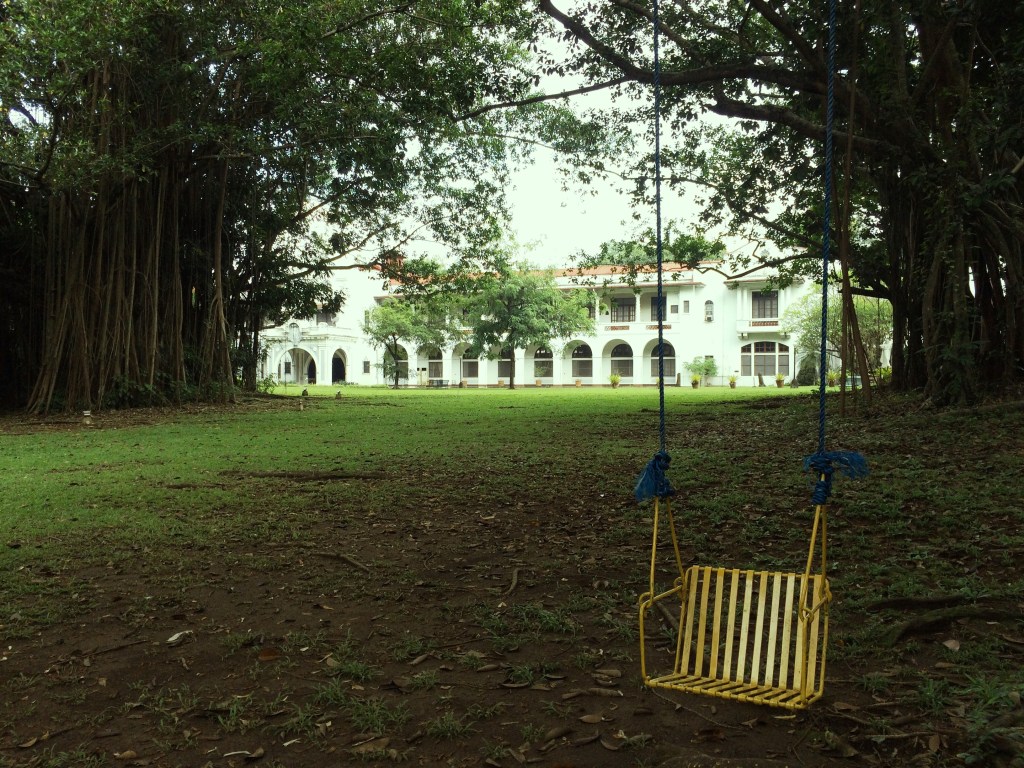
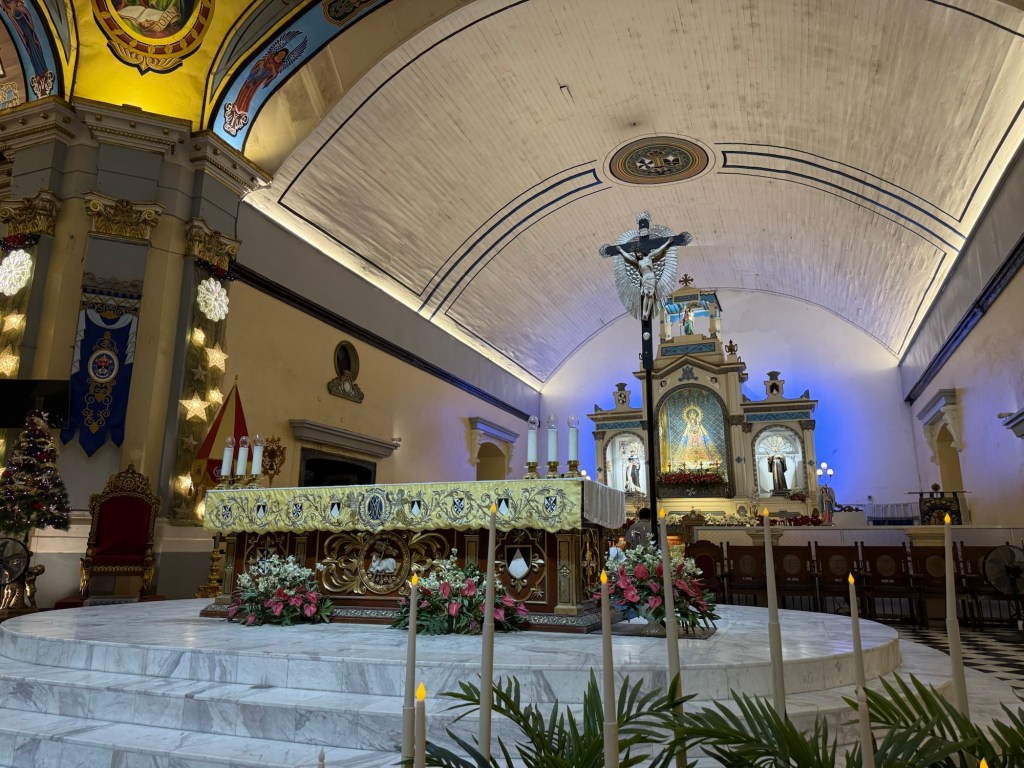
Photo by author, Sabbath Place, Assumption Baguio, January 2019.

“It isn’t that, my lord,” Hannah answered. “I am an unhappy woman. I have neither wine nor liquor; I was only pouring out my troubles to the Lord” (1 Samuel 1:15).

How often people misread
what is really inside us,
Lord Jesus, 
especially when we pour out
our troubles to you;
and yet,
you have always been so kind
with us,
so gracious
in listening
and most of all in
granting our prayers
and desires.
Teach us, dear Jesus
to open ourselves more
to you,
to bare our souls to you
to be cleansed and refreshed
in your healing mercy
and abounding love.
Most of all,
help us to pour things out
to you, Jesus
those sins and evil
we keep inside,
those which we have buried
deep inside us that
continue to bother and 
destabilize us 
including the pains
and hurts in the past
that have imprisoned us
and prevent us from experiencing 
your liberation and freedom,
salvation and fresh start
like that man with an unclean spirit
in today's gospel.
Amen.
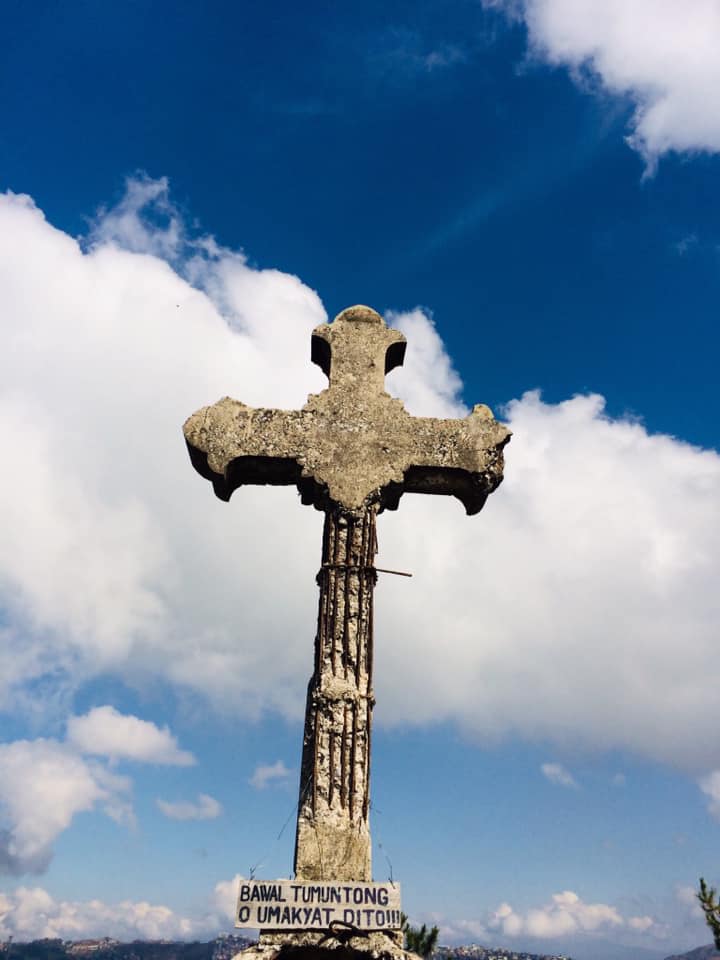
Photo by author, Sabbath Place, Assumption Baguio, January 2019.

This is the time of fulfillment

 3,170 total views

Lord My Chef Daily Recipe for the Soul by Fr. Nicanor F. Lalog II
Monday, First Week in Ordinary Time, Year II, 12 January 2026
1 Samuel 1:1-8     <*((((><  +  ><))))*>     Mark 1:14-20
Photo by author, San Juan, La Union, 09 January 2026.

After John had been arrested, Jesus came to Galilee proclaiming the Gospel of God: “This is the time of fulfillment. The Kingdom of God is at hand. Repent, and believe in the Gospel” (Mark 1:14-15).

Thank you dear Jesus
for this brand new week,
for this start of Ordinary Time
in our liturgical calendar;
how wonderful to remind us
it is the time of fulfillment,
of completion and wholeness
in you, O Lord because it is only
in you lies our fulfillment.
Teach us to open our hearts
and souls to your call, Jesus
like the brothers Peter and Andrew,
James and John,
your first disciples;
was it really that quick and easy
for them to leave everything behind
including the father of James
and John just to follow you?

Yes, dear Jesus,
like them,
we felt incredulous
and even fearful with your call,
not only last year
but even this year;
in fact, as we begin
our Ordinary Time this Monday,
the more I felt your calling 
continues everyday
because without you
we shall never be complete.
Like Hannah,
our lives will never be complete
and fulfilled without having you
that may take several forms
like a child for Hannah;
many times Lord we wonder
why we cannot have what we
are specifically praying for
like Hannah who has become
a subject of ridicule by others
for being barren and childless;
but, inasmuch as your call continues
for us, then you hereby assure us too
of your continuing works in our
many deficiencies if we can only
be patient and persevering in you
in awaiting your calls.
Amen.
Photo by author, San Juan, La Union, 09 January 2026.
A more decisive 2026 in Christ

 2,619 total views

Lord My Chef Sunday Recipe for the Soul by Fr. Nicanor F. Lalog II
Feast of the Baptism of the Lord, Cycle A, 11 January 2026
Isaiah 42:1-4, 6-7 ><}}}}*> Acts 10:34-38 ><}}}}*> Matthew 3:13-17
Mosaic of the Lord’s Baptism by John at the Neonian Baptistery, Ravenna, Italy; from wikimedia commons.

Still, our greeting today is a blessed Merry Christmas until the last Mass tonight when we close the Christmas Season with this Feast of the Lord’s Baptism. Tomorrow we shift into the Ordinary Time with the green motif back in our liturgy.

Most often during this time of the year, many of us make “new year’s resolutions” that always end up unfulfilled, discarded, and forgotten because these are merely based on whims or fads or anything less than a matured decision. A decision is the making up of the mind and heart to act firmly on something; hence, it connotes a sense of determination in fulfilling that decision made.

In this Feast of the Lord’s Baptism, Jesus invites us to reflect our decision-making process as we embark on another journey of twelve months in him with Matthew as our guide so we can be more matured in our faith and as a person.

Jesus came from Galilee to John at the Jordan to be baptized by him. John tried to prevent him, saying, “I need to be baptized by you, and yet you are coming to me?” Jesus said to him in reply, “Allow it now, for thus, it is fitting for us to fulfill all righteousness.” Then he allowed him (Matthew 3:13-15).

From wikimedia.org.

See the brief and direct reportage by Matthew of the event that immediately followed his story last Sunday of the Lord’s Epiphany to the world represented by the wise men from the East as we meet Jesus today all grown up, so matured as a man in his decisions.

And what do we find so remarkable in his decision-making process we can all emulate? His obedience to the Father!

All throughout his ministry, Jesus always made known to everyone that whatever he said and did were not his but the Father’s will. From his coming here at the first Christmas until his death on the Cross, it was all about Christ’s obedience to the Father. In fact, there was no need for him to be baptized by John for it was a baptism of repentance because Jesus is sinless, being the Son of God. Yet, he decided to be baptized “to fulfill all righteousness” as planned by the Father. In a similar manner, see John’s obedience too to Jesus and the Father when he could had insisted not to do it because Jesus is the Christ.

Photo by author, 2025.

Fulfillment of every aspiration and mission in this life becomes difficult when we insist on what we know or what we prefer rather than what God wills for us.

Obedience is one virtue that is vanishing in this modern age so characterized by everyone wanting to be in control of everything, of one’s life and even of others expressed in those handheld gadgets as well as cars and other vehicles. See how everyone would want to “drive” one’s own life, totally disregarding those in authority especially God.

The word obedience is from two Latin words “ob audire” that literally means “to listen attentively”.

One cannot be obedient without first learning to listen that begins with our willingness to to be silent. Jesus is obedient because he always listens to the Father through frequent and long periods of prayers. Even the Blessed Mother as we reflected last January first exemplified the virtue of obedience when she listened intently and treasured in her heart the words spoken by the shepherds who came to adore the new-born Jesus in Bethlehem.

It would be nice this 2026 that we start cultivating a prayer life by embracing silence to listen attentively to God’s plans for us so that we could make the right decisions in life.

The opposite of “ob audire” in Latin is “absurdus” – exactly what we are when we make the wrong decisions and become absurd.

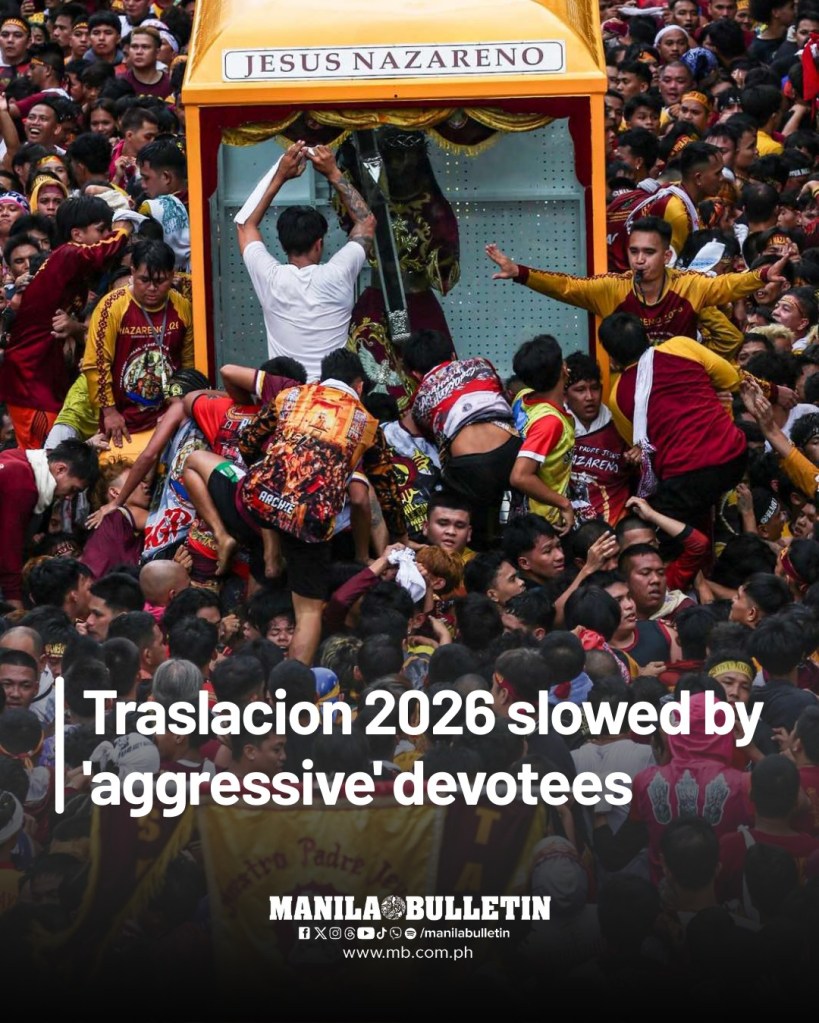
And sorry, that’s how we can describe this year’s Traslacion – absurd. In fact, every year, it becomes more absurd than ever and something drastic even radical has to be done in the real sense of the word, that is, by going back to its very roots.

When the devotees refused to obey the priests to stop at the San Sebastian Church and insisted on bringing the Poon Nazareno to Quiapo regardless of its many safety and practical implications, it was a clear case of misplaced devotion. It is fanaticism. Selfish and un-Christian. Despite the many defenses and theologizing by many, it is about time Nazareno devotees examine themselves about this devotion, of their panata that admittedly have been so baffling that if our faith in God is such intense, why are we still electing corrupt and evil officials?

Obedience is always a virtue because everything that is good follows when we are obedient, like being more loving at its truest sense. Whenever we decide out of obedience to God and parents and superiors, it is most often because of love.

Photo by Ryan Jacob, Paco, Obando, Bulacan, 2023.

This is the second characteristic of Jesus Christ’s decision-making process that is based on his love for the Father expressed in his love for us.

Again, there was no need for Jesus Christ to be baptized by John in the river Jordan because he is sinless but, he chose to be baptized there as a sign of his solidarity, of his oneness with us sinners and weak people. It was all because of love.

Jesus chose to be baptized even there was no need because he loves us and wants to be one with us. Jesus chose to die on the Cross, as depicted in the Black Nazarene of Quiapo, because he loves us and wants to carry our burdens.  Jesus chose to be eaten as bread in the Holy Mass all because he loves us too so that we may have eternal life.

When Jesus went down to Jordan river, out of obedience and most of all out of love for all of us, he became one with us in our pains and hurts and sickness and failures and even sins which St. Peter realized personally that he declared after Pentecost that “God shows no partiality” (Acts 10:34) that we are all loved by God and are called to be obedient to him always by loving one another as he loves us. That is our mission, to love and be like Jesus Christ, the “Suffering Servant” who was “sent to bring forth justice… to open the eyes of the blind, to bring out prisoners from confinement, and from the dungeon, those who live in darkness” (Is.42:1,6-7).

Photo by Mr. Boy Cabrido, January 2024.

In going down into the dirty waters of Jordan River that signifies this earth, this life, Jesus showed us his mission of redeeming us so that we can become like him, God’s beloved child with whom he is well pleased. Every morning when we wake up, this scene at Jordan happens anew. The choice is ours to make by being like Jesus Christ who throughout his earthly life was a total obedience and yes to God because of love.

Last week I went to Baguio to facilitate a retreat with some of my kababata or teenage friends from my hometown of Bocaue. Being the youngest among them at 60 years old, I reflected about our senior years. Two things I shared with them:

First, as senior citizens, let us stop thinking of getting old because we are already old. Stop saying pagtanda ko… matanda na nga tayo. Let us face the reality we are old and find most especially the grace of God of reaching this stage. Being senior is to look with gratitude to our youth and to our past as we look forward to finding and meeting God who continues to call us to him.

Second, I told them to stop saying or thinking about our coming death because we are already dying. Huwag na nating isipin yung “kapag namatay tayo” kasi namamatay na nga tayo. Being senior is doing away with all those bucket lists, of things to do or places to visit before we die. We are already dying; hence, do whatever you can do now!

Perhaps the same propositions are applicable to anyone of any age. What matters is how much we love God and others expressed in our obedience to them like Jesus Christ. Let us keep following Jesus in the next twelve months of this 2026 to be filled with himself. Amen. Have a blessed week ahead.

Photo from forbes.com, 2019.

Epiphany: recognizing Christ revealed

 6,826 total views

Lord My Chef Sunday Recipe for the Soul by Fr. Nicanor F. Lalog II
Solemnity of the Epiphany of the Lord, 04 January 2026
Isaiah 60:1-6 ><}}}}*> Ephesians 3:2-3, 5-6 ><}}}}*> Matthew 2:1-12
From https://www.godwhospeaks.uk/what-is-epiphany/

After the Nativity of the Lord and the Solemnity of Mary, Mother of God, comes now the third major celebration of Christmas Season, the Epiphany of the Lord we celebrate this Sunday. It is still the Christmas Season, so, continue greeting one another with Merry Christmas!

Had the rare opportunity of spending the past week after Christmas with my two nieces and only nephew in a staycation in Makati. I requested them to bring me to the Mind Museum inasmuch as I wanted to stroll at the BGC too after 20 years since I last hanged out there!

And that was when I realized the irony of our Christmas celebrations when we unconsciously leave Christ behind because the harder we try to be “in” Jesus from our Simbang Gabi to our shopping and noche buena, the more we actually push Jesus “out” as we think more of ourselves than of Him and others. This is most sadly true at how so many benighted Catholics imitate the westerners led by these giant malls in removing Jesus from Christmas in their more “inclusive” greeting of “Happy Holidays” instead of the Merry Christmas.

Photo by author, Ayala Triangle, 28 December 2025.

The more we celebrate Christmas, the more we think of our selves as we are so concerned with everything new and beautiful like our clothes and gifts, forgetting the poor and marginalized as well as the sinful and outcasts for whom Jesus actually came for. Of course, Jesus comes and dwells in our hearts but let us not forget that Christmas is not being “in” but being “out” in Him by thinking less of ourselves, more of Him and of His love and mercy.

Christmas is getting out of our comfort zones inside our old, usual self to meet Jesus outside the box so to speak.

And that is also the meaning of our celebration today, the Epiphany or Manifestation of the Lord to the Nations of the world represented by the magi. For us to find Jesus who manifests Himself in so many ways daily, we need to get out of ourselves like the magi and avoid being locked inside and held captive by our fears like King Herod and the people of Jerusalem.

When Jesus was born in Bethlehem of Judea, in the days of King Herod, behold, magi from the east arrived in Jerusalem, saying, “Where is the newborn king of the Jews?  We saw his star at its rising and have come to do him homage.” When King Herod heard this, he was greatly troubled, and all Jerusalem with him (Matthew 2:1-3).

 It was totally odd that when the magi inquired about “the newborn king of the Jews”, Herod and the people in Jerusalem were troubled instead of at least checking on their statements like looking up to see if there was indeed that star leading them, or ask for clarification about what kind or who was the king they were talking about. Instead of being troubled, the strongest feeling one could have would be perplexed or baffled, with the familiar reactions of “what?” or “duh…” or “huh” or as we would always say, “ha, ano daw iyon?”

This is what we mean of Christmas more as being “out” than “in”: instead of going out to check on the inquiry by the magi, to look up the sky to see for themselves about the star, Herod and the people of Jerusalem went inside themselves and got locked in their positions!

They were troubled because they felt the status quo would be altered that could throw them off their comfort zones. And the biggest irony is that they who have the answers in the scriptures remained locked inside their own selfish worlds, refusing to get out and meet the newborn king!

How often does it happen with us especially in our parish, in our Church, in our families that we are so stuck into our old beliefs even traditions that we refuse to go out and meet Jesus Christ Who have come into the world more than 2000 years ago to set us free from all forms of slavery caused by sins? Herod and the rest of Jerusalem were troubled simply because they were not interested with Jesus Christ which tragically continues to happen these days on many occasions in our lives when we do not really search for the Lord as we are more intent in pursuing our own stars of fame and glory.

Photo by Elodie Astier on Pexels.com

Epiphany in Greek means manifestation, appearance and revelation.  On Christmas day, we celebrated the birth of Jesus Christ while Epiphany today is telling us the identity and mission of the Lord, that is, He is the Son of God, the Messiah or “Anointed One” (Christos in Greek) who had come to set all people free from sins.

Jesus fulfilled the longings of the people since the Old Testament time as heralded by Isaiah’s prophecy in the first reading which St. Paul beautifully explains in the second reading in his concept of “the mystery made known by God to him.”  Mystery in this sense is not something hidden but revealed so that in Christ Jesus, the mystery of God, His plan for us is revealed or made known for everyone not only the Jews but for all peoples of the world represented by the magi.

Yesterday, GMANews reporter Joseph Morong posted an experience at a burger stand when he told the server to “keep the change” of ₱50.00. According to Mr. Morong, the server refused to accept his gift because the amount was so big. That’s when the reporter commented “may mali sa ating mga Filipino”: yung nasa burger stand hiyang-hiyang tanggapin yung tip na ₱50 habang yung mga corrupt sa gobyerno at congress, di masiyahan sa ₱50-M at ₱50-B!”

So true! Many of us keep on looking inward, of what is for us that we forget Jesus found among the poor and marginalized. Today’s celebration of the Epiphany is reminding us how Jesus Christ continues to reveal and manifest Himself to us today outside in our daily lives to lead us back to the Father.

Are we willing to be like the magi who dared to leave everything behind, unmindful of the long and perilous journey to make in order to meet Jesus Christ?

In meeting the Lord like the magi, are we willing to give up everything we have especially the most precious ones and offer these to Him?

Most of all, upon finding God, are we willing to go back home by “another way” like the magi as instructed in a dream never to return to Herod?

The Lord continues to manifest Himself to us in so many ways every day, often in the simplest occasions and things.  May we have the courage to meet Jesus Christ so that we may see the light and beauty of this New Year He has for us. Amen. May your new year be filled with Jesus Christ’s peace and grace!

Who are you?

 13,945 total views

Lord My Chef Daily Recipe for the Soul by Fr. Nicanor F. Lalog II
Friday, Memorial of Sts. Basil the Great & Gregory Nazianzen,
Bishops and Doctors of the Church, 02 January 2026
1 John 2:22-28     ><))))*> + ><))))*> + ><))))*>     John 1:19-28
Photo by author, Hagia Sophia, Istanbul, Turkiye, 01 November 2025.
Lord Jesus,
today I feel like John
being asked by priests
and Levites sent by Jews
from Jerusalem:
"Who are you?"

What a great question 
we all have to confront
at the start of the new year
because unless we truly know
and accept who we are,
we can never give the right
answer in making you known,
Jesus; many times,
we fail to make you known
not because you are difficult to
know but simply because we do not
know who we are unlike John;
we cannot give a definitive answer
"I am not the Christ"
because even if we do not 
claim it verbally, unconsciously
we pretend as the Christ;
many times, Lord
you are not known 
not because you are so far
but because our lives are so far
from you that people could not 
believe what we say about you;
most often, you are not known
Jesus not because your teachings
are hard and difficult but because
we ourselves are lost and could not
find the way into our true selves
to be the voice of one in the desert 
like John crying out,
"Make straight the path 
of the Lord."
At the start of this new year,
dear Jesus,
help me to be like John
or St. Basil or St. Gregory
who knew themselves very well,
embracing everything about me
especially my sins and weaknesses
so that like John, 
I can declare "I am not the Christ"
and therefore, stop from pretending
or acting or speaking as the Messiah;
let me embrace the limitations I have,
the darkness and emptiness
within me so that
I may remain in you
and your grace only.
Amen.
Photo by author, detail of John the Baptist from the Deesis Mosaic in the hagia Sophia in Istanbul, Turkiye, 01 November 2025.

Welcoming 2026 with Mary

 13,944 total views

Lord My Chef Daily Recipe for the Soul by Fr. Nicanor F. Lalog II
Thursday, Solemnity of Mary, Mother of God, 01 January 2026
Numbers 6:22-27 ><}}}}*> Galatians 4:4-7 ><}}}}*> Luke 2:16-21
“The Adoration of the Shepherds”, a painting of the Nativity scene by Italian artist Giorgione before his death at a very young age of 30 in 1510.

Still a blessed Merry Christmas to everyone! Please continue greeting one another with a Merry Christmas until January 11, 2026, the Feast of the Lord’s Baptism that closes the Christmas Season.

Keep greeting Merry Christmas even on this new year’s day because what we celebrate today is the Solemnity of Mary, Mother of God – not the New Year! Remember we had our new year last first Sunday of Advent, evening of November 29 and the 30th.

Stop announcing our New Year’s Mass. Our Mass today is Solemnity of Mary, Mother of God which is the Eighth Day within the Octave of Christmas.

It is the oldest feast of the Blessed Virgin Mary that celebrates the mystery of her being the Mother of Jesus Christ who is true God and true Man following the Council of Ephesus in 431 AD. Since Jesus remained fully God and fully human in his conception by the Blessed Virgin Mary, it is right and proper too as the Council affirmed to call Mary the “Mother of God” (Theotokos). Since the birth of Christ is also our point reference in reckoning time that we have the terms “BC” (Before Christ) and “AD” (Anno Domini or Year of the Lord), this celebration teaches a lot on how to welcome this 2026 like Mary.

Photo by author, mosaic of Mary with Jesus, Hagia Sophia, Istanbul, Turkiye, 01 November 2025.

First lesson the Blessed Virgin Mary teaches us this new year in Christ is what we have mentioned last Christmas – if there is anything that merits haste, it is those of things of God. How sad that these days we are so preoccupied with what is trending and viral or we race for what is “in” in fashion and everything. In an age of instants, we rush everything that we miss out life itself, God and one another, especially our very selves.

The shepherds went in haste to Bethlehem and found Mary and Joseph, and the infant lying in the manger. When they saw this, they made known the message that had been told them about this child (Luke 2:16-17).

Mary went in haste too for the Lord. Recall her response to the Angel at the Annunciation, “Be it done unto me according to your word.” Her response was immediate. She did not dare the Angel like Zechariah. After the Annunciation, Mary went in haste to visit her cousin Elizabeth pregnant with John the Baptist.

Photo by author, December 2020.

It is true that “haste makes waste” because doing things too quickly leads to mistakes that result in greater losses in time, effort, and materials. The great St. Francis Sales cautioned us that haste is the biggest enemy of growth in spirituality.

However, during the Christmas season, we find that haste is not that totally bad at all.

As shown to us both by Mary and the shepherds, there is something so good with making haste to find Christ, to share Christ, to be with Christ.

We have a prayer formula now rarely used in public prayers wherein the leader says “O God come to my assistance” with the people responding, “O Lord make haste to help me” while making the sign of the Cross like in the praying of the Rosary. It is a beautiful prayer that tells us how God would always hasten to come to us even before we have called Him!

How sad that we rush to everything and everyone except to Jesus our Lord and God! More sad is the fact so many people have been in making haste to these days for the more mundane things without even spending some quality time in the church to pray.

This 2026, let us go in haste in the Lord for He has so many things in store for us as the shepherds and Elizabeth realized.

From forwarded cartoon at Facebook, December 2020.

Second important lesson the Blessed Mother is teaching us in welcoming Jesus Christ this new year is the value of silence which is a prerequisite in cultivating a prayer life, in making haste to God.

Though I grew up from the very barrio that manufactures most of the pyrotechnics sold in my hometown of Bocaue in Bulacan dubbed as the fireworks capital of the Philippines, I never liked these popular products every new year. Aside from being so dirty, these are so dangerous as I have seen many of our neighbors who have lost their arms, hands or fingers in manufacturing and playing with fireworks. Worst of all are the many lives of people lost following explosions of some factories in our barrio.

When I became a priest, I kept telling people including my barrio folks that welcoming the new year with fireworks is pagan practice, not Christian. And the most Christian way of welcoming new year like Mother Mary is always in silence, silent prayer like before the Blessed Sacrament.

Photo by Ar. Philip Santiago, Chapel at the Angels’ Field in Bethlehem, October 2025.

All who heard it were amazed by what had been told them by the shepherds. And Mary kept all these things, reflecting on them in her heart (Luke 2:18-19).

It is very interesting that Luke had told us how people were amazed at what the shepherds spoke about that night on the birth of Jesus Christ they have found on a manger with his Mother Mary and her husband Joseph. Keep in mind that the shepherds were among the least trusted people of that time but their story went “viral” and “trending” so to speak. Amid all these talks was Mary, the Mother of Jesus, silently meditating everything in her heart!

Tonight or today, try to spend some silent moments of prayer before the Blessed Sacrament to thank God for all the blessings of 2025 as well as to listen to Christ’s instructions and plans for us this 2026. Jesus has always something to tell us but we always go in haste somewhere else or to somebody else. Jesus is right there in our hearts, the faintest voice you always dismiss and take for granted.
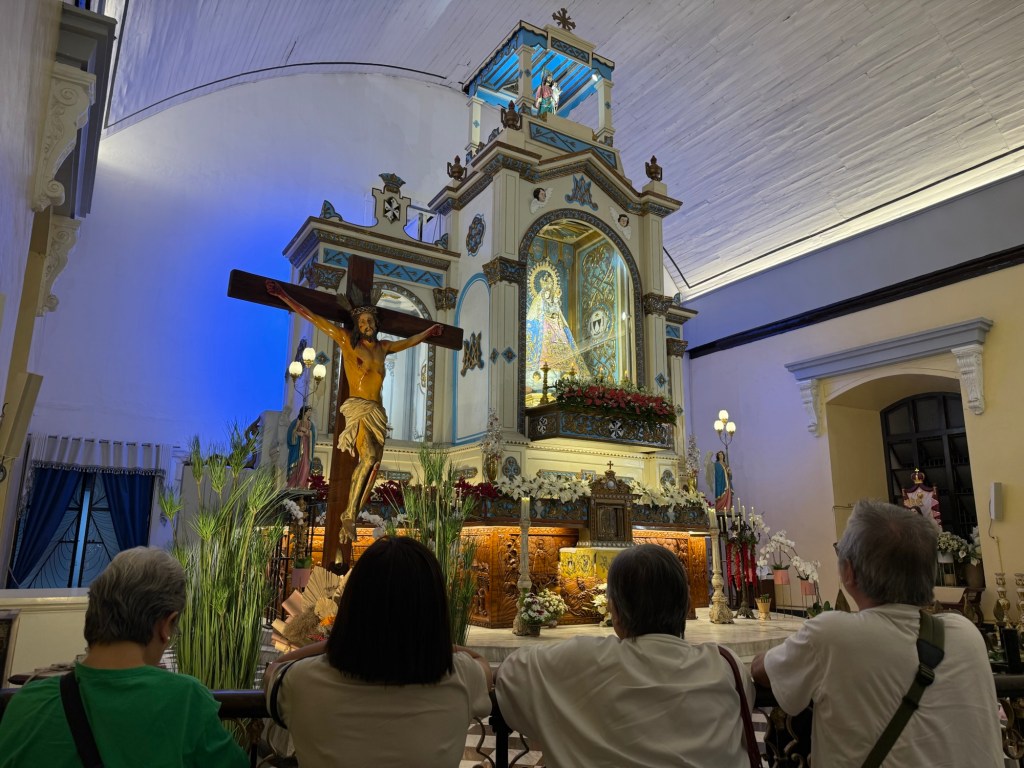
Let us cultivate a prayer life like Mary who always kept in her heart the words and experiences she had with Jesus. Let us not be like the shepherds who were there only at Christmas, never came back to Jesus specially when he was preaching in Galilee and when crucified on Good Friday wherein his constant companion in silence was Mary his Mother.

Photo by Ar. Philip Santiago, Basilica of the Annunciation, Nazareth, October 2025.

Third important lesson the Blessed Mother Mary is teaching us this first day of 2026 is to have faith in God in Jesus Christ His Son our Savior. Therefore, please stop all those superstitious beliefs of pampasuwerte like feng shui and fortune telling that are pagan practices.

When eight days were completed for his circumcision, he was named Jesus, the name given him by the angel before he was conceived in the womb (Luke 2:21).

Mary was very much like us when Mary gave birth to Jesus on that first Christmas: she too was totally unaware of what was in store for her, of what would happen to her Son. She was totally unaware of what would happen in the future. The only thing she was certain was the name to be given to her child, “Jesus” which means “God is my Savior”.

All blessings come only from God, not from any other spirits. We drive all the malas and bad spirits and negative vibes of the past year not with noises and blasts of trumpets or fireworks but with silence that is rooted in deep faith in Christ Jesus.

Such was the attitude of Mary on that first Christmas until her glorious Assumption into heaven: she never knew Jesus would be betrayed by one of his trusted friends and apostles; she was never told by the angel how after Jesus would feed and heal so many people He would later be arrested and crucified like a criminal except that she believed in Him until the end, remaining with Christ at the foot of the Cross.

All Mary had was a deep faith in Jesus as told her by the angel as the name to be given to her child is also the child of the Most High. Like Mary, let us keep our faith in Christ alone, not to round fruits nor stones nor other stuffs peddled to us to bring luck this new year.

Let us imitate Mary, the Mother of God, so human like us except in sin who was always in haste with things of God, silently meditating his words and workings, and most of all, trusting wholly in her Son Jesus. Amen. May your new year be filled with Christ’s peace and grace!

Photo by Ar. Philip Santiago, Basilica of the Annunciation, Nazareth, October 2025.

A kingdom or a home?

 13,901 total views

Lord My Chef Sunday Recipe for the Soul by Fr. Nicanor F. Lalog II
Feast of the Holy Family of Jesus, Mary & Joseph, Cycle A, 28 December 2025
Sirach 3:2-6, 12-14 ><}}}}*> Colossians 3:12-21 ><}}}}*> Matthew 2:13-15, 19-23

Last November we were blessed to have visited Romania’s three famed castles at Transylvania region: the Bran Castle considered as the home of Count Dracula in Bram Stoker’s stories; the Cantacuzino Castle owned by one of Romania’s wealthiest family which is the setting of Netflix’s Wednesday series; and the Pelisor Castle which is the smallest but loveliest for me due to its romantic story behind.

I remembered these Romanian castles because of our gospel today about two kings: one is a ruthless, old king named Herod so “greatly troubled” upon hearing the news of the “newborn king of the Jews”, our Lord Jesus Christ (Mt.2:2, 3).

Very often when we hear of kings and royalties living in castles, so many images of affluence and power come into our minds. And indeed they are so true when we went inside those castles with its wonderful interiors and amazing artworks; however, as we learned more of its history especially of the lives of its occupants, our wonder and excitement dissipated. It was really more like a fairy-tale, or a horror story in the case of Bran Castle.

Photo by author, Cantacuzino Castle, Romania, 06 November 2025.

It must have been so lonely and sad living in those palaces; however, let us admit how often the presence and reality of Jesus whom we take for granted like when he was born in Bethlehem more than 2000 years ago invite us into those parts of our lives where we like to rule like kings or queens.

I find this important and even essential before reflecting about the Feast of the Holy Family because it is right in our homes – ironically or tragically – where we are first exposed to evil and sins. It is inside our homes when the father or mother or siblings take on their “power trips”, insisting on their rules, even flexing their powers over each other that in the process we hurt each other. Sometimes, the trauma that comes after may last a lifetime.

Would we rather choose a kingdom or a home? Be a Herod or a Baby Jesus?

Of course, our answers are so obvious as we would generally choose a home than a kingdom and be a Baby Jesus than a Herod. This we can do by imitating St. Joseph.

When the magi had departed, behold, the angel of the Lord appeared to Joseph in a dream and said, “Rise, take the child and his mother, flee to Egypt, and stay there until I tell yo. Herod is going to search for the child and destory him.” Joseph rose and took the child and his mother by night and departed to Egypt… When Herod had died, behold, the angel of the Lord appeared in a dream to Joseph in Egypt and said, “Rise, take the child and his mother and go to the land of Israel, for those who sought the child’s life are dead.” He rose, took the child and his mother, and went to the land of Israel. But when he heard that Archelaus was ruling over Judea in place of his father Herod, he was afraid to go back there… He went and dwelt in a town called Nazareth, so that what had been spoken through the prophets might be fulfilled, He shall be called a Nazorean (Matthew 2:1314, 19-22, 23).

Photo by author, site of the Nazareth home of the Holy Family underneath the Church of St. Joseph in Nazareth, Israel, 2017.

Remember how Matthew described St. Joseph as a righteous man? Here after the birth of Jesus Christ, we find Joseph’s holiness most shining. See how before this scene, Matthew described to us the attitudes of Herod and the experts in Jerusalem vis-a-vis the Magis from the East: Herod and company were all disturbed while the Magis were all sincere and so open in their search for the Christ.

That’s what we were saying earlier: of how we play so much on our turf and power, on how we want to make our “rule” as sovereignty felt always right in our home, in Jerusalem that was then the seat of power and of worship. Very clear at that time, the temple was already so untidy that needed Christ’s cleansing thirty years later.

When sin especially pride fills us, it is difficult to recognize Jesus. Moreover, even the smallest and harmless or weakest person like a child or a woman would always disturb anyone filled with one’s self, feel threatened like Herod that one’s rule is being taken away. How sad when a father or a husband, a mother or a wife including the eldest children would dare challenge everyone at home, asking who is the father or who is the one supposed to be in command? Sino ba and tatay (o nanay) dito na dapat masunod? It is the most scariest tactic of all not because of what the power trippers can do but actually it was a proof enough they are immatured and lacking of proper understanding about power and authority.

Photo by author, March 2024.

Joseph was clearly not of the same kind. He readily left his home and moved the Infant Jesus and Mary to Egypt. Remember that Bethlehem as the town of David is Joseph’s turf so to speak being from royal Davidic lineage himself. It must have been so difficult for him to leave Bethlehem and be a refugee in Egypt!

But Joseph had none of those airs of rule and superiority. For him, the only rule was God and that meant always the good of Jesus and Mary. That is why Joseph twice “rose” to obey the angel’s instructions to him to take the Infant Jesus and Mother Mary to Egypt and then back to Israel after some time.

Joseph’s rising was actually an act of bowing low to the power and authority of God, most of all to the Son of God he had named as “Jesus”.

Can we imitate Joseph’s “rising” from our selfishness and ordinariness of petty quarrels and assertions of power or “rule” especially in our homes? To imitate the Holy Family, we need to be like Joseph who rose not just literally from his sleep and comfort but rose above his very self. Jesus is inviting us this Sunday to rise too above our pride and self-centeredness to give way to his love and mercy, kindness and understanding for each other so that everyone remains safe and unharmed like the Infant Jesus and Mary following Joseph’s selflessness.

Photo by author, St. Joseph Parish Church, Pacdal, Baguio City, 28 December 2024.

Home is where the heart is. This is most true when we get into the origin of the Filipino equivalent of home which is tahanan which is from the root word tahan that means to stop crying. When children cry, we tell them to tahan natahan na… or stop crying.

Home is where we stop crying because that is where we are most safe, that is where we find the people who love us, believe in us, the one who would still accept us and forgive us when we have sinned. Home is our safest place because that is where there are people willing rise above their selfishness, to rise above their painful memories, and rise to let go of their comforts for others in distress and more difficult plight and situation in life.

Jesus, Mary and Joseph all rose from their very selves for each other to be safe. Most of all, they rose above themselves because they love so much for each other, a reflection of their great love for God the Father. Amen. May your family be blessed!

Advent is the light of Christ coming

 29,200 total views

Lord My Chef Simbang Gabi Recipe for the Soul by Fr. Nicanor F. Lalog II
Wednesday, Simbang Gabi-XIX, 24 December 2025
2 Samuel 7:1-5, 8-12, 14, 16     <*((((>< + ><))))*>     Luke 1:67-79
Photo by author, sunrise at Lake of Galilee, the Holy Land, May 2019.

Being an early riser or “madrugeño” in Spanish, I have always loved and preferred early morning Masses because churchgoers at that time are mostly silent, either still sleepy or simply truly reverent.

Though sunsets are more colorful and dramatic like a spectacular show – a palabas in Filipino -sunrise is different because it is more of paloob, of inside movement that is subtle yet intense when light steals into shadows as the sun isgradually breaking open the darkness to reveal what is unseen. Our local term for sunrise or breaking of dawn says it all, pagbubukang liwayway.

There lies the beauty of our Simbang Gabi especially on this final day of our novena when we are slowly seeing the light of Christ’s coming. It is hoped that in these nine days of prayers and reflections on the Sacred Scriptures, we have been enlightened about the the true meaning of Christmas, of how it continues to come and happen in our modern time so darkened by sin and evil.

On this final day of our Simbang Gabi, we reflect on the wonderful aftermath of the assertions by Elizabeth and later by her husband Zechariah on the name “John” meaning “God is gracious” being given to their child as instructed by God. Suddenly, Zechariah who was rendered deaf and mute following his unbelief in having a child, sang praises to God!

Zechariah his father, filled with the Holy Spirit, prophesied, saying: “Blessed be the Lord, the God of Israel; for he has come to his people and set them free. He has raised for us a mighty Savior, born of the house of his servant David… In the tender compassion of our God the dawn from on high shall break upon us, to shine on those who dwell in darkness and the shadow of death, and to guide our feet into the way of peace” (Luke 1:67-68, 78-79).

Painting by Italian Riccardo Cessi in 1892 of Zechariah giving name to his son John;from commons.wikimedia.org.

In singing the Benedictus, Zechariah affirmed and confirmed in himself the reality and truth of God being present in our lives.

Many times we are like Zechariah that even if we pray, celebrate the Masses, do all the devotions but still deep inside, doubt God’s reality that we simply do all this sacred rites and traditions just for the sake of doing them.  Last week at the start of our Misa de Gallo, we have invited you to reassess and examine the reason why we are keeping this sacred tradition.  Is it because of special favors we are asking from God or is it because we want to see God?

The late American Trappist monk Thomas Merton said in one of his writings that seeking God is not like searching for a “thing” or a lost object because God is more than an intellectual pursuit or a contemplative illumination of the mind. Merton explained that God reveals Himself to us in our hearts through our communion and fellowships in the Church.

Photo by Ar. Philip Santiago, Benedictus on the wall of the patio of Church of St. John the Baptist in Ein-Karem where he was born.

In singing the Benedictus, Zechariah realized God’s presence and His coming communion throughout Israel’s history, from the Patriarchs down to the birth of his son John who would prepare the way of Jesus Christ.  The Benedictus describes to us the coming of the Christ as expected by the people of Israel in the Old Testament and that is why, unlike Mary’s Magnificat, it is in the future tense. While Zechariah mentions the mission of his son John, the main focus of the Benedictus is Jesus Christ who was about to be born six months later at that time.

Therefore, when we who believe in Jesus as the Christ or Messiah expected by the people of Israel in the Old Testament, the Benedictus becomes an affirmation of God’s presence in us and among us today and forever.

It is in this most sublime expression by Luke we find Christ’s coming like the breaking of dawn like shafts of light bursting forth, “In the tender compassion of our God the dawn from on high shall break upon us, to shine on those who dwell in darkness and the shadow of death, and to guide our feet into the way of peace.” It is in this breaking of dawn we find and experience the poetry of sunrise that is more of the heart than of the eyes we mentioned earlier.

After seeing the coming of the Christ in the birth of his son John, Zechariah now summarizes to us the very essence of Jesus our Savior, of God Himself: tender compassion or in the original Greek, splaghna or “tender mercy” of God.

It is not just compassion which is to suffer with us but at the same time be filled with tenderness that one is so moved to reach out, to do something by going down with the one suffering.

Like courage, mercy is a movement in the heart called misericordia in Spanish from the Latin mittere, meaning to be moved, to be stirred. It is something dynamic, not static. It is a deep feeling that moves toward someone in pain and suffering. An identification of Jesus with every person going through so much hardships and sufferings in life.

Ar. Philip Santiago reverently kissing the very site of John’s birthplace in Ein-Karem, October 2025.

See now the culmination of movements we have mentioned in Luke’s Christmas story: last Saturday at the Annunciation to Mary, the Angel mentioned the “overshadowing of Holy Spirit” on her in bearing our Savior; today in the Benedictus, there is the moving or stirring of the heart in Zechariah. Whenever we allow God to overshadow with His powers, our hearts are moved to love more, to be tender like God.

Zechariah’s heart is no longer hardened with negativity and cynicism – it was so stirred by God that he mentioned His tender mercy or compassion because he had personally felt it as he recovered his voice and speech. With the birth of John, he now believes that God’s love for his suffering people is deep and personal.

And that is perhaps one of the things we sorely lack in our history as a nation especially during the decadent years of the last Administration – the utter lack of tenderness by our officials and their kawatan in corruption. Wala silang awa at habag sa taong-bayan.

Recall the tender compassion, tender mercy of Jesus, how during His ministry all four evangelists would narrate Jesus was moved with pity and compassion to the people who were lost, tired and sick “like sheep without a shepherd” that no matter how tired He may be, He would always find time to teach them, heal their sick, and even feed them. That is the mercy of God that Jesus had brought forth to us in His coming, experienced by Zechariah himself that he could foresee its coming at the birth of John.

Photo by Ar. Philip Santiago, Filipino translation of the Benedictus on the wall of the patio of Church of St. John the Baptist in Ein-Karem where he was born.

That is the Benedictus, the song of every faithful disciple of Jesus introducing His coming, His birth. So many people have forgotten God, do not know God, refused to believe in God because many among us He had lavishly loved have refused to share His love with others, choosing to remain in the darkness of the night, thinking more of themselves and of their hurts and pains that they revenge with by stealing billions of money.

How lovely to think that God’s tenderness moves in us like the breaking of dawn, of shafts or streaks of lights slowly penetrating, bursting forth through cracks in the skies, in our homes and even right in our very selves. Bask in that light saw by Zechariah, shared by John the Baptist his son. Amen. Have a blessed and meaningful Christmas! Thank you for following our reflections. Share it and let it be shafts of light to somehow illumine the darkness in others.

Advent is asserting God’s plan

 26,954 total views

Lord My Chef Simbang Gabi Recipe for the Soul by Fr. Nicanor F. Lalog II
Tuesday, Simbang Gabi-VIII, 23 December 2025
Malachi 3:1-4, 23-24     <*[[[[><  +  ><]]]]*>     Luke 1:57-66
Photo by author, birthplace of John the Baptist under the Church of St. John the Baptist at Ein-Karem, the Holy Land, May 2019.

As we near the completion of our Christmas novena, we hear today the birth and naming of John the Baptist that is still filled with drama just like in the announcement of his birth to his father Zechariah.

Recall how Zechariah not only doubted the good news but even challenged God at “how” his barren wife Elizabeth could still bear a child. All these come into fore when that promise is fulfilled in the birth of the old couple’s child. Such is the artistry of Luke in keeping our attention, hoping we could learn and realize how we can at this modern age still be a part of the Christmas story like Zechariah and Elizabeth.

When the time arrived for Elizabeth to have her child she gave birth to a son. Her neighbors and relatives heard that the Lord had shown his great mercy toward her, and they rejoiced with her. When they came on the eighth day to circumcise the child, they were going to call him Zechariah after his father, but his mother said in reply, “No. He will be called John,” But they answered her, “There is no one among your relatives who has this name.” So they made signs, asking his father what he wished him to be called. He asked for a tablet and wrote, “John is his name,” and all were amazed. Immediately his mouth was opened, his tongue freed, and he spoke blessing God (Luke 1:57-64).

Everybody expected that this first-born’s naming would continue the family line by giving him his father’s name, Zechariah.

Photo by Ar. Philip Santiago, altar at the very site of John’s birthplace also below the Church of St. John. the Baptist in Ein-Karem, October 2025.

Imagine the sight narrated to us by Luke of everybody so happy, trying to take a piece of action while Zechariah, father of the new-born child, old, deaf, and mute was so silent like a nobody in a corner. In the Jewish society, it is the father who gives name to the children, especially to the son; but, due to Zechariah’s condition, nobody bothered to ask him so that their neighbors who were all epal as we call in Filipino, assumed that role.

However, keep in mind that up until that time it was only Elizabeth who clearly believed in what was God doing to them, having instructed that their son would be called “John”. Feel her firm stand when she insisted on everyone, “No. He will be called John.” Be with Elizabeth as her neighbors and relatives react with disbelief, “There is no one among your relatives who has this name.”

Like Elizabeth, has there been a time for you where God has invited you to do the unexpected or out of the ordinary? How was God with you through it?

Photo by author, birthplace of John the Baptist, Church of St. John the Baptist at Ein-Karem, the Holy Land, May 2019.

When I was growing up, I have heard from my father and then from some of my superiors and colleagues in media and now in the Church of how people are more inclined to believe foolish people than geniuses and more sane people.

Look at the kind of lawmakers and officials who get elected in our countryn from the barangay to the national levels – they are only famous or well-known ether because they are actors/actresses or members of political dynasties who are totally benighted beings bereft of any love for country and fellowmen. Tuwing matatapos ang halalan, nanghihinayang na lang tayo palagi sa mga hindi naboboto na gaya nina Heidi Mendoza at Chel Diokno na sa wakas nakapasok dahil sa party-list.

When I was still a seminarian until I became a priest, I have proven on many occasions as well as in many experimentations I conducted that indeed, when you speak the truth, be honest and sincere with people, they will doubt and even hate you; but, tell them lies and fake news, bolahin mo sila, they readily believe you, even will defend and support you!

And there lies the challenge to us today: are we willing to assert no matter how unpopular what is true and good like Elizabeth and Zechariah? Can we insist on the plan of God that is even contrary to the ways of the world like these the parents of the Lord’s precursor?

Painting by Italian Riccardo Cessi in 1892 of Zechariah giving name to his son John;from commons.wikimedia.org.

It was a crucial moment when Zechariah boldly made a stand about his faith in God, obeying the angel’s instruction to name his son “John” or Jehohanan in Hebrew that means “God is gracious” or “graciousness of God”.

How lovely is that scene Luke presents us today when amid all the noise, Zechariah made the bold move of writing on a tablet “John is his name” to confirm the name given by his wife Elizabeth that also reaffirmed the instruction to him by the Angel at his annunciation.

With a single stroke of hand, everyone felt God present among them as “fear came upon the neighbors for surely the hand of the Lord was with him” that they realized something very special with the child.

So amazing too as experienced by the people was when Zechariah asserted God’s plan by naming his son “John”, he was finally able to speak and hear again!

Photo by author, Church of St. John the Baptist, Ein-Karem, the Holy Land, May 2019.

Whenever we assert the plan of God in our lives, in our community, in our family and country, new possibilities open as we break free from all obstacles and hindrances that prevent us from growing and maturing, from being joyful and fulfilled.

Whenever we assert the plan of God in our lives, in our community, in our family and country, that is when Christmas happens because Jesus Christ comes when we become like John.

Whenever we obey and assert the plan of God in our lives, in our community, in our family and country, that is when we take that leap of faith, believe again and experience God again.

In the first reading, the Prophet Malachi spoke of how the Messiah’s precursor or messenger would be “like the refiner’s fire, or like the fuller’s lye” (3:2). Though he was referring to John, see it would be Zechariah his father who was first to be refined and purified by God by making him deaf and mute until John’s birth.

The imposed silence on Zechariah made him realize how he had been held prisoner by his disappointments and frustrations over a long period of time when God did not hear his prayers for a child. Imagine their shame being childless despite their being good persons and as husband and wife. At that time, childlessness was seen as a punishment from God, a curse. It must have been a strong blow too to Zechariah’s ego as a priest consulted by everyone for advise and prayers yet could not sire his wife with a child!

Photo by Ar. Philip Santiago, site of John’s birthplace below the Church of St. John the Baptist, Ein-Karem, October 2025.

All those negative feelings of humiliation and dejection could have caused Zechariah’s trust and faith in God to wane that even his priestly duties have become perfunctory that he never saw the tremendous grace and blessing of incensing the Holy of Holies of the temple.

Many times we have been like Zechariah, numb and even indifferent to the movements and works of God in our lives following our many failures in life. Though we may be praying with many devotions doing so many religious activities, we have actually become “spiritual dwarfs” who never grew and matured in faith. Our prayers and devotions have become mere “habits hard to break” that are empty and meaningless.

Today God is calling us to do a Zechariah, to take that bold step of asserting and insisting God’s plan like when Elizabeth and later Zechariah boldly declared in writing “John is his name”. How lovely to know too that Zechariah in Hebrew means “God remembers” while Elizabeth means “God has promised.” God remembers and keeps his promise always because he is gracious all the time. Amen. Have a blessed Christmas ahead!

Ar. Philip Santiago reverently kissing the very site of John’s birthplace in Ein-Karem, October 2025.

Our song, our music – our self

 27,929 total views

Lord My Chef Simbang Gabi Recipe for the Soul by Fr. Nicanor F. Lalog II
Monday, Simbang Gabi-VII, 22 December 2025
1 Samuel 1:24-28     <*((((><  +  ><))))*>     Luke 1:46-56
Photo by author, Church of Visitation, Ein-Karem, Israel, 2017.

One of the most beautiful and touching sites in the Holy Land I have always loved is the Church of the Visitation at Ein-Karem outside Jerusalem where Mary visited her cousin Elizabeth.

It sits atop of a hill and there’s no other way to get there except by foot due to the narrow road but, it is worth all the effort for anyone going up there with the beautiful scenes all the way with cool breeze soothing your face and lovely flowers delighting your eyes and senses. It somehow gives every pilgrim a taste of the great love and joy of Mary pregnant with out Lord Jesus Christ visiting her cousin Elizabeth on the sixth month of her pregnancy with John the Baptist.

Photo by Ar. Philip Santiago, Church of Visitation, the Holy Land, October 2025.

Perhaps we could say the Visitation was the first Christmas party in history as Luke tells us today how Mary rejoiced in God singing the Magnificat after Elizabeth praised her:

“My soul proclaims the greatness of the Lord, my spirit rejoices in God my savior.  For he has looked upon his lowly servant.  From this day, all generations will call me blessed:  the Almighty has done great things for me, and holy is his Name.  He has mercy on those who fear him in every generation.  He has shown the strength of his arm, and has scattered the proud in their conceit.  He has cast down the mighty from their thrones and has lifted up the lowly.  He has filled the hungry with good things, and the rich he has sent away empty.  He has come to the help of servant Israel, for he has remembered his promise of mercy, the promise he made to our fathers, to Abraham and to his children forever” (Luke 1:46-55).

Aside from this beautiful bronze statues of Mary and Elizabeth at the patio of the Church of the Visitation are the translations of the Magnificat in different languages, including in our very own Filipino which is one of the most popular songs we often sing in our Masses.

Photo by Ar. Philip Santiago, Church of Visitation, the Holy Land, October 2025.

But, do we really realize the meaning of this song of Mary?

Actually, the Magnificat was composed by Luke that he placed on the lips of Mama Mary. It is part of his artistry, of putting songs on the lips of some of his Christmas characters like Zechariah after John’s circumcision (the Benedictus) and later on Simeon (Nunc Dimittis) at the Presentation of Jesus in the temple.

Why? Because singing, like dancing, is the highest expression of our feelings to the one we love. Mothers sing lullabies to their infants, suitors compose and sing songs to their beloved, and we Filipinos sing and dance in whatever mood we are wherever we may be! There is always music in us from the simple gesture of washing the dishes, ironing of clothes to driving and taking a shower. When we sing and dance, we not only show what’s inside us but most of all who we are!

Photo by Ar. Philip Santiago, Church of Visitation, the Holy Land, October 2025.

In singing the Magnificat which St. Luke patterned after a similar song by Hannah at the birth of her son the Prophet Samuel who’s story we heard in the first reading, Mother Mary expressed her joy and gratitude in the nearness of God among us not only with the coming birth of her Son Jesus Christ but also through her!

The late Fr. Raymond Brown, one of the great biblical scholars of our time noted in his classic “Birth of the Messiah” that Mary as the first Christian is teaching us in her Magnificat the essential task of every disciple of the Lord which is, after hearing the word of God and accepting it, we must share it with others, not by simply repeating it but by interpreting it so that people can see it truly as the good news.

Here we wish to mention something we have read recently about singing and dancing that the best singer or best dancer is one who can listen or hear – and fill the silent gaps in every piece of music. That’s amazing because singing and dancing are not about having super beautiful voice or precise steps. Singing and dancing are more of attitude, of claiming and owning a piece of music as yours. That’s why it is called an interpretation or as young people these days refer to as “cover”.

As we have mentioned earlier, one of the most popular Mass songs in the country is Mary’s Magnificat called Ang Puso Ko’y Nagpupuri but does it reflect our spirituality as a Christian nation?

Photo by Ar. Philip Santiago, Church of Visitation, the Holy Land, October 2025.

Have you noticed how this 2025 that we heard so little of Mr. Jose Mari Chan his Christmas in Our Hearts?

I feel sorry for Mr. Chan when suddenly this 2025 he is more heard and seen in the McDonald’s commercial shouting “George!” to a fellow senior citizen. We as a nation momentarily forgot about Mr. Chan’s classic line “whenever I see girls and boys selling lanterns” because we as a nation is so disgusted with the ghost project scams of flood controls. We could not even emphatize with the family of the former Undesecretary of DPWH who had died of an apparent suicide because of the “breadth and depth and height” of their corruption running into trillions of pesos. They have cheated on us big time and we really wonder why the big “congtractors” and senators are not yet in jail?

But God has been so good to us this Christmas that we can all sing with conviction the Magnificat for indeed, “the Almighty has done great things for us” like putting into jail in a far away land the former president who called God as stupid not once nor twice but multiple times on television. That is aside from ordering the bloodiest anti-drug campaign he shamelessly likened to Hitler’s Holocaust of Jews in World War II.

The Lord invites us to make this 2025 as the last Christmas we allow corrupt and inept people get elected, that we finally put an end to political dynasty, and stop the stupidity and callousness of people in government who set a budget of 500pesos for people to enjoy noche buena.

Photo by Ar. Philip Santiago, Church of Visitation, the Holy Land, October 2025.

This Christmas let us sing like Mary, as faithful disciple of Christ, sharing Jesus, always Jesus and only Jesus in singing the Magnificat in our daily witnessing to the Gospel, making Jesus come in our life of loving service to everyone especially those in need. Let us actively cooperate with Jesus like Mary his Mother to make these lines a living reality in our midst – “he has mercy on those who fear him in every generation, showing the strength of his arm by scattering the proud in their conceit, casting down the mighty from their thrones, lifting up the lowly, filling the hungry with good things, sending the rich away empty, coming to the help of Israel, for he has remembered his promise of mercy”.

More than a song and hymn, the Magnificat reveals us as the signs of the Christ, the Emmanuel, God-is-with-us! Amen. A blessed week ahead of everyone!

Advent is God encouraging us

 24,231 total views

Lord My Chef Simbang Gabi Recipe for the Soul by Fr. Nicanor F. Lalog II
Fourth Sunday in Advent-A, Simbang Gabi-5&6, 21 December 2025
Isaiah 7:10-14 ><}}}}*> Romans 1:1-7 ><}}}}*> Matthew 1:18-24
Photo by author, moon over Istanbul, Turkiye, 02 November 2025.

We shared last month in our blog a Filipino movie called Gaano Kadalas ang Minsan? as jumping board of our reflection of the readings of the day (https://lordmychef.com/2025/11/18/gaano-kadalas-ang-minsan/).

Allow me on this final Sunday of Advent and fifth day of our Simbang Gabi to begin my reflection with a another Filipino movie released in 1983, Nagalit ang Buwan sa Haba ng Gabi starring Dindo Fernando with Laurice Guillen who played the role as his wife in the Flor de Luna TV series in the 80’s.

Don’t worry… I know something about this movie because I have seen it being the operator of the Betamax player when my mother watched it. And if I remember it right, Laurice had “lent” her husband Dindo to another woman as his mistress; it was an extra-marital affair “with consent”. Basta. When things were already getting offhand as Dindo had a near-fatal heart attack due to over-fatigue in his work and life, Laurice reminded him to finally decide to stop his affair because “kahit buwan magagalit sa haba ng gabi.” (That’s how poetic our movies and music!)

That catchy movie title came as I prayed today’s first reading and gospel that mentioned Isaiah’s prophecy of the coming of the Messiah to be called Emmanuel – emanu ‘Elohim – which means in Hebrew God-is-with-us.

Photo by Elodie Astier on Pexels.com

The Lord spoke to Ahaz, saying: Ask for a sign from the Lord, your God; let it be deep as the netherworld, or high as the sky!” But Ahaz answered, “I will not ask! I will not tempt the Lord!” Then Isaiah said: “Listen, O house of David! Is it not enough for you to weary men, must you also weary my God? Therefore the Lord himself will give you this sign: the virgin shall be with child, and bear a son, and shall name him Emmanuel” (Isaiah 7:10-14).

Ahaz was one of the notoriously evil Kings of Judah who revived the barbarous custom of human sacrifice as he followed other idolatrous practices of their neighboring pagans especially the Assyrians.

When the king of Syria was threatening and later attacked Jerusalem, God told Ahaz through Isaiah to trust in Him alone for He shall save the Jewish people, explicitly warning him against entering into any alliances with Judah’s pagan neighbors. But Ahaz disregarded all these as he secretly entered into military alliances with his pagan neighbors in the belief they could defend Judah against the threat of Syria.

To prove His fidelity and truthfulness in His promise of protecting Judah, God asked Ahaz to ask for any sign from Him; the king declined, pretending he did not want to test God when in fact He knew already of his secret alliances with Judah’s pagan neighboring countries. That was when Isaiah declared in exasperation, “Listen, O house of David! Is it not enough for you to weary men, must you also weary my God? Therefore the Lord himself will give you this sign: the virgin shall be with child, and bear a son, and shall name him Emmanuel.” That’s how I likened Isaiah to Laurice Guillen, complaining to the stubborn King Ahaz, as if warning him “baka magalit ang buwan sa haba ng gabi.”

View of a decorated Christmas tree and tower of the Franciscan Monastery of St Saviour locally also known as San Salvador monastery in the Christian Quarter Old city East Jerusalem

How sad when we are like King Ahaz with God who always encourages us to come to Him, to be intimate with Him, to trust Him, even encouraging us to ask Him for signs just to prove that He loves us so much.

What a shame when we pretend like Ahaz of not testing God as if we are faithful to Him when in fact we have already made up our mind or had made a decision on something as we totally disregard God’s suggestions and instructions! Worst of all, we are so convinced in ourselves that God does not know at all of what is really in our hearts!

Let us be honest: oftentimes, we reject God’s offer of signs and His encouragements not because we love and respect Him but simply we doubt Him. Like Ahaz, we believe more in ourselves or in the prevailing way of thinking of most people we find in social media or what ever science tells us especially these days of modern technologies.

And what happens next? We fail. It is while amid our guilt feelings and sorrow that we realize later how through our family and friends and the church that God was right after all. If only we have been more sincere, more open and had the courage to change our mind and decisions…

But, despite all these, the good news is that God remains with us, still loving us, forgiving us, and most of all giving us another chance to make better. Like with King Ahaz despite his rejection of God and His plans, we too are given with the sign of Jesus Christ who had come and continues to come to encourage us to keep on following Him despite our weaknesses and failures.

Francisco Goya’s painting, “Dream of St. Joseph” (El Sueno de San Jose) done in 1772; from en.wikimedia.org.

Here we find the great sign of Joseph, the righteous man who completely trusted God.

Like Mary, Joseph was encouraged by God to change his mind and decision, to trust Him completely to fulfill the prophecy of Jesus, the greatest of all signs.

Such was his intention when, behold, the angel of the Lord appeared to him in a dream and said, “Joseph, son of David, do not be afraid to take Mary your wife into your home. For it is through the Holy Spirit that this child has been conceived in her”… All this took place to fulfill what the Lord had said through the prophet: Behold, the virgin shall conceive and bear a son, and they shall name him Emmanuel, which means “God is with us.” When Joseph awoke, he did as the angel of the Lord had commanded him and took his wife into his home (Matthew 1:20, 22-24).

Photo by Ar. Philip Santiago, Church of St. Joseph, Nazareth, Israel, October 2025.

Each one of us is like Joseph, a sign of God’s presence, of God-with-us especially when life is dark and difficult, when others are confused with all the cacophonous sounds of the world centered on ego and materialism.

Every prophecy of God is fulfilled through a combination of active cooperation of man with the Divine plan which is what St. Paul is reminding us in the second reading. We are all “called to be an apostle and set apart for the gospel of God” (Rom. 1:1) who is Jesus Christ.

We are all weak like St. Paul or King Ahaz or even Joseph who did not know the whole story before of Mary’s pregnancy; by being open to God’s encouragement, to the many signs He sends us, what we must consider is not our weaknesses nor insignificance in the world but the power and reality of Jesus “established as Son of God in power according to the Spirit of holiness through the resurrection from the dead, Jesus Christ our Lord” (Rom.1:4).

Photo by author, “St. Joseph Protector of the Child Jesus”, 2024.

Advent and Christmas happen when despite all odds especially with what other people are saying or conventional wisdom tells us, we still follow that little voice of encouragement of God from the innermost part of our hearts.

Like Joseph, it was not superstition that he obeyed God’s instructions through an Angel in his dream when he awoke. It was his deep and matured faith in God that made him decide to change his mind, to take that deep plunge of faith in God. In taking Mary as his wife, Joseph expressed his great love for God so that in taking Mary, Christ came into the world.

This final Sunday in Advent as we approach Christmas Day, we are encouraged to trust God completely by making Jesus truly present first in us and then with others. God is merciful and forgiving, always encouraging us to come back to Him, to obey Him, to be like Him. But remember too, long dark nights end that we might get caught off guard of Christ’s coming. Baka magalit din sa atin ang buwan sa haba ng gabi. Amen. Have a blessed and meaningful Christmas!

Advent is allowing God to overshadow us like Mary

 22,896 total views

Lord My Chef Simbang Gabi Recipe for the Soul by Fr. Nicanor F. Lalog II
Saturday, Simbang Gabi-V, 20 December 2025
Isaiah 7:10-14     <*((((><  +  ><))))*>     Luke 1:26-38

Basilica of the Annunciation in Nazareth, Israel; photo by Ar. Philip Santiago, October 2025.

On this fifth day of our Simbang Gabi we hear the second Christmas story by Luke, telling us how six months after announcing to Zechariah the coming of their son John, the angel Gabriel went to Nazareth to announce the birth of our Savior Jesus Christ to the Blessed Virgin Mary who was betrothed to St. Joseph.  Unlike Zechariah who doubted the angel’s message, Mary was more open with her response by asking how it would all take place.

And the angel said to her in reply, “The Holy Spirit will come upon you, and the power of the Most High will overshadow you.  Therefore the child to be born will be called holy, the Son of God” (Luke 1:35).

We reflected the other day how Matthew ended his story of the genealogy of Jesus Christ with Mary to show her as the new beginning of everything in the world. Through Mary’s giving birth to Jesus, we now share with Him one common origin in faith who is God as our Father so that despite our many sins and failures, we are given with a fresh start, new opportunities in life daily. Luke bolsters this today with his account of the annunciation of the birth of Jesus to Mary.

Photo by Ar. Philip Santiago, Annunciation Basilica in Nazareth, October 2025.

As a Jew, Mary must be totally aware of the words of the angel about herself being “overshadowed by the Most High” like in the Old Testament stories of God’s presence in the cloud during their journey in the wilderness after their exodus from Egypt.  Even Moses could not enter the tent when “the cloud covered it and the glory of the Lord filled the tabernacle” (Ex.40:34-38).

To be filled and overshadowed by the presence of God is to be to be possessed by God and eventually to be transformed by God.

Remember how in the movie “The Ten Commandments” when the face of Moses was transformed after meeting God. In the New Testament, the three synoptic gospels record a similar incident of God’s presence in a cloud hovering with Jesus during His transfiguration at Mount Tabor witnessed by Peter, James and John. The two great prophets of Israel were there, Elijah and Moses conversing with Jesus when a cloud overshadowed them with a voice declaring “this is my beloved Son, listen to Him.” Matthew, Mark and Luke tell us how the apostles were all terrified at the sight of the Transfiguration.

And we can also surmise how terrifying it must be to experience God’s presence, to be filled with God.  But that is how grace works!

Photo by Ar. Philip Santiago, Annunciation Basilica in Nazareth, October 2025.

At the start of our Simbang Gabi we have reflected how under the light of Christ we are able to see our sinfulness and weaknesses that sometimes we feel so sorry for ourselves but that is actually when grace works in us – the moment we change our sinful ways, then we grow!

When we see our limitations as humans yet still forge on in life to achieve greater things, to become better persons, that is God working in us. That is why Luke tells us today how the angel greeted Mary during the annunciation using the Greek words “kaire” which is to rejoice and “charis” or “karis” for grace:  “Hail (or rejoice), full of grace!  The Lord is with you” (Lk.1:28).

This is actually unusual because Jews greet each other with “shalom” for peace; why did Luke use kaire? Because wherever and whenever there is grace, surely there is rejoicing like in our Third Sunday of Advent called Gaudete Sunday: we rejoice because the Lord who is pure grace is near!

The late American spiritual writer and monk Thomas Merton rightly said, “We live in a time of no room, which is the time of the end.  The time when everyone is obsessed with lack of time, lack of space, with saving time, conquering space… The primordial blessing, ‘increase and multiply’ has suddenly become a hemorrhage of terror… In the time of the end there is no longer room for the desire to go on living.  Why?  Because they are part of a proliferation of life that is not fully alive, it is programmed for death” (Raids on the Unspeakable, pp. 70-72).

Photo by Ar. Philip Santiago, Annunciation Basilica in Nazareth, October 2025.

Advent is the time to get real, to stop pretending. Advent is the time for us to finally admit our own limitations, to create a space in our hearts and in our lives to let God fill us, to let God possess us.

Can we, like Mary allow God’s power “hover over us” to renew our lives in welcoming Jesus Christ? This was the problem of Isaiah with King Ahaz in the first reading who pretended to refusing God giving signs of his presence when actually he had already entered into alliances with other pagan kings in the region as the Babylonians were closing in them; that is why Isaiah uttered the prophecy to insist that God is our protector: “Listen, O house of David! Is it not enough for you to weary men, must you also weary my God? Therefore the Lord himself will give you this sign: the virgin shall be with child, and bear a son, and shall name him Emmanuel” (Is.7:13-14).

Let me end this reflection by inviting you dear friends to pray for Fr. Flavie Villanueva, an SVD priest so active in caring for the poor especially the orphans left by victims of tokhang. He was recently awarded the Ramon Magsaysay Award considered as Asia’s equivalent of Nobel Peace Prize for his works for the poor.

Yes, he had a very dark past, being a former drug dependent but God used that chapter in his life to make him turn around and become a missionary priest. Fr. Flavie had never hidden nor sanitized his dark past because it was during those years when he also found the light and grace of God’s love and mercy for him. Perhaps, he is most effective in his works among the poor and the addicts precisely because he used to be one of them! He is now under attack for his works by the dark elements of the past administration, the most decadent in our history.

From Facebook via Political Insight Today, 18 December 2025.

Fr. Flavie is no Virgin Mary but like her, he opened his heart to God who eventually overshadowed him with His powers to do all these great things for the poor who now feel Christ’s presence.

Recall now the many instances in our lives where we have learned our most important lessons in life and most surely, these were also the moments we have faced many hardships and sufferings but, instead of being down, these have inspired us and transformed us into better persons.

Let us imitate Mary in saying yes to God – “Behold I am the handmaid of the Lord.  May it be done to me according to your word!”  Let us open our hearts to God so the Holy Spirit may hover on us to fill us with Jesus Christ we can share with others broken like us. Amen. A blessed weekend everyone! 

Christ comes in the Mass

 23,076 total views

Lord My Chef Simbang Gabi Recipe for the Soul by Fr. Nicanor F. Lalog II
Friday, Simbang Gabi-IV, 19 December 2025
Judges 13:2-7, 24-25     <*((((><  +  ><))))*>     Luke 1:5-25
View of a decorated Christmas tree and tower of the Franciscan Monastery of St Saviour locally also known as San Salvador monastery in the Christian Quarter Old city East Jerusalem

From Matthew, we now shift to Luke’s account of the story of Christmas which is the most complete and detailed of all gospel accounts. In fact, most artistic renditions of Christmas were inspired by Luke’s gospel.

Very surprising in his Christmas story, Luke started it with the annunciation of the birth of John the Baptist to his father Zechariah who was then serving at the temple of the Lord in Jerusalem, a beautiful reminder to us all these days that Christ comes in our Holy Mass.

And I wonder – what if I imitate Zechariah in the gospel on this Simbang Gabi: come out late in the altar… totally silent, unable to speak?

Meanwhile the people were waiting for Zechariah and were amazed that he stayed so long in the sanctuary. But when he came out, he was unable to speak to them, and they realized that he had seen a vision in the sanctuary. He was gesturing to them but remained mute. Then, when his days of ministry were completed, he went home (Luke 1:21-23).

Photo by author, December 2023.

Apriest recently posted on Facebook an appeal to us all priests to truly pray and reflect to have a good homily this Simbang Gabi and Christmas Season because the people deserve more than jokes, hugot lines and gimicks during these ten days of celebrating the Mass.

And we totally agree with him!

Let us accept the fact that majority of Catholics in the world – not only in the Philippines – celebrate Mass only on Christmas. At least in our country, there is the Simbang Gabi when many Catholics try to complete its nine-days of Masses plus the Christmas Day itself and, that’s it for them – ten consecutive days in December and absent every Sunday from January to November with a few who would return to Mass on Palm Sunday, fiestas and birthdays. Especially these days, most people have no qualms at all of skipping Sunday Masses while there are still some who wrongly believe the online Mass suffices.

The challenge and call for us priests this season is indeed very true when we are able to pray and prepare well our homilies to catechize the once-a-year-Catholics so that they may experience the love and mercy of God in Jesus Christ who had come and continues to come during our celebrations of the Mass and other sacraments.

Problem is, very often we priests are indeed so much like Zechariah on that day when he doubted the good news of John’s birth announced by an Angel. Not only are many priests notoriously late in their Mass schedule, worst of all as the people complain, either they have nothing or too much to say during their homily!

Photo by Ar. Philip Santiago, Jerusalem, October 2025.

Like the people awaiting Zechariah during that important feast, people are amazed today why some priests could not say anything substantial at all except to continuously ask people to clap their hands and praise God with such cues as “God is good…” and “all the time…” and soon enough what’s next, collection, then after communion special collection!

On the other hand, like the people awaiting Zechariah during that feast, people are also amazed when their priests speak a lot without any sense at all. Worst, many times, the priests are like Jollibee – puro pabida either by converting the altar into a stage for his stand-up jokes and entertainment or turn the sanctuary into a videoke bar because Father is so bilib in his voice.

Sorry, my brother priests. Let’s listen to what people are saying. Let’s listen especially to God when he speaks to us. Or, do we have time to listen to him in prayers?

One truth we priests could not admit or refuse to admit despite its glaring realities is that many of us have become just like politicians – so corrupted that we simply entertain people, keep them ignorant of the more essential things in life and about God because many of us do not pray or are not even interested of going to heaven at all.

Maybe like Zechariah, many priests have been burned out not only of the tasks and living in near isolation but also due to the long wait for answers to our prayers coupled with the many pains and hurts that came along with the ministry that has become more of duties than relationship with the Caller, Jesus Christ.

Photo by Lara Jameson on Pexels.com

In telling us this story of the annunciation to Zechariah, Luke had touched on something very timely and sensitive among us priests including the faithful in this age of social media: we have been so detached from God and the divine, many times so impersonal with one another, and, worst of all, so attached with material and worldly things.

As a result, many people have stopped looking up to some priests as models and inspiration for upright living because we have become so much like them in almost every aspect from clothing to speaking and even thinking!

“Pari pala yun!” is what some people often remark these days when they find priests making tambay dis oras ng gabi in almost every cafe or worst, in places we should not even go like casinos and bars, whether with GRO’s or macho dancers.

A growing concern among us these days is the complaint of lay faithful who feel lost and could not guidance like find definitive answers from their pastors about moral issues so blurred by the modern technologies and Western thoughts like wokism. Imagine a Catholic school allowing gay pride festivities? Or relativistic priests to issues of abortion and contraceptives, sex change and gender manipulations, even cases of pornography and other modern addictions. A growing number of laypeople openly express their disappointment at how lately priests have become so lenient with sins that they are already confused on what to confess!

Photo by author, March 2024.

Zechariah and us priests today face the same problem before God: we talk too much and pray so little that perhaps, we need to be silenced too in order to pray more, to listen more to God, his words, his plans and his people as envisioned by synodality now in oblivion.

Imagine all his life as a priest, Zechariah had been praying for a son but when it was finally answered by God, he refused to believe it. Suddenly, he was so lost at what he was supposed to be an expert like spirituality and prayer, most of all, of God’s goodness.

What happened to Zechariah?

And that is what our gospel is asking us priests today, what happened Father?

In the first reading we have heard of the wife of Manoah who felt “a man of God” approached and told her of the good news of the birth of a son (Samson); how lovely if people could feel the same way like in the old days of their priests as “man of God”!

It is very sad when laypeople complain their priests have become so “ordinary” without any sense of holiness or at least of the holy, from simplest wearing of clerical shirt and proper Mass vestments to good grooming and tidiness.

Maybe because we priests have been so concerned so much with palabas than of paloob, when like the social influencers, many among us are so carried away by media chasing content than substance, especially theology.

Photo by author, Jerusalem, May 2017.

One of the most painful cuts in the ministry today that hurts so bad is when priests striving to be holy, speaking and doing what is right and proper would then be called as pharisaical. This is very evident in the celebration of the Mass as some priests would belittle even insult those who follow rubrics as well put on proper vestments.

Luke invites us today, both ordained priests and laypeople who share in the priestly office of Jesus in their baptism, that we look into ourselves, into our hearts amid our worship of God like Zechariah in the very presence of God in the Holy of holies: are we present in the Lord?

Do others feel Christ’s coming in our presence especially in the word and later in our life of witnessing and loving service to them?

Let us strive to have meaningful celebrations of the Mass and other communal worship not only this Advent and Christmas because people await from us ministers of the altar like Zechariah of old the good news of the coming of Christ in every Mass we celebrate with them. Help us your priests, our dear lay faithful by giving us the chance to pray more and serve more instead of inviting us in your activities and other affairs we are not needed. Amen. Have a blessed Friday!

Bloodlines do not bring Christmas

 25,265 total views

Lord My Chef Simbang Gabi Recipe for the Soul by Fr. Nicanor F. Lalog II
Thursday, Simbang Gabi-III, 18 December 2025
Jeremiah 23:5-8     ><}}}}*> + ><}}}}*> + ><}}}}*>     Matthew 1:18-25
Photo of St. Joseph with Child Jesus from vaticannews.va.

After presenting to us the genealogy of Jesus, Matthew now gives us the very essence of Christ’s origin who is God himself making him truly Divine but at the same time coming from the lineage of Abraham and David, truly human like us in everything except sin.

But, in the light of the corruption so rampant in our country, I find Matthew’s genealogy so timely as it also shows us so clearly the need to break away from the much vaunted and abused powers of bloodlines and kinship so common in most nations and societies where key positions and status are considered as hereditary.

Sociologists call it “familism” which is too much emphasis on one’s family line that leads to abuses like nepotism in offices, dynasty in politics and even caste systems that all degrade of the value of every human person. We reflected yesterday how in the genealogy of Jesus, we are all beloved children of God; when some people cling to power and positions as if they are the only ones capable of doing things even in bringing Christmas, they are totally wrong.

See how in our country politicians shamelessly abuse their power in a family dynasty occupying all elective positions aside from controlling major businesses in their town or city, region or province. A classic example of kawalan ng kahihiyan. And thank God Jesus was not born in the Philippines!

Sorry for the rant but let us recall Matthew’s shift yesterday in the flow of Christ’s genealogy at the end: “Eliud the father of Eleazar. Eleazar became the father of Matthan, Matthan the father of Jacob, Jacob the father of Joseph, the husband of Mary, of her was born Jesus who is called the Christ” (Mt.1:15-16). See the break from the rhythmic cadence of “is the father of, is the father of” to stress that Jesus is from God, not from any man like St. Joseph, biologically speaking. This, I think, is crucial for Matthew so that no one can ever claim an exclusive family tie or bloodline in Jesus nor brag being a “relative” or even the “son” of God like that pastor now in jail in Manila.

Francisco Goya’s painting, “Dream of St. Joseph” (El Sueno de San Jose) done in 1772; from en.wikimedia.org.

With the birth of Jesus by Mary, all mankind by faith in Christ can now trace our origin in God – thanks to both St. Joseph and Blessed Virgin Mary! They showed us that Christmas did not happen by mere bloodlines but through active cooperation in the work of God.

This is how the birth of Jesus Christ came about. When his mother Mary was betrothed to Joseph, but before they lived together, she was found with child through the Holy Spirit. Joseph her husband, since he was a righteous man, yet unwilling to expose her to shame, decided to divorce her quietly. Such was his intention when, behold, the angel of the Lord appeared to him in a dream and said, “Joseph, son of David, do not be afraid to take Mary your wife into your home. For it is through the Holy Spirit that this child has been conceived in her (Matthew 1:18-20).

Photo by Deesha Chandra on Pexels.com

Men are seldom described by their relationship to a woman as it is more often the other way around like in the tradition of wives assuming their husband’s surnames.

Most notable exception anywhere in history is St. Joseph who is known more because of his connection to Mother Mary; however, it is in this unique aspect that we also find his greatness, his holiness.

Like in any patriarchal society, it is always the father who gives the identity to the child especially among the Jews. Every pilgrim who had gone to the Holy Land knows this so well when you look at the ID of tour guides and bus drivers that always include the lines that says “bar” followed by one’s father’s name as “son of so and so.” Unlike men, women easily claim motherhood for a child as part of her nature; a man would never give his name to any child not his.

But not Joseph who was really an exception for being “righteous” according to Matthew.

Photo from vaticannews.va, 2020.

Righteousness among the Jews is also holiness which is to keep and abide by the laws of God.

Here we find Matthew as a Jew writing to his fellow Jewish converts to Christianity that holiness is more than obedience to the Ten Commandments and its over 600 precepts every pious Jew must first follow.

For Matthew, righteousness or holiness is always complementary to justice which is more than legal fairness but having the character of God who is fair and merciful, compassionate and kind especially with the weak. In the first reading, we hear Jeremiah speaking about the coming Messiah to be called “the Lord is justice” who shall restore what’s broken, primarily his people.

Actually we got this thought on the complementarity of justice and righteousness from one of our favorite bloggers at WordPress, Sr. Renee Yann who in her “Lavish Mercy” issue in March 19, 2019 cited a Protestant exegete about the matter:

“Justice in the Old Testament concerns distribution in order to make sure that all members of the community have access to resources and goods for the sake of a viable life of dignity…. Righteousness concerns active intervention in social affairs, taking an initiative to intervene effectively in order to rehabilitate society, to respond to social grievance, and to correct every humanity-diminishing activity” (Walter Brueggemann, Journey to the Common Good).

That complementarity of justice and righteousness in St. Joseph is best expressed by Matthew when he said that “When Joseph awoke, he did as the angel of the Lord had commanded him and took his wife into his home.”

When Mary was found pregnant with a child not his, St. Joseph already displayed his righteousness when he took the concrete and painful step of quietly leaving her to spare her of all the shame and even punishment their laws imposed on such cases. And after the angel had explained to him everything about the pregnancy of Mary, St. Joseph all the more showed the depth and reality of his holiness or righteousness that was willing to forget his total self for the greater good of Mary and everyone!

Photo by author, “St. Joseph Protector of the Child Jesus”, 2024.

As a sign of his righteousness in accordance with his deep sense of justice, St. Joseph showed in his very life that true relationship with God is expressed in our love for others which would become later a major teaching by Jesus Christ.

Moreover, it was in accepting Mary as his wife that Jesus finally came into the world as our Savior. Today, St. Joseph is teaching us that Christmas happens whenever we respect and accept each other because that is when Christ comes in our midst like in their eventual marriage.

It was not the first time that St. Joseph displayed his kind of righteousness complemented by the virtue of justice. After the Nativity, St. Joseph took the difficult and perilous task of fleeing to Egypt to protect and save Mother Mary and the Infant Jesus from the murderous wrath of King Herod.

Twice St. Joseph acted as a righteous man in the temple: first at the presentation of Jesus when he allowed Simeon and Anna to take the Holy Infant into their arms and praised him; and second in the finding of Jesus in the temple when St. Joseph chose to step into the background to let the Child Jesus assume his teaching vocation among the learned men there, an apparent anticipation of the ministry of Jesus later. (Recall in that scene that St. Joseph was totally silent while it was the Blessed Mother who did all the talking by speaking to Jesus how worried they have been looking for him.)

Based on these few instances found in the gospel wherein the Holy Family were presented together, St. Joseph remained righteous and just during their hidden years in Nazareth as he worked hard to provide for Mary and Jesus, actively doing good for his family and community while silently fostering, forming the personality and ministry of Jesus Christ.

Let us imitate St. Joseph working hard in silence amid the great temptations of glamor in this social media age, always rooted in Christ, our only Savior and Mediator. True holiness is purely grace and part of that is our hard work in actively bringing Jesus into this world so sick, so dark with evil and sin. Amen. Have a blessed Thursday!

Photo by author, site of the Nazareth of the Holy Family underneath the Church of St. Joseph in Nazareth, Israel.

Our living family tree

 14,436 total views

Lord My Chef Simbang Gabi Recipe for the Soul by Fr. Nicanor F. Lalog II
Wednesday, Simbang Gabi-II, 17 December 2025
Genesis 49:2, 8-10     <*[[[[><  +  ><]]]]*>     Matthew 1:1-17
Photo by author, December 2023.

Next to the Belen and the Parol, the Christmas Tree stands out as the third leading sign of Christmas especially in our country. Though it was first introduced by the German Lutherans in the 16th century, we Catholics have adopted it too with the Vatican having a giant Christmas Tree every year lighted at St. Peter’s Square in Rome.

The Christmas Tree invites us to remember Jesus who was born in Bethlehem is the true Tree of Life, as it “depicted the tree of paradise and the Christmas light or candle which symbolized Christ, the Light of the world” (Book of Blessings, page 443). Remember also that since ancient time especially among the Anglo-Saxons, trees symbolize our relationships as family and kin that is why we have “family trees” that trace our roots.

And that is what a genealogy is all about.

Photo by author, December 2022.

Matthew along with John opened his gospel account with the origin of Jesus; both felt the need to present right away to their specific audience where the Christ came from. John traced it to eternity as the Word (Logos) while Matthew whose followers were mostly Jewish converts to Christianity presented Jesus as the fulfillment of God’s promise in the Old Testament through their two main personalities, Abraham and David.

The book of the genealogy of Jesus Christ, the son of David, the son of Abraham. Abraham became the father of Isaac, Isaac the father of Jacob, Jacob the father of Judah and his brothers. Judah became the father of Perez and Zerah, whose mother was Tamar (Matthew 1:1-3).

Every year we hear this gospel proclaimed on December 17 which is also the start of the second and final phase of Advent when all our readings and prayers direct our attention to the first Christmas that happened more than 2000 years ago.

For Matthew, it all started with God’s promises to Abraham, the father of all nations and to David, the greatest King of Israel whose royal lineage made the Christ a King, in fact the King of Kings. What is most interesting in Matthew’s genealogy is the fact that with each of those names that sound so funny for many of us today was a true person just like us – so human and so imperfect, even sinful except the Blessed Virgin Mary. Matthew did not sanitize nor photoshop the personalities in the Lord’s genealogy because that is the Good News: it is good to be human that is why the Son of God became one of us in everything as a human being except sin.

This year, I wish to reflect on just one person, Judah.

Jacob called his sons and said to them: “Assemble and listen, sons of Jacob, listen to Israel, your father. You, Judah, shall your brothers praise – your hand on the neck of your enemies; the sons of your father shall bow down to you. Judah, like a lion’s whelp, you have grown up on prey, my son… The scepter shall never depart from Judah, or the maqce from between his legs, while tribute is brought to him, and he receives the people’s homage” (Genesis 49:2, 8-9, 10).

This is the second Christmas me and my siblings are celebrating without both our parents. Our mother died May 2024. Though it was so heavy and difficult for us, everything moved so fast that year. So unlike this 2025.

Photo by author, December 2020.

We never get used to deaths in the family; the pain becomes most painful as we move through the years especially during Christmas as if our Belen would never be complete without a St. Joseph and a Mama Mary. Of course, Christmas and life itself is all about Jesus Christ but it is a different reality and story celebrating this most joyful season without parents. Especially for a priest like me. (No drama intended.)

That is why I felt so drawn in my prayers to Judah in Matthew’s genealogy as one of the great, great, great grandfather of Jesus Christ.

In the first reading, we have Jacob nearing death while they were all in Egypt courtesy of his eleventh son Joseph who rose to power after being sold there by his brothers. Though my mother never gave such speeches when she was nearing death, all her life she used to tell us similar things when we were growing up, of how after she and dad would be gone that I must look after my two sisters and only brother, that we would not quarrel and be loving one another always. I think such habilin as we say in Filipino is common among us Pinoys along with the usual passing on or entrusting of family and properties to the eldet, either the kuya or ate.

But that’s not the case in our first reading because Judah was not the eldest of Jacob’s children with her first wife Leah. Judah was their fourth son with three elder brothers – Reuben, Simeon and Levi with a sister named Dinah. Judah also had six half-brothers from their father’s concubines or later wives: Dan, Napthali, Gad, Asher, Joseph, and Benjamin.

Rembrandt’s 1660 painting of “Judah and Tamar” via en.wikimedia.org

Why was Judah the one anointed by Jacob to lead his family and not the elder sons as it is the norm among Jewish and even Filipino families?

This is where the story gets most interesting: Judah’s Kuya Reuben fell from grace because he had sex with their father’s concubine Bilha whose sons were Dan and Napthali while his Diko Simeon and Sangko Levi were disqualified from leading the family after their bloody revenge for the rape of their sister Dinah.

However, that does not mean Judah was clean and honorable at all!

Matthew told us in his genealogy of Jesus that Judah’s sons Perez and Zerah (twins) were born through Tamar who was actually the wife of Judah’s eldest son Er who died without having any son. As per Jewish tradition, Judah’s second son Onan married Tamar but refused to have a son with her that he “spilled his seed” to the ground – that is, he masturbated! It angered God that he took Onan (that is why masturbation is sinful and also known as “onanism” from Onan).

After losing his two sons because of Tamar, Judah refused to give his third and youngest son Shelah to marry her. So, Tamar devised the plan of pretending a prostitute, luring Judah into bed and have her pregnant with the twins Perez and Zerah. Read Genesis 38 for the full story!

Of Jacob’s sons, Joseph was the most eligible to lead and continue Jacob’s family lineage and not Judah had no credentials at all to speak of as a great man leading his brothers, eventually becoming the father of the Jewish nation from whose name came the word “Judaism”.

“Patriarch Judah”, a Russian Orthodox painting in 1654 from en.wikipedia.org.

Remember too that Judah was totally silent and timid unlike Reuben when his elder brothers planned of killing Joseph because of jealousy; it was him, however, who thought of selling Joseph into slavery to Egypt to make some money.

Judah’s only saving grace came after more than twenty years when Joseph was already a powerful man in Egypt demanded to have Jacob’s youngest son Benjamin as his slave in exchange for them to purchase foodstuff during the famine (Gen. 42). Judah pleaded for Benjamin’s life that Joseph finally revealed himself as their lost brother after he could no longer contain his tears and joy in being reunited with his brothers anew.

Despite all these shady past of Judah, God chose him to continue the family lineage of his father Jacob from whom the Messiah, Jesus came.

Like Judah, we are not the perfect son or daughter, brother or sister in the family.

Like Judah, we are not most qualified for being the favored one or anointed one in the family or in the organization. There is always somebody better than us.

But God’s works in mysterious ways, in ways so different from our own ways. As the saying goes, God does not call the qualified but qualifies his calls. Likewise, God writes straight in crooked lines.

The Simbang Gabi invites us not only to look forward to the birth of the Messiah; in these nine days of prayers and reflections, we also look back to our past to face and embrace, admit and own those shades of darkness in our lives.

Matthew’s genealogy reminds us today that this family tree of faith in Jesus extends down the generations and includes us today. Feel and experience, most of all, celebrate that joy of belonging to God’s living family tree where every branch, every member is loved and cared for. God believes in us that he entrusted to us his Son Jesus Christ. That’s Christmas – God becoming human, infant and weak like us, entrusting himself to our care and love and protection.

This Simbang Gabi, let us remember our family members and other persons who made us feel belonging in this living family tree of Jesus. Let us also pray for those lost family members and friends that Jesus wants us to draw near to his living family tree with our friendship and warmth, forgiveness and acceptance. As you light your Christmas tree tonight, do not forget to share the light and warmth of Jesus Christ, our Tree of Life. Amen. Have a blessed Wednesday!

From Facebook, December 2023.
Scroll to Top