

16,139 total reads
30th Sunday C
Sir 35:12-14, 16-18
The reading highlights Sirach’s perspective on justice and the care for the needy. He emphasizes the importance of honest dealings as a reflection of God’s justice, noting Yahweh’s sensitivity to the poor, widows, and orphans, “the anawim”, especially in patriarchal society where a man’s presence was crucial. Sirach stresses the dispositions of dependence and prayer among the disadvantaged, with Yahweh acting as their defender and judge. Hebrew law prioritized justice and the rights of all, with Yahweh as their advocate.
2 Tim 4:6-8, 16-18
Paul writes from his likely Roman imprisonment, feeling his death is near after his first trial (vv16ff). He describes his life as a sacrifice (v6), using athletic imagery, and reflects on completing his work (Acts 9:15) with faith intact and victory assured. The crown of righteousness (v8) symbolizes sanctification, granted at Christ’s return—the parousia, when rewards and punishments are given. Little is known about his adversary Alexander (vv14f). Paul states he was abandoned during his defense, with only the Lord standing by him (v16). Nevertheless, God’s support ensured a successful trial (v17), and He will protect him to reach his heavenly home (v18).
Luke 18:9-14
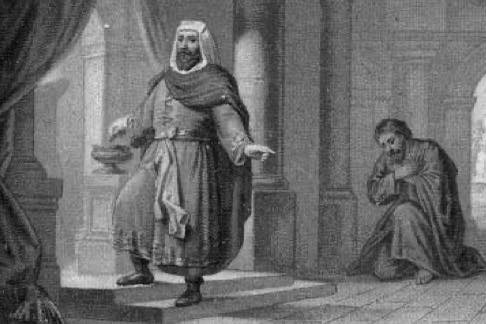
The gospel presents two parables on prayer. The first emphasizes perseverance; the second highlights the inner attitude needed for prayer, exemplified by a childlike spirit. Self-righteousness hampers discipleship and God’s reign (v9; 5:32; 15:7). The Pharisee’s prayer is self-serving, comparing himself to others and boasting about religious deeds like fasting and tithing, representing religious authority. Conversely, the tax collector, seen as a social outcast, admits his sinfulness, seeks forgiveness, and demonstrates humility. This contrast mirrors the story of the sinful woman and Pharisee (7:36-50). The parable underscores God’s justice, where the tax collector’s humility leads to justification, distinguishing it from Pauline ontological justification. God judges the conduct, recognizing the tax collector’s dependence and repentance, while the Pharisee’s self-reliance is lacking. Jesus concludes with a note on God’s reversal of fortunes (v14).
Avoiding self-righteousness is difficult, as conversations often turn self-serving. Self-preservation includes seeking recognition, which never fully vanishes. Jesus repeatedly warns us, emphasizing humility in Luke’s gospel. Those who appear favorably are sinners and outlaws because they understand their need for God and turn to Him. May we all have the stance of the “anawim of Yahweh” who has no one but God to rely on. For “the Lord hears the cry of thr poor”, (Ps 34). Amen.