


13,682 total reads
Easter Sunday
Acts 10:34, 37-43
The reading is part of Peter’s speech, one of many in Acts, focusing on Jesus’ redemptive actions—his death, resurrection, and appearances—which form the core of the gospel. The speech also highlights Jesus’ earthly ministry, death, resurrection, and post-resurrection appearances, linking his earthly work with the divine plan of salvation. Jesus first brought God’s word to the Jews, fulfilling prophecy, with his ministry centered in Galilee and Jerusalem, emphasizing healing and the Holy Spirit. God anointed Jesus for mission at baptism. The apostles’ testimony from baptism to resurrection is crucial in Luke, with post-resurrection appearances reflecting his transcendent, but still bodily, existence, connecting the risen Christ to the earthly Jesus. The concept of Christ as universal judge appears more in Gentile speeches than Jewish ones, which emphasize scriptural proof and Jewish guilt in Jesus’ death. The speeches end with a universal call for all to access God’s forgiveness through faith and repentance.
Col 3:1 – 4
Paul establishes the theological basis (vv1-4) for the moral imperatives listed (vv5-11). Baptism symbolizes union with Christ’s death and resurrection (2:12). This new life, centered on eternal realities, arises from this union. Christ seated (v1), fulfilling messianic prophecy from Ps. 110:1, ascends as the earth-centered life is excluded (v2). The new life is hidden now, fully revealed at Christ’s return (vv3f; Rom 6:2-5). During this period, Christians must stay vigilant, as God’s full work is not yet visible; glory remains latent.
John 20:1-9
The gospel describes the empty tomb and Jesus’ appearances, highlighting different gospel traditions that focus on women or disciples. All agree the tomb was empty and Jesus rose. Only John mentions Mary Magdalene alone early on, while the others mention women together. The account may combine Matthew and Luke. Mary assumes body removal from the rolled stone, believing later after Jesus’ appearance. Peter and the beloved disciple rush to the tomb; the beloved, loyal to Jesus, first sees the linen cloths, suggesting the body wasn’t stolen. Their failure to believe initially is linked to scriptural misunderstanding, though the resurrection reinterprets the scriptures, revealing new insights about the Messiah.
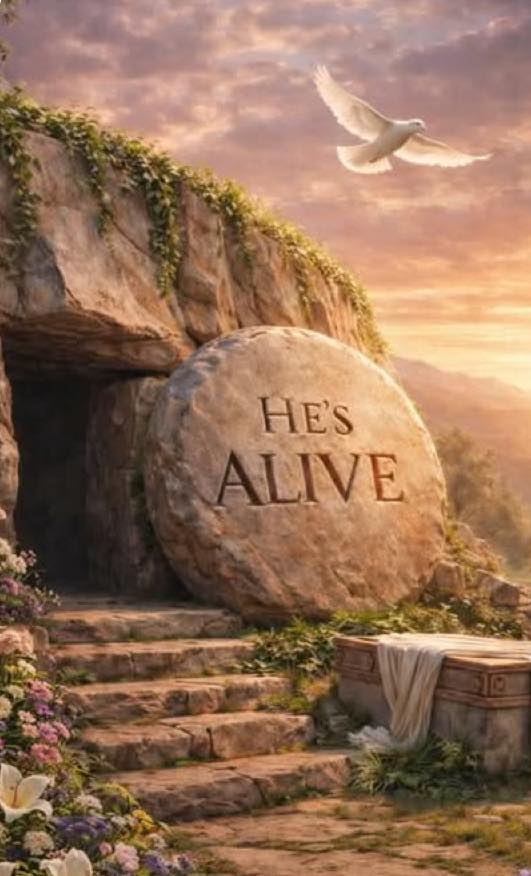
Newness of life- that is the message of Easter, the Church’s principal feast. It comes in the spring of the year when nature begins to burst forth anew, pointing to new life. It ushers us to enter into Christ’s way of thinking and acting, a time of grace given us by the Lord so that we can move beyond a dull or mechanical way of living our faith, and instead open the doors of our hearts, our lives, going out in search of others so as to bring them the light and the joy of our faith in Christ. He invites us not to stop believing and hoping, not to let ourselves be crushed by any stone that entombed but to walk in the light of the risen Christ. The tomb, death, does not have the last say; the resurrection, the new life in Jesus has! Amen!
The mystery of the resurrection of Jesus, according to Pope Francis, “urges us to move forward, to come out of the sense of defeat, to roll away the stone of the tombs in which we often confine our hope, to look with confidence to the future, because Christ is risen and has changed the direction of history…Jesus gives life even when it seems that all hope has gone…Like the stone sealing shut his tomb there are moments when life seems to be a sealed tomb: everything is dark around us, and we see only sorrow and despair. The tomb could be a tomb of pessimism, of bad memories, of rancor animosity, antagonism, antipathy, bad blood, bitterness, enmity, gall, grudge, hostility, and most of all hopelessness”, (P. Francis Eater Message 2023).