

21st Sunday C
Isa 66:18-21
This concludes the prophecy by inviting all nations to worship Yahweh in Jerusalem. “My glory” signifies God’s presence in the temple, and some Gentiles are called to spread this message to distant lands. This emphasizes that conversion is often initiated by God rather than Jewish efforts. Gentiles and diaspora Jews approach Jerusalem in a ceremonial procession, while the native population makes offerings. The mention of some Gentiles serving as priests and Levites contrasts with contemporary Judaism’s restrictions on Gentile contact.
Heb 12:5-7, 11-13
The reading highlights that suffering can be a test that strengthens faith rather than just a punishment for sin. Christians are encouraged to persevere through trials, using Christ as a model. God’s discipline is a sign of love, leading to joy and an upright spirit. Just as a recovering person must walk on level ground, those disciplined should avoid sin to progress virtuously.
Lk 13:22-30
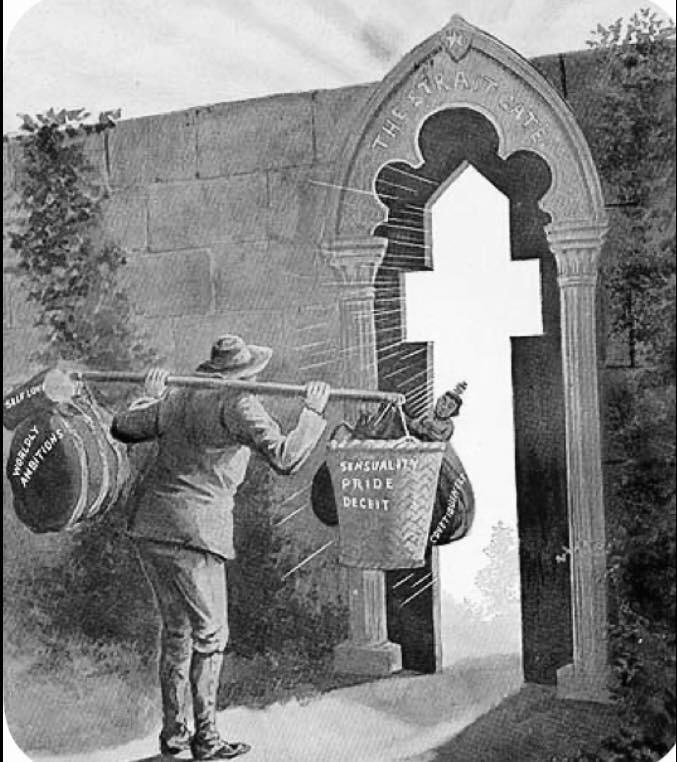
Jesus, on his way to Jerusalem, teaches about rejection and acceptance of his message using two main metaphors: the narrow gate (v24) symbolizes the qualifications for salvation, while the locked door (v25) reflects the consequences of delay and indifference. These ideas resonate with his Jewish audience, who were struggling with his claims.
The second parable (vv25-27) highlights that merely being associated with Jesus does not guarantee salvation; those who hesitate will face exclusion. The sorrow of rejected Jews will grow as Gentiles take precedence in the kingdom (vv28f, v30). While focused on Jew-Gentile dynamics, this message also warns early Christians of the need for vigilance and repentance (13:1-8; 12:35-40), stressing that laxity can prevent anyone, including new believers, from entering through the narrow gate.
(from s1S#99 Strive):
In today’s gospel (Lk 13:22-30), Jesus was asked about salvation, prompting a response concerning entry into the kingdom. He highlights the need to strive, using the term ἀγωνίζομαι (agōnizomai), which implies significant effort, particularly regarding salvation (cf 1 Tim 6:12; 2 Tim 4:7; John 18:36). Jesus emphasizes that the path to salvation is narrow, contrasting it with a wide entrance.
He warns against procrastination, stressing urgency in striving for the kingdom, as the narrow door is ultimately opened by the master (v25). Salvation is reserved for those whom He truly knows (vv26, 27), indicating a deep relationship rather than mere affiliation.
While some sects claim exclusive salvation, we believe in the universality of Jesus’ redemption, as envisioned by Isaiah (66:18-21). We must strive diligently and recognize our sufferings as divine discipline, akin to a father’s love (Heb 12:5f). True Christian discipleship requires effort, self-giving, service to others, and living the life of Jesus. May we all strive to live it. Amen!