Rev. Fr. Jerico Habunal
Monday, October 26, 2026 7:15 am
11,192 total reads
Gospel Reading for October 26, 2026 – Luke 13: 10-17
LEGALISTIC
Jesus was teaching in a synagogue on the sabbath. And a woman was there who for eighteen years had been crippled by a spirit; she was bent over, completely incapable of standing erect. When Jesus saw her, he called to her and said, “Woman, you are set free of your infirmity.” He laid his hands on her, and she at once stood up straight and glorified God. But the leader of the synagogue, indignant that Jesus had cured on the sabbath, said to the crowd in reply, “There are six days when work should be done. Come on those days to be cured, not on the sabbath day.” The Lord said to him in reply, “Hypocrites! Does not each one of you on the sabbath untie his ox or his ass from the manger and lead it out for watering. This daughter of Abraham, whom Satan has bound for eighteen years now, ought she not to have been set free on the sabbath day from this bondage?” When he said this, all his adversaries were humiliated; and the whole crowd rejoiced at all the splendid deeds done by him.
————
How absurd it is to think that healing people is work that is prohibited on the Sabbath! Imagine if, these days, doctors were not allowed to treat patients on Sundays. How many lives would be lost? Surely, God would not want the lives he has given to be lost.
The Sabbath Day, the Day of the Lord, which Christians now celebrate on Sunday, is a day of REJOICING and PRAISING God for all the wonderful things he has done for us during the past week. How can we rejoice and praise God when we know that there are people around us who are in need of his healing grace?
The Laws of God are all based on LOVE, and love can never be LEGALISTIC. Like every other day of the week, the Lord’s Day is not exempt from acts of love and compassion. Just as God is full of mercy and compassion, we, who are made in his image and likeness, are expected to be merciful and compassionate as well.
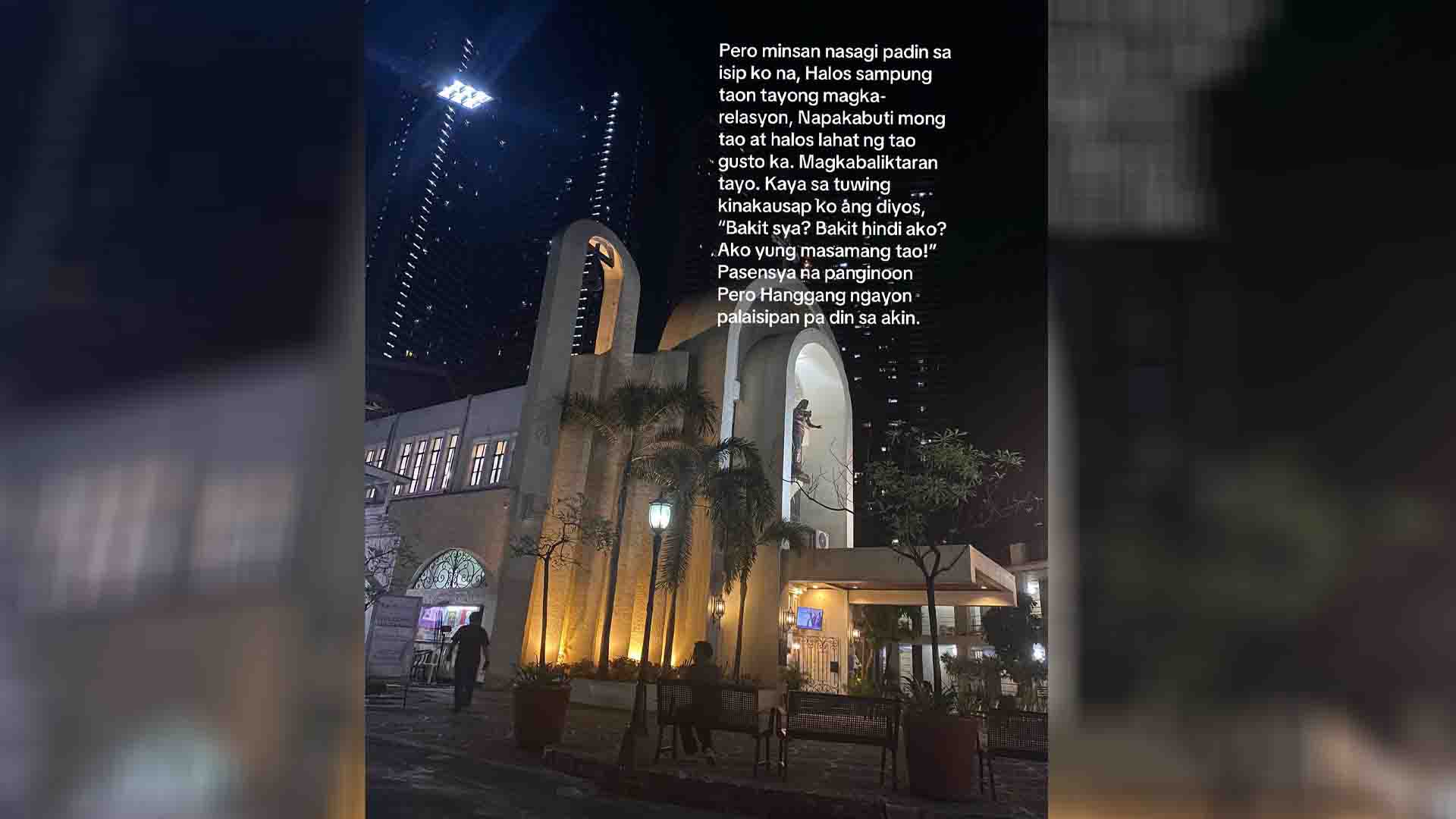
Isang tula tungkol sa pag-ibig, pagkawala, at pananampalataya
Bakit nga ba, Panginoon,
sa dami ng taong maaari naming makilala,
may mga pusong sa sandaling dumating sa aming buhay
ay nagiging tahanan,
ngunit hindi pala maaaring manatili
hanggang sa huling pahina?
Bakit ang taong nagturo sa aming magmahal,
ang taong yumakap sa aming mga kahinaan,
ang taong tumingin sa amin nang may paniniwala
kahit ang sarili namin ay hindi na makita ang aming halaga,
ay siya pang taong kailangan naming matutuhang pakawalan?
Ang daya naman yata ng buhay, Panginoon.
May mga taong dumarating
nang hindi natin hinihiling,
ngunit sila pala ang sagot
sa mga panalanging hindi natin masambit.
May mga taong nagsisimula bilang kapitbahay,
nagiging kaklase,
hanggang sa maging kasintahang
kasama nating mangarap sa hinaharap.
At bago natin mamalayan,
sila na pala ang tahanang
ayaw na nating iwanan.
Gaya nina Romeo at Keyne.
Mahigit siyam na taong pag-ibig,
mga pangarap na unti-unting binuo,
mga alaalang naging saksi
sa dalawang pusong piniling manatili.
Sa mundong minsang nagparamdam kay Romeo
na wala siyang halaga,
dumating si Keyne upang ipaalala
na hindi kailangang maging dakila
upang maging karapat-dapat mahalin.
Minsan, sapat nang may isang taong magsabi: “Narito ako. Nakikita kita. Mahalaga ka.”
At sa payak na mga salitang iyon,
may pusong muling natutong mabuhay.
Ngunit bakit, Panginoon?
Bakit may mga kuwentong
habang tumatagal ay lalong gumaganda,
ngunit sa gitna ng kanilang pamumulaklak
ay biglang tinatapos ng kamatayan?
Bakit ang mga pangarap na sabay na binuo
ay kailangang ipagpatuloy ng isang tao na lamang?
Bakit may mga pangakong
hindi naman kusang binitiwan,
ngunit hindi na rin kayang tuparin
dahil ang isa ay nauna nang lumisan?
Noong 2021,
may isang pusong kailangang matutong mamuhay
sa mundong wala na ang isa pang tibok
na dati nitong tinatawag na tahanan.
At marahil,
walang salitang sapat upang ilarawan
ang katahimikang iniwan ng isang taong
dating bahagi ng bawat bukas.
Sapagkat ang pagluluksa
ay hindi lamang pag-iyak sa mga nawala.
Ito rin ay ang biglang paglingon
dahil may nais kang ibalita sa kaniya,
ang pagngiti sa isang alaala
bago muling masaktan,
ang paghahanap sa isang tinig
sa gitna ng katahimikan.
Ito ang pagpapatuloy ng buhay
habang may bahagi ng puso
na nananatiling nakaupo
sa tabi ng isang bakanteng upuan.
At dito natin nauunawaan,
na ang paghilom ay hindi palaging paglimot.
Minsan, ang paghilom
ay ang matutong ngumiti nang hindi nagkakasala,
ang muling mangarap nang hindi itinatatwa ang nakaraan,
ang tanggapin na maaari kang magpatuloy
nang hindi kailangang burahin
ang taong minsang naging buong mundo mo.
Sapagkat hindi naman itinuturo ng Simbahan
na kailangang kalimutan ang mga yumao
upang magpatuloy sa pananampalataya.
Itinuturo nitong ang kamatayan
ay hindi ang huling salita.
Sa paanan ng krus,
nakita rin ni Maria ang kaniyang Anak na nagdurusa.
At sa libingan ni Lazaro,
lumuha rin si Hesus.
Kaya sino tayo upang ikahiya ang pag-iyak?
Sino tayo upang sabihing kulang ang pananampalataya
ng isang taong hindi pa rin makaahon
sa bigat ng kaniyang pangungulila?
Maging ang Panginoon ay lumuha.
Sapagkat ang tunay na pag-ibig
ay hindi nagiging manhid sa pagkawala.
At ang pananampalataya
ay hindi nangangahulugang hindi na tayo masasaktan.
Ang pananampalataya
ay ang pagkapit sa Diyos
kahit wala tayong mahanap na sagot,
kahit ang panalangin ay nauuwi sa mga luha,
kahit ang tanging nasasambit natin
ay ang paulit-ulit na tanong na:
“Panginoon, bakit siya?”
At marahil,
hindi lahat ng bakit
ay masasagot natin habang tayo’y nabubuhay.
Hindi natin laging mauunawaan
kung bakit may mga buhay na maagang nagtatapos,
kung bakit may mga pag-ibig na napuputol
sa panahong marami pa sanang maaaring mangyari.
Ngunit sa gitna ng mga tanong,
may isang katotohanang hindi dapat mawala:
Ang halaga ng isang buhay
ay hindi nasusukat sa haba nito,
kundi sa pag-ibig na naibahagi nito.
At kung may isang pusong natutong maniwala sa sarili
dahil minahal siya ng isa pang puso,
kung may isang taong muling natutong mangarap
dahil may naniwala sa kaniya,
kung may isang buhay na naging mas makabuluhan
dahil sa presensiya ng isang minamahal—
masasabi bang walang saysay ang lahat?
Hindi.
Sapagkat may mga taong
hindi man nanatili hanggang sa ating pagtanda,
ay may iniwang kabutihang
magpapatuloy sa ating pagkatao.
May mga pag-ibig na hindi na maipagpapatuloy
sa paraang dati nating pinangarap,
ngunit maaari pa ring maging dahilan
upang tayo’y maging mas mabuting tao.
At marahil, Romeo,
sa paglingon mo sa mga taon
na kasama mo si Keyne,
unti-unti mong makikita
na hindi lamang siya bahagi ng iyong nakaraan.
Bahagi rin siya ng taong ikaw ay naging.
Ngunit sa lahat ng ito,
may isang bagay na hindi natin dapat ipagpalagay:
na nawala si Keyne dahil kailangan kang turuan ng Diyos
ng isang aral tungkol sa pag-ibig.
Hindi natin kailangang tawaging mabuti ang kamatayan
upang makakita ng kabutihang
patuloy na umuusbong sa gitna ng dalamhati.
Hindi kailangang sabihing ginusto ng Diyos ang iyong sakit
upang maniwalang hindi ka Niya iniiwan
habang dinadala mo ito.
Sapagkat ang Diyos na ating pinananaligan
ay hindi lamang Diyos ng mga sagot.
Siya rin ang Diyos na sumasama
sa mga taong walang mahanap na paliwanag,
ang Diyos na nakikinig sa mga panalanging
hindi na kayang buuin ng mga labi,
ang Diyos na nananatili
kahit ang puso ay pagod nang umasa.
At kung isang araw ay muli kang ngumiti,
hindi nangangahulugang nakalimutan mo na siya.
Kung muli kang umibig,
hindi nangangahulugang ipinagkanulo mo ang nakaraan.
Kung dumating ang araw na kaya mo nang alalahanin siya
nang mas nangingibabaw ang pasasalamat kaysa sakit,
hindi nangangahulugang lumiit ang pagmamahal mo.
Nangangahulugan lamang iyon
na unti-unti mong natututuhang dalhin
ang isang pag-ibig na hindi na kayang yakapin,
ngunit hindi kailangang itatwa.
At sa huling sandali ng ating mga tanong,
marahil ay hindi natin kailangang malaman
kung bakit naging maikli ang kanilang panahon.
Marahil, ang maaari lamang nating gawin
ay ipagkatiwala sa Diyos
ang mga bagay na hindi natin kayang baguhin.
Ipanalangin ang yumao.
Alagaan ang mga alaalang nagturo sa atin ng kabutihan.
At ipagpatuloy ang buhay
nang may pusong marunong magmahal.
Sapagkat ang pag-asa ng Kristiyano
ay hindi lamang ang maniwalang may dahilan ang bawat sakit.
Ito ay ang maniwalang
kahit ang kamatayan ay hindi makapaghihiwalay
sa pag-ibig ng Diyos
sa mga taong kumakapit sa Kaniya.
At kung sakaling dumating ang araw
na magkita silang muli sa piling ng Panginoon,
iyon ay hindi dahil kaya nating ipaliwanag
ang lahat ng nangyari sa mundong ito.
Kundi dahil nananalig tayo
sa pangakong mas dakila sa ating pangungulila:
na kay Kristo,
ang kamatayan ay hindi wakas,
at ang pag-ibig ay hindi nauuwi
sa isang libingang walang pag-asa.
Kaya ngayon,
kung tatanungin kung bakit siya dumating
at kung bakit kinailangang lumisan,
marahil ay mananatiling tahimik
ang langit sa ating mga katanungan.
Ngunit sa bawat kabutihang iniwan niya,
sa bawat pusong natuto niyang mahalin,
sa bawat buhay na nabago ng kaniyang presensiya,
may isang bagay na hindi na maikakaila:
May mga taong hindi natin nakasama habambuhay,
ngunit ang pag-ibig na itinanim nila
ay patuloy na nabubuhay
sa mga pusong kanilang binago.
At marahil, sa pagbabalik-tanaw ni Romeo
sa lahat ng kanilang pinagsamahan,
sa bawat alaala, sa bawat luha, sa bawat pasasalamat,
ang mga salitang ito
ang pinakamalapit na sagot na maibibigay ng puso:
“Keyne, hindi ko man naunawaan
kung bakit kinailangang maging ganito ang ating kuwento,
salamat dahil sa panahong ipinahiram sa atin,
ipinaramdam mong karapat-dapat akong mahalin.”
At sa Diyos, na nakaaalam
ng mga kuwentong hindi natin kayang tapusin,
ipagkakatiwala niya ang natitirang mga pahina.
Dahil ang buhay ay hindi laging patas.
Ang pamamaalam ay hindi laging nauunawaan.
At ang pag-ibig ay hindi laging nagtatapos
sa paraang ating ipinagdarasal.
Ngunit hangga’t may pananampalataya,
hangga’t may pag-asang nakaugat kay Kristo,
at hangga’t may pag-ibig na patuloy na nagbubunga ng kabutihan—
may dahilan pa upang magpatuloy.
Hindi dahil hindi na masakit.
Kundi dahil kahit masakit,
may pag-ibig pang dapat dalhin,
may buhay pang dapat yakapin,
at may Diyos na hindi tayo iniiwan
kahit ang puso natin
ay hindi pa handang magpaalam.
H.E. Pablo Virgilio Cardinal David, D.D.
Sunday, October 25, 2026 8:22 pm
12,290 total reads
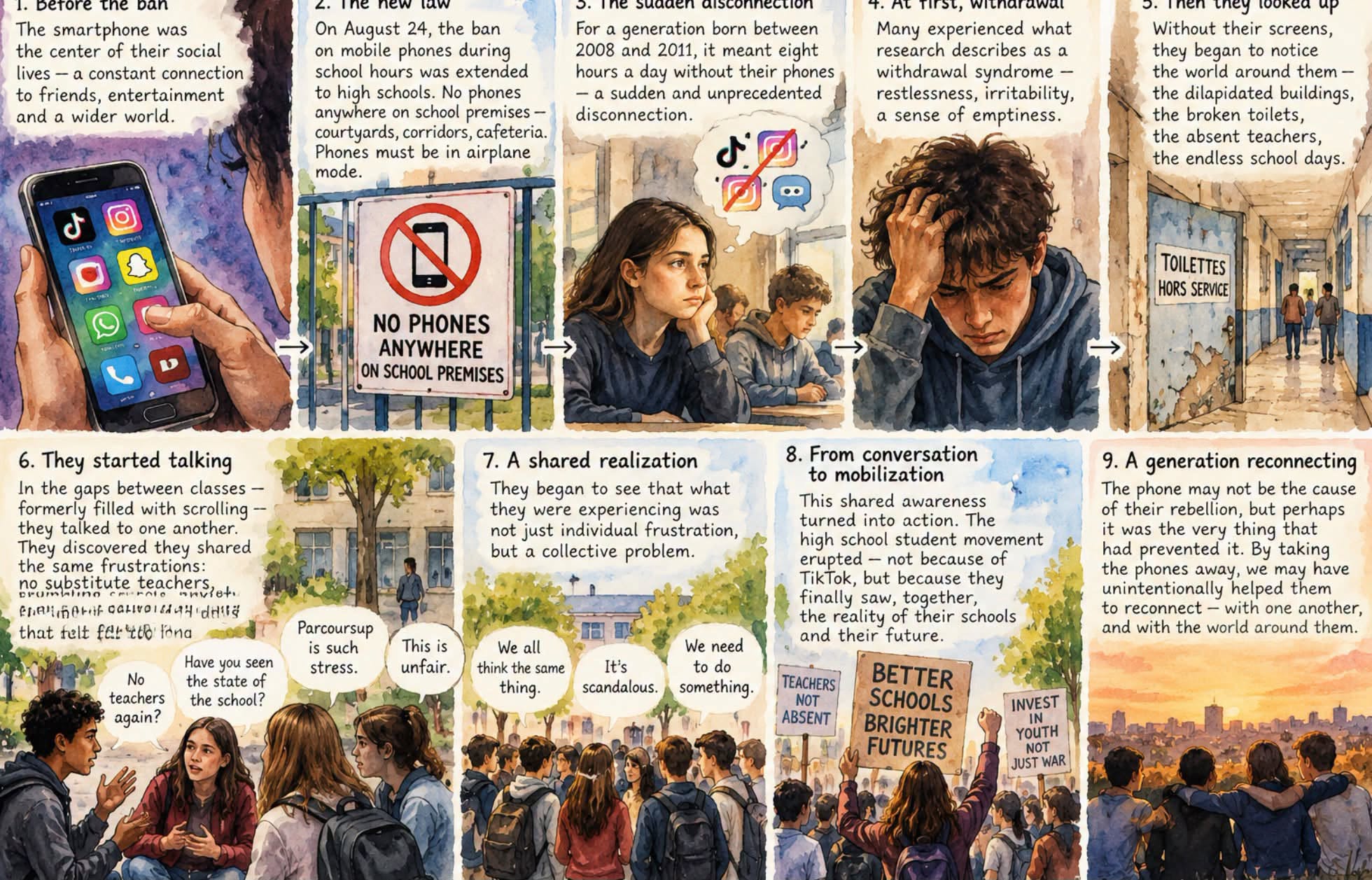
I’ve just watched a video in French. A lady high school teacher proposed a hypothesis about the connection of the total school ban on cellphones to the high school students’ uprising in France. She made a lot of sense to me. She said:
“We have forgotten to discuss one element in this high school student mobilization—an element that is central to the lives of teenagers, and indeed to everyone’s lives: the mobile phone.”
“The law of August 24 extended the ban on mobile phones during school hours to high schools. It is no longer simply a matter of ‘no phones during class.’ It has become ‘no phones anywhere on school premises’—not in the courtyard, not in the corridors, not in the cafeteria. Phones must be switched to airplane mode.”
“And then, just one month later, this high school student movement erupted, denouncing the shortage of substitute teachers, dilapidated school buildings, anxiety over Parcoursup—the university admissions system—and excessively long school days.
Coincidence? I don’t think so.”
“Now, I am not saying that mobile phones are the cause of the movement. And I am certainly not suggesting that students are setting garbage bins on fire because someone confiscated their TikTok. In fact, I am suggesting quite the opposite.”
“My hypothesis is that the mobile phone ban was the invisible trigger of this anger. What do I mean?”
“We know from scientific research what happens when adolescents who are heavily dependent on their smartphones are suddenly deprived of them. It resembles a withdrawal syndrome. And you don’t need to be a neurologist to understand this. Just observe what happens at home when you confiscate your teenager’s phone.”
“What fascinates me is the coincidence. We have just taken away from an entire generation the object around which they have organized practically their entire social lives.”
“Those born between 2008 and 2011 are the first generation to have been suddenly subjected to eight hours of disconnection every day—something that we adults would probably be quite incapable of imposing on ourselves.”
“And what did they do? They raised their heads. And they saw the condition of their schools. They noticed the filthy toilets, the absent teachers, the endless school days. The gaps in their class schedules suddenly became eternities without screens.”
“We wanted them to put down their phones. And they did. They started talking to one another between classes. And they discovered that they all agreed: what was happening around them was scandalous.”
“And this is precisely what a teacher from Seine-Saint-Denis describes this morning in an article published on the website Le Grand Continent:
“When my students lifted their eyes from their phones, they became noisy again. And they discovered that we had prepared an unbearable world for them.”
“And what if the mobile phone was not the instrument of their rebellion, but rather the very thing that had prevented that rebellion from happening earlier? That is my hypothesis. The high school students taking to the streets represent a generation that is beginning to reconnect with itself.”
163,682 total reads Kapanalig, magaling itong si Department of Interior and Local Government secretary Jonvic Remulla. Sa press release lalu na sa pagsasalita sa media, magaling
249,051 total reads Kapanalig, taon-taon kapag isinumite ng Office of the President sa pamamagitan ng Department of Budget and Management sa Kongreso ang panukalang National Expenditure
295,791 total reads Mga Kapanalig, nang tanungin ang kanyang opinyon tungkol sa umano’y pagtanggap ng pera mula sa China at Hong Kong ng isang kompanyang iniuugnay
439,523 total reads Mga Kapanalig, hindi nakatutuwang pagtawanan ang mga taong may kapansanan o persons with disability. Siguradong narinig na ninyo ang tungkol sa episode ng
431,429 total reads Paggunita sa Mahal na Birheng Maria tuwing Sabado Tagapagdiwang: Rev. Fr. Jerome Secillano [fb_plugin video href=https://www.facebook.com/100069518821428/videos/640919728176053] [give_form id=”72114″ show_title=”true” show_goal=”false” show_content=”none” display_style=”onpage”]
431,374 total reads Paggunita sa Mahal na Birheng Maria tuwing Sabado Tagapagdiwang: Rev. Fr. Victor Sadaya, CMF [fb_plugin video href=https://www.facebook.com/DZRV846/videos/307434575241976] [give_form id=”72114″ show_title=”true” show_goal=”false” show_content=”none” display_style=”onpage”]
431,357 total reads Paggunita sa Mahal na Birheng Maria tuwing Sabado Tagapagdiwang: Rev. Fr. Joel DL. Rescober, CM [fb_plugin video href=https://www.facebook.com/DZRV846/videos/358163723302254] [give_form id=”72114″ show_title=”true” show_goal=”false” show_content=”none”
431,348 total reads Paggunita sa Mahal na Birheng Maria ng Fatima Tagapagdiwang: Rev. Fr. Joel Camaya, SDB [fb_plugin video href=https://www.facebook.com/DZRV846/videos/660940865819605] [give_form id=”72114″ show_title=”true” show_goal=”false” show_content=”none” display_style=”onpage”]