
7,188 total reads
26th Sunday A
Ez 18:25-28
The prophet emphasizes individual responsibility over collective blame, marking a shift from the traditional idea that children bear their parents’ sins. During exile, guilt shifted from family to personal accountability. The chapter discusses the invalidity of the proverb about parents eating green grapes and children gritting their teeth, highlighting that virtuous and sinful behaviors are individual. It teaches that a person who turns to evil will face punishment, while one who repents and lives virtuously will receive God’s favor. God’s justice is fair; death signifies separation from God, but life and restoration are signs of His grace. Sins of ancestors are not inherited, and personal virtue or vice depends on individual choice and can change.
Phil 2:1-11
Paul uses a Christological hymn to encourage humility and unity among Christians, rooted in being ‘in Christ’ and fellowship in the Holy Spirit. The hymn depicts Christ’s descent from divine form, his self-emptying, and humility in becoming human and suffering death on the cross. God’s exaltation of Christ, giving him a new name and authority above all creation, signifies his divine status. This example of humility inspires followers to adopt a similar mindset.
Mt 21:28-32
Today’s Gospel is another parable found only in Matthew (21:28-32). It is one of three consecutive stories (21:28 – 22:14) that form an extended commentary on the earlier cited obduracy and duplicity of the Jewish leaders who approached him while he taught in the Temple and asked for his credentials: “By what authority are you doing these things, and who gave you this authority?” “We, the legitimate Temple authorities, didn’t commission or license you.” (21:23 – 27). It is to them that Jesus’ discourse is directed.
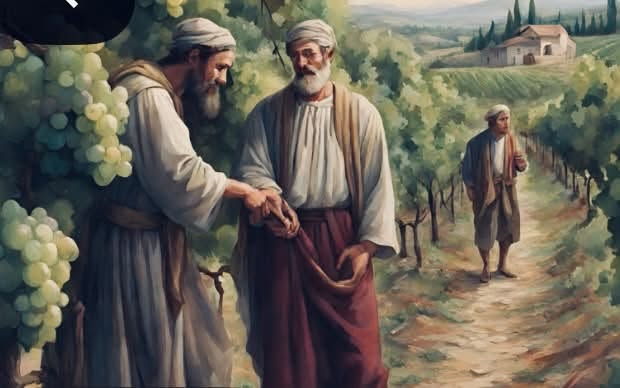
The vineyard as a metaphor for God’s reign is frequent (20:1; 21:33; Is 5:1-7; Jer 2:10). The two sons, as the parable makes clear, represent two segments of Judaism. The first son (v28) stands for those considered sinners within Israel: the tax collectors who cheated and took money from Jews for an alien power; and the prostitutes who committed sexual sins and sold their services often to Roman soldiers. But despite their initial negative response, ultimately they answer favorably John’s, and consequently, the message of Jesus. The deponent verb “metamelomai” (μεταμελομαι, vv29, 32) means “to change what one has at heart or one’s mind, to think better of something, to regret or be sorry”. The word sounds and is related to the word for repentance, “metanoia”.
The second son (v30) represents Jesus’ audience, the religious leaders of the Jews, the recipients of the revelation of God to his people. It is a message to which they and their forefathers had initially given their assent. But when God’s plan is brought to its fulfillment, first of all, in the preaching of John the Baptist, they refuse acceptance. In their response to Jesus’ question of which son did what the father wanted (v31), they accuse themselves. The final verse applies the parable to the chief priests and elders (v32, cf21:23). They are contrasted with despicable members of Jewish society and come out worse in the comparison. The paradox was almost unthinkable by Jewish standards. The teachers of Israel are self-excluded while the outcasts enter God’s reign.
Earlier in the gospel of Matthew, we hear Jesus saying: “Not everyone who says to me, ‘Lord, Lord’, will enter the kingdom of heaven, but only the one who does the will of my Father in heaven (7:21). Our verbal declaration is not enough. For obedience to God is only evident in action, not confession. But if at times we do say no, God is so patient and merciful, waiting for us “ to change our mind/heart”, to repent and become his truly obedient children. Amen.