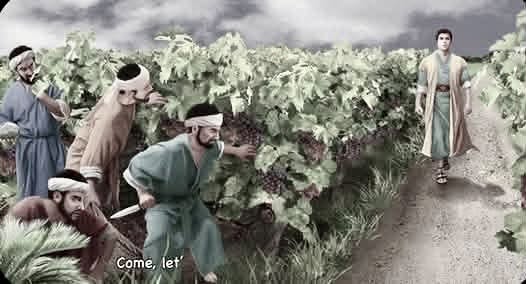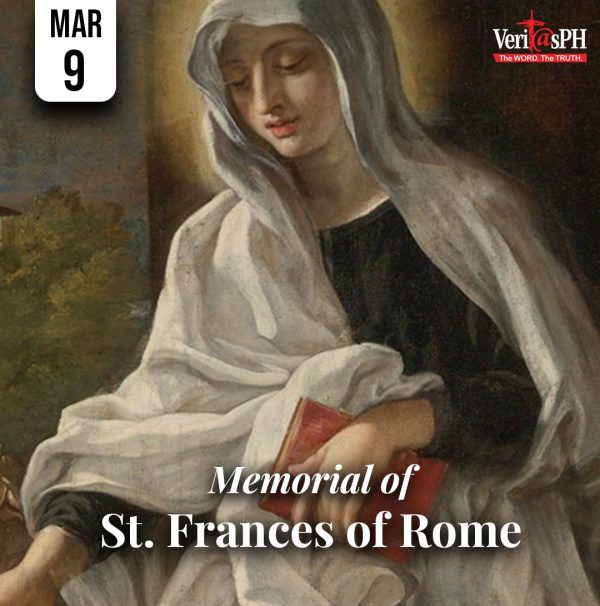
In the year 596, some 40 monks set out from Rome to evangelize the Anglo-Saxons in England. Leading the group was Augustine, the prior of their monastery. Hardly had he and his men reached Gaul when they heard stories of the ferocity of the Anglo-Saxons and of the treacherous waters of the English Channel. Augustine returned to Rome and to Gregory the Greatโthe pope who had sent themโonly to be assured by him that their fears were groundless.
Laboring patiently, Augustine wisely heeded the missionary principlesโquite enlightened for the timesโsuggested by Pope Gregory: purify rather than destroy pagan temples and customs; let pagan rites and festivals be transformed into Christian feasts; retain local customs as far as possible. The limited success Augustine achieved in England before his death in 605, a short eight years after his arrival, would eventually bear fruit long after in the conversion of England. Augustine of Canterbury can truly be called the โApostle of England.โ
H.E. Pablo Virgilio Cardinal David, D.D.
Saturday, August 22, 2026 4:14 pm
211 total reads
Homily for the Last Day of the Novena Mass of Mary the Queen Parish, Friday, 21 August 2026
Ezekiel 37:1โ14; Matthew 22:34โ40, Votive Mass of the Blessed Virgin Mary
Why is Jesus giving two answers to one question in our Gospel reading? He could have stopped after saying, โYou shall love the Lord your God with all your heart, with all your soul, and with all your mind.โ That answer would have been enough. After all, the question was simply, โWhich is the greatest of all the commandments?โ
The standard answer was the so-called Great Shema. It comes from Deuteronomy 6. Up until now, every young Jewish male who reaches the age of thirteen and celebrates his Bar Mitzvah is expected to know this Great Commandment by heart.
But Jesus added an unsolicited second answer. And he even qualified it as being of the same value as the first: โThe second is like it.โ Meaning, not only should it be treated as being of the same value; it should never be separated from the first: โYou shall love your neighbor as yourself.โ That comes from Leviticus 19:18.
The late Jaime Cardinal Sin used to refer to these โtwo lovesโ as the two lines that make up the Cross of Jesus Christ: the vertical, our love of God, and the horizontal, our love of neighbor. We cannot have the redeeming Cross of Christ without one or the other.
But take note of a further qualification in the so-called second commandment: AS YOURSELF. It does not stop at โYou shall love your neighbor.โ It says, โYou shall love your neighbor as yourself.โ In Tagalog, perhaps we could say, โIturing mo siyang parang hindi na iba sa iyo.โ Treat the other as your ownโyour own brother, sister, mother, father, even as your own self.
One problem with English is that we use the same word โloveโ even to express our fondness for objects. โI love pasta!โ โI love that shirt!โ Sa Tagalog hindi natin sinasabi, โMahal ko ang pasta.โ Baka โMahilig ako sa pasta.โ Alam kasi natin na hindi naman tayo kayang mahalin pabalik ng pasta o ng T-shirt. To love a fellow human being is never to love an object, but a fellow subject, who may or may not love us back.
And remember where Jesus got that second commandment: Leviticus 19:18. It says, โYou shall love your neighbor as yourself. I am the Lord.โ Why should I love my neighbor as myself? Because, God says, โI am the Lord.โ
Put it negatively and perhaps the implication becomes clearer: If you do not love your neighbor as yourself, then I am not really your Lord. You cannot separate your love for God from your love of neighbor. You cannot disconnect your faith in God from respect for human dignity, because the invisible God has made himself visible in the human being created in his image and likeness.
That is why St. John would later say, โI am a liar if I say I love the God whom I cannot see while I hate the brother or sister whom I can see.โ
And this brings us closer to the theme of your fiesta: โLaboring with the Poor and for the Poor.โ
There is a way of working for the poor that can still treat them merely as objects of charity, as beneficiaries of our generosity. We can give something to the poor and still fail to treat them with dignity. That is precisely one of the most serious problems of Philippine politics: the politics of patronage.
When politicians exploit peopleโs poverty and helplessness by using public funds to patronize them and expect political loyalty in return, the poor remain dependent on their patrons. Parang ninakawan ka ng sarili mong pera, tapos bibigyan ka ng kaunting sukli, at ngayon may utang na loob ka pa. How can we call that charity if caritas means unconditional love?
Jesus did not say, โLove your neighbor as your beneficiary.โ He did not say, โLove your neighbor as the recipient of your ayuda.โ He said, โLove your neighbor AS YOURSELF.โ
I remember Cardinal Chito Tagle once telling the story of a little girl selling sampaguita. He was riding in a car with the sponsor of a Mass when they stopped at a red light. A little girl approached and tapped on the window. Perhaps conscious that he had to be charitable because there was a bishop beside him, the man opened the window and offered her money without taking the sampaguita.
To his surprise, the girl refused. She said, โSir, hindi po ako nagpapalimos. Nagbebenta po ako ng sampaguita.โ She returned the money and walked away.
She was trying to make a living. She did not want to be treated as a beggar. In effect she was saying, โSalamat po sa pera, pero hindi awa ang gusto ko kundi paggalang.โ
And sometimes people react, โIkaw na nga ang tinutulungan, nagmamalaki ka pa. Ayaw mo, di huwag.โ But that attitude is precisely the opposite of loving your neighbor as yourself.
Many years ago, our PPC at San Roque Cathedral had a routine Christmas gift-giving project for indigent families. One day I saw a long line snaking from the cathedral all the way toward Mabini Street. I asked what was going on. Somebody said, โNamimigay po tayo ng ayuda.โ
I said, โAyuda? Galing sa gobyerno?โ โHindi po, galing sa parishioners.โ
I said, โThen donโt call it ayuda, and donโt give it the way politicians often do.โ Welcome them inside the church. Let them sit comfortably. Read the Gospel about the multiplication of the loaves and say something about the miracle of generosity. Then let our volunteers personally hand them the Christmas gifts. Perhaps include a little rosary and prayer card saying: โHindi po ito ayuda ng gobyerno. Kaloob po ito ng inyong mga kapatid sa parokya. Pamasko. Pakisama na lamang po sila sa inyong panalangin.โ
The difference may look small, but it has to do with dignity.
Perhaps we should ask why so much of our national budget continues to be spent on patronage-based rather than genuinely program-based projects. Why not invest more decisively in programs that truly give people a way out of poverty: good subsidized education, accessible healthcare, decent housing, sustainable livelihoods and jobs that allow people to support their families with dignity?
This is why our social action work must go beyond dole-outs and relief work. Of course, when people are hungry, we feed them. When disaster strikes, we help them. But we cannot stop there. Even our language should change. Instead of simply calling people disaster โvictims,โ we speak of them as survivors whom we accompany. The goal is not to keep people permanently in dependency as victims but to restore their capacity to stand on their own feet.
There are higher forms of charity: community development, transforming unjust social structures, putting an end to patronage politics, and promoting good politics for the common good. Pope Francis once said that although politics is often denigrated, it remains โa lofty vocation and one of the highest forms of charityโ when it truly seeks the common good.
Sometimes the more charitable thing is not merely to feed a hungry family today, but to ask why that family has remained hungry for generations, and what must change so that their children will not inherit the same poverty.
And this brings us beautifully to our first reading: Ezekielโs famous vision of the valley of dry bones.
This is not originally about the literal resurrection of dead bodies. The dry bones represent the people of Israel who had lost everything in the exileโtheir Temple, their country, their freedom and, finally, their hope. They said, โOur bones are dried up, our hope is lost.โ
And God asks Ezekiel: โSon of man, can these bones live?โ
That is also the question we might ask when we look at communities trapped in generations of poverty. Can the poor in our country still rise? Can families in our slum communities escape the cycle of poverty? Can OFW parents who endure years of separation from their children help create a future in which their children will not have to leave home simply to survive? Can we still save our country from corruption and from the resentment that makes us put our hopes in violent leaders who have little respect for the rule of law?
And Godโs answer is yes.
The bones come together. The breath of God enters them. And then comes the most beautiful detail: they stand on their feet.
For me, that is a wonderful image of what it means to labor with and for the poor. The goal is not simply to put flesh and bones together. It is to allow Godโs breath to breathe new life and new hope into our people, so that they can stand again on their own feet and participate in changing their own destiny.
When a poor family can send their children to a good school; when those children are given genuine opportunities; when those children are protected from violent video games, from cyberbullying and online gambling, when they can find decent work and build a future without being forced to leave their families and country simply to surviveโthen the dry bones begin to live again. People recover hope and experience what it means to live with dignity.
And perhaps this is where our Blessed Mother, whom we honor in this Votive Mass, points us back to her Son. In the Magnificat, Mary praises a God who does not merely pity the lowly. He lifts up the lowly. โHe has cast down the mighty from their thrones and lifted up the lowly; he has filled the hungry with good things.โ
That is more than charity. That is the Gospel transforming the way we relate to one another.
And it all begins with the simple but radical commandment of Jesus: โLove your neighbor as yourself.โ Not beneath yourself. Not as your beneficiary. Not as somebody permanently dependent on your generosity. As yourself.
Because the poor are not just people we are called to work for. They are brothers and sisters we are called to work with, and to walk with. And in them, if only we learn to see, we encounter the face of the God whom we say we love.
Rev. Fr. Jerico Habunal
Saturday, August 22, 2026 7:56 am
495 total reads
Gospel Reading for August 22, 2026 – Matthew 23: 1-12
WASTING OUR TIME
Memorial of the Queenship ofthe Blessed Virgin Mary
Jesus spoke to the crowds and to his disciples, saying, โThe scribes and the Pharisees have taken their seat on the chair of Moses. Therefore, do and observe all things whatsoever they tell you, but do not follow their example. For they preach but they do not practice. They tie up heavy burdens hard to carry and lay them on peopleโs shoulders, but they will not lift a finger to move them. All their works are performed to be seen. They widen their phylacteries and lengthen their tassels. They love places of honor at banquets, seats of honor in synagogues, greetings in marketplaces, and the salutation โRabbi.โ As for you, do not be called โRabbi.โ You have but one teacher, and you are all brothers. Call no one on earth your father;
you have but one Father in heaven. Do not be called โMasterโ; you have but one master, the Christ. The greatest among you must be your servant. Whoever exalts himself will be humbled; but whoever humbles himself will be exalted.โ
โโโโ
Sometimes, the messenger of the Good News is not good. Sometimes, we find people preaching the Gospel but not living what they preach. Should that be a reason for us to reject the Good News?
We must always remember that the messenger is not the Good News. The One who is important is the source of the Good NewsโJesus himself.
Many Catholics leave the Church because they find the messenger unworthy. But the truth is, no messenger is completely worthy, wherever we may go. What is most important is that we follow the teachings of Jesus, not the imperfections of those who proclaim them.
If we are like the scribes and Pharisees, intentionally trying to make people believe that we are good when we are not, then we are only WASTING OUR TIME. What do we gain from living a farce? We may be able to convince other people, but we will never be able to convince ourselves that we are truly good. Worse, God sees what is in our hearts and minds. We can never fool him.
Mary, our Queen, teach us to be humble servants of Christ, as you were. Amen.
Rev. Fr. Nicanor Lalog II
Saturday, August 22, 2026 7:05 am
1,800 total reads
Lord My Chef Daily Recipe for Soul by Fr. Nicanor F. Lalog II
Saturday, Twentieth Week in Ordinary Time
Memorial of Queenship of Mary, 22 August 2026
Isaia 9:1-6 ><}}}}*> + ><}}}}*> + ><}}}}*> Luke 1:26-30
Photo by author, St. Paul Spiritual & Renewal Center, Bgy. Tanyawak, Alfonso, Cavite, 18 August 2026.
YES.
Perhaps the most sweetest word we all wish to hear but also the most difficult word for us to say. We want others saying โyesโ to our requests and questions but we are so afraid, so hesitant telling it to others. Very often, we hide our โyesโ in cloudy expressions like maybe, will try, or simply not say it all.
Especially with God.
Every love story of husband and wife, lovers as well as vocation story of any priest and religious all started with that simple word and answer โyesโ.
Ang matamis na โooโ na inaasam ng binata sa kanyang dilag.
And of course, ourย โyes, Lordโโฆ..ย โopo, Panginoon, susunod akoโ!
โCoronation of the Virginโ by Spanish artist Diego Velasquez (1635-1636); from en.eikipedia.org.
We celebrate today the Memorial of Queenship of Mary, a week after the Solemnity of her Assumption into heaven. She too said that most precious sweet word of โyesโ to God when she was asked by the angel to become the Mother of the Savior, Jesus Christ.
Mary said, โBehold, I am the handmaid of the Lord. May it be done to me according to your word.โ Then the angel departed from herย (Luke 1:38).
How amazing that such a very simple word of three letters โ YES โ could be so powerful enough to change oneโs life. Even the world and its history.
And how could such a very short word be so difficult to say, too?!
With every yes in life we hear, it becomes so sweet because we are affirmed. We feel valuable and precious when people say โyesโ to us.
However, we are very cautious in saying โyesโ to others, especially to God and in the name or presence of God because when we say that โyesโ, it becomes our very life.
Every โyesโ becomes a commitment, a vow, a promise to keep.
Photo by author, St. Paul Spiritual & Renewal Center, Bgy. Tanyawak, Alfonso, Cavite, 18 August 2026.
Not only for us priests and religious but everybody, especially husband and wife saying yes on their wedding day; doctors, lawyers and other professionals saying yes to uphold life, justice and freedom; and, children saying yes to obey their parents and teachers.
Everyone has to say a yes in different ways every day everywhere in many occasions and situations. Many times it looks so simple, sometimes it could mean life and death.
Every yes is precious and sweet because it is the beginning of love. And more love, no matter what.
That is why we need to affirm and stand with that yes day in, day out in our lives.
Like Mary, her โyesโ to God did not happen just once but everyday in her life, reaching its highest point at the Cross when her Son Jesus Christ died. She must have had the most painful yet bittersweet yes too when she held Christโs lifeless Body immortalized in Michaelangeloโs La Pieta.
But it was Maryโsย yesย that brought us Christmas and Easter, leading to Pentecost in the birth of our Church, and led her to heaven. That is why, we celebrate her Queenship today, a week after her Assumption. Let us pray to keep our โyesโ to God true and faithful always.
O most Blessed Virgin Mary,
our Mother and Queen,
help us say "yes" like you
to God every day in our lives;
pray for us to remain faithful
and true to our "yes" to him
through our loved ones,
through his flock,
his people entrusted to us;
pray for us,
Mary our Queen
to keep our "yes" to God
simple like yours,
trusting him always
when our "yes"
leads us to Jesus on the Cross
and eventually into his very
presence in heaven with you.
Amen.
Mary sits enthroned in heaven on the right hand of Jesus Christ, who crowns her as โQueen of Heavenโ in this 13th century apse mosaic in the Santa Maria Maggiore, Rome; photo from littleflowermemphis.org
36,023 total reads Kapanalig, sa nakalipas na dalawang lingo sa buwan ng Agosto 206., ating nasaksihan, ating naranasan kung paano naging โwaterworldโ ang maraming bahagi ng
130,251 total reads Mga Kapanalig, isinagawa na noong Biyernes ang kauna-unahang โtruth-telling sessionโ ng Truth Commission tungkol sa madugong war on drugs ng administrasyon ni dating
190,746 total reads Mga Kapanalig, hindi lang korapsyon sa mga flood control projects ang umaalingasaw tuwing tag-ulan. Nangangamoy din ang baho ng bigรณng pagtugon natin sa
204,653 total reads Mga Kapanalig, โpeople over profitโ at โlabor over capitalโ ang ilan sa mga prinsipyong itinataguyod ng mga panlipunang turo ng ating Simbahan kapag
285,258 total reads Kapanalig sa 15 ng impeachment trial ni Vice President Sara Duterte, hindi pa rin nabubutasan o napahina ng depensa ang prosecution theory at