Rev. Fr. Jerico Habunal
Friday, October 16, 2026 10:33 am
13,212 total reads
Gospel Reading for October 16, 2026 – Luke 12: 1-7
MODERN-DAY PHARISEES
At that time: So many people were crowding together that they were trampling one another underfoot. Jesus began to speak, first to his disciples, “Beware of the leaven–that is, the hypocrisy–of the Pharisees. “There is nothing concealed that will not be revealed, nor secret that will not be known. Therefore whatever you have said in the darkness will be heard in the light, and what you have whispered behind closed doors will be proclaimed on the housetops. I tell you, my friends, do not be afraid of those who kill the body but after that can do no more. I shall show you whom to fear. Be afraid of the one who after killing has the power to cast into Gehenna; yes, I tell you, be afraid of that one. Are not five sparrows sold for two small coins? Yet not one of them has escaped the notice of God. Even the hairs of your head have all been counted. Do not be afraid. You are worth more than many sparrows.”
————
Perhaps there are very few people in the world who would not fear murderers or members of groups operating in the underworld or engaged in criminal activities. For Jesus, however, this fear is secondary to the fear of those who can lead us astray—those who have managed to convince others that what has always been morally right is wrong, and what is wrong is now morally right.
Jesus is not merely speaking about the Pharisees. We have MODERN-DAY PHARISEES who manipulate the Word of God to serve their personal interests or promote their advocacies that run counter to the teachings of Jesus and Sacred Scripture.
If we are to be true Christians who wish to enjoy eternal life with God someday, we have to be wary of these people. They are the ones we must avoid because, although they cannot kill us physically, they can kill us spiritually.
Lord Jesus, help us to always seek the truth in Sacred Scripture and in the teachings of Jesus in the New Testament.
Rev. Fr. Nicanor Lalog II
Friday, October 16, 2026 7:19 am
14,759 total reads
Lord My Chef Daily Recipe for Soul by Fr. Nicanor F. Lalog II
Friday, Twenty-Eighth Week in Ordinary Time, Year II, 16 October 2026
Ephesians 1:11-14     ><))))*> + ><))))*> + ><))))*>     Luke 12:1-7
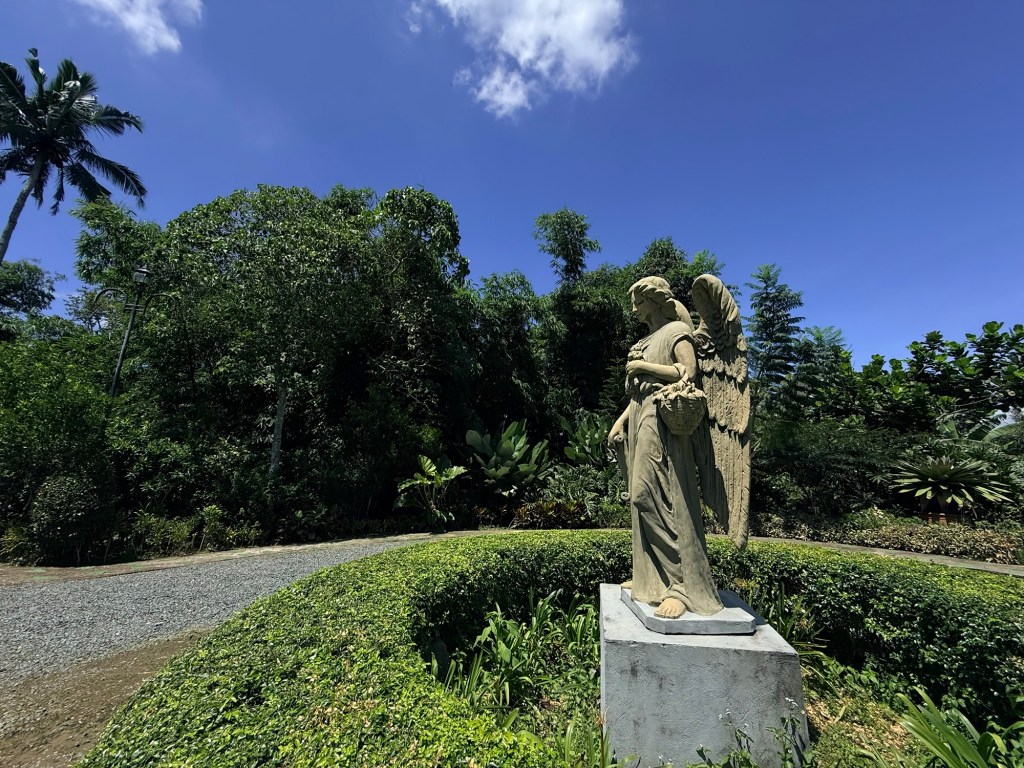
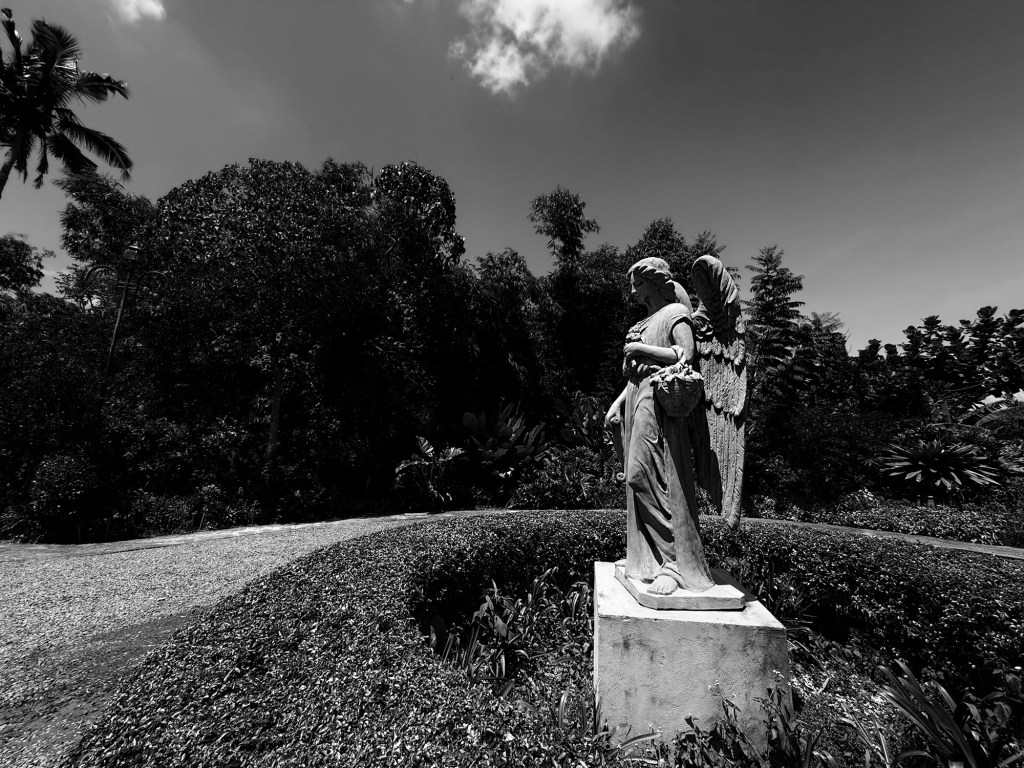
Photo by author, Bella Rosa Gardens, Silang, Cavite, 07 October 2026.
What's happening in the world,
Lord where everyone seems to thrive
in chaos?
Trash talks like cussings,
making fun of other people's
disabilities, smart shaming and
body shaming are so glorified and
imitated especially in social media;
many have no more sense of shame at all,
stretching their rights without any regard
for their responsibilities nor rights of others
that we are like in that gospel scene today:
At that time, so many people were crowding together that they were trampling one another underfoot. Jesus began to speak, first to his disciples, “Beware of the leaven – that is, hypocrisy – of the Pharisees (Luke 12:1).
Photo by author, Bella Rosa Gardens, Silang, Cavite, 07 October 2026.
Are we not like those
people crowding together,
already trampling just to hear you
speak, Jesus?
Give us the wisdom,
awaken us from our glorification of
everything that is crass and low,
giving only emphasis on the body
forgetting about the soul,
its dignity and value
along with virtues:
"I tell you,
 my friends,
do not be afraid of those
who kill the body
but after that can do no more"
(Luke 12:4).
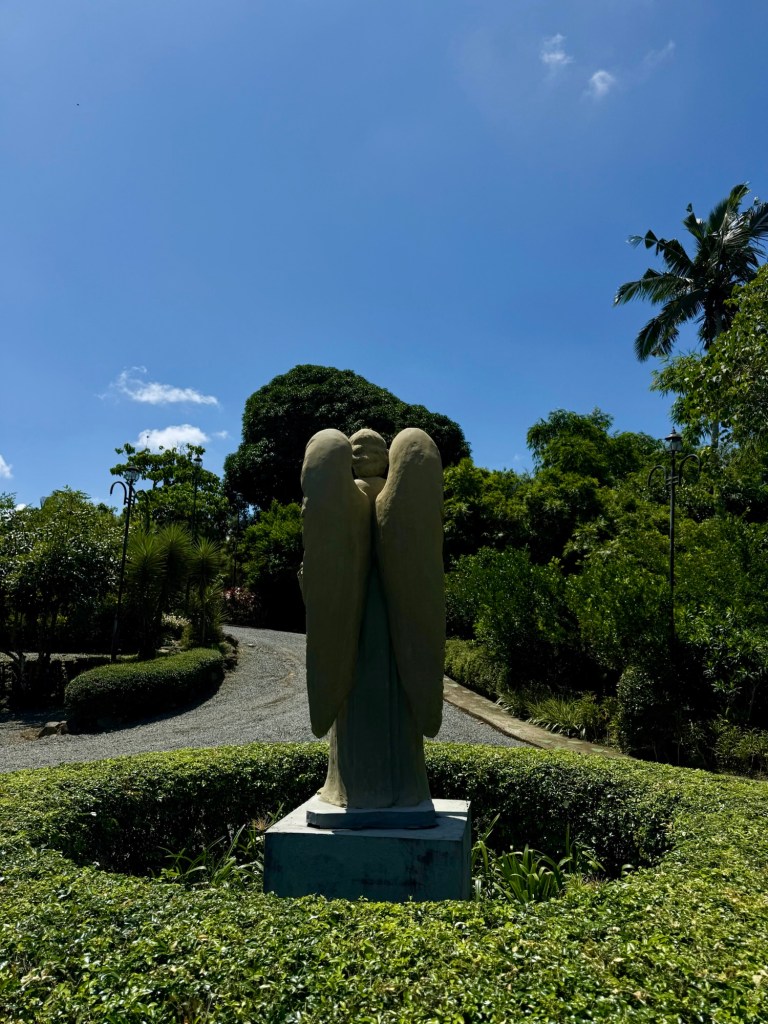
Photo by author, Bella Rosa Gardens, Silang, Cavite, 07 October 2026.
Let us see St. Paul's
alternative vision for the world
in which God's plan is to restore
all things in you, Christ;
let us see more the love and
mercy you have lavished upon us
when you suffered and died
on the Cross to save us,
rising from the dead on the third day
to reconcile us to the Father
and with everyone;
how consoling that we are
not our own,
that despite the chaos
and darkness all over us these days,
"In Christ we were also chosen,
destined in accord with purpose of
the one who accomplishes all things
according to the intention of his will...
were sealed with the Holy Spirit"
(Ephesians 1:11, 13).
How lovely are
these words, Lord!
May we be like St. Paul
in proclaiming to this sick and dark world
that there is an alternative,
better vision of the world
from the Father
in Christ Jesus.
Give us the courage to work on this,
to cooperate with your grace in
showing the world
life is so beautiful!
Amen.
Rev. Fr. Anton CT Pascual
Friday, October 16, 2026 7:00 am
137,996 total reads
Kapanalig, mahalaga sa sinumang lider ang pagtataglay ng katangiang “compassion” o kabutihang loob bilang servant leadership, dalisay na pagsisilbi sa taumbayan.
Sinasabi sa Philippians 2: 6-7, “Who, being in very nature[a] God, did not consider equality with God something to be used to his own advantage; rather, he made himself nothing by taking the very nature of a servant, being made in human likeness.
Iginiit din ng yumaong Pope Francis na ang “Compassion is the language of God. Let us learn to live with kindness, to love everyone, even when they do not love us.”
Sinususugan naman ni dating South African President Nelson Mandela na “Our human compassion binds us the one to the other — not in pity or patronizingly, but as human beings who have learnt how to turn our common suffering into hope for the future.”
Mayroong kasabihan na “A leader chooses compassion without weakness, correct without cruelty, build people up”.
Pero Kapanalig, tila wala ang katangiang ito sa mga kasalukuyang lider ng bansa, walang natututo sa mga ating pulitiko, walang accountability sa ating mga lider, walang malasakit sa ating bayan.,walang malasakit sa ating mga Pilipino.
Sa ating bansa, ang pera ng bayan…ang pondo ng taumbayan mula sa kanilang pinaghihirapang pagbabayad ng buwis, ay mistulang pag-aari na ng ating mga hinalal na lider o pulitiko. Sila na ang nagsisilbing “opera conductor”, sa bawat kumpas nila, sa bawat naiisin nila sa pera ng taumbayan ay kanilang magagawa. Ang masakit, ang mga politiko na mismo ang nagiging “account holder” ng pondo ng mamamayang Pilipino.
Sa report ng People’s Budget Coalition, “hindi na sila nahiya”, tinukoy dito ang mga mambabatas sa Mababang Kapulungan ng Kongreso matapos walang kaabog-abog na ipasa ang 7.2-trilyong pisong national budget para sa taong 2027.
Ipinagbabawal na ng korte suprema ang pork barrel, gayunman nakagawa pa rin ang mga mambabatas ng eskima, natuklasan ang parking scheme., pinalitan ito ng unprogrammed appropriations. Matapos mabunyag ang unprogrammed appropriations sa multi-bilyong pisong budget insertions sa flood control projects ng DPWH, pinalitan naman ang eskima ng “leadership fund”.
Ang tindi ng apog ng mga walanghiya sa Kongreso! Kapanalig, sa inaprubahang 7.2 trilyong pisong national budget ng House of the Representatives., na red-flag o kuwestiyunable ang 1.2-trilyong pisong unprogrammed appropriations na maaring magamit sa political patronage at korapsyon. Natukoy ang 120-bilyong pisong pondo na pang-ayuda o doleouts ng mga pulitiko., 695-bilyong pisong lump sum infrastructure na walang tinukoy na proyekto, 43-bilyong piso sa Office of the President, House of the Representatives at Senado., 112-bilyong pisong unprogrammed appropriations, at merong pang idinagdag na 84-bilyong pisong budget insertions ang House Committee on Appropriations na blangko kung saan gagamitin. Isa itong malalang paglapastangan sa pondo ng bayan.
Kapanalig, ang 1.06-trilyong pisong red-flagged budget allocations ay 15-percent ng kabuuang 7.2-trilyong pisong 2027 national budget. Nasaan ang malasakit ng mga congressman sa taumnbayan? Ang bansa ay nahaharap sa mataas na inflation, laylay na ang balikat ng taumbayan sa mataas na presyo ng langis, mataas na bayarin sa pamasahe, mahal na halaga ng mga bilihin, mahal na serbisyo publiko. Pero Kapanalig, pagdating sa pera ng taumbayan, magagaling sa pagpa-plano., magagaling sa pagkuwenta ang ating mga congressman., magagaling sila gumawa ng paraan kung paano magkapera, magaling guwama ng eskima para manakaw ang pondo ng bayan ng hindi napapawisan.
Ang mga mambabatas natin, magagaling sa kawalanghiyaan!
137,997 total reads Kapanalig, mahalaga sa sinumang lider ang pagtataglay ng katangiang “compassion” o kabutihang loob bilang servant leadership, dalisay na pagsisilbi sa taumbayan. Sinasabi sa
212,485 total reads Mga Kapanalig, just energy transition now! Ito ang panawagan ng Diyosesis ng San Jose de Antique kung saan nakapaloob ang isla ng Semirara.
245,935 total reads Mga Kapanalig, kilala natin ang Boracay sa natatangi nitong ganda. Ang maputi at pinung-pino nitong buhangin, malinaw na dagat, at magandang tanawin ay
281,233 total reads Mga Kapanalig, bagamat abalá tayo sa maraming bagay, sana ay sinusubaybayan pa rin natin ang nagpapatuloy na impeachment trial kay VP Sara Duterte.
502,375 total reads Kapanalig, malinaw na malinaw sa Article VII, Section 13 ng 1987 Philippine Constitution na “The President, Vice-President, the Members of the Cabinet, and
427,150 total reads Paggunita sa Mahal na Birheng Maria tuwing Sabado Tagapagdiwang: Rev. Fr. Jerome Secillano [fb_plugin video href=https://www.facebook.com/100069518821428/videos/640919728176053] [give_form id=”72114″ show_title=”true” show_goal=”false” show_content=”none” display_style=”onpage”]
427,095 total reads Paggunita sa Mahal na Birheng Maria tuwing Sabado Tagapagdiwang: Rev. Fr. Victor Sadaya, CMF [fb_plugin video href=https://www.facebook.com/DZRV846/videos/307434575241976] [give_form id=”72114″ show_title=”true” show_goal=”false” show_content=”none” display_style=”onpage”]
427,078 total reads Paggunita sa Mahal na Birheng Maria tuwing Sabado Tagapagdiwang: Rev. Fr. Joel DL. Rescober, CM [fb_plugin video href=https://www.facebook.com/DZRV846/videos/358163723302254] [give_form id=”72114″ show_title=”true” show_goal=”false” show_content=”none”
427,069 total reads Paggunita sa Mahal na Birheng Maria ng Fatima Tagapagdiwang: Rev. Fr. Joel Camaya, SDB [fb_plugin video href=https://www.facebook.com/DZRV846/videos/660940865819605] [give_form id=”72114″ show_title=”true” show_goal=”false” show_content=”none” display_style=”onpage”]