

29th Sunday (B)
Is 53:10-11
This passage comes near the end of the fourth and last song of the servant of the Lord in Deutero-Isaiah. The servant’s sufferings, which have become more intense, eventually lead to his death (53:3, 5, 😎. But the chorus of onlookers realizes that he was innocent, and his suffering was endured for the sins of his people (53:4f).
Today’s verses underline the following: First, the servant’s suffering and death are seen by God in a very favorable light: the Lord was pleased (vI0), given the outcome- redemption, not the suffering and death itself. It is the willingness to comply with Yahweh’s pre-ordained plan that gives the Lord pleasure (v10c; 44:28; 48:14). The servant’s self-surrender is described in sacrificial terms (v10b). Second, the Lord’s appreciation will be seen in the servant’s vindication. He shall be gifted with many descendants whom he shall live to see (v10b), with multiple progeny a sure sign of divine favor (Ex 20:6). The era of light in a long life is synonymous with liberation, joy, and tranquillity (v11; 9:1ff). It will be, in short, a life totally opposite to the painful lot that he has experienced. Finally, the servant will effect redemption through the vicarious atonement which he offers (v11).
Heb 4:14-16
The priesthood of Christ is a major theme in Hebrews. The entrance of the high priest into the inner sanctuary once a year finds its final expression and fulfillment in the once-for-all sacrifice of Jesus (Heb 9:11-14). Today’s passage examines certain aspects of Christ’s sacerdotal role. He is the great high priest (v14), (the title used only here), underscores Jesus’ superiority to the Jewish high priest. The resurrection-exaltation of Jesus is here described in liturgical terms which allude to the high priest’s entrance into the holy place (3:1; 10:19-22). He does this as Son of God, a post-resurrection title (Rom 1:4). The high priest’s efficacy hinges not only on his present state but also on the fact that, as one who came “in the flesh,” as totally human, he is in a position to understand the debility and corresponding needs of humankind (v15). Christ was exempt from any form of temptation. His human experience was total. It is not stated that he could not sin, only that he did not. This clear statement is at odds with any effort to “divinize” Christ by diminishing his humanity and its accompanying experiences. This human condition of the heavenly Christ is to inspire trust in prayer and recourse (v16). Access to the Father, to God’s throne, is now one of “grace” because Christ’s sacrifice has made it possible. Every believer may now approach God’s sanctuary because Christ the high priest has penetrated the veil and provided direct and immediate contact.
Mk 10:35-45
To the ambitious request of Zebedee’s two sons in today’s gospel for a position of status in God’s reign, Jesus expressed three distinct pronouncements: the assurance of their suffering (v39), the allotment of places in God’s reign (v40), and the role of leadership in the church (vv42-45).
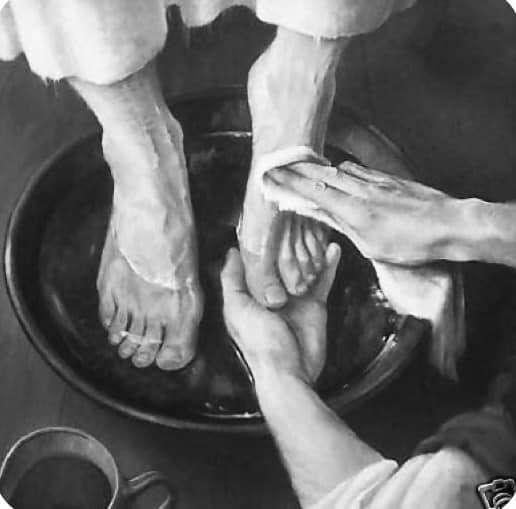
The response that the apostles receive is totally different than expected. First It is not the position they are promised but suffering. To drink the cup (v38) refers to a share in the sufferings that Jesus will undergo at the behest of the Father. Baptized with the baptism (v39) is an image of tragedy which is frequently described in terms of submersion in water (Ps 42:7f; Is 43:2). Jesus’ baptism is his death by which he makes Christian baptism effective (Lk 12:50). In addition, the Christian reader would see baptism as a transition from death to life. Jesus’ death brought about that passage in his life. Regarding the designation of places (v40), it is not for Jesus to make. Mark links this story on status-seeking with Jesus’ statement on authority within the Christian community. There is, first of all, a comparison with worldly, pagan authority (v42), followed by a statement on leadership as servanthood (vv43ff). The language describing Gentile rulers is particularly strong: “lording it over” and “using power over.” It clearly connotes a domination which contrasts sharply with the ensuing description of Christian leadership. Finally, Jesus is himself the model for the exercise of leadership. The Philippians hymn speaks of his coming “in the form of a slave” (Phil 2:7). Jesus’ posture was that of service to humankind, a dedication that carried him to death (v45). It is symbolically reflected in his washing the apostles’ feet (Jn 13:1, 11). There are distinct echoes of Is 53:10-12 in this final verse. The death of Jesus is here presented as an act of reacquisition of an enslaved people. Jesus here presents his life of service, which included death itself, as the model of authentic Christian authority. It is opposed to any form of “power” government. Its exponents take last place in the community in their willingness to serve.
Today’s readings teach us about a reverse type of precedence that characterizes discipleship: service and suffering. The painful experience of Jesus, foreshadowed by the Isaian servant of the Lord, was a life of service even to the point of dying in atonement for the sins of others. Jesus’ spirit of service, lowliness, and willingness to die, is our model. May we all be able to imitate him. Amen.