943 total reads
Homily for Tuesday of the Third Week of Lent, 22 March 2022, Dan 3:25, 34-43 & Mat 18:21-35
Today’s first reading is a prayer. I call it one of three most interesting prayers in the whole Bible. The other two are the prayer of Tobiah before his honeymoon, and the prayer of Jonah while in the belly of the fish.
The Prayer of Tobiah was said before the couple went to bed together, knowing that Sarah was under the spell of a demon that had slain all the other men whom Sarah had previously married. The Prayer of Jonah was supposedly said inside the belly of the fish where Jonah stayed for three days and three nights.
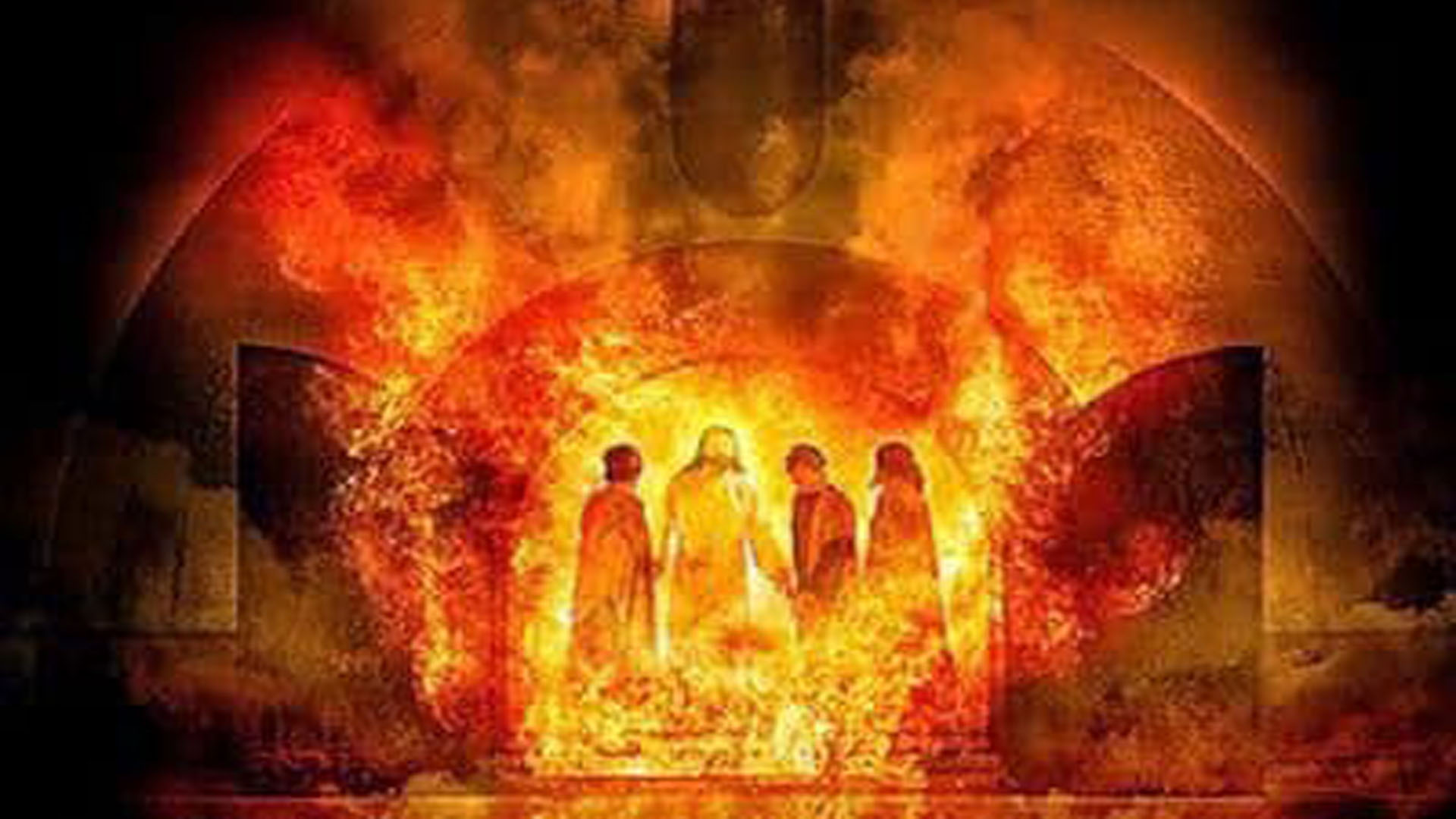
The third interesting prayer is what we read today from the Book of Daniel. It is the prayer uttered by Azariah, as he and his two other companions (Hananiah and Mishael) walked amid the burning flames. They had been thrown inside the fiery furnace as a punishment for their refusal to worship the golden statue that had been set up for veneration by the Babylonian King Nebuchadnezzar. These three Jewish young men had been exiled in Babylon and were serving as administrators of the province of Babylon.
The prayer of Azariah is actually a prayer of repentance, begging God’s forgiveness for the sins of the Israelite people. The background is—they had just been invaded by a world power, the Babylonian Empire, the way Ukraine is presently being invaded by Russia. Their country had been destroyed, their temple had been reduced to a pile of ruins, and their people had been exiled as slaves in Babylon. That is why Azariah is saying in his prayer, “We are reduced, O Lord, beyond any other nation, brought low everywhere in the world because of our sins.”
He is not talking about the sins of their Babylonian invaders. He is talking rather about their own sins as a nation, for which, he believes they are now suffering. Listen to how he describes their situation, “We have in our day no prince, prophet or leader, no burnt offering, sacrifice, oblation or incense, no place to offer first fruits, to find favor with you.”
Half way through his prayer, Azariah suddenly refers to himself and his two companions inside the fiery furnace as “holocaust,” meaning, as burnt offerings meant as sacrifice for their people’s sins.
Honestly, I had goose bumps while meditating on the lines where Azariah said, “But with contrite hearts and humble spirit let us be received as though it were burnt offerings of rams and bullocks or thousands of fat lambs…” By way of paraphrasing,what he is saying is, “Lord, since we have no more temple in which to slaughter lambs and offer them as sacrifice, we ask you to accept us as substitute offerings in sacrifice for the sins of our people, as we walk amid these burning flames.”
The scene suddenly reminded me of the millions of Jews who were exterminated by Hitler in gas chambers and crematories, and how this genocide is referred to by historians as The Holocaust. It also brought to mind the mushroom-shaped cloud that rose above the cities of Hiroshima and Nagasaki after an atomic bomb was dropped on them and caused the decimation of hundreds of thousands of Japanese people. It was this horrible event that finally ended the second world war.
We know that the weapons of destruction that are now in the hands of the present world powers are far more deadly and destructive than the atomic bomb of 1945. Now we’re talking of nuclear and biochemical weapons of mass destruction that can turn the whole world into a fiery furnace.
The three young men in the furnace did not blame their fate on the Babylonians, nor on God. Instead, they uttered a prayer of sincere repentance seeking God’s forgiveness for their sins and the sins of their own people. It is what Pope Francis is inviting us to do on March 25.
Today’s Gospel reminds us that if asking to be forgiven is important, it is equally important to learn to be forgiving, if we do not want to suffer the same fate as that of the unforgiving servant. Perhaps we should keep this in mind when we listen to hate messages in social media. I notice how many such messages spread around especially among those who think that the war in Ukraine is justified. They are full of historical recollections that succeed in making the present generation imagine themselves as victims of the past and fill their hearts with resentfulness and the desire for revenge. They share a collective sense of insecurity and defensiveness that make them think of themselves as being under a constant threat of an attack. As a consequence, they refuse to see or even admit their own shortcomings and tend to blame all their present miseries on others. They never get to experience the liberating power of forgiveness, neither having the humility to ask for it or the generosity to offer it.
While it is good to remember the 330 years of Spanish colonial rule, or the 50 years of American colonial rule, or the three years of Japanese occupation so as to avoid repeating history, it is more important to remember how the past four centuries of resistance have forged our sense of nationhood. I once heard an elderly Russian saying in an interview, “We cannot build a future for this world on the foundation of hatred and resentment.” The only civilization worth building is a civilization of love, that always goes with mercy, compassion and forgiveness.