52,005 total reads
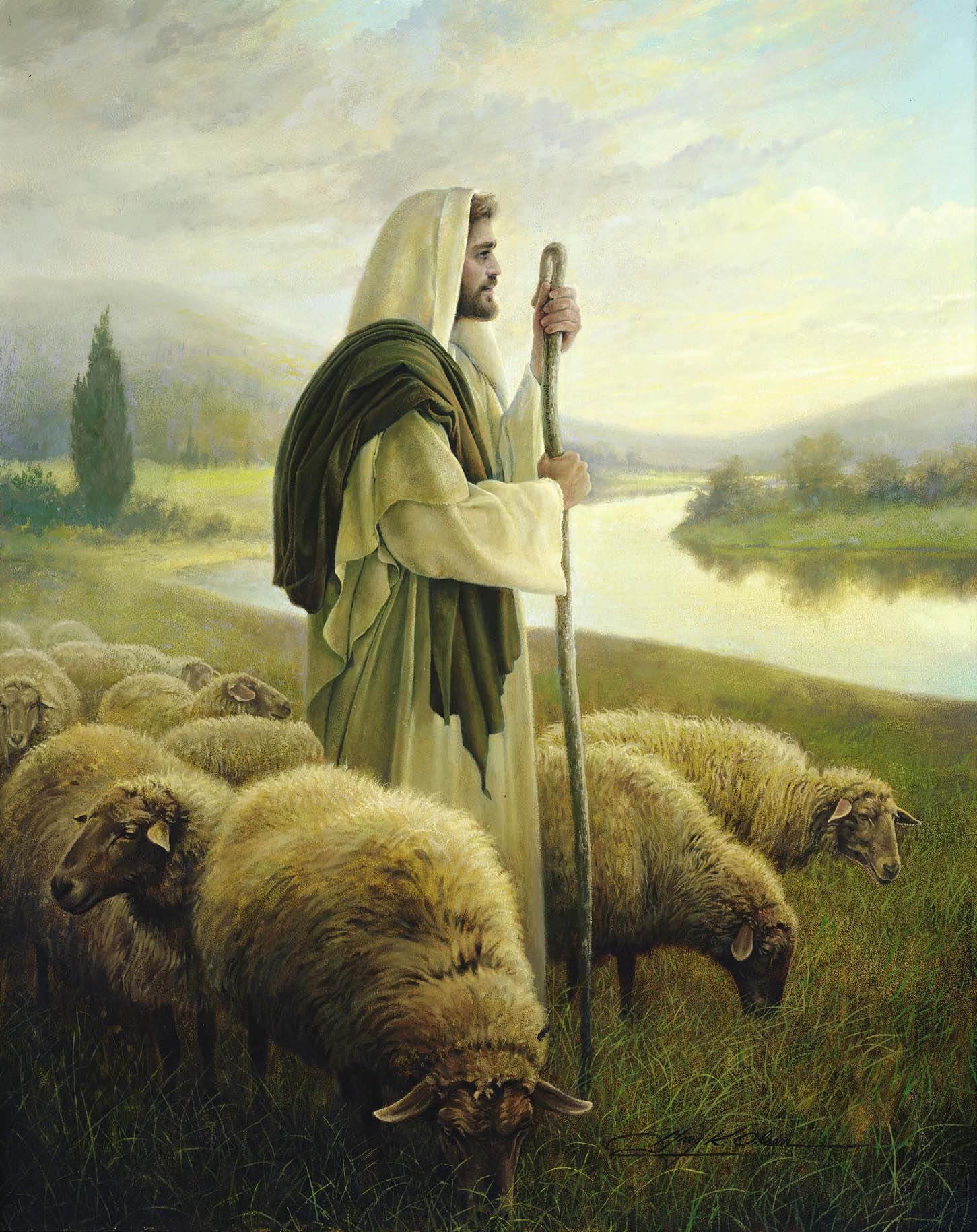
Homily for Good Shepherd Sunday (World Day of Vocations) 25 April 2026, John 10:1–10
We gather this evening for this Vigil Mass of Good Shepherd Sunday — the World Day of Vocations. And we do so in the middle of a world that has had enough of hirelings and wolves, and is desperately, urgently, crying out for good shepherds.
Let me begin with the two readings we just heard — because on the surface, they seem to me to be making an enormous leap. The responsorial psalm is from Psalm 23 — one of the most beloved passages in the Bible: “The Lord is my Shepherd, there is nothing I shall want.” We are so familiar with it because we keep hearing it in funerals and wakes.
And then in the Gospel, Jesus says: “I am the Good Shepherd.” From “The Lord is my Shepherd” to “I AM the Good Shepherd” — isn’t that quite a huge jump? I want to spend this first part of my homily unpacking that leap, because I believe it holds the answer to the crisis of our time.
Psalm 23 is called “A Psalm of King David.” That means the king is speaking — the most powerful man in the ancient Kingdom of Israel — and yet he says, “The Lord is my Shepherd.” As if to remind himself: “It is not I, but God, who is the true Shepherd of this people. Even if I rule as king, I am only God’s steward. I am a member of the flock myself before I am a leader of it.”
David knew shepherding from the inside — it was his origin. The Book of Samuel tells us that when God sent the prophet Samuel to find a king among the sons of Jesse, Samuel inspected them one by one — strong, impressive young men — but God kept saying, “Not this one.” Until he asked Jesse, “Are these all the sons that you’ve got?” And Jesse said, “My youngest is out tending sheep in the field. But he’s just a child.” And he called him in.
The author tells us God said to the prophet: “I do not see as human beings see. I look at the heart.” In David, God saw the heart of a shepherd. So he was called from shepherding sheep to shepherding a nation. And Psalm 23 is David’s lifelong reminder to himself: “I have no right to lead my people unless I first listen and follow. God alone is the Shepherd of Israel — the One who led us out of Egypt, guided us through the desert, brought us to the Promised Land. The One who revealed himself to Moses as YAHWEH.”
The Leap Jesus Makes
Now comes the extraordinary move. The Gospel of John takes Psalm 23 — “YAHWEH is my Shepherd” — and transforms it into “I AM the Good Shepherd,” and puts this in the mouth of Jesus. Is he not committing blasphemy? John knows — and is teaching us in his Gospel — that the name YAHWEH, as revealed to Moses, means “I AM.” He is not saying Jesus is replacing God. Rather, he is revealing that in Jesus, the God YAHWEH has taken human flesh.
And more than that — he is calling every one of us into that same identity of the Great I AM. Because Genesis 1:26–27 tells us we were made in the image and likeness of God. If YAHWEH is the Shepherd, and we bear YAHWEH’s image and likeness, then our vocation is to be shepherds too — not to replace God, but to participate in God’s own Shepherd care for the world.
Ako ang Bahala
This is where I want to introduce a Filipino concept that, I believe, captures what Jesus means better than almost any phrase I know. The phrase is: “Ako ang bahala.” We say this when we take responsibility for someone. “Don’t worry — ako ang bahala. I’ve got you. I will not abandon you. You are my responsibility.”
Now here is the fascinating thing. Linguists tell us the word bahala comes from Bathala — the name our ancestors used to refer to God, our Creator. Bathala is the Filipino name for the Divine. So when we say “Ako ang bahala,” we are literally saying, “I will be as God to you” — I will care for you the way God cares for his people.
Don’t you find that startling? Who are we to claim that? But that is precisely what John is doing when he makes Jesus say “I AM the Good Shepherd.” He is not displacing the Father — he is embodying the Father’s care. And he is calling us — made in God’s image and likeness, redeemed by his love — to do the same.
Bahala Na is Not Fatalism
But let me address a common misunderstanding. Some people tend to reduce “Bahala na” to fatalism — when they throw up their hands in surrender and say, “Wala tayong magagawa, just leave it for God to sort it out.” I think that is a corruption of a profound Filipino spirituality.
Bahala na does not mean “I give up.” It means: “I will do everything within my power, and entrust the rest to God.” It is the prayer of Jesus in Gethsemane: “Not my will, but yours be done.” It is Mary’s answer to the angel: “Behold the handmaid of the Lord; let it be done to me according to your word.” She was not surrendering like she had no choice; she was declaring her choice — to embrace God’s will as her own will.
We have a saying: “Nasa Diyos ang awa, nasa tao ang gawa.” God’s mercy is real — but human effort must come first, di ba? Grace builds on nature. It is not like a ripe guava waiting to fall into the mouth of Juan Tamad, the man who lies under the tree with his mouth open, waiting for fruit to drop from heaven.
Bahala na is an act of faith.
Jeremiah once described this faith as being like clay, entrusting itself in the potter’s hands, even when the shape is not yet clear. But it is not about passivity. It is about effort completed and offered back to God.
Our World Today
With this in mind, let us now look at the world around us.
In the Middle East, despite the fragile ceasefire there remains a threat for bombs, drones and missiles to continue falling. Entire families — children, grandmothers, fathers — have already been buried under rubble. Leaders around the world, including Pope Leo, are desperately trying to open doors for diplomacy and negotiation. Global institutions are falling apart as international laws are simply disregarded by leaders who go by the principle of might is right. We continue to hear debates and statements, but the crisis is only escalating further. Arms industries are the only ones profiting from armed conflicts. The world is desperately in need of shepherds — leaders willing to lay down not their enemies’ lives, but their own interests, for the sake of peace.
And right here at home — we cannot look away from what is happening in our own country. In the midst of an already huge challenge of coping with economic crisis, there is an ongoing impeachment trial that is also calling our national attention. And yet honestly speaking: impeachment, as serious as it may be, is only a visible symptom of a much deeper disease — the disease of patronage politics and political dynasties that have hollowed out our public institutions for many generations. The problem is not merely one official, one family, one administration. The problem is a system — a culture — in which power is treated as private property to be inherited, hoarded, and weaponized, rather than as a public trust to be exercised on behalf of the poor. How can we make our democratic institutions function within this culture? How can we counteract the sense of impunity of people in government and demand transparency and accountability from them?
This is what corrupts from within. When political families treat government positions as family businesses — when loyalty to a patron matters more than competence or integrity — when public funds become campaign resources camouflaged as ayuda and appointments become rewards for personal fealty — when the shepherds become the wolves. When those who are supposed to protect the flock begin to feed on the flock instead.
The prophet Ezekiel once denounced the leaders of his nation with these angry words:
“Woe to the shepherds of Israel who have been pasturing themselves! Should not shepherds pasture the flock? You consumed milk, wore wool, and slaughtered fatlings, but the flock you did not pasture. You did not strengthen the weak nor heal the sick nor bind up the injured. You did not bring back the stray or seek the lost but ruled them harshly and brutally. So they were scattered for lack of a shepherd, and became food for all the wild beasts. They were scattered and wandered over all the mountains and high hills; over the entire surface of the earth my sheep were scattered. No one looked after them or searched for them.”
In the midst of the national crisis caused by corruption and the war in the Middle East, it is ordinary Filipinos who pay the price — both those at home and those scattered abroad as contract workers. They pay it at the market, where the cost of rice, oil, and basic goods keeps climbing. They pay it at the gas station, where fuel prices devour the earnings of drivers and farmers. They pay it in the classroom, in the hospital, in the courtroom — everywhere that public resources have been drained by those who said they would serve, but chose instead to lord it over.
This is not bahala na in the good sense. This is bahala na in the worst possible sense — the powerful washing their hands of their responsibility to the poor, leaving the most vulnerable to fend for themselves.
From Sheep to Shepherd
Good Shepherd Sunday is calling us to something radically different. Our discipleship is not complete until we move from being sheep to becoming fellow shepherds. We begin as sheep, perhaps even as lambs — grateful, trusting, totally dependent on God’s care. Bahala na, Panginoon — Lord, you are in charge, I trust you. That is real and necessary. But God does not leave us there.
David was a sheep before he was a shepherd of a nation. The whole point of Psalm 23 — the whole point of tonight’s Gospel — is that God forms us in his own image so that we can say to others what God has said to us: “Ako ang bahala. I will not abandon you. You are my responsibility.”
Think of how this word bahala lives in our language. “Pamamahala” — is our term for governance, stewardship. A leadership that is supposed to be founded on malasakit — genuine concern for others. We say “Nababahala ako” when we are troubled on someone else’s behalf. All of these words carry within them the DNA of Bathala — of God’s own divine mercy and care, but now entrusted to human hands.
Don’t parents at some point say to the older siblings, “Ikaw na ang bahala sa kapatid mo” — “You take care of your brother now.” That is a transfer of sacred responsibility. That is what a vocation is. A calling or an invitation to say: Ako ang bahala. I will not walk away. I will not be the hired hand who runs when the wolf comes. I will stay.
There is a Pinoy Pop group called SB19 that wrote a song that has become viral on social media. The song has a universal appeal because it is about a son who says to his aging and ailing parents:
“Mama kamusta na?
’Di na tayo laging nagkikita
Miss na kita, sobra
Lagi na lang kami ang nauuna
’Di ba pwedeng ikaw muna?
Akin na’ng pangamba
Papa, naalala mo pa ba, yeah
Nung ako ay bata pa, ’di ba?
Aking puso’y ’yong hinanda
Sa mga bagay na buhay ang may dala
Dala ko ang ’yong bawat payo
At hanggang sa dulo, magkalayo man tayo
Ako’y tatayo, pangako, tatay ko”
In the refrain, the son says:
“Kaya ’wag mag-alala, ipikit ang ’yong mata
Tahan na, pahinga muna, ako na’ng bahala
Labis pa sa labis ang ’yong nagawa
Mama, papa, pahinga muna, ako na”
The Invitation
So tonight, as we celebrate this feast of the Good Shepherd, let us ask ourselves the question it places before each of us: Who are the sheep without a shepherd in my life? In my family, my community, my country?
The child with no one to guide them. The elderly parent left alone. The worker crushed by inflation. The farmer priced out of his own livelihood. The prisoner forgotten by a justice system captured by the powerful. The citizen whose vote has been bought or whose voice has been silenced by a dynasty that has run the same town for three generations.
God is saying to each of us what he once said to a young shepherd boy named David: I have seen the shepherd’s heart in you. Now go. Step forward. Stop waiting for someone else.
Say it — and mean it with your life: “Ako naman ang bahala.” I will not abandon you. You are my responsibility. That is our vocation. That is the meaning of the Good Shepherd. That is the only answer worthy of the crisis that we are experiencing. May we learn to say with Jesus today, “I am the Good Shepherd…”