
In the gospels, the Infancy and the Passion are properly termed narratives because despite of their differences both follow somehow the same succession of events. But not in the stories about the Resurrection; the four gospels give different accounts, (thus, the preferred label, the resurrection accounts), of the empty tomb and the appearances of the risen Christ. If there is one thing commonly noticeable aside from the basic mention of the empty tomb and appearances to different persons is the element of “not understanding” the event (and consequently, not believing that Jesus has risen, cfJohn 20:9; 15; 21:4; Mk 16: 11,13, 14; Mt 28:17; Lk 24:16, 25, 37)
The vocabulary for “understanding” both verbal and nominal is varied in both testaments. They are all connected, though, in their reference to “rational insight, or intelligence, as well as discernment. John uses “oida” ( οἴδα ) which is translated also as knowing, perceiving. But in its few occurrences in the NT, it takes as its objects the parable (Mk 4:13), the gifts, mysteries, and knowledge of God (1 Cor 2:12, 13:2). Thus, the word specifically refers to an understanding that culminates in the right perception and realization of the unique person of Christ, leading to belief in him. In the case of Mary Magdalene, she simply concludes that the body has been removed based on the rolled back stone (John 20:1), suspecting theft (cf Mt 28:13f, 27:62). Twice Mary admits that she does not “understand”, a major theme in John’s gospel. It occasions Jesus to instruct the “ignorant” and bring them to light (e.g. Samaritan woman, 4:7-26; and with Thomas, 14:5). The disciples’ failure to believe (apart from “the beloved”) is attributed to a faulty scriptural understanding (v9; Lk 24:26).
Eventually, their “eyes were opened”, they understood and they believed. It all happened in a personal and close encounter with Jesus: Mary hearing him calling out her name (John 20:16); the apostles seeing him enter locked doors and sitting in their midst and showing his hands and side, (including Thomas later, 20:19f; 28f); the disciples listening to the explanation of the scriptures (Lk 24:27, 44-47); in the breaking of the bread (Lk 24:30; John 21:12-13); and the miraculous catch of fish (John 21:7).
Jesus has risen indeed, and we can have a personal encounter with him every day. Would that we understand and truly feel his living and loving presence? We will all do, if we do not remain in our “tombs” but rather walk in his light; if we consistently spend time in prayer, to be able to encounter him and hear his voice, in the constant reading of the scriptures, in our devoted participation of the eucharist where we receive and touch his body, and in our conscious awareness of his miraculous presence every moment of our life.
Rise
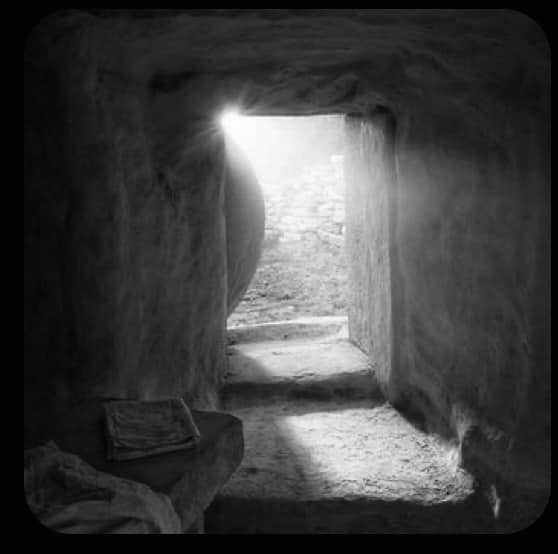
The four Gospels give different accounts of the empty tomb and the appearances of the risen Christ. They represent different traditions, some emphasizing the role of women, others that of disciples, and thus difficult to harmonize. They all converge however around the basic fact: the tomb was empty and the Lord has risen.
In the gospel of John 20:1-9, the verb used is ‘rise’, ‘anistēmi’, (ἀνἰστῆμι) with the primary sense to arise, rise up, raise up in a variety of contexts. When used in the phenomenon of the resurrection, it describes Christ’s ‘rising from the dead’ as both prophesied and recorded (cf Mt 17:9, 20:19; Mk 9:9f, 10:34; Lk 18:33, 24:7; Acts 2:24f, 3:26, 13:33f; Rom 14:9; 1 Cor 15:3-5). In other words, it is according to the salvific plan of God from the very beginning (OT) and it is indeed a historical fact as accounted by the NT scriptures.
The tomb was empty because Christ is risen and his emergence from the tomb points to the following: first, it is God’s endorsement of everything Jesus claimed and taught. His life ends in victory not defeat, not destroyed by cynical machinations, political manipulation, or military power. God has the final word in Jesus’ resurrection. Second, this faith event is a cause of our salvation- ‘if Christ did not rise, we are still deep in sin’, says St. Paul, the “firstborn of the dead”, who called us to a similar destiny. Third, it is the risen Christ that represents the starting point of the Christian faith, the prism through which everything in his earthly ministry is now viewed. Jesus of Nazareth is truly God’s Son and Lord. And we are the easter people.
Our union with Christ makes our suffering his and his resurrection ours. These two great moments in salvation are woven into the fabric of our Christian life. Our final victory will not be ours alone but his as well and our suffering especially in the interest of faith is not borne alone for Christ bears it with us.
May the risen Christ strengthens us to bear our sufferings in this life and grants us life eternal in the next. Amen.