722 total reads
Homily for 4th Sunday in Ordinary Time, 30 January 2022, Luke 4:21-30
There is a saying in Latin that lawyers are very familiar with: “DURA LEX, SED LEX.” In English, “The law is hard, but it is the law.” In our Gospel today, we can reformulate that saying to DURA VERITAS, SED VERITAS. “The truth is hard, but such is the truth.” It comes close to what Jesus is trying to say to his town-mates in Nazareth.
Jesus knows that his town-mates are questioning his authority to comment on the Scriptures. It is what they imply when they ask, “Is this not the son of Joseph?” But perhaps if he would perform before them a miracle like they heard him do in Capernaum, they would believe.
The work of the prophet is basically to proclaim a message from God, not perform miracles. When Jesus refers to two examples of prophets who performed miracles; both examples are about foreigners, meaning, non-Israelites. First, there was the widow of Zarephath whose “jar of flour never went empty and jug of oil never ran empty” (1 Kings 17:14) because she generously shared her last piece of bread with the prophet Elijah. Second, there was Naaman the Syrian military official who was cured of his leprosy when he immersed himself seven times in the Jordan river, as he was told by the prophet Elisha (2 Kings 5:1-23).
What Jesus is saying when he refers to these two examples is that neither the prophet Elijah nor the prophet Elisha needed to prove their authority to their own people. It was up to the people to discern whether or not they were true prophets.
This is also basically what the Lord is saying to Jeremiah in our first reading. We are told that Jeremiah was very hesitant to proclaim what God was asking him to say to his people. In the earlier part of that first reading, Jeremiah reacted to God’s call and said, “Ah, Lord God, I am still too young. I do not know how to speak.” But the Lord reacts, and if I may paraphrase him, “Do not say you are unqualified because you are young. You are qualified because you’re the one I am calling. Just go to whomever I send you, and just say whatever I ask you to proclaim to them.”
More simply put, the message is, “Just do what you are told.” It is God’s way of telling Jeremiah that he did not need to prove his worth to anybody. That it is the word itself that he will speak that will confirm his authority. He does not have to do a hocus-pocus to get people to believe him. You may not believe in yourself, but I believe in you because I knew you since you were formed in your mother’s womb. I dedicated and appointed you from the moment you were born.
God, as it were is telling Jeremiah, “What is your source of authority? My words, my presence, my being with you. It is either they recognize me at work in you or they don’t.”
In the Gospel we have a similar situation happening in Nazareth. Because the people knew Jesus to be one of them, an ordinary son of a carpenter, even if what he is saying seems convincing, they are demanding a proof of authority. Meaning, perform miracles for us and we will believe in you.
This is no different from the way we expect our candidates for the coming elections to prove their worth through their credentials. A bit like the question, “What can you do to convince me that I should vote for you?” Or, “Show me a clear sign that you will be able to make my life better if you get elected. Show me some magic, or some gold, or some political machismo that will convince us that you have the capacity to bring about change in our country. Convince us, persuade us, make us believe in you.”
My brother Randy David wrote about this attitude in the electorate in his column today in the Philippine Daily Inquirer. He says, this attitude expects the president to solve all the problems of the country within six years—yes, everything including “hunger, illiteracy, oppression and injustice, joblessness, homelessness and drug addiction.” He calls it an “inflated view of politics that positions us for inevitable disappointment in our leaders, our government, and yes, in ourselves.” He also says it “reinforces the excessive belief in the transformative power of individual leaders, notably of political strongmen and messiahs who promise the moon and the stars to people long steeped in the culture of dependence and patronage.”
St. Paul in our second reading today in 1 Cor 13 has an answer to people who make such unrealistic demands. For him, the best credentials are not an articulate tongue, or the capacity to predict the future. It is not about moving mountains, or doing favors for people, or making acts of sacrifice.” This is the famous chapter in Paul’s letter to the Corinthians that we have romanticized and turned into a favorite reading for weddings. It is not even talking about romantic love; he is talking about radical love. He says, “Without love, none of what I am doing matters. Without love, I am nothing.”
It applies not just to leaders but to us citizens as well. You have heard me say very often, we cannot expect good governance without good citizenship. Remember that saying made famous by Kennedy? “Ask not what your country can do for you, but what you can do for your country.”?
It is our capacity for genuine and radical love, love for God, love for neighbor, love for country, that can make our message truly credible and powerful. Why? St. Paul points out some qualities that to him are indicators that a person has love. Love he says, makes us patient and kind, not rude, not arrogant, not self-seeking, not quick-tempered, not resentful, not the type who would gloat on the fall of their enemies. Love, he says, makes us rejoice only over the truth, not over lies. It builds our capacity to endure hardships, to have faith and to have hope. It makes us carry on until the end, through thick and thin.
Paul tells us it is love alone that can make us truly mature and allow us to see clearly, hear distinctly, know and understand more fully. And why is he telling us that love is greater that faith and hope? Because for him, it is not even possible to believe and to hope, if we have no love.
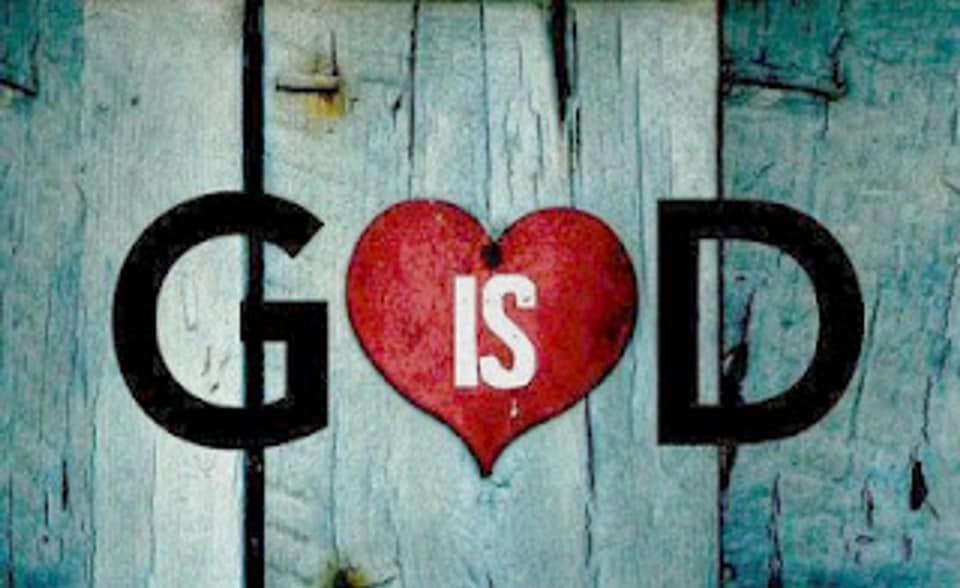
It is love that truly empowers us, love that gives authority and credibility to our words. It gives us the power to create, to renew and to transform. Love is the best proof that a person is Godsent to us. Why? Because, as St. John says plainly, God is love. Those who are without love are usually full of themselves. Those with genuine love are always ready to totally empty themselves. They are not afraid to lose or to die. Why? Because they do not think of their work as their work, but as God’s work.