
SABADO, MARSO 2, 2024

SHARE THE TRUTH

 13,103 total reads

Sabado sa Ika-2 Linggo ng Apatnapung Araw na Paghahanda

Mikas 7, 14-15. 18-20
Salmo 102, 1-2. 3-4. 9-10. 11-12

Ang ating mahabaging D’yos
ay nagmamagandang-loob.

Lucas 15, 1-3. 11-32

Saturday of the Second Week of Lent (Violet)

UNANG PAGBASA
Mikas 7, 14-15. 18-20

Pagbasa mula sa aklat ni propeta Mikas

Patnubayan mo ang iyong bayan, Panginoon, ang bayan na iyong hinirang. Nag-iisa siya sa gitna ng matabang lupain. Bayaan mo silang manirahan sa magandang pastulan ng Basan at Galaad.

Magpakita ka sa amin ng mga kababalaghan tulad noong ilabas mo sa Egipto ang iyong bayan. Wala nang ibang Diyos na tulad mo. Pinatatawad mo ang mga kasalanan ng nalabi sa bayan mong hinirang. Hindi ka nagkikimkim ng galit. Sa halip ay pinadarama mo sa kanila ang tapat mong pagmamahal. Muli kang mahahabag sa amin, lilimutin mo ang mga pagkakasala namin at ihahagis sa kalaliman ng dagat. Ipamamalas mo ang iyong katapatan sa Israel at ang walang maliw na pag-ibig sa angkan ni Abraham, gaya ng iyong ipinangako sa aming mga magulang mula pa nang unang panahon.

Ang Salita ng Diyos.

SALMONG TUGUNAN
Salmo 102, 1-2. 3-4. 9-10. 11-12

Ang ating mahabaging D’yos
ay nagmamagandang-loob.

Panginoo’y papurihan, purihin mo, kaluluwa,
ang pangalan niyang banal purihin mo sa tuwina.
Ikaw, aking kaluluwa, ang Diyos ay papurihan,
at huwag mong lilimutin yaong kanyang kabutihan.

Ang ating mahabaging D’yos
ay nagmamagandang-loob.

Ang lahat kong kasalana’y siya ang nagpapatawad,
ang anumang aking sakit, ginagamot niyang lahat.
Sa bingit ng kamatayan ako ay inililigtas,
at pinagpapala ako sa pag-ibig niya’t habag.

Ang ating mahabaging D’yos
ay nagmamagandang-loob.

Banayad nga kung magalit, hindi siya nagtatanim;
yaong taglay niyang galit, hindi niya kinikimkim.
Kung siya ay magparusa, di katumbas ng pagsuway;
di natayo siningil sa nagawang kasalanan.

Ang ating mahabaging D’yos
ay nagmamagandang-loob.

Ang agwat ng lupa’t langit, sukatin ma’y hindi kaya,
gayon ang pag-ibig ng Diyos, sa may takot sa kanya.
Ang silangan at kanluran kung gaano ang distansya
gayung-gayon ang pagtingin sa sinumang nagkasala.

Ang ating mahabaging D’yos
ay nagmamagandang-loob.

AWIT-PAMBUNGAD SA MABUTING BALITA
Lucas 15, 18

Babalik ako sa ama,
at aamunin ko siya,
sasabihin ko sa kanya:
“Ako po ay nagkasala
sa D’yos at sa ‘yong pagsinta.”

MABUTING BALITA
Lucas 15, 1-3. 11-32

Ang Mabuting Balita ng Panginoon ayon kay San Lucas

Noong panahong iyon, ang mga publikano at ang mga makasalanan ay nagsisilapit upang makinig kay Hesus. Nagbulung-bulungan ang mga Pariseo at ang mga eskriba. Ang sabi nila: “Ang taong ito’y nakikisalamuha sa mga makasalanan at nakikisalo sa kanila.” Kaya’t sinabi sa kanila ni Hesus ang talinghagang ito:

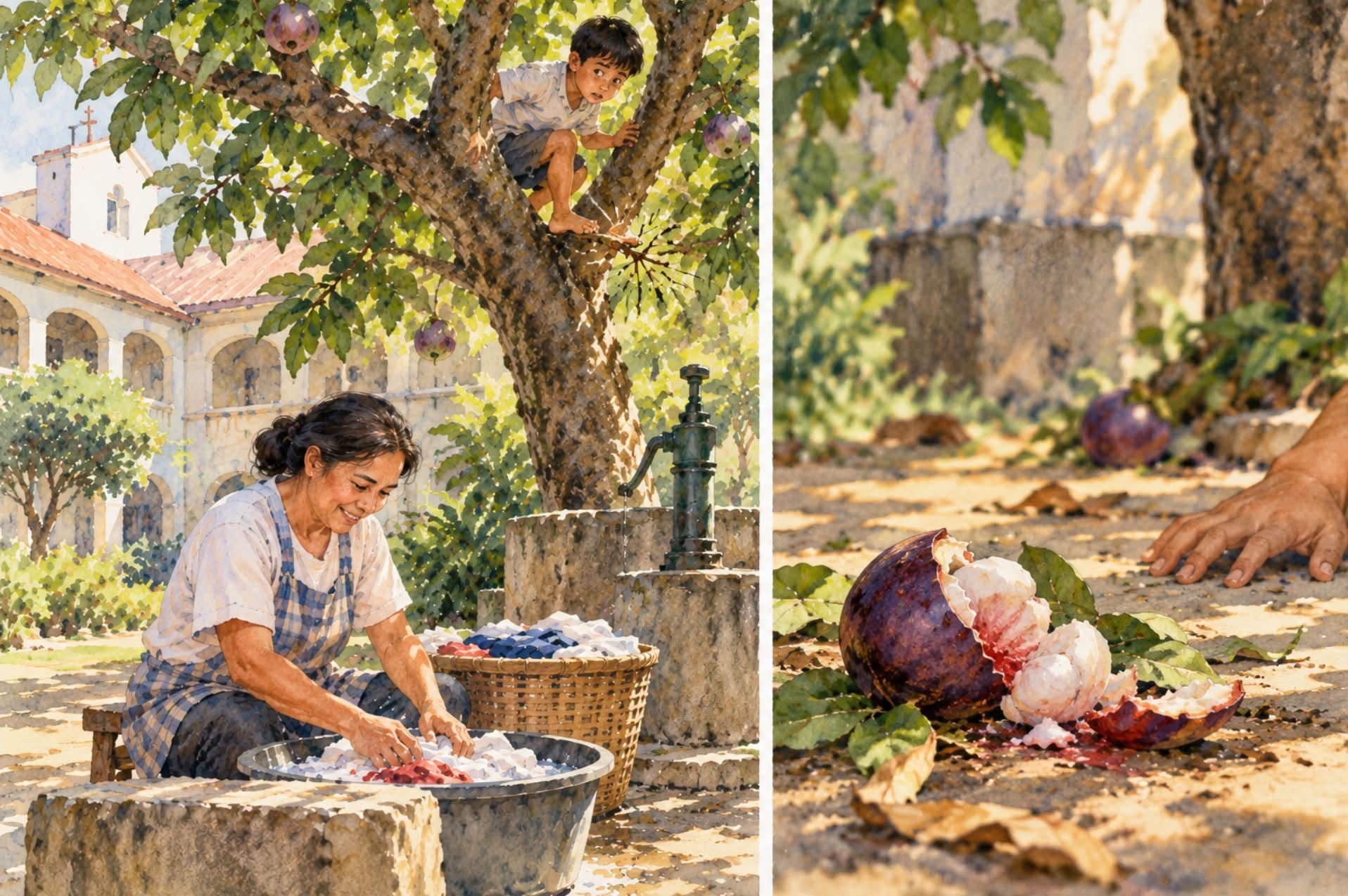
“Isang tao ang may dalawang anak na lalaki. Ang wika ng bunso, ‘Ama, ibigay na po ninyo sa akin ang mamanahin ko.’ At binahagi sa kanila ng ama ang kanyang ari-arian. Pagkalipas ng ilang araw, ipinagbili ng bunso ang kanyang ari-arian at nagtungo sa malayong lupain, taglay ang buo niyang kayamanan, at doo’y nilustay na lahat sa di wastong pamumuhay. Nang malustay na niya ang kanyang kayamanan, nagkaroon ng matinding taggutom sa lupaing yaon, at nagdalita siya. Kaya’t namasukan siya sa isang mamamayan ng lupaing yaon. Siya’y pinapunta nito sa bukid upang mag-alaga ng baboy. Ibig sana niyang punan ang kanyang pagkain kahit ng mga bungang-kahoy na ipinakakain sa mga baboy ngunit walang magbigay sa kanya. Nang mapag-isip-isip niya ang kanyang ginawa, nasabi niya sa sarili, ‘Ang mga alila ng aking ama ay may sapat na pagkain – at lumalabis pa – samantalang ako’y namamatay ng gutom dito! Babalik ako sa kanya, at sasabihin ko, “Ama, nagkasala po ako sa Diyos at sa inyo. Hindi na po ako karapat-dapat na tawagin ninyong anak; ibilang na lamang ninyo akong isa sa inyong mga alila.”, At tumindig siya at pumaroon sa kanyang ama.

“Malayo pa’y natanawan na siya ng ama at ito’y labis na nahabag sa kanya, kaya’t patakbo siyang sinalubong, niyakap, at hinagkan. Sinabi ng anak, ‘Ama, nagkasala po ako sa Diyos at sa inyo. Hindi na po ako karapat-dapat na tawagin ninyong anak.’ Ngunit tinawag ng ama ang kanyang mga alila, ‘Madali! Dalhin ninyo rito ang pinakamahusay na damit at isuot sa kanya. Suutan siya ng singsing at panyapak. Kunin ang pinatabang guya at patayain; kumain tayo at magsaya! Sapagkat namatay na ang anak kong ito; ngunit muling nabuhay; nawala, ngunit nasumpungan.’ At sila’y nagsaya.

“Nasa bukid noon ang anak na panganay. Umuwi siya, at nang malapit na sa bahay ay narinig niya ang tugtugan at sayawan. Tinawag niya ang isa sa mga alila at tinanong: ‘Bakit? May ano sa atin?’ ‘Dumating po ang inyong kapatid!’ tugon ng alila. ‘Ipinapatay ng inyong ama ang pinatabang guya, sapagkat nagbalik siyang buhay at walang sakit.’ Nagalit ang panganay at ayaw itong pumasok sa bahay. Kaya’t lumabas ang kanyang ama at inamu-amo siya. Ngunit sinabi nito, ‘Pinaglingkuran ko po kayo sa loob ng maraming taon, at kailanma’y hindi ko kayo sinuway. Ngunit ni minsa’y hindi ninyo ako binigyan ng kahit isang bisirong kambing para magkatuwaan kami ng aking mga kaibigan. Subalit nang dumating ang anak ninyong lumustay ng inyong kabuhayan sa masasamang babae, ipinagpatay pa ninyo ng pinatabang guya!’ Sumagot ang ama, ‘Anak, lagi kitang kapiling. Ang lahat ng ari-arian ko’y sa iyo. Ngunit dapat tayong magsaya at magalak, sapagkat namatay na ang kapatid mo, ngunit muling nabuhay; nawala, ngunit nasumpungan.’”

Ang Mabuting Balita ng Panginoon.

PANALANGIN NG BAYAN
Ikalawang Linggo ng Kuwaresma
Sabado

Ang Talinhaga ng Waldas na Anak ay nagpapahayag sa isang payak subalit malalim na paraan ng katotohanan ng pagbabagong-loob – ang nagagawa ng pag-ibig at habag sa ating mundo. Pinakikilos tayo nito upang agad na lumapit sa Ama sa panalangin.

Panginoon, dinggin Mo ang aming panalangin.
o kaya
Ama, ibaling Mo ang aming mga puso sa Iyo.

Sa paggabay ng Santo Papa at ng mga obispo, tuwina ay malugod na tanggapin nawa ng ating kaparian ang mga nagsisisi at naghahangad na makipagkasundo sa Diyos, manalangin tayo sa Panginoon.

Tulad ng waldas na ama nawa’y maging bukas-palad tayo sa pagpapatawad sa mga nakasakit o bumigo sa amin, manalangin tayo sa Panginoon.

Ang mga kasapi ng pamilya na may alitan sa isa’t isa nawa’y mas piliin ang magpatawad at makipagkasundo, manalangin tayo sa Panginoon.

Ang mga makasalanan nawa’y mapukaw ang loob na magsisi at hingin ang kapatawaran sa kanilang mga kasalanan sa Sakramento ng Kumpisal, manalangin tayo sa Panginoon.

Ang mga yumao nawa’y makarating sa kanialng walang hanggang tahanan, manalangin tayo sa Panginoon.

Diyos na makapangyarihan, malugod mo nawang tanggapin ang mga panalangin ng mga makasalanang matapat na nagbabalik sa iyong pag-ibig at habag na hindi nagmamaliw. Hinihiling namin ito sa pamamagitan ni Kristong aming Panginoon.

Amen.
THE MOST RADICAL TEACHING OF JESUS

 1,148 total reads

“Love your enemies, do good to those who hate you, bless those who curse you, pray for those who mistreat you.” (Lk 6:27–28)

I have always thought that this must be the most radical of all the teachings of Jesus. It asks for something that seems almost contrary to our instincts. We naturally love those who love us, defend ourselves against those who hurt us, and return hostility with hostility. Jesus asks us to break that cycle.

Perhaps this is also the deepest foundation of the late Pope Francis’ persistent insistence on mercy. Mercy is not weakness. It is the strength to refuse to become like the one who has hurt us. It is the freedom to stop evil from reproducing itself through us.

Pope Leo XIV speaks often of building a civilization of love, picking up a vision already articulated by his predecessors. But there is something profoundly Augustinian about it as well: the contrast between two ways of building a city, two ways of imagining human greatness.

Genesis 11 gives us the image of Babel. “Come, let us build ourselves a city and a tower…and make a name for ourselves.” It is civilization built on power, uniformity and self-glorification. Everyone speaks the same language, everyone is enlisted in the same project, everyone looks upward—but toward human greatness rather than toward God. And it ends not in communion but in dispersion.

Perhaps humanity had to learn the hard way that true unity cannot be built by making everyone speak the same language. The City of God is built by learning to live with many languages, cultures, peoples and differences—and discovering within that plurality a higher language capable of creating communion: the language of love.

That is why the command of Jesus to love our enemies is so radical. He is not simply teaching us to be nice to difficult people. He is proposing a higher form of humanity.

In an age that is returning so easily to the language of power, domination, retaliation and “making a name for ourselves,” the Gospel proposes another way of building the human city: not Babel, but the New Jerusalem; not uniformity, but communion; not domination, but mercy.

Perhaps a civilization of love begins precisely there: when hatred reaches us, and we refuse to pass it on.

FLOODS AND THE DREADED LEPTOSPIROSIS

 1,146 total reads

I cannot think of leptospirosis merely as a statistic. Whenever I hear about another case, I remember Dion Angelo De la Rosa, one of our altar servers, and the painful story of how a disease acquired from contaminated floodwater can suddenly turn into a life-threatening illness.

Yesterday, Fr. Rommel Brebaño, our Diocesan BEC Coordinator, updated me about what they have been seeing on the ground. He was alarmed by the rate at which people in flooded communities are contracting leptospirosis—and by the deaths being reported. What makes the situation even more disturbing is hearing from residents who go to their Barangay Health Centers after exposure to floodwater, only to be told: ubos na po ang gamot.

I decided to check whether what they are observing locally is reflected in the official figures. Unfortunately, it is.

As of early September, Central Luzon had already recorded 435 leptospirosis cases since August, with health authorities saying that most of the patients had been exposed to floodwaters during the weeks of prolonged flooding. At Jose B. Lingad Memorial General Hospital here in Pampanga, more than 60 leptospirosis patients from different parts of Central Luzon were confined at the same time just a few days ago.

Nationally, the DOH has recorded 6,253 cases so far this year. Even more alarming is the sudden rise following the floods: in just the two-week period from August 2 to 15, 824 cases were recorded—a 77-percent increase from the preceding period. Central Luzon is now among the regions under intensified monitoring.

And this morning comes another grim figure. San Lazaro Hospital has recorded 22 deaths from leptospirosis as of September 7. Almost three-fourths of these deaths were associated with pulmonary hemorrhage—bleeding in the lungs, one of the most dreaded complications of severe leptospirosis.

Leptospirosis is caused by Leptospira bacteria, commonly spread through water or soil contaminated by the urine of infected animals, especially rats. Floodwater provides an almost perfect vehicle for transmission. The bacteria can enter the body through wounds and abrasions, including tiny breaks in the skin that we may not even notice.

At first, the disease can deceptively resemble an ordinary flu: fever, headache, chills, muscle pains—often severe pain in the calves—vomiting, abdominal pain and redness of the eyes. Symptoms may develop days or even weeks after exposure. But untreated infection can progress rapidly and damage the kidneys, liver and lungs, producing jaundice, kidney failure, hemorrhage and respiratory failure.

This is why early consultation and treatment are so important. The DOH itself advises people exposed to floodwater—even those without obvious wounds—to seek assessment at a health center or YAKAP clinic to determine whether post-exposure prophylaxis with doxycycline is indicated.

Here is what I find difficult to understand.

The DOH says there is no national shortage of medicine. It reported having distributed some 1.2 million doxycycline capsules to affected areas, with another 2.6 million available in regional health offices. Even earlier, DOH-Central Luzon reported distributing more than 200,000 doxycycline capsules in our region. The Health Secretary himself has assured the public that there is an adequate buffer supply.

And yet, on the ground, we are hearing: “Wala na pong gamot.”

If the medicine exists in government warehouses but is unavailable when a flood victim presents himself at a barangay health center, then the problem is no longer simply one of supply. It is a problem of access, distribution and public-health delivery.

And when the consequence of that failure can be kidney failure, pulmonary hemorrhage, dialysis—or death—then we cannot treat it as a minor logistical problem.

There is something scandalous about this.

Centuries have passed since the Black Death swept through Europe and wiped out entire communities at a time when people knew almost nothing about bacteria, antibiotics, epidemiology or modern public health. We live in a very different age. We know what causes leptospirosis. We know how it is transmitted. We know how to reduce the risk after exposure. We know how to treat it when detected early. We have antibiotics. We have laboratories. We have hospitals. We have an entire government health system.

People should not be dying simply because the medicine did not reach them in time.

I therefore appeal urgently to the Department of Health, especially DOH-Central Luzon: please look beyond the figures in the warehouses and verify the situation at the barangay level, particularly in communities that have remained flooded for days or weeks.

Please make sure that medicines actually reach the health centers where they are needed. Establish easily accessible leptospirosis consultation and prophylaxis points in heavily flooded communities. Make the public know where medicines are available. And where barangay stocks have run out, replenish them immediately.

Flooding is already a calamity. It should not be allowed to become a preventable epidemic.

The poor have already had to wade through filthy floodwaters because they often have no other choice. They should not have to wade through another flood afterward—a flood of bureaucracy, unavailable medicines and inaccessible health care—just to stay alive.

RETALIATION

 1,157 total reads

Gospel Reading for September 10, 2026 – Luke 6: 27-38

RETALIATION

Jesus said to his disciples: “To you who hear I say, love your enemies, do good to those who hate you, bless those who curse you, pray for those who mistreat you. To the person who strikes you on one cheek, offer the other one as well, and from the person who takes your cloak, do not withhold even your tunic. Give to everyone who asks of you, and from the one who takes what is yours do not demand it back. Do to others as you would have them do to you. For if you love those who love you, what credit is that to you? Even sinners love those who love them. And if you do good to those who do good to you, what credit is that to you? Even sinners do the same. If you lend money to those from whom you expect repayment, what credit is that to you? Even sinners lend to sinners, and get back the same amount. But rather, love your enemies and do good to them, and lend expecting nothing back; then your reward will be greatnand you will be children of the Most High, for he himself is kind to the ungrateful and the wicked. Be merciful, just as also your Father is merciful. “Stop judging and you will not be judged. Stop condemning and you will not be condemned. Forgive and you will be forgiven. Give and gifts will be given to you; a good measure, packed together, shaken downr , and overflowing, will be poured into your lap. For the measure with which you measure will in return be measured out to you.”

————

One of the most difficult things for us Christians to do is to love our enemies, do good to those who hate us, bless those who curse us, and pray for those who mistreat us. At first glance, it seems as though we would be out of our minds for doing these things. But when we see through the eyes of God, we realize that this is exactly what should be.

These are the best things we can do to break the vicious cycle of RETALIATION, which is the cause of endless conflicts and wars. They are also the best way to have inner peace and true happiness in life.

Jesus teaches us this simple logic: we do unto others what we expect God to do unto us. We always expect God to forgive us for the wrong things we do against him. Therefore, forgiving others for the wrong things they do to us is also what he expects from us.

Lord Jesus, teach us to be like you on the Cross: “Father, forgive them, for they know not what they do.” Amen.

Veritas Editorial

Picture of Rev. Fr. Anton CT Pascual

Rev. Fr. Anton CT Pascual

Fashion show sa baha

 42,208 total reads

 42,208 total reads Mga Kapanalig, ano ang datíng kapag ang mga pulitiko na nakikiramay sa mga binaha ay nakasuot ng mamahaling damit? Ang Pampanga ay ang

Read More »

Perwisyo sa NLEx

 64,409 total reads

 64,409 total reads Mga Kapanalig, napagsabihan na ba kayo nito: “kung ayaw mong ma-traffic, umalis ka nang maaga.” Pero paano kung umalis ka nga nang maaga,

Read More »

Pagod na pagod

 100,906 total reads

 100,906 total reads Mga Kapanalig, pagod na pagod na raw si Senador Juan Miguel Zubiri sa sobrang siksik na schedule niya tuwing pumapasok sa Mataas na

Read More »

Kahirapan sa bansa

 321,533 total reads

 321,533 total reads Mga Kapanalig, tinatayang anim na milyong Pilipino ang nakaahon na sa kahirapan.  Ayon iyan sa Philippine Statistics Authority (o PSA). Bumagsak sa 9.7%

Read More »

Inhustisya sa gitna ng krisis sa klima

 353,737 total reads

 353,737 total reads Mga Kapanalig, nakikiramay tayo sa mga taga-Nepal Matapos ang isang nakapanlulumong trahedyang nangyari doon. Noong nakaraang linggo, magkasunod na flash floods at mudslides

Read More »

Watch Live

RELATED TOPICS

Sabado, Setyembre 12, 2026

 1,280 total reads

 1,280 total reads Sabado ng Ika-23 Linggo sa Karaniwang Panahon (II) o kaya Kamahal-mahalang Ngalan ng Mahal na Birhen o kaya Paggunita sa Mahal na Birheng Maria tuwing

Read More »

Biyernes, Setyembre 11, 2026

 2,820 total reads

 2,820 total reads Biyernes ng Ika-23 Linggo sa Karaniwang Panahon (II) 1 Corinto 9, 16-19. 22b-27 Salmo 83, 3. 4. 5-6. 12 Ang templo mo’y aking

Read More »

Huwebes, Setyembre 10, 2026

 4,056 total reads

 4,056 total reads Huwebes ng Ika-23 Linggo sa Karaniwang Panahon (II) 1 Corinto 8, 1b-7. 11-13 Salmo 138, 1-3. 13-14ab. 23-24 Poon, ako ay samahan sa

Read More »

Miyerkules, Setyembre 9, 2026

 4,690 total reads

 4,690 total reads Miyerkules ng Ika-23 Linggo sa Karaniwang Panahon (II) 1 Corinto 7, 25-31 Salmo 44, 11-12. 14-15. 16-17 O kab’yak ng hari namin, ang

Read More »

Martes, Setyembre 8, 2026

 5,703 total reads

 5,703 total reads Kapistahan ng Pagsilang ng Mahal na Birheng Maria Mikas 5, 1-4a o kaya Roma 8, 28-30 Salmo 12, 6ab. 6kd Ang lubos kong kasiyahan

Read More »

SUPPORT OUR MISSION

BECOME A KAPANALIG MEMBER AND EUCHARISTIC ADVOCATE!

CATHOLINK

THE PHILIPPINES CATHOLIC CHURCH ONLINE DIRECTORIES

Scroll to Top