


6,660 total reads
Neh 8:2-4, 5-6, 8-10
The lay ruler Nehemiah and the priest Ezra played a crucial role in the reconstruction of Jerusalem—socially, physically, and morally—following the exile in Babylon in the fifth century B.C. In the presence of the assembled community in Jerusalem, Ezra read from the Torah.
During significant moments in Israel’s history, such as this, the community ritualized their recommitment to the original covenant with Yahweh (as seen in Exodus 19-24). This act is solemn and communal, emphasizing the recognition and formal acceptance of Yahweh’s invitation to enter into a covenant relationship. In response, the people expressed their acknowledgment and formal acceptance of Yahweh’s invitation to recommit to the covenant by saying, “Amen.”
1 Cor 12:12-30
The text addresses the issues of rivalry and competition over spiritual gifts that were common in the Corinthian church, which ultimately undermined unity. In this context, Paul uses the metaphor of the body to illustrate that all members (or gifts) are essential and interdependent within the church. Just as each part of the human body serves a specific role, every spiritual gift holds significance, and no gift should be dismissed or regarded as inferior.
Paul emphasizes that the church transcends ethnic and social divisions, highlighting that all members are necessary to maintain harmony, as stated in Galatians 3:28. He points out the mutual dependency among church members, indicating that the body of Christ expresses itself through various ministries. He lists different roles—such as apostles, prophets, and teachers—as foundational to the development of the church, underscoring that love is the core of all spiritual gifts, as elaborated in 1 Corinthians 13.
Lk 1:1-4; 4:14-21
The text includes the prologue to Luke’s Gospel (Lk 1:1-4) where he addresses Theophilus, indicating that his work is intended for a broader audience. Luke aims to present Jesus’ ministry not as strict history but through a faith perspective shaped by the Easter experience.
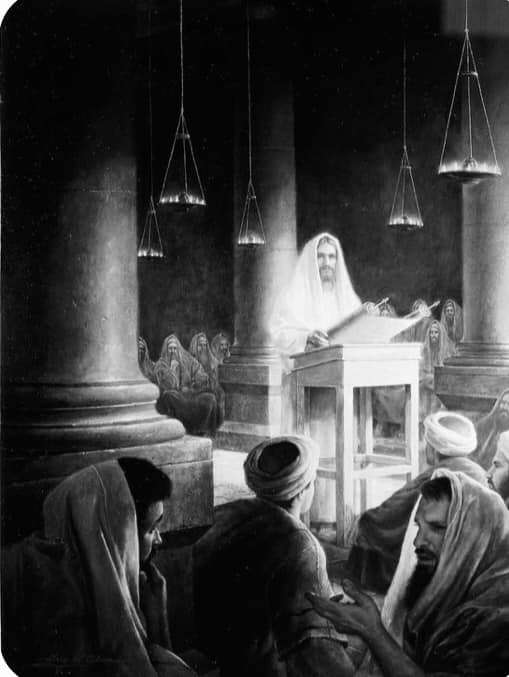
The narrative shifts to the beginning of Jesus’ ministry in Galilee, highlighting his anointing by the Spirit and his mission to the poor and disenfranchised (Lk 4:14-21). The setting in the Capernaum synagogue connects the two Testaments and illustrates that Jesus’ mission prioritizes those who are socially and physically marginalized. His reference to the “year of favor” alludes to the jubilee year, emphasizing restoration and freedom.
Jesus declares the fulfillment of Isaiah’s messianic text in his mission. However, unlike Ezra, he faces rejection from his own townspeople who attempt to silence him (vv28f). Throughout the narrative, a key theme is God’s faithfulness to his promises and concern for humanity.
Today’s readings emphasize the power and truth of God’s word. In the first, Ezra leads his people in a recommitment to God’s law. The people express their willingness to center their lives around this saving word. In the gospel, Jesus presents himself as the fulfillment of the prophecy from Isaiah. Just as he embraces his appointed role, he invites his listeners to accept him as well.
May we always respond with a heartfelt “Amen,” filled with conviction and commitment. Amen!
Amen
Amen is one of the shortest words in the Bible, just three Hebrew letters: אמן (‘ãmën). But at the same time, it is one of the Bible’s most powerful words; it is the Bible’s supreme expression of assent. By saying Amen we mean much more than simple agreement. It is a remarkable word because it allows us to succinctly articulate “Praise the Lord” and “I agree”.
This powerful word comes from the Hebrew root אמן (a-m-n) that is also related to the word אמונה (emunah) which means “faith”. Interestingly, Amen is classified as an adjective which describes states and moods. This word is not another “Yes” or “No”. When a person says Amen, they commit themselves to a state of conscious agreement, judgment, and faith. In the Bible, having faith is not just a question of being spiritually awake, but of being firmly committed to one’s religious identity. This comprehensive sense of the word Amen can be seen in the first reading from prophet Nehemiah (8:2-4, 5-6, 8-10), where Ezra read the Torah before the presence of the convened assembly in Jerusalem at the moment of restoration after the Jews returned to their homeland. As in a solemn ritual, the community expressed their recognition and formal acceptance of Yaweh’s invitation to a covenant recommitment by saying Amen.
In the gospel (Lk 1:4, 4:14-31) Jesus presents himself as the one to whom the Isaian prophecy points. Just as he accepts his designated role, he implicitly asks for his hearer’s acceptance. But as the later part of the chapter will indicate (4:28f), the response of the people did not match the submission of Ezra’s hearers.
Today’s readings stress the power and truthfulness of God’s Word and in a very real sense, we all stand under the judgment of the Word. As the scripture is read, it is directed to each one of us and our responsibility is to examine our own conversion in the light of the Word. Can we respond AMEN with firm conviction and express not only our willingness to really center our lives in the saving Word?