

3,421 total reads
5th Sunday Lent (A)
Ez 37:12-14
The text describes Ezekiel’s vision of Israel’s restoration as a symbolic resurrection, using imagery of dry bones and breath. Just as Yahweh gave life to the first man (Gen 2:7), His spirit will revive Israel, making it alive again. This renewal, symbolized by a restored homeland, recognizes Yahweh as Israel’s only Lord through His power (v13). The resurrection here is symbolic, not a personal or bodily one.
Rom 8:8-11
Paul discusses the meaning of death and life for Christians, contrasting ‘flesh’—the weakened human nature affected by sin—and ‘spirit,’ the divine presence that justifies and sanctifies. Living “in the flesh” means pursuing selfish desires, while Christian life centers on the indwelling Spirit, a gift of Christ’s resurrection that transforms existence. The passage hints at the Trinity: God as the creator of this new life, the Spirit of Christ enabling access to the divine, and Christ dwelling within believers, forming a unity. Without the Spirit, life ceases; with it, death is transformed into a new life through justification. The Spirit, which raised Christ, also promises eternal life, making resurrection the inevitable outcome of justification. Spirit life involves sharing God’s own life, with baptism as a pivotal moment that initiates this divine life.
Jn 11:1-45
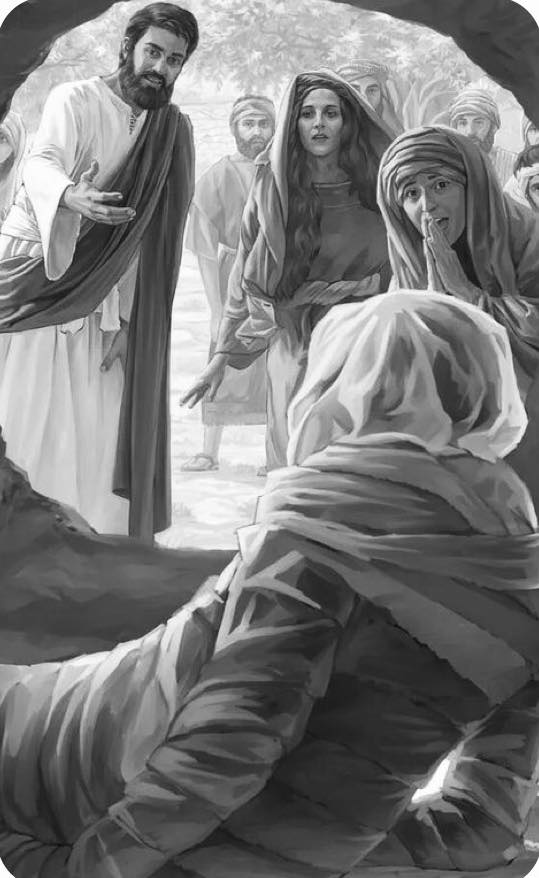
Bethany, near Jerusalem, was a frequent visit spot for Jesus, with Mary and Martha being close friends. The story of Lazarus’ raising appears only in John, highlighting its significance as a miracle and its role in Jesus’ death. Lazarus symbolizes the faithful Christian, representing both initial faith and future resurrection. The event emphasizes Jesus’ power over physical death and spiritual life, with two levels of understanding: literal and figurative. Faith is essential for resurrection, with Jesus as the divine Son and Messiah. The story underscores the Christian hope of both present and future resurrection through Jesus’ life-giving power.
All of the readings point to a “new life”—Ezekiel’s oracle predicting the “resurrection” of his people with their return to their homeland at the end of the exile. This signifies our rising to new life, not only in the future but also in our introduction to the Christian life. According to St. Paul and the climactic “sign” of Jesus in John’s book of signs (1:19 – 12:50), the raising of Lazarus is key. With Lazarus, we have come to life. We only need to leave behind the burial bands and cloths of past death and walk in a resurrection spirit. This also means we have passed from flesh to spirit. We cannot have it both ways. May our faith and life match. Amen.