13,020 total reads
21st Sunday A
Is 22:15, 19 – 23
This passage discusses the biblical account during King Hezekiah’s reign, focusing on Shebna, the king’s chief administrator, who is to be replaced for misconduct with Eliakim, the master of the palace. Shebna, identified as a scribe and palace official, retains a high administrative role even after his disgrace. Evidence suggests ‘master of the palace’ was a later addition to 22:15, with the original describing an unnamed official. Eliakim’s investiture symbolizes authority—holding the ‘key of the house of David,’ granting access to the king’s courts and privileges—thus firmly establishing his role in government.
Romans 11:33-36
The reading highlights God’s infinite wisdom and goodness. Paul concludes with a hymn praising God’s unmatched knowledge, which guides history and creation without need of counsel. His argument relies on two scriptural texts, one from Isaiah and an uncertain one, likely related to Job. The passage emphasizes giving glory to God, the origin, support, and ultimate goal of all, who directs history according to His plan, as seen in the Jew-Gentile discussion.
Mt 16:13-20
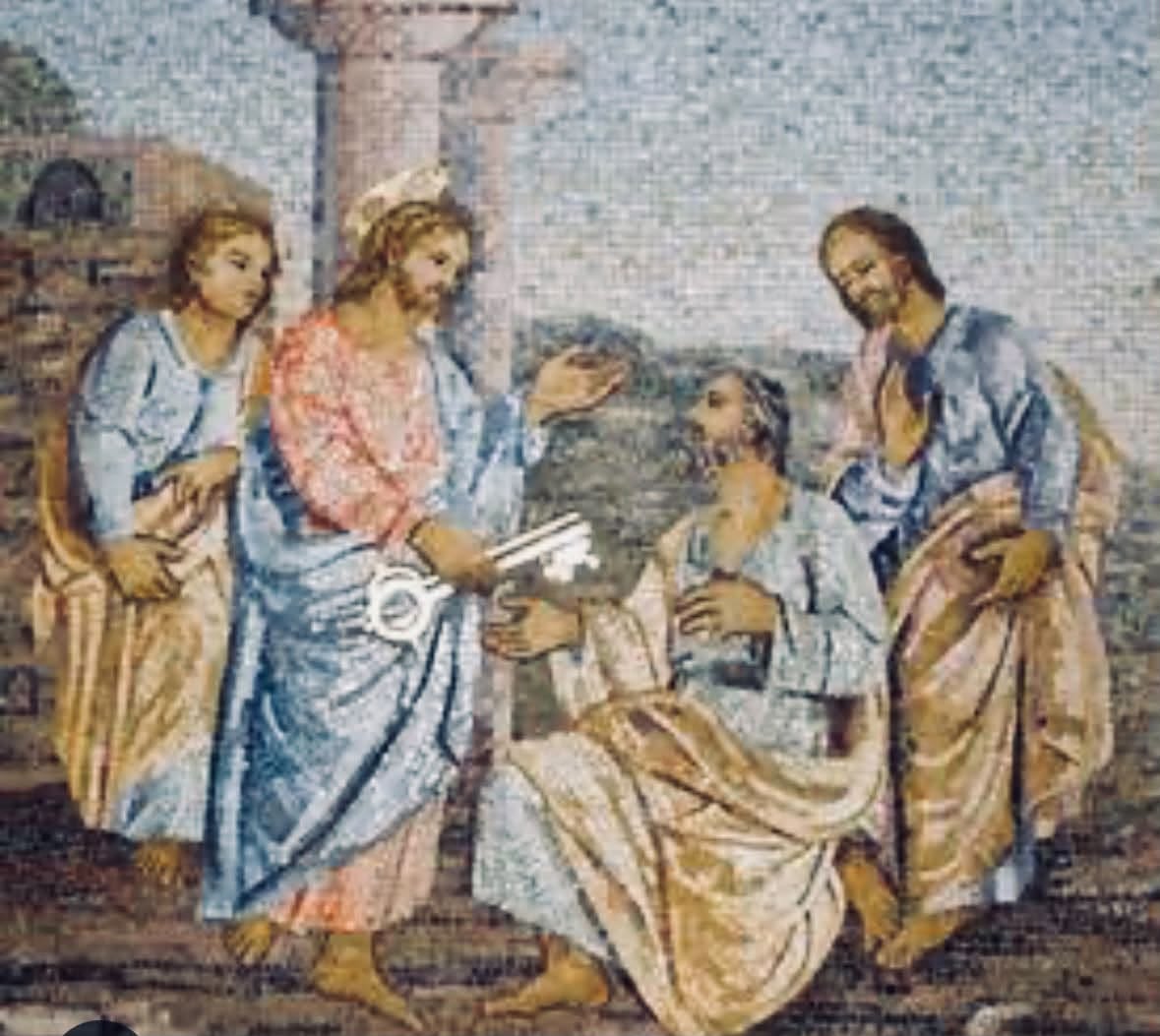
The gospel highlights a key church moment, showing Jesus’ recognition of Peter as the foundational leader, symbolized by the renaming as Rock and given authority to bind and loose. This passage, unique to Matthew, emphasizes the church’s organized structure, authority, and divine guidance, rooted in Peter’s faith and revelation from God.
Peter’s authority is symbolized by the key Jesus gave him. The term “ kleis “ ( κλλείς ) occurs six times in NT and refers to “key” only in a metaphorical sense, but with powerful symbolism in each context. In Mt 16:19, Jesus promises to give Peter the “keys” of the kingdom as a sign of his apostolic authority. In Lk 11:52, the kleis refers to the “key” of knowledge which the Israelite lawyers had removed and deprived many people of the opportunity to enter into the kingdom of heaven. The supreme spiritual authority of Jesus the Messiah-King is indicated by the risen Christ holding the “keys” to death and Hades (Rev. 1:18), and the “key of David” (Rev 3:7). In Rev. 9:1; 20:1, kleis refers to the “key” of the bottomless pit as one of the symbols for the place of eternal punishment.
The image of the keys is probably drawn from Isaiah 22 (cf first reading) where Eliakim, who succeeds Shebnah as master of the palace, is given”the key of the house of David,” which he “opens and “shuts” authoritatively. There are many instances in rabbinic literature of the binding-loosing imagery. Of the several meanings given there to the metaphor, two are of special importance here: the giving of authoritative teaching, and the lifting or imposing of the ban of excommunication.
Today we are reminded that as the head of the Church, Peter and the Popes hold a special place, especially when it comes to teaching us and guiding us about matters of faith and morality. Let us pray for Pope Leo XIV and other Church leaders so that they remain steadfast in the ministry entrusted to them by Christ, and that we all stay loyal to the Church even when it is continually rocked by scandals that erode her credibility. Amen.