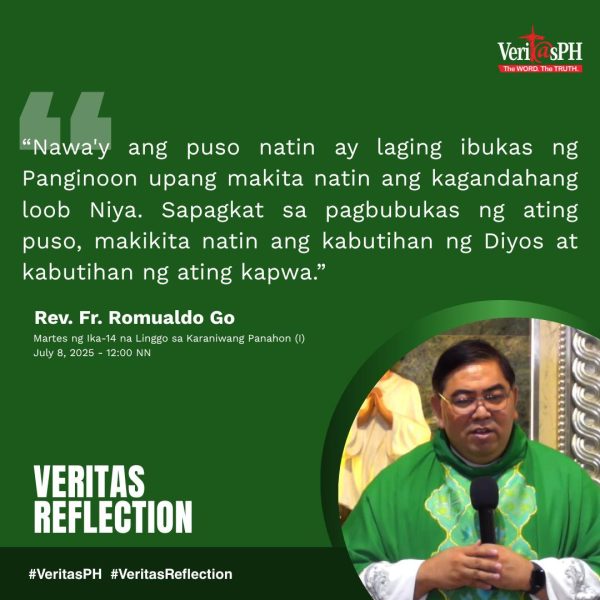
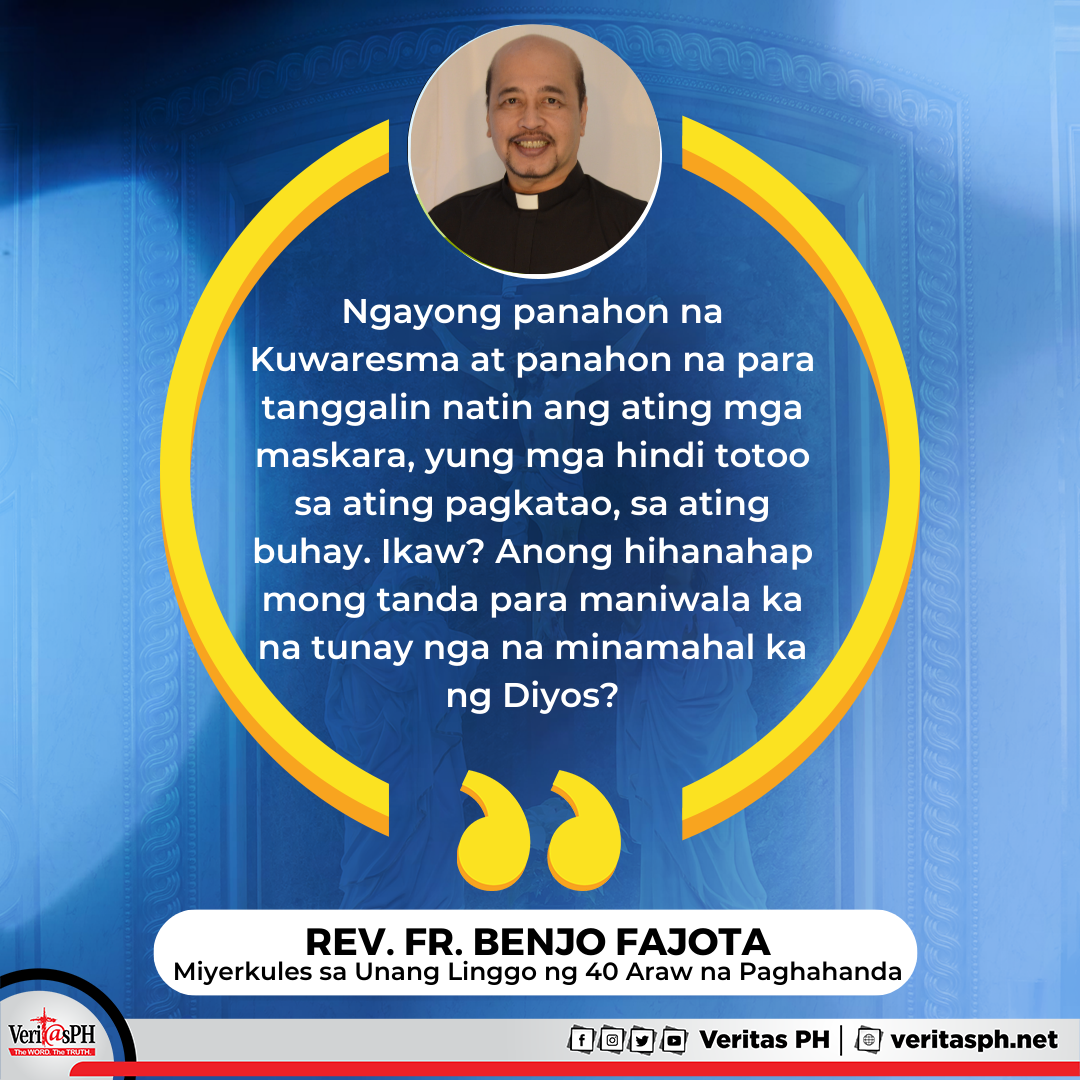

“๐™ˆ๐™œ๐™– ๐™†๐™–๐™ฅ๐™–๐™ฃ๐™–๐™ก๐™ž๐™œ, ๐™ฅ๐™–๐™–๐™ฃ๐™ค ๐™ฉ๐™–๐™ฎ๐™ค ๐™ข๐™–๐™œ๐™—๐™–๐™—๐™–๐™ก๐™ž๐™ -๐™ก๐™ค๐™ค๐™— ๐™จ๐™– ๐˜ฟ๐™ž๐™ฎ๐™ค๐™จ?”

SHARE THE TRUTH

 1,512 total reads

Pagod na pagod

 957 total reads

Mga Kapanalig, pagod na pagod na raw si Senador Juan Miguel Zubiri sa sobrang siksik na schedule niya tuwing pumapasok sa Mataas na Kapulungan.

Labindalawang oras daw sila sa opisina, mula alas-9 ng umaga hanggang alas-9 ng gabi. Sa umaga, tuwing Lunes hanggang Miyerkules, umuupo sila bilang senator-judges sa nagpapatuloy na impeachment trial kay Vice President Sara Duterte. Sa hapon, nagsasagawa naman sila ng mga pagdinig sa mga panukalang batas.

Totoong mahaba ang labindalawang oras para igugol sa pagtatrabaho. Kaya nga naging standard ang walong oras na pagtatrabaho sa isang araw, hindi dahil hindi na kaya ng isang taong magtrabaho pagkatapos ng panahong ito. Ito ay para maiwasan ang sobrang kapaguran o chronic overwork. Kinikilala rin ang pangangailangan ng mga manggagawa para sa panahong magagamit sa mga personal na gawain gaya ng paglilibang at pagpapahinga. Kung pipilitin din ang mga manggagawang maging produktibo ng lampas sa walong oras, malaki ang tsansang makompromiso ang kalidad ng kanilang trabaho.ย ย 

Pero maraming manggagawang Pilipino ang ginugugol ang kanilang araw sa pagtatrabaho. Ayon sa Philippine Statistics Authority (o PSA), nasa 20% ng mga manggagawang Pilipino ang nagtatrabaho ng mahigit 48 na oras sa isang linggo. Nag-o-overtime sila, at maraming dahilan kung bakit.

Dahil mababa o kulang ang sinasahod nila, nakikita ng mga manggagawa ang pag-o-overtime para magkaroon ng dagdag na panggastos. Ayon sa batas, dapat na may bayad ang mga nagtatrabaho ng lampas sa kanilang itinakdang oras.ย 

Itinuturing ding dahilan ang napakatinding traffic, lalo na rito sa Metro Manila, kaya pinipili ng ilan na mag-overtime na lang hanggang lumuwag na ang mga lansangan. Sa totoo lang, tatlo hanggang limang oras na nga ang nawawala sa mga manggagawa kada araw dahil sa matinding traffic.ย 

May mga sektor ding kailangang mag-overtime ng mga manggagawa. Extended ang trabaho ang mga doktor at nars dahil kulang ang mga nasa propesyong ito. Doble-kayod ang mga construction workers dahil may mahigpit na deadline ang kanilang mga proyekto. May mga call centers at BPO na umaasa sa mas mahabang oras ng pagtatrabaho dahil sa malaking demand para sa kanilang serbisyo.ย 

Pagod na pagod din sila. Pero marami sa kanila ang wala namang sariling sasakyan kung saan komportable sila kahit naiipit sa trapik. Marami sa kanila ang hindi naman nabibigyan ng mahabang session breaks kung saan pwede silang magbakasyon pero may sahod pa rin. Wala silang mga sandamakmak na staff na tumutulong sa kanilang gawin ang kanilang trabaho. Higit sa lahat, marami sa kanila ang hindi naman sumasahod ng hindi bababa sa โ‚ฑ300,000 sa isang buwan. Kung minimum wage earner ang isang manggagawa, kulang ang isang taon para maabot ang ganoong kalaking suweldo. Masakit pa kung โ€œno work, no payโ€ ang patakaran ng pinapasukan ng mga manggagawa.

Malaking sakripisyo talaga ang pagiging lingkod-bayan. Sa Catholic social teaching na Fratelli Tutti, tinalakay ni Pope Francis ang tinatawag na โ€œpolitical charity.โ€ Aniya, ang ating mga lider ay nanunungkulan hindi para paglingkuran kundi para maglingkod, gaya ng itinuro ni Hesus sa Mateo 20:28. Ang lider na isinasabuhay ang political charity ay may malalim na pakikiramay sa tunay na paghihirap na dinaranas ng mga mamamayan.ย 

Karapatan ng bawat taong mapagod, pero ibang usapin kung ang reklamo ay nagmumula sa mga pinunong nangakong magsilbiโ€”mga taong may hawak ng kapangyarihan, tinatamasa ang mga mararangyang pribilehiyo, at sinuswelduhan mula sa pawis at buwis ng mga ordinaryong manggagawang araw-araw ding nagpapakapagod. Kung ganito ang sitwasyon, malinaw na may kailangang ituwid.

Mga Kapanalig, kung may dapat mahiya sa pagkapagod ng mga mambabatas na nagtatrabaho ng halos isang buong araw, ito ay mga kapwa nilang patuloy na nagtatago at hindi nagtatrabaho.ย 

Sumainyo ang katotohanan.

TIPS TO PREVENT SCHOOL VIOLENCE IN THE PHILIPPINES

 2,552 total reads

On Juneโ€ฏ22,โ€ฏ2026, news from Tacloban City shocked the nation: two minors, agedโ€ฏ14 andโ€ฏ15, entered a public high school and opened fire, killing three students and wounding seven others. Police recovered more than 40 spent shells and traced the weaponsโ€”one belonging to a police officer, another to a security agencyโ€”revealing how easily lethal arms slipped past supposed safeguards. This tragedy is not an isolated incident; it is a painful wakeโ€‘up call that our schools are vulnerable, our systems incomplete, and our childrenโ€™s safety fragile. Violence in Philippine schoolsโ€”whether mass attacks, bullying, or abuseโ€”destroys lives, disrupts education, and betrays the trust families place in learning institutions. Drawing from the lessons of Tacloban and existing policies like DepEd Orderโ€ฏ40โ€ฏs.โ€ฏ2012 (Child Protection Policy) and RAโ€ฏ10627 (Antiโ€‘Bullying Act), here are five practical, humanโ€‘centered strategies to prevent such horrors from happening again.


  1. Fortify Entry Points and Strictly Control Access – Prevention begins with physical security that is visible yet respectful. Schools must implement mandatory bag inspections, install working metal detectors, and maintain complete visitor logs with proper identification and escort systems. All firearms, bladed weapons, and explosive materials must be strictly prohibited within school grounds, without exceptionโ€”including for personnel or visitors unless authorized by law enforcement and fully accounted for. Security guards must be vetted, trained in child protection protocols and emergency response, and coordinated with local police and barangay tanods for regular patrols and quick reaction support. In partnership with LGUs and PNP, schools should conduct periodic security audits to identify blind spots, weak fencing, or unmonitored areas that could be exploited. Safety is not about making schools feel like prisons; it is about ensuring that every person entering is there to learn, teach, or serveโ€”never to harm.


  1. Build Robust Mental Health and Emotional Support Systems – Violence is rarely sudden; it is often the final expression of longโ€‘unheard pain, isolation, or trauma. Philippine schools must move beyond viewing guidance counselors as mere disciplinarians or paperโ€‘pushers and instead establish comprehensive mental health support aligned with RAโ€ฏ12080 (Basic Education Mental Health Law). This means having accessible counselors, regular emotional wellness checkโ€‘ins, peer support groups, and clear referral pathways to social workers and mental health professionals. Teachers and staff should be trained to recognize warning signsโ€”withdrawal, sudden behavioral changes, aggressive outbursts, fixation on violence or weaponsโ€”and to report concerns confidentially to the Child Protection Committee (CPC) required in every school. When students feel seen, heard, and supported, destructive impulses are more likely to be addressed before they escalate into irreversible harm.


  1. Strengthen Child Protection Mechanisms and Reporting Cultures – Every school must fully operationalize DepEdโ€™s Child Protection Policy (DOโ€ฏ40โ€ฏs.โ€ฏ2012) and Antiโ€‘Bullying Law (RAโ€ฏ10627), ensuring that the CPC functions actively and not just on paper. Policies must be clear, known to all, and include anonymous, safe reporting channelsโ€”online forms, suggestion boxes, dedicated hotlinesโ€”so that students, parents, and even concerned community members can speak up without fear of retaliation. Crucially, reports must be investigated promptly, fairly, and confidentially, with appropriate interventions ranging from counseling and mediation to disciplinary or legal action. Schools should also teach โ€œupstanderโ€ behaviorโ€”empowering learners to intervene safely or seek help when they witness harmโ€”rather than normalizing bystander silence. A culture of openness and accountability is our strongest defense against violence.


  1. Deepen Partnerships Between Schools, Families, and Communities – Prevention requires a united front. Schools must build stronger ties with parents through regular dialogues, orientation programs, and active involvement in Brigada Eskwela and other activities, so families understand their vital role in monitoring behavior and reinforcing values. Coordination with barangay officials, LGUs, and the PNP should be formalizedโ€”through school safety committees, joint patrols, and shared intelligence on emerging threats or troubled youth. Local leaders must also help regulate access to weapons and ensure that communities themselves reject violence as a solution. When schools, homes, and neighborhoods work together, we create an extended safety net that surrounds every child, wherever they are.


  1. Teach Peace, Respect, and Conflict Resolution as Core Subjects – Finally, the most lasting prevention is education itself. Violence thrives where empathy, respect, and peaceful problemโ€‘solving are absent. Schools should integrate peace education, human rights, gender sensitivity, and conflict resolution into daily lessonsโ€”not just as special events, but as essential competencies alongside reading, math, and science. Students must learn to value differences, manage emotions constructively, and settle disputes through dialogue and mediation. When our schools consistently nurture a culture of respect and compassion, we build a generation that rejects violence and protects one another.


The tragedy in Tacloban must not be just another headline. It must be the turning point that compels us to move from policies on paper to real, lived safety in every classroom, campus, and community across the Philippines. Guarding our schools and youth is more than a matter of policy or securityโ€”it is a sacred duty rooted in the call to protect the most vulnerable among us. As Jesus taught, โ€œLet the children come to me, and do not hinder them; for to such belongs the kingdom of heavenโ€ (Matthewโ€ฏ19:14), reminding us that every learner is a precious gift entrusted to our care.

Fraternal Correction

 2,959 total reads

23rd Sunday A


Ez 33:7-9
Th reading introduces Ezekiel’s prophetic work among Babylonian exiles, emphasizing God’s universal concerns as he was the first prophet called in a foreign land. He warns of Jerusalem’s destruction and describes the watchman’s role in warning of danger, emphasizing accountability for failing to warn. The passage highlights personal guilt and God’s concern, with the prophetic voice vital for repentance until the end, focusing on responsibility over response.


Rom 13:8-10
The passage highlights Paul’s teaching on Christian freedom from the law. This freedom isn’t license or anti-nomianism; observing the command to love ensures the law’s demands are met. Love respects the law but requires more. It’s the only debt Christians owe, fulfilling the law through unlimited love (Mk 12:28-34), making the law fully fulfilled (v10).


Mt 18:15-20
Considering the previous parable on the lost sheep (Mt 18:12-14) as the immediate context of the gospel reading today (vv 15-20), the motive behind the three-step procedure regarding erring brothers becomes obvious. In keeping the desire of the โ€˜heavenly Father that none any of these little ones should perishโ€™ (v14), it aims to โ€œwin overโ€ the brother who sinned (v 15). The verb โ€œkerdainลโ€ ฮบฮญฯฮดฮฑแฝถฮฝฯ‰ generally means “to gain,””acquire” and could have as its object either things (material world at the expense of of oneโ€™s spiritual life, Mt 15:26) or someone (for reconciliation, Mt 18:15; 1 Pet. 3:1 or for St. Paul, gaining converts, 1 Cor. 9:19ff, and Christ himself, Phil. 3:8).

The first step in the process of correction is based on Lev 19.17: โ€œYou shall not hate your brother in your heart but you shall reason with your neighbor lest you bear sin with your neighbor because of himโ€. This sort of private confrontation should be motivated by love and concern. The second step is based on Deut 19,15: โ€œOnly on the evidence of two or of three witnesses, shall a charge be sustained.” The biblical procedure presupposes a criminal offense, but here the witnesses would help in a sort of โ€œnegotiationโ€ in order to urge him to return to faithfulness. Lastly, the step that can be considered as the โ€œadjudicationโ€. If the brother still will not listen, the disciple must tell it “to the church,” the community of those who belong to the kingdom. The whole purpose of this action is to remove every stumbling block, to bring back the strayed into fellowship with the whole community. If that fails, however, “let such a one be to you as a Gentile and a tax-col-lector” a common proverbial phrase indicating those outside the kingdom (cf. 5:46-47).

In the concluding verses, the power to bind and loose, previously bestowed on Peter in 16:19, is now given to the disciples at large. That power would seem to concern either the imposing (and lifting) of decrees of excommunication or the forgiving (and not forgiving) of sins (v18). The ideas of agreement, common prayer, and Christ’s presence are here in the service of exercising the power to bind and loose in the case of the brother who sins (v19). When the community gathers in Jesus’ name to hear a legal case, Jesus is there. When the community agrees, the Father in heaven agrees (v20).

This Sunday’s message highlights our Christian duty to correct others when needed, based on Ezekiel’s call for admonition in prophecy and the Gospel’s guide for confronting unrepentant offenders. It stresses community prayer, love as the foundation of commandments, and the importance of addressing wrongdoings courageously without vindictiveness or inaction. Practicing this fulfills God’s desire that no one be lost. May we all have the courage to do so. Amen.

Veritas Editorial

Picture of Rev. Fr. Anton CT Pascual

Rev. Fr. Anton CT Pascual

Pagod na pagod

 958 total reads

 958 total reads Mga Kapanalig, pagod na pagod na raw si Senador Juan Miguel Zubiri sa sobrang siksik na schedule niya tuwing pumapasok sa Mataas na

Read More ยป

Kahirapan sa bansa

 221,599 total reads

 221,599 total reads Mga Kapanalig, tinatayang anim na milyong Pilipino ang nakaahon na sa kahirapan.ย  Ayon iyan sa Philippine Statistics Authority (o PSA). Bumagsak sa 9.7%

Read More ยป

Inhustisya sa gitna ng krisis sa klima

 256,272 total reads

 256,272 total reads Mga Kapanalig, nakikiramay tayo sa mga taga-Nepal Matapos ang isang nakapanlulumong trahedyang nangyari doon. Noong nakaraang linggo, magkasunod na flash floods at mudslides

Read More ยป

Bayan, hindi bayad

 272,172 total reads

 272,172 total reads Mga Kapanalig, ngayon ay National Heroes Day o Araw ng mga Bayani.ย  Sa araw na ito, kasama sa mga bayaning ginugunita natin ay

Read More ยป

SOP

 308,609 total reads

 308,609 total reads Kapanalig, sa day-19 ng impeachment trial ni Vice President Sara Duterte sa misused o maling paggamit sa 500-milyong pisong confidential fund ng Office

Read More ยป

Watch Live

RELATED TOPICS

SUPPORT OUR MISSION

BECOME A KAPANALIG MEMBER AND EUCHARISTIC ADVOCATE!

CATHOLINK

THE PHILIPPINES CATHOLIC CHURCH ONLINE DIRECTORIES

Scroll to Top