Rev. Fr. Jerico Habunal
Monday, October 12, 2026 9:41 am
554 total reads
Gospel Reading for October 12, 2026 – Luke 11: 29-32
TRULY BLESSED
While still more people gathered in the crowd, Jesus said to them, “This generation is an evil generation; it seeks a sign, but no sign will be given it, except the sign of Jonah. Just as Jonah became a sign to the Ninevites, so will the Son of Man be to this generation. At the judgment the queen of the south will rise with the men of this generation and she will condemn them, because she came from the ends of the earth to hear the wisdom of Solomon, and there is something greater than Solomon here. At the judgment the men of Nineveh will arise with this generation and condemn it, because at the preaching of Jonah they repented, and there is something greater than Jonah here.”
————
The Pharisees and Sadducees (Matthew 16:1), as well as the scribes (Matthew 12:38–39), kept demanding miraculous signs from heaven from Jesus to establish his authority, especially when his teachings contradicted theirs. Even the large crowds that followed him did so because of the miracles he had been performing (John 6:26).
What is absurd about this is that Jesus had already performed so many signs: healing the sick, raising the dead, casting out demons, changing water into wine, multiplying bread and fish, among others. Yet, they were still asking for more signs.
As long as we live on earth, we will never have the chance to see God face-to-face. This is reserved for those who will be with him in the afterlife. But we will always be able to see God through the many signs he gives us, both extraordinary and ordinary, if only we put our COMPLETE FAITH AND TRUST in him. If we allow these signs to show us the way to the Father, we are TRULY BLESSED!
Lord Jesus, help us have eyes that truly see and ears that truly hear. Amen.
Rev. Fr. Nicanor Lalog II
Monday, October 12, 2026 7:48 am
738 total reads
Lord My Chef Daily Recipe for Soul by Fr. Nicanor F. Lalog II
Monday, Twenty-Eighth Week in Ordinary Time, Year II, 12 October 2026
Galatians 4:22-24, 26-27, 31-5:1     <*((((>< + ><))))*>     Luke 11:29-32
Photo by author, Bella Rosa Gardens, Silang, Cavite, 07 October 2026.
Please excuse me, Jesus
as I feel like singing
one of the songs during
our college days by
Stephen Bishop
for the movie "Tootsie"
starring Dustin Hoffman:
Time, I've been passing time
Watching trains go by
All of my life
Lying on the sand
Watching sea birds fly
Wishing there would be
Someone waiting home for me
Something's telling me it might be you
It's telling me it might be you
All of my life
Photo by author, Bella Rosa Gardens, Silang, Cavite, 07 October 2026.
I could hear you speaking
to me today, Jesus:
"This is an evil generation;
it seeks a sign,
but no sign will be given it,
except the sign of Jonah"
(Luke 11:29);
there are times I keep looking
for certainty, asking for a sign
from God for the things I have to do,
for the mission I have to accomplish;
but like your people,
we today fail or refuse to see you,
to find you, Jesus
when you are
right in front of us,
always beside us;
and it is true, Lord Jesus,
I cannot find you in my life
because I expect something
more obvious or even something
more dramatic like in the movies.

Keep me simple, Jesus,
so that I may find you,
I may recognize you in
the most ordinary,
the simplest occasions
in my life,
among the people I meet daily
especially those I take for granted
or refuse to relate with.
So many quiet walks to take
So many dreams to wake
And with so much love to make, oh
I think we're gonna meet some time
Maybe all we need is time
And it's telling me it might be you
All of my life
I've been saving love songs and lullabies
And there's so much more
No one's ever heard before
Something's telling me it might be you
Yeah, it's telling me it must be you
And I'm feeling it'll just be you
All of my life
Photo by author, Chapel of Our Lady of Ephesus, Bella Rosa Gardens, Silang, Cavite, 07 October 2026.
Yes, it's you, Jesus...
always you every time I wake up
and make that sign of the Cross
first thing in the morning;
it is you, Jesus...
when I see the light
and feel the warmth of
the rising sun;
it is you, Jesus...
when people and kids
smile at me,
when people ask for me,
when people listen and
speak to me;
it is you, Jesus...
when I still hope
and love and desire
for you.
Help me in my unbelief.
Amen.
Rev. Fr. Anton CT Pascual
Monday, October 12, 2026 7:00 am
6,967 total reads
Mga Kapanalig, bagamat abalá tayo sa maraming bagay, sana ay sinusubaybayan pa rin natin ang nagpapatuloy na impeachment trial kay VP Sara Duterte.
Nitong nakaraang linggo, tumutok ang pagdinig sa Article II na inaakusahan ang bise presidente ng pagkakaroon ng hindi maipaliwanag na yaman, pagsusumite ng maling statement of assets, liabilities, and net worth (o SALN), at patuloy na pagkita mula sa mga pribadong negosyo. Iniharap ng prosekusyon ang mga financial experts, bank representatives, at mga tax executives para ipaliwanag ang mga bagay-bagay.
Gaya ng inaasahan, masyadong teknikal ang mga narinig natin mula sa mga ipinresentang witnesses. Pero narito ang ilan sa mga naungkat sa pagdinig.
Una, kinumpirma ng Anti-Money Laundering Council (o AMLC) ang mga suspicious o kahina-hinalang transaksyon na kinasasangkutan ni VP Sara at ng kanyang mister. Umabot sa 4.4 bilyong piso ang halaga ng mga transaksyong ito.
Pangalawa, ipinakita rin ng records mula sa AMLC na nakatanggap ang isang kompanya ng asawa ni VP Sara ng 319 milyong piso mula sa mga kompanyang nakabase sa China.
Pangatlo, natuklasan sa mga records na ang mga joint accounts nina VP Sara at ng kanyang tatay na si dating Pangulong Digong Duterte ay tumanggap ng mga depositong nagkakahalaga ng 193 milyong piso. Nangyari lang ito sa isang araw!
Pang-apat, lumabas sa mga bank records nina VP Sara at kanyang asawa na meron silang 59 milyong piso noong 2022, pero hindi ito inilagay ng bise presidente sa kanyang SALN.
Panghuli, nakatanggap si VP Sara ng suweldo mula sa Davao City LGU kahit pa bise presidente na siya. May mga tinanggap din siyang kabayaran at mga cash holdings na lampas-lampas sa kanyang suweldo.
Malinaw ang ating Saligang Batas: “Public office is a public trust.” Ang mga pinuno at mga kawani ng gobyerno ay kinakailangang laging nananagot sa taumbayan. Dapat silang maglingkod nang may pinakamataas na integridad, dangal, katapatan, at kahusayan. Dapat taglay nila sa pagtupad ng kanilang tungkulin ang pagkamakabayan at katarungan. Inaasahan din silang mamuhay nang buong kapakumbabaan.
Sa unang araw ng kanilang pag-upo sa posisyong ipinagkatiwala sa kanila ng pinakamaraming botante, nanumpa silang tutupdin ang itinakdang ito ng Konstitusyon. Sa araw na iyon, pumasok sila sa isang kasunduan sa taumbayan. Hindi natin dapat kalimutan ang kasunduang iyon, at dito papasok ang impeachment trial. Ito ang tamang paraan para papanagutin (o gawing accountable) ang mga lider na hindi tumupad sa ating kasunduan sa kanila. Ito ang tamang paraan para sabihin sa ating mga pinuno na binabantayan natin sila at na mahalaga sa atin ang katotohanan. Sabi nga sa Mga Efeso 5:13-14, “Ang lahat ng nalalantad sa liwanag ay nakikilala kung ano talaga ang mga iyon, at nalalantad ang lahat dahil sa liwanag.” Liwanag ang dala ng impeachment trial.
Pinahahalagahan maging ng ating Simbahan ang pagpapanagot sa ating mga lider. Ang paglilingkod sa bayan ay hindi tungkol sa pagkakaroon ng kapangyarihan at pribilehiyo. Ito ay isang morál na obligasyon ng pagsisilbi, at salungat na salungat dito ang pagtataksil sa tiwala ng bayan o betrayal of public trust. Pinagtataksilan ng mga pinuno ng pamahalaan ang tiwalang ito kapag meron silang itinatagong yaman, kapag kumikita sila labás sa kanilang trabaho, at kapag may iba pa silang interes maliban sa pagsisilbi sa bayan.
Mga Kapanalig, kapag sariling interes ang inuuna ng mga nasa gobyerno, napagkakaitan ang publiko ng tapat na serbisyo at epektibong solusyon sa mga problema. Ganito kabigat ang betrayal of public trust—ang pagtataksil sa tiwala ng taumbayan. Ito sana ang makita ng mga kababayan nating patuloy na nagogoyo ng pakitang-tao ng mga pulitiko, nakukuntento na lang sa panandaliang ayuda, at nabubulag sa pagkapanatiko.
6,968 total reads Mga Kapanalig, bagamat abalá tayo sa maraming bagay, sana ay sinusubaybayan pa rin natin ang nagpapatuloy na impeachment trial kay VP Sara Duterte.
235,550 total reads Kapanalig, malinaw na malinaw sa Article VII, Section 13 ng 1987 Philippine Constitution na “The President, Vice-President, the Members of the Cabinet, and
129,016 total reads Kapanalig, ang bayan ay nahaharap sa kasalukuyan sa samu’t-saring suliranin., maging tayong mga Pilipino ay naiipit ng mga dambuhalang problema. Laganap sa bayan
223,045 total reads Mga Kapanalig, lumahok ang Pilipinas sa walkout ng mga delegado sa 81st United Nations General Assembly habang nagsasalita si Israeli Prime Minister Benjamin
267,074 total reads Mga Kapanalig, kumakalat sa social media ang mga posts tungkol sa hoarding o labis-labis na pag-iimbak ng tubig. Paghahanda raw ito sa “super
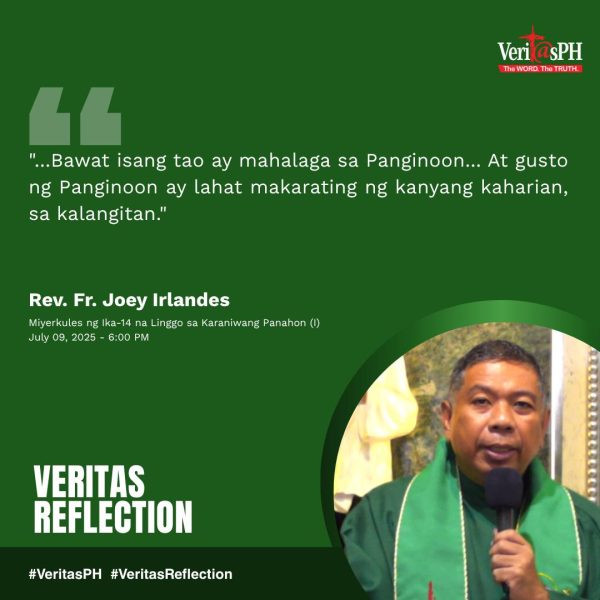
35,109 total reads #VERITASREFLECTION: “…Bawat isang tao ay mahalaga sa Panginoon… At gusto ng Panginoon ay lahat makarating ng kanyang kaharian, sa kalangitan.”-Rev. Fr. Joey IrlandesMiyerkules
35,110 total reads #VERITASREFLECTION: “Gaya ng pagmamahal ng Panginoon sa makakasalanan, nawa ay ating isabuhay ang magpatawad sa mga taong nagkakasala rin sa atin. Bigyan natin
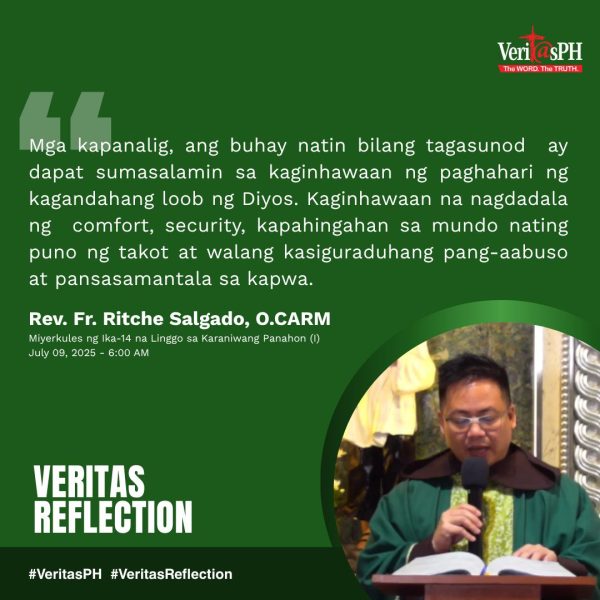
35,111 total reads #VERITASREFLECTION: “Ang ating buhay ay dapat sumasalamin sa kadakilaan at kababaang loob ng Panginoon.”– Rev. Fr. Ritche Salgado, O.CARMMiyerkules ng Ika-14 na Linggo
35,111 total reads #VERITASREFLECTION: “Samahan natin ng malalim na pananampalataya ang ating hiling na makalaya sa ating mga sakit dahil walang imposible sa Diyos at kayang-kaya
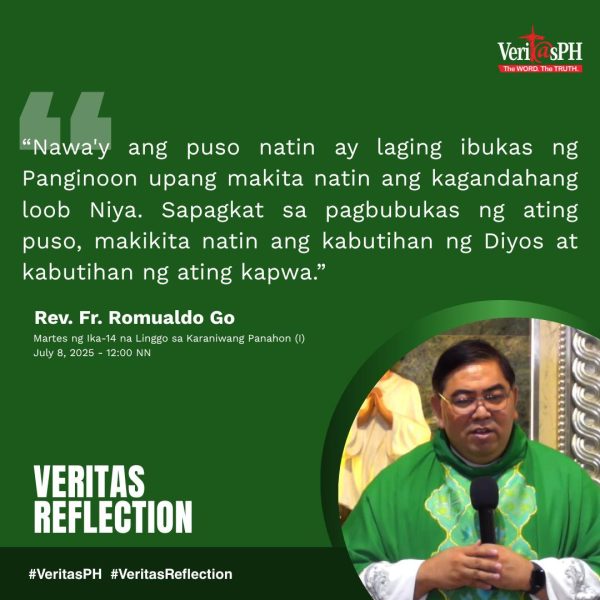
35,110 total reads #VERITASREFLECTION: “Nawa’y ang puso natin ay laging ibukas ng Panginoon upang makita natin ang kagandahang loob Niya. Sapagkat sa pagbubukas ng ating puso,