BIYERNES, HULYO 28, 2023

SHARE THE TRUTH

 3,809 total reads

Biyernes ng Ika-16 na Linggo sa Karaniwang Panahon (I)

Exodo 20, 1-17
Salmo 18, 8. 9. 10. 11

Panginoon, iyong taglay
ang Salitang bumubuhay.

Mateo 13, 18-23

Friday of the Sixteenth Week in Ordinary Time (Green)

UNANG PAGBASA
Exodo 20, 1-17

Pagbasa mula sa aklat ng Exodo

Noong mga araw na iyon, sinabi ng Diyos: “Ako ang Panginoon, ang inyong Diyos na naglabas sa inyo sa Egipto at humango sa inyo sa pagkaalipin.

Huwag kayong magkakaroon ng ibang diyos, maliban sa akin.

Huwag kayong magkakaroon ng diyus-diyosan o kaya’y larawan o rebulto ng anumang nilalang na nasa himpapawid, nasa lupa o nasa tubig. Huwag kayong yuyukod o maglilingkod sa alinman sa mga diyus-diyusang iyan sapagkat akong Panginoon ay mapanibughuin. Parurusahan ko ang lahat ng aayaw sa akin pati ang kanilang mga anak hanggang sa ikaapat na salinlahi. Ngunit ang lahat ng umiibig sa akin ay pagpapalain ko hanggang sa kanilang kaapu-apuhan.

Huwag ninyong babanggitin sa walang kabuluhan ang pangalang Panginoon sapagkat parurusahan ko ang sinumang bumanggit nito nang walang kabuluhan.

Italaga ninyo sa akin ang Araw ng Pamamahinga. Anim na araw kayong gagawa ng inyong gawain. Ang ikapitong araw ay Araw ng Pamamahinga, at itatalaga ninyo sa akin. Sa ikapitong araw, walang gagawa isa man sa inyo: kayo, ang inyong mga anak, mga katulong, ang inyong mga hayop o sinumang naninirahan sa inyong bayan. Anim na araw na ginawa ko ang langit, ang lupa, ang mga dagat at ang lahat ng nasa mga ito; namahinga ako sa ikapitong araw. Itinangi ko ito at itinalaga para sa akin.

Igalang ninyo ang inyong ama’t ina. Sa gayo’y mabubuhay kayo nang matagal sa lupaing ibinigay ko sa inyo.

Huwag kayong papatay.

Huwag kayong mangangalunya.

Huwag kayong magnanakaw.

Huwag kayong sasaksi sa di katotohanan laban sa inyong kapwa.

Huwag ninyong pag-iimbutan ang sambahayan ng inyong kapwa: ang kanyang asawa, mga alila, mga baka, asno o ang anumang pag-aari niya.”

Ang Salita ng Diyos.

SALMONG TUGUNAN
Salmo 18, 8. 9. 10. 11

Panginoon, iyong taglay
ang Salitang bumubuhay.

Ang batas ng Panginoon ay batas na walang kulang,
ito’y utos na ang dulot sa tao ay bagong buhay;
yaong kanyang mga batas ay mapagtitiwalaan,
nagbibigay ng talino sa pahat ang kaisipan.

Panginoon, iyong taglay
ang Salitang bumubuhay.

Ang tuntuning ibinigay ng Poon ay wastong utos,
liligaya ang sinuman kapag ito ang sinunod;
ito’y wagas at matuwid pagkat mula ito sa Diyos,
pang-unawa ng isipan yaong bungang idudulot.

Panginoon, iyong taglay
ang Salitang bumubuhay.

Yaong paggalang sa Poon ay marapat at mabuti,
isang banal na tungkulin na iiral na parati;
pati mga hatol niya’y matuwid na kahatulan,
kapag siya ang humatol, ang pasiya ay pantay-pantay.

Panginoon, iyong taglay
ang Salitang bumubuhay.

Ito’y higit pa sa ginto, na maraming nagnanais.
Higit pa sa gintong lantay na ang hangad ay makamit;
matamis pa kaysa pulot, sa pulot na sakdal tamis,
kahit anong pulot ito na dalisay at malinis.

Panginoon, iyong taglay
ang Salitang bumubuhay.

ALELUYA
Lucas 8, 15

Aleluya! Aleluya!
Ang Salitang mula sa D’yos
kapag isinasaloob
ay mamumunga nang lubos.
Aleluya! Aleluya!

MABUTING BALITA
Mateo 13, 18-23

Ang Mabuting Balita ng Panginoon ayon kay San Mateo

Noong panahong iyon, sinabi ni Hesus sa kanyang mga alagad, “Pakinggan nga ninyo ang kahulugan ng talinghaga tungkol sa manghahasik. Ang mga nakikinig ng Salita tungkol sa paghahari ng Diyos ngunit hindi nakauunawa nito ay katulad ng mga binhing nahasik sa tabi ng daan. Dumarating ang Masama at inaagaw ang nahasik sa kanilang puso. Inilalarawan ng binhing nahasik sa kabatuhan ang nakikinig ng Salita at masayang tumatanggap nito kaagad. Ngunit hindi ito tumitimo sa puso nila kaya’t hindi sila nananatili. Pagdating ng mga kapighatian o pag-uusig dahil sa Salita, agad silang nanlalamig. Inilalarawan naman ng naghasik sa dawagan ang nakikinig ng Salita, ngunit naging abala sa mga bagay ukol sa mundong ito, at naging maibigin sa mga kayamanan anupat ang Salita’y nawalan na ng puwang sa kanilang puso, kaya’t hindi makapamunga. At inilalarawan ng naghasik sa matabang lupa ang mga nakikinig ng Salita at nakauunawa nito. Sila’y namumunga: may tigsasandaan, may tig-aanimnapu, at may tigtatatlumpu.”

Ang Mabuting Balita ng Panginoon.

PANALANGIN NG BAYAN
Ika-16 na Linggo sa Karaniwang Panahon
Biyernes

Manalangin tayo sa Ama sa Langit upang makinig ang sangkatauhan sa kanyang makapangyarihang salita at magbunga ito sa ating buhay.

Panginoon, dinggin mo ang aming panalangin.
o kaya
Panginoon, palaguin mo ang iyong salita sa amin.

Ang Bayan ng Diyos nawa’y maging bukas sa Salita ng Diyos at maipahayag ito sa pamamaraang mauunawaan ng lahat, manalangin tayo sa Panginoon.

Ang mga naglilingkod sa bayan nawa’y gawin ang kanilang tungkulin nang may katapatan at dangal, manalangin tayo sa Panginoon.

Ang mga magsasaka at ang mga nagtatrabaho sa bukirin nawa’y basbasan ng mabuting panahon at mayamang ani, manalangin tayo sa Panginoon.

Ang mga maysakit nawa’y makatagpo ng kasiyahan at kapayapaan sa mga Salita ni Jesus, manalangin tayo sa Panginoon.

Ang ating mga mahal na yumao nawa’y mamayapa sa Kahariang inihanda para sa kanila, manalangin tayo sa Panginoon.

Panginoong Diyos, magsalita kayo sa amin at gawin mo kaming makinig sa iyo. Magbunga nawa ito ng buhay Kristiyano sa amin. Hinihiling namin ito sa pamamagitan ni Kristong aming Panginoon. Amen.

GSIS LIFELINE IN THE STORM

 3,222 total reads

When calamity strikes, it does not send an appointment letter. It simply arrives — sometimes as relentless heat that dries up our water sources, sometimes as a silent virus that spreads through our communities, leaving families worried and weary. In Albay, Camarines Norte, and the City of Naga, our people have been carrying these dual burdens: the lingering, parching effects of the El Niño drought and the rising anxiety brought by the dengue outbreak. For many households, these are not merely inconveniences — they are quiet emergencies that stretch budgets thin and test resilience to its very limit.


It is in moments exactly like these that the true purpose of institutions reveals itself. The Government Service Insurance System has stepped forward with a commitment that speaks volumes: ₱1.69 billion in emergency loans, reaching nearly 69,000 members and pensioners across the three affected provinces. On paper, it is a financial allocation — significant, yes, but just numbers to some. In reality, it is a lifeline. It is the assurance that when the crisis comes, the public servants who have dedicated their lives to serving our communities will not be left behind to face it entirely on their own.


Think of what this means in practical, human terms. For a teacher in Albay watching over students while worrying about rising water bills, this assistance could mean one less sleepless night. For a retiree in Camarines Norte whose pension barely stretches through the month, it could mean the difference between enduring the heat and falling ill from it. For a nurse or government worker in Naga whose household has been touched by sickness, it could mean being able to afford medicine without sinking into debt. These are the quiet, urgent realities that this program addresses — not grand gestures, but dignified survival for people who have long served our nation.


The thoughtful design of this assistance also deserves recognition. By making applications accessible through the GSIS Touch mobile app, the system meets people where they are — removing the need to travel through heat or uncertainty just to seek help. With a reasonable 6% interest rate payable over three years, the terms are compassionate and sustainable rather than predatory. Even more meaningful is the redemption insurance feature — a gentle but powerful reminder that the system cares not just about repayment, but about protecting families should the worst happen. It acknowledges that those we serve deserve dignity and peace of mind alongside financial support.


There is also profound dignity in the eligibility itself. The program extends not only to active public servants but to our pensioners as well — those who have already given decades of their lives in service. It recognizes that they too remain vulnerable when crisis strikes, and that our obligation to care for them does not end when they retire. The clear deadlines and transparent guidelines reflect fairness and respect for the people’s time and trust.


Yet we must also look beyond the numbers. This emergency loan is a bridge, not a permanent solution. It provides breathing room so families can recover, but it also invites us to reflect on the deeper challenges our communities face — the growing frequency of climate crises, the strain on our healthcare systems, and the quiet financial vulnerability that so many of our public servants live with even in the best of times. Programs like this should inspire us not just to be grateful for the help, but to advocate for a nation where fewer people find themselves on the edge of survival when disaster arrives.


In the end, what makes this moment truly meaningful is the simple, powerful truth it represents: we are not alone in the storm. Institutions exist because we choose to stand together. GSIS’ response reminds us that service does not end when disaster begins — in fact, that is when it matters most. To every public servant, every retiree, every family in these communities: may this lifeline bring you not just relief, but renewed hope. You have given so much to our country. It is right and just that our country stands with you now.


And perhaps, in our own small ways, we can carry this spirit forward — to our neighbors, our colleagues, anyone who might be struggling quietly beside us. For the greatest emergency aid any of us can offer is simply this: I see you, and you do not have to carry this alone. Ultimately, the true strength of a society is measured not by how smoothly it operates in calm waters, but by how swiftly and compassionately it responds when the storm breaks. The GSIS emergency loan initiative is more than an efficient policy response; it is a tangible expression of collective responsibility. By extending financial relief with dignity, convenience, and empathy to active workers and retirees alike, the institution fulfills its ultimate promise: ensuring that those who spend their lives building and serving our communities are safeguarded when their own foundations are shaken.

IN LOVE WITH OUR KIDNAPPERS?

 3,836 total reads

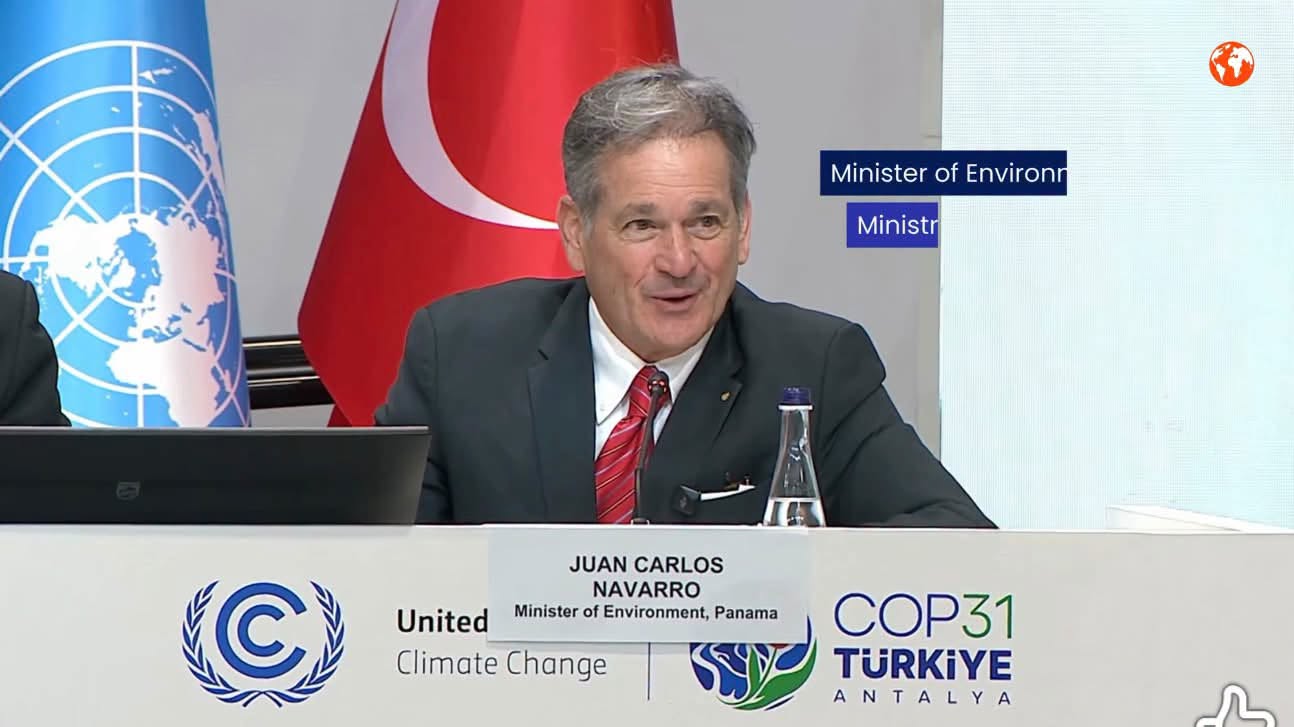
One of the most striking speeches delivered at COP31 in Antalya, Türkiye, came from Panama’s Minister of Environment, Juan Carlos Navarro.

Speaking at a press conference on November 18, 2026, where a growing coalition of 30 countries was calling for an international treaty to phase out fossil fuels, Navarro dispensed with the usual diplomatic language and said:

“We are being held hostage by the petroleum mafia. Not only that, we have all been stricken by Stockholm disease. We are in love with our kidnappers.

“We love the petroleum guys. We can’t live without them, and they are so smart that they have convinced us that they are actually doing this for our own good.

“They torture us for our own good. They destroy our planet for our own good. They destroy nature to help us, and they demand our unrequited, endless, unlimited, boundless love.”

He went on to challenge individual nations to take responsibility for their own ecological policies, citing the example of Vanuatu, Tuvalu and Fiji:

“And so we must act with urgency, we must act with political will at the national level, and we must start by facing the truth. If we keep going the way we are at this COP, we’re going nowhere. I call for radical change of course. We must radically change the way we go about taking care of the Earth.”

His speech drew enthusiastic applause and quickly became one of the most talked-about interventions at the summit.

What struck me about Navarro’s speech was his readiness to acknowledge our own complicity. He was not simply accusing the petroleum industry. He was also calling attention to our collective dependence on the very industry whose products are contributing enormously to the destruction of our common home.

Is this not precisely why Pope Francis, in Laudato Si’, called for an ecological conversion? And why, eight years later, in Laudate Deum, he expressed mounting frustration over the inability of international institutions to respond effectively to the climate crisis?

I wonder what position our own Philippine delegation took on the proposed Fossil Fuel Treaty. Did we stand alongside Panama, Vanuatu, Tuvalu and Fiji? As one of the countries most vulnerable to climate disasters, should we not have a particularly strong voice in this conversation?

We cannot keep demanding assistance for the victims of climate change without also confronting the principal causes of climate change.

There is something deeply disturbing about our inability to break free from a system that is destroying the very conditions that make life possible on this planet.

PERSEVERANCE

 4,394 total reads

Gospel Reading for November 25, 2026 – Luke 21: 12-19

PERSEVERANCE

Jesus said to the crowd: “They will seize and persecute you, they will hand you over to the synagogues and to prisons, and they will have you led before kings and governors because of my name. It will lead to your giving testimony. Remember, you are not to prepare your defense beforehand, for I myself shall give you a wisdom in speaking that all your adversaries will be powerless to resist or refute. You will even be handed over by parents, brothers, relatives, and friends, and they will put some of you to death. You will be hated by all because of my name, but not a hair on your head will be destroyed. By your perseverance you will secure your lives.”

————

Jesus was speaking about what would happen in the future when he is no longer around. It must have been very frightening and disheartening for the crowd to hear. Many of them looked up to Jesus. Many of them hung on to every word he said because he taught like nobody else did – He was compassionate in his teachings and in practice. His teachings were so reassuring to people who had been burdened so much in the practice of religion. His standing with crowds was so great that’s why the Pharisees and elders had to study very hard how to destroy him.

There were so many martyrs among the early Christians. What we have now is the fruit of all their sacrifices and the lives they had to give to uphold the Faith. The Church was able to survive through the BLOOD OF THE MARTYRS.

Today, we are called to continue being martyrs for the Faith. As long as we continue being faithful to the teachings of Jesus despite the confusion and disorientation of values around us, we are called to defend the Faith, the teachings of Jesus Christ. By doing so, have to expect persecution not only from other people but even from our own family. All we need is PERSEVERANCE until the time when God calls us to join him in eternal life.

Lord Jesus, may we remain faithful to you until our dying day. Amen.

Veritas Editorial

Picture of Rev. Fr. Anton CT Pascual

Rev. Fr. Anton CT Pascual

Usapang klima

 50,664 total reads

 50,664 total reads Mga Kapanalig, ngayon ang huling araw ng Global Warming and Climate Change Consciousness Week na isinasagawa taun-taon mula November 19 hanggang 25. Kasabay

Read More »

Hindi krimen ang magprotesta

 166,443 total reads

 166,443 total reads Mga Kapanalig, nairaos na ang ASEAN Summit. Mahalaga ito sa pagtataguyod ng mabuting ugnayan ng mga bansa sa Timog Silangang Asya at iba

Read More »

THE LOST LESSONS

 287,023 total reads

 287,023 total reads Kapanalig, A Nation That Fails to Educate Its Children Risks Its Future Madalas sinasabi, ang edukasyon ang pundasyon ng kinabukasan ng isang bansa.

Read More »

NAKAHANDA BA TAYO WHEN NATURE STRIKES

 334,785 total reads

 334,785 total reads Kapanalig, ang climate change ay hindi na isang banta. Ito ay kumakatok na sa ating mga pintuan, binabaha ang ating tahanan, sinisira ang

Read More »

Watch Live

RELATED TOPICS

Huwebes, Nobyembre 5, 2026

 38,610 total reads

 38,610 total reads Huwebes ng Ika-31 Linggo sa Karaniwang Panahon (II) Filipos 3, 3-8a Salmo 104, 2-3. 4-5. 6-7 Ang may pusong tapat sa D’yos ay

Read More »

Miyerkules, Nobyembre 4, 2026

 41,132 total reads

 41,132 total reads Paggunita kay San Carlos Borromeo, obispo Filipos 2, 12-18 Salmo 26, 1. 4. 13-14 Panginoo’y aking tanglaw, siya’y aking kaligtasan. Lucas 14, 25-33

Read More »

Martes, Nobyembre 3, 2026

 43,216 total reads

 43,216 total reads Martes ng Ika-31 Linggo sa Karaniwang Panahon (II) o kaya Paggunita kay San Martin de Porres, namanata sa Diyos Filipos 2, 5-11 Salmo

Read More »

Lunes, Nobyembre 2, 2026

 41,735 total reads

 41,735 total reads Paggunita sa Lahat ng mga Pumanaw na Kristiyano Mga Pagbasa para sa Unang Misa 2 Macabeo 12, 43-46 Salmo 103, 8 at 10.

Read More »

Linggo, Nobyembre 1, 2026

 42,835 total reads

 42,835 total reads Dakilang Kapistahan ng Lahat ng mga Banal Pahayag 7, 2-4. 9-14 Salmo 23, 1-2. 3-4ab. 5-6 Panginoon, ang bayan mo ay dumudulog sa

Read More »

SUPPORT OUR MISSION

BECOME A KAPANALIG MEMBER AND EUCHARISTIC ADVOCATE!

CATHOLINK

THE PHILIPPINES CATHOLIC CHURCH ONLINE DIRECTORIES

Scroll to Top