Linggo, Agosto 24, 2025

SHARE THE TRUTH

 4,040 total reads

Ika-21 Linggo sa Karaniwang Panahon (K)

Isaias 66, 18-21
Salmo 116, 1. 2

Humayo’t dalhin sa tanan
Mabuting Balitang aral.

Hebreo 12, 5-7. 11-13
Lucas 13, 22-30

Twenty-first Sunday in Ordinary Time (Green)

UNANG PAGBASA
Isaias 66, 18-21

Pagbasa mula sa aklat ni propeta Isaias

Ito ang sinasabi ng Panginoon: “Nalalaman ko ang iniisip nila at mga ginagawa. Darating ako upang tipunin ang lahat ng bansa, at mga taong iba’t iba ang wika. Malalaman nila kung gaano ako kadakila. Malalaman din nilang ako ang nagpaparusa sa kanila. Ngunit magtitira ako ng ilan upang padala sa iba’t ibang bansa. Susuguin ko sila sa Tarsis, sa Pul at sa Lydia, mga dakong sanay sa paggamit ng pana. Magsusugo rin ako sa Tubal at Javan, at sa mga baybaying hindi pa ako nababalita sa aking kabantugan. Ipahahayag nila sa lahat ng bansa kung gaano ako kadakila. Bilang handog sa akin sa banal na bundok sa Jerusalem, ibabalik nila ang mga kababayan ninyo buhat sa pinagtapunan sa kanila. Sila’y darating na sakay ng mga kabayo, asno, kamelyo, karwahe at kariton, tulad ng pagdadala ng mga handog na butil sa Templo, nakalagay sa malilinis na sisidlan. Ang ilan sa kanila ay gagawin kong saserdote at ang ilan ay Levita.”

Ang Salita ng Diyos.

SALMONG TUGUNAN
Salmo 116, 1. 2

Humayo’t dalhin sa tanan
Mabuting Balitang aral.

o kaya: Aleluya.

Purihin ang Poon!
Dapat na purihin ng lahat ng bansa,
Siya ay purihin
ng lahat ng tao sa balat ng lupa.

Humayo’t dalhin sa tanan
Mabuting Balitang aral.

Pagkat ang pag-ibig
na ukol sa ati’y dakila at wagas,
at ang katapatan niya’y walang wakas.

Humayo’t dalhin sa tanan
Mabuting Balitang aral.

IKALAWANG PAGBASA
Hebreo 12, 5-7. 11-13

Pagbasa mula sa sulat sa mga Hebreo

Mga kapatid, nalimutan na ba ninyo ang pangaral ng Diyos sa inyo bilang mga anak niya – mga salitang nagpapalakas ng loob ninyo?

“Anak, huwag kang magwalang-bahala kapag itinutuwid ka ng Panginoon,
at huwag panghinaan ng loob kapag ikaw ay pinarurusahan niya.
Sapagkat pinarurusahan ng Panginoon ang mga iniibig niya,
at pinapalo ang itinuturing niyang anak.”

Tiisin ninyo ang lahat bilang pagtutuwid ng isang ama, sapagkat ito’y nagpapakilalang kayo’y inaari ng Diyos na kanyang mga anak. Sinong anak ang hindi itinuwid ng kanyang ama? Habang tayo’y itinutuwid hindi tayo natutuwa kundi naghihinagpis. Ngunit pagkaraan niyon, lalasap tayo ng kapayapaang bunga ng matuwid na pamumuhay.

Kaya’t palakasin ninyo ang inyong lupaypay na katawan at tipunin ang nalalabi pang lakas! Lumakad kayo sa daang matuwid upang hindi tuluyang mapilay, kundi gumaling ang paang nalinsad.

Ang Salita ng Diyos.

ALELUYA
Juan 14, 6

Aleluya! Aleluya!
Ikaw, O Kristo, ang Daan,
ang Katotohana’t Buhay
patungo sa Amang mahal.
Aleluya! Aleluya!

MABUTING BALITA
Lucas 13, 22-30

Ang Mabuting Balita ng Panginoon ayon kay San Lucas

Noong panahong iyon, nagpatuloy si Hesus sa kanyang paglalakbay. Siya’y nagtuturo sa bawat bayan at nayon na kanyang dinaraanan patungong Jerusalem. May isang nagtanong sa kanya, “Ginoo, kakaunti po ba ang maliligtas?” Sinabi niya, “Pagsikapan ninyong pumasok sa makipot na pintuan. Sinasabi ko sa inyo, marami ang magpipilit na pumasok ngunit hindi makapapasok.

“Kapag ang pinto’y isinara na ng puno ng sambahayan, magtitiis kayong nakatayo sa labas, at katok nang katok. Sasabihin ninyo, ‘Panginoon, papasukin po ninyo kami.’ Sasagutin niya kayo, ‘Hindi ko alam kung tagasaan kayo!’ At sasabihin ninyo, ‘Kumain po kami at uminom na kasalo ninyo, at nagturo pa kayo sa mga lansangan namin.’ Sasabihin naman ng Panginoon, ‘Hindi ko alam kung tagasaan kayo! Lumayo kayo sa akin, kayong lahat na nagsisigawa ng masama!’ Tatangis kayo at magngangalit ang inyong ngipin kapag nakita ninyong nasa kaharian ng Diyos sina Abraham, Isaac at Jacob, at ang lahat ng propeta, at kayo nama’y ipinagtabuyan sa labas! At darating ang mga tao buhat sa silangan at kanluran, sa hilaga at timog, at dudulog sa hapag sa kaharian ng Diyos. Tunay ngang may nahuhuling mauuna, at may nauunang mahuhuli.”

Ang Mabuting Balita ng Panginoon.

PANALANGIN NG BAYAN
Ika-21 Linggo sa Karaniwang Panahon (K)

Batid ang kahirapan habang dumaraan tayo sa “makipot na pintuan” ng tunay na buhay Kristiyano, idalangin natin ang maawaing tulong ng Panginoon:

Panginoon, gabayan Mo kami!

Para sa Simbahan, ang pama-yanan ng mga sumasampalataya: Nawa’y tanggapin niya ang lahat
ng kultura at tradisyon upang dalisayin at palaguin niya ang mga pagpapahalaga ng Mabuting
Balita. Manalangin tayo.

Para sa Santo Papa at lahat ng Obispo: Nawa sila’y laging maging malinaw na tanda at kasangkapan ng pag-ibig ng Diyos sa lahat ng tao, sa kanilang pangangaral at sa kanilang mga gawaing pastoral. Manalangin tayo.

Para sa dumaranas ng kahirapan sa pamumuhay alinsunod sa Mabuting Balita: Nawa’y magtamo sila ng ginhawa sa alaalang may gantimpala ang Diyos para sa bawat isa alinsunod sa kani-
kanilang pagsisikap. Manalangin tayo.

Para sa ating parokya: Nawa ito’y maging isang tunay na “Pamayanan ng mga Alagad” kung saan bawat kasapi ay nakadarama ng pagpapahalaga at tulong sa patuloy na pagsisikap mamuhay alinsunod sa turo ng Panginoon. Manalangin tayo.

Diyos Ama, maraming salamat at ginawa Mo kaming Iyong mga anak kay Hesus, na aming Kapatid at Tagapagligtas. Tulungan Mo kami sa aming pagsisikap na lalong mapalapit sa Iyo sa pamamagitan ng “makipot na pintuan” ng tapat na pagsunod sa Iyong kalooban. Isinasamo namin ito sa ngalan ni Kristong aming Panginoon. Amen!

TIPS TO PREVENT SCHOOL VIOLENCE IN THE PHILIPPINES

 563 total reads

On June 22, 2026, news from Tacloban City shocked the nation: two minors, aged 14 and 15, entered a public high school and opened fire, killing three students and wounding seven others. Police recovered more than 40 spent shells and traced the weapons—one belonging to a police officer, another to a security agency—revealing how easily lethal arms slipped past supposed safeguards. This tragedy is not an isolated incident; it is a painful wake‑up call that our schools are vulnerable, our systems incomplete, and our children’s safety fragile. Violence in Philippine schools—whether mass attacks, bullying, or abuse—destroys lives, disrupts education, and betrays the trust families place in learning institutions. Drawing from the lessons of Tacloban and existing policies like DepEd Order 40 s. 2012 (Child Protection Policy) and RA 10627 (Anti‑Bullying Act), here are five practical, human‑centered strategies to prevent such horrors from happening again.


  1. Fortify Entry Points and Strictly Control Access – Prevention begins with physical security that is visible yet respectful. Schools must implement mandatory bag inspections, install working metal detectors, and maintain complete visitor logs with proper identification and escort systems. All firearms, bladed weapons, and explosive materials must be strictly prohibited within school grounds, without exception—including for personnel or visitors unless authorized by law enforcement and fully accounted for. Security guards must be vetted, trained in child protection protocols and emergency response, and coordinated with local police and barangay tanods for regular patrols and quick reaction support. In partnership with LGUs and PNP, schools should conduct periodic security audits to identify blind spots, weak fencing, or unmonitored areas that could be exploited. Safety is not about making schools feel like prisons; it is about ensuring that every person entering is there to learn, teach, or serve—never to harm.


  1. Build Robust Mental Health and Emotional Support Systems – Violence is rarely sudden; it is often the final expression of long‑unheard pain, isolation, or trauma. Philippine schools must move beyond viewing guidance counselors as mere disciplinarians or paper‑pushers and instead establish comprehensive mental health support aligned with RA 12080 (Basic Education Mental Health Law). This means having accessible counselors, regular emotional wellness check‑ins, peer support groups, and clear referral pathways to social workers and mental health professionals. Teachers and staff should be trained to recognize warning signs—withdrawal, sudden behavioral changes, aggressive outbursts, fixation on violence or weapons—and to report concerns confidentially to the Child Protection Committee (CPC) required in every school. When students feel seen, heard, and supported, destructive impulses are more likely to be addressed before they escalate into irreversible harm.


  1. Strengthen Child Protection Mechanisms and Reporting Cultures – Every school must fully operationalize DepEd’s Child Protection Policy (DO 40 s. 2012) and Anti‑Bullying Law (RA 10627), ensuring that the CPC functions actively and not just on paper. Policies must be clear, known to all, and include anonymous, safe reporting channels—online forms, suggestion boxes, dedicated hotlines—so that students, parents, and even concerned community members can speak up without fear of retaliation. Crucially, reports must be investigated promptly, fairly, and confidentially, with appropriate interventions ranging from counseling and mediation to disciplinary or legal action. Schools should also teach “upstander” behavior—empowering learners to intervene safely or seek help when they witness harm—rather than normalizing bystander silence. A culture of openness and accountability is our strongest defense against violence.


  1. Deepen Partnerships Between Schools, Families, and Communities – Prevention requires a united front. Schools must build stronger ties with parents through regular dialogues, orientation programs, and active involvement in Brigada Eskwela and other activities, so families understand their vital role in monitoring behavior and reinforcing values. Coordination with barangay officials, LGUs, and the PNP should be formalized—through school safety committees, joint patrols, and shared intelligence on emerging threats or troubled youth. Local leaders must also help regulate access to weapons and ensure that communities themselves reject violence as a solution. When schools, homes, and neighborhoods work together, we create an extended safety net that surrounds every child, wherever they are.


  1. Teach Peace, Respect, and Conflict Resolution as Core Subjects – Finally, the most lasting prevention is education itself. Violence thrives where empathy, respect, and peaceful problem‑solving are absent. Schools should integrate peace education, human rights, gender sensitivity, and conflict resolution into daily lessons—not just as special events, but as essential competencies alongside reading, math, and science. Students must learn to value differences, manage emotions constructively, and settle disputes through dialogue and mediation. When our schools consistently nurture a culture of respect and compassion, we build a generation that rejects violence and protects one another.


The tragedy in Tacloban must not be just another headline. It must be the turning point that compels us to move from policies on paper to real, lived safety in every classroom, campus, and community across the Philippines. Guarding our schools and youth is more than a matter of policy or security—it is a sacred duty rooted in the call to protect the most vulnerable among us. As Jesus taught, “Let the children come to me, and do not hinder them; for to such belongs the kingdom of heaven” (Matthew 19:14), reminding us that every learner is a precious gift entrusted to our care.

Fraternal Correction

 811 total reads

23rd Sunday A


Ez 33:7-9
Th reading introduces Ezekiel’s prophetic work among Babylonian exiles, emphasizing God’s universal concerns as he was the first prophet called in a foreign land. He warns of Jerusalem’s destruction and describes the watchman’s role in warning of danger, emphasizing accountability for failing to warn. The passage highlights personal guilt and God’s concern, with the prophetic voice vital for repentance until the end, focusing on responsibility over response.


Rom 13:8-10
The passage highlights Paul’s teaching on Christian freedom from the law. This freedom isn’t license or anti-nomianism; observing the command to love ensures the law’s demands are met. Love respects the law but requires more. It’s the only debt Christians owe, fulfilling the law through unlimited love (Mk 12:28-34), making the law fully fulfilled (v10).


Mt 18:15-20
Considering the previous parable on the lost sheep (Mt 18:12-14) as the immediate context of the gospel reading today (vv 15-20), the motive behind the three-step procedure regarding erring brothers becomes obvious. In keeping the desire of the ‘heavenly Father that none any of these little ones should perish’ (v14), it aims to “win over” the brother who sinned (v 15). The verb “kerdainō” κέρδαὶνω generally means “to gain,””acquire” and could have as its object either things (material world at the expense of of one’s spiritual life, Mt 15:26) or someone (for reconciliation, Mt 18:15; 1 Pet. 3:1 or for St. Paul, gaining converts, 1 Cor. 9:19ff, and Christ himself, Phil. 3:8).

The first step in the process of correction is based on Lev 19.17: “You shall not hate your brother in your heart but you shall reason with your neighbor lest you bear sin with your neighbor because of him”. This sort of private confrontation should be motivated by love and concern. The second step is based on Deut 19,15: “Only on the evidence of two or of three witnesses, shall a charge be sustained.” The biblical procedure presupposes a criminal offense, but here the witnesses would help in a sort of “negotiation” in order to urge him to return to faithfulness. Lastly, the step that can be considered as the “adjudication”. If the brother still will not listen, the disciple must tell it “to the church,” the community of those who belong to the kingdom. The whole purpose of this action is to remove every stumbling block, to bring back the strayed into fellowship with the whole community. If that fails, however, “let such a one be to you as a Gentile and a tax-col-lector” a common proverbial phrase indicating those outside the kingdom (cf. 5:46-47).

In the concluding verses, the power to bind and loose, previously bestowed on Peter in 16:19, is now given to the disciples at large. That power would seem to concern either the imposing (and lifting) of decrees of excommunication or the forgiving (and not forgiving) of sins (v18). The ideas of agreement, common prayer, and Christ’s presence are here in the service of exercising the power to bind and loose in the case of the brother who sins (v19). When the community gathers in Jesus’ name to hear a legal case, Jesus is there. When the community agrees, the Father in heaven agrees (v20).

This Sunday’s message highlights our Christian duty to correct others when needed, based on Ezekiel’s call for admonition in prophecy and the Gospel’s guide for confronting unrepentant offenders. It stresses community prayer, love as the foundation of commandments, and the importance of addressing wrongdoings courageously without vindictiveness or inaction. Practicing this fulfills God’s desire that no one be lost. May we all have the courage to do so. Amen.

Debt of Love

 1,150 total reads

Lord My Chef Sunday Recipe for Soul by Fr. Nicanor F. Lalog II 
Twenty-Third Sunday in Ordinary Time, Cycle A, 06 September 2026
Ezekiel 33:7-9  ><}}}}*> Romans 13:8-10  ><}}}}*> Matthew 18:15-20
From Facebook post by Marvin Germo, 04 September 2026.

Thanks be to God for Alex Eala – not only an excellent tennis player, a bright and intelligent lady but most of all, most kind and humble of all.

Her recent landing on the front page of New York Times that prides itself with the motto “All the News Fit to Print” in its 175 years of existence cemented Eala’s stardom. That’s real influence no blog stats nor Hollywood walk of fame could match.

Side by side with the major events and newsmakers in the world, the editors of New York Times featured Eala on their front page not entirely because of her prowess and grit in tennis but of her expressions of love, community and unity of Filipinos – a far, far cry from news coming from our forsaken country of calamities and crooks in government. Eala – along with other athletes like EJ Obienna – are the only good news we now have, with her practically a walking gospel like St. Paul in today’s second reading.

Brothers and sisters: Owe nothing to anyone, except to love one another; for the one who loves another has fulfilled the law (Romans 13:8).

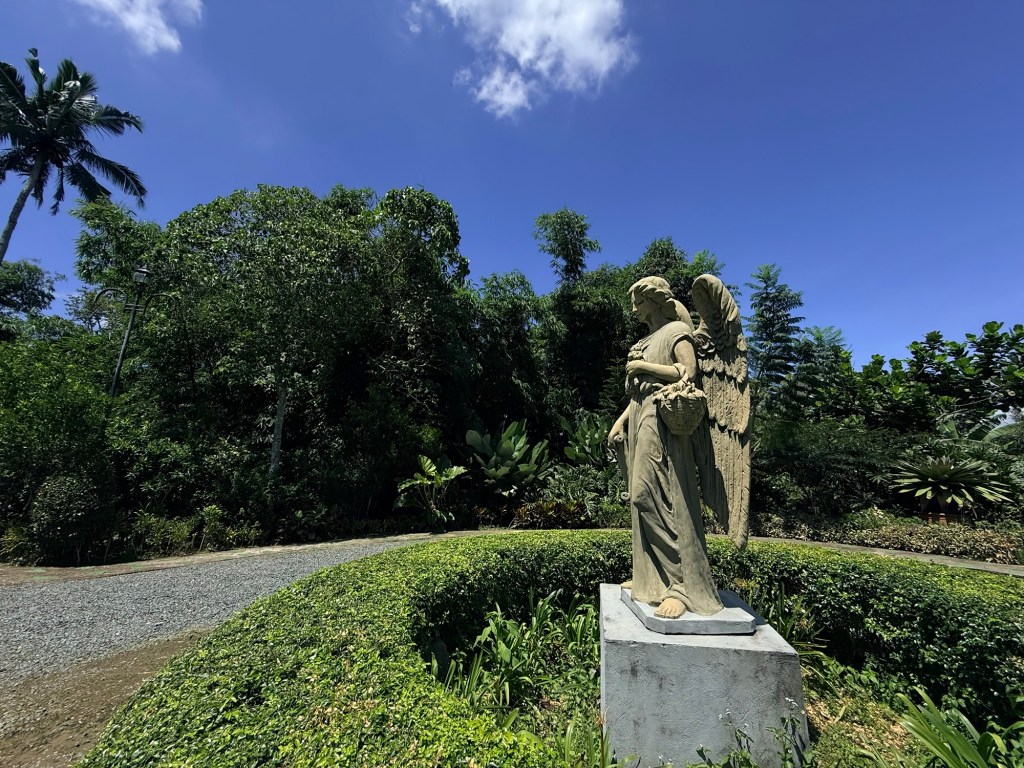
Photo by author, St. Paul Spiritual & Renewal Center, Bgy. Tanyawak, Alfonso, Cavite, 19 August 2026.

What kind of love is Paul exhorting the Romans then and us today? For St. Paul, love is the self-sacrificing love that Jesus showed us when he offered himself for us on the cross.

Recall last Sunday St. Paul reminded us “to offer your bodies as a living sacrifice” (Rom. 12:1) like Jesus. In that same chapter, he spoke of not retaliating or seeking vengeance while in the following chapter we now have, he expounded the themes of obedience to authority and a sort of social responsibilities like justice (Rom. 13:1-7).

And while justice demands we pay off our debts and other dues to one another, to the state and public officials, it is a totally different scenario when it comes to love. For St. Paul, love is the imitation of Jesus Christ, a love that can never be measured at all and even be demanded and decreed.

Love is not a possession that anyone can receive nor give in an exactly measured quantity like a pound or a kilogram of love. St. Mother Teresa said the measure of love is when you love without measure. It is either you love or do not love! And when we do not love, then we sin which is a refusal to love.

That sin can only be repaired and corrected by love.

Therefore, to overcome sin, you have to love more!

That is why we hear Jesus teaching us today the importance of fraternal correction based on love not anything else.

Jesus said to his disciples: “If your brother sins against you, go and tell him his fault between you and him alone. If he listens to you, you have won over your brother. If he does not listen, take one or two other along with you, so that every fact may be established on the testimony of two or three witnesses. If he refuses to listen to them, tell the church. If he refuses to listen to the church, then treat him as you would a Gentile or a tax collector” (Matthew 18:15-17).

Photo by a friend in Swan Island Dahlia Farm, Canby, Oregon, 29 August 2026.

Jesus is now heading to Jerusalem to fulfill his mission. Along the way, he taught his disciples important lessons about the Church he had just established upon Peter, the Rock, while at Caesarea Philippi the other Sunday.

For three Sundays beginning today, Jesus will touch on three moral issues we face with seeming complexity in our modern time like fraternal correction, forgiving, and work. These are crucial because they are expressions of mutual love for one another. Most of all, it is in these realms we fall into “sin of omission” particularly with fraternal correction as we tend to detach ourselves from others when they are committing sin. By distancing from them or refusing to make a clear stand against evil, we unconsciously allow sin to persist.

The dark side of the sin of omission lies in that tendency within us to not care at all with those into serious sins when we separate and distance from them, even telling them “bahala ka na sa buhay mo…pinili mo iyan, pagdusahan mo.”

Fraternal correction is the antidote to sins of omission because it is about keeping our relationships intact as family, friends, brothers and sisters in Jesus Christ who becomes truly present in the world among us when we live in harmony because “where two or three are gathered together in my name, there am I in the midst of them” (Mt. 18:20).

This is the good news of Eala, whether she wins or loses a match, she speaks of love and kindness. And she has been consistent with it!

From Facebook, 04 September 2026.

Since the Old Testament, God had already insisted on this moral precept as his children that we look after one another like a sentinel – a watchman or a guard – as he told the Prophet Ezekiel in the first reading.

At that time, the enemies of Judah were closely approaching their borders that they designated watchmen as their first line of defense. Failure by these watchmen to warn the people – as it turned out later – could spell disaster for the kingdom.

The same thing is true with us. We are all interrelated with each other. One rotten tomato can spoil the whole batch like allowing corruption in every form to continue as well as electing corrupt officials into office. How sad we have not learned our lessons; maybe not until we have sank deep into flood…

We cannot be indifferent and be mere bystanders amid the evil and sins happening around us perpetrated especially by those closest to us. It is not enough either that we do no wrong on others yet allow those into corruption to continue with their evil doings. Fraternal correction is an expression of our love – for God and for others. We correct those into sin because of love, not because we are better or holier.

St. Paul beautifully declared in 2 Corinthians 5:14, “Caritas Christi urget nos” – the love of Christ urges, impels us – to love more especially in these times of calamities and disunity in the country.

Photo by a friend, Swan Island Dahlia Farm, Canby, Oregon, 29 August 2026.

This love of Jesus Christ the Lord himself described as “new commandment” at his last supper (Jn.13:34) is a love rooted in God himself, a love that “levels up” every disciple into the mystical plane of existence.

Recall those moments you have truly loved without strings attached, unselfish and selfless: that is when we realize that love is a debt we can never pay off because love is a gift from God, something that is never exhausted nor depleted. In fact, we realize that we too can love like Jesus Christ!

God does not “order” nor “command” us in the strict sense to love him. He asks for our love because he loves us, because he is love. When we love, we fulfill the commandments of God, we live in peace and harmony with one another like in heaven. That is why it is only love that will remain in heaven where there will be no more fraternal corrections. Most of all, love can never be paid off as a debt because love is all that shall remain to become our very person in Christ. Amen. Have a blessed, loving week!

Veritas Editorial

Picture of Rev. Fr. Anton CT Pascual

Rev. Fr. Anton CT Pascual

Kahirapan sa bansa

 199,833 total reads

 199,833 total reads Mga Kapanalig, tinatayang anim na milyong Pilipino ang nakaahon na sa kahirapan.  Ayon iyan sa Philippine Statistics Authority (o PSA). Bumagsak sa 9.7%

Read More »

Inhustisya sa gitna ng krisis sa klima

 234,506 total reads

 234,506 total reads Mga Kapanalig, nakikiramay tayo sa mga taga-Nepal Matapos ang isang nakapanlulumong trahedyang nangyari doon. Noong nakaraang linggo, magkasunod na flash floods at mudslides

Read More »

Bayan, hindi bayad

 250,406 total reads

 250,406 total reads Mga Kapanalig, ngayon ay National Heroes Day o Araw ng mga Bayani.  Sa araw na ito, kasama sa mga bayaning ginugunita natin ay

Read More »

SOP

 286,894 total reads

 286,894 total reads Kapanalig, sa day-19 ng impeachment trial ni Vice President Sara Duterte sa misused o maling paggamit sa 500-milyong pisong confidential fund ng Office

Read More »

PAANO MAIWASAN ANG SCHOOL VIOLENCE?

 293,594 total reads

 293,594 total reads Kapanalig, ang nangyayaring school violence sa ating bansa ay hindi matutugunan ng isang simpleng paghihigpit sa seguridad sa mga paaralan. Hindi rin sagot

Read More »

Watch Live

RELATED TOPICS

Martes, Setyembre 8, 2026

 867 total reads

 867 total reads Kapistahan ng Pagsilang ng Mahal na Birheng Maria Mikas 5, 1-4a o kaya Roma 8, 28-30 Salmo 12, 6ab. 6kd Ang lubos kong kasiyahan

Read More »

Lunes, Setyembre 7, 2026

 1,244 total reads

 1,244 total reads Lunes ng Ika-23 Linggo sa Karaniwang Panahon (II) 1 Corinto 5, 1-8 Salmo 5, 5-6. 7. 12 Poon, ako’y pangunahan nang landas mo’y

Read More »

Linggo, Setyembre 6, 2026

 1,248 total reads

 1,248 total reads Ika-23 Linggo sa Karaniwang Panahon (A) Ezekiel 33, 7-9 Salmo 94, 1-2. 6-7. 8-9 Panginoo’y inyong dinggin, huwag n’yo s’yang salungatin. Roma 13,

Read More »

Sabado, Setyembre 5, 2026

 7,203 total reads

 7,203 total reads Sabado ng Ika-22 Linggo sa Karaniwang Panahon (II) o kaya Paggunita sa Mahal na Birheng Maria tuwing Sabado 1 Corinto 4, 6b-15 Salmo 144,

Read More »

Biyernes, Setyembre 4, 2026

 9,644 total reads

 9,644 total reads Biyernes ng Ika-22 Linggo sa Karaniwang Panahon (II) 1 Corinto 4, 1-5 Salmo 36, 3-4. 5-6. 27-28. 39-40 Nasa D’yos ang kaligtasan ng

Read More »

SUPPORT OUR MISSION

BECOME A KAPANALIG MEMBER AND EUCHARISTIC ADVOCATE!

CATHOLINK

THE PHILIPPINES CATHOLIC CHURCH ONLINE DIRECTORIES

Scroll to Top