LINGGO, DISYEMBRE 24, 2023

SHARE THE TRUTH

 8,167 total reads

Ikaapat na Linggo sa Panahon ng Pagdating ng Panginoon (B)

2 Samuel 7, 1-5. 8b-12. 14a. 16
Salmo 88, 2-3. 4-5. 27 at 29

Pag-ibig mong walang maliw
ay lagi kong sasambitin.

Roma 16, 25-27
Lucas 1, 26-38

Fourth Sunday of Advent (Violet)

UNANG PAGBASA
2 Samuel 7, 1-5. 8b-12. 14a. 16

Pagbasa mula sa ikalawang aklat ni Samuel

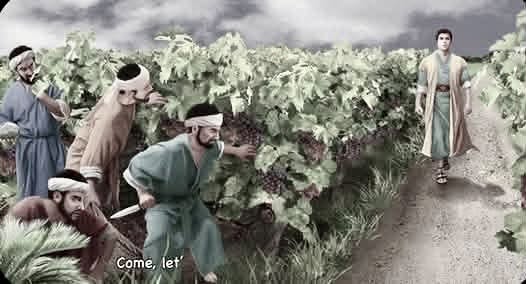
Si David ay panatag nang nakatira sa kanyang bahay. Sa tulong ng Panginoon, hindi na siya ginambala ng kanyang mga kaaway. Tinawag niya si Natan at sinabi, “Nakikita mong nakatira ako sa tahanang sedro, ngunit ang Kaban ng Tipan ay sa tolda lamang.” Sumagot si Natan, “Isagawa mo ang iyong iniisip, sapagkat ang Panginoon ay sumasaiyo.”

Ngunit nang gabing iyo’y sinabi ng Panginoon kay Natan, “Ganito ang sabihin mo kay David: ‘Ipagtatayo mo ba ako ng tahanan? Inalis kita sa pagpapastol ng tupa upang gawing pinuno ng bayang Israel. Kasama mo ako saanmang dako at lahat mong mga kaaway ay aking nilipol. Gagawin kong dakila ang iyong pangalan tulad ng mga dakilang tao sa daigdig. Bibigyan ko ang Israel ng kanyang lupa at doon ko patitirahin. Wala nang gagambala sa kanila roon: wala nang aalipin sa kanila tulad noong una, buhat nang maglagay ako ng hukom nila. Magiging payapa ka sapagkat wala nang gagambala sa iyo. Bukod dito, akong Panginoon ay nagsasabi sa iyo: Patatatagin ko ang iyong sambahayan. Pagkamatay mo, isa sa iyong mga anak ang ipapalit ko sa iyo. Patatatagin ko ang kanyang kaharian. Kikilanlin ko siyang anak at ako nama’y magiging ama niya. Magiging matatag ang iyong sambahayan, ang iyong kaharia’y hindi mawawaglit sa aking paningin at mananatili ang iyong trono.’”

Ang Salita ng Diyos.

SALMONG TUGUNAN
Salmo 88, 2-3. 4-5. 27 at 29

Pag-ibig mong walang maliw
ay lagi kong sasambitin.

Pag-ibig mo, Poon, na di magmamaliw
ang sa tuwi-t’wina’y aking aawitin;
ang katapatan mo’y laging sasambitin,
Yaong pag-ibig mo’y walang katapusan,
sintatag ng langit ang ‘yong katapatan.

Pag-ibig mong walang maliw
ay lagi kong sasambitin.

Sabi mo, Poon, ikaw ay may tipan
na iyong ginawa kay David mong hirang
at ito ang iyong pangakong iniwan:
“Isa sa lahi mo’y laging maghahari,
ang kaharian mo ay mamamalagi.”

Pag-ibig mong walang maliw
ay lagi kong sasambitin.

Ako’y tatawaging ama niya’t Diyos,
tagapagsanggalang niya’t Manunubos.
Ang aking pangako sa kanya’y iiral
at mananatili sa kanya ang tipan.

Pag-ibig mong walang maliw
ay lagi kong sasambitin.

IKALAWANG PAGBASA
Roma 16, 25-27

Pagbasa mula sa sulat ni Apostol San Pablo sa mga taga-Roma

Mga kapatid:

Purihin ang Diyos na makapagpapatibay sa inyo sa pamamagitan ng Mabuting Balita tungkol kay Hesukristo na ipinangangaral ko sa inyo. Ang Mabuting Balitang iyan ay isang hiwaga na nalihim sa loob ng mahabang panahon, at sa utos ng walang hanggang Diyos ay nahayag ngayon sa mga Hentil upang sila’y manalig at tumalima kay Kristo. Ang lahat ng iyan ay ayon sa mga sulat ng mga propeta.

Sa iisang Diyos, ang marunong sa lahat – sa kanya iukol ang papuri magpakailanman sa pamamagitan ni Hesukristo! Amen.

Ang Salita ng Diyos.

ALELUYA
Lucas 1, 38

Aleluya! Aleluya!
Narito ang lingkod ng D’yos
maganap nawa nang lubos
ang salita mong kaloob.
Aleluya! Aleluya!

MABUTING BALITA
Lucas 1, 26-38

Ang Mabuting Balita ng Panginoon ayon kay San Lucas

Noong panahong iyon: ang anghel Gabriel ay sinugo ng Diyos sa Nazaret, Galilea, sa isang dalaga na ang pangala’y Maria. Siya’y nakatakdang ikasal kay Jose, isang lalaki buhat sa lipi ni Haring David. Paglapit ng anghel sa kinaroroonan ng dalaga, binati niya ito. “Matuwa ka! Ikaw ay kalugod-lugod sa Diyos,” wika niya. “Sumasaiyo ang Panginoon!” Nagulumihanan si Maria sa gayong pangungusap, at inisip niyang mabuti kung ano ang kahulugan niyon. Kaya’t sinabi sa kanya ng anghel, “Huwag kang matakot, Maria, sapagkat kinalulugdan ka ng Diyos. Makinig ka! Ikaw ay maglilihi at manganganak ng isang lalaki, at siya’y tatawagin mong Hesus. Magiging dakila siya, at tatawaging Anak ng Kataas-taasan. Ibibigay sa kanya ng Panginoong Diyos ang trono ng kanyang amang si David. Maghahari siya sa angkan ni Jacob magpakailanman, at ang kanyang paghahari ay walang hanggan.”

“Paanong mangyayari ito, gayong ako’y dalaga?” tanong ni Maria. Sumagot ang anghel, “Bababa sa iyo ang Espiritu Santo, at lililiman ka ng kapangyarihan ng Kataas-taasan. Kaya’t banal ang ipanganganak mo at tatawaging Anak ng Diyos. Natatandaan mo ang iyong kamag-anak na si Elisabet? Alam ng lahat na siya’y baog, ngunit naglihi siya sa kabila ng kanyang katandaan. At ngayo’y ikaanim na buwan na ng kanyang pagdadalantao – sapagkat walang hindi mapangyayari ang Diyos.”

Sumagot si Maria, “Ako’y alipin ng Panginoon. Mangyari sa akin ang iyong sinabi.” At nilisan siya ng anghel.

Ang Mabuting Balita ng Panginoon.

PANALANGIN NG BAYAN
Ika-4 na Linggo ng Adbiyento

Kasama ni Maria, ang bukas-palad na lingkod ng Diyos, pagtuunan natin ang kalooban ng Diyos, at hilingin sa Kanya ang biyayang kinakailangan natin. Manalangin tayo:

Diyos naming tapat, dinggin Mo kami!

Nawa’y higit na pahalagahan ng Simbahan at kanyang mga pinuno ang pagtatayo ng matatatag na pamayanan ng pananampalataya at paggawa. Manalangin tayo!

Nawa’y alalahanin ng lahat ng pinunong pambayan na mauuwi sa wala ang kanilang mga balakin kung hindi rin lamang ito alin-sunod sa kalooban ng Diyos. Manalangin tayo!

Nawa’y pahalagahan ng mga naghahanda sa Pasko ang kanilang mga pangangailangang espiritwal nang higit sa mga pangangailangang materyal. Manalangin tayo!

Nawa’y ang lahat ng di pa sumasampalataya kay Hesus bilang tagapagligtas ay magbukas na ng kanilang mga puso sa pahayag ng salita ng Diyos nang ito’y magbunga sa kanilang buhay. Manalangin tayo!

Nawa’y gugulin natin ang araw na ito ng pamaskong Nobena nang may disposisyong tulad ng kay Mariang Kabanal-banalan nang hinihintay niya ang pagsilang ni Hesus. Manalangin tayo!

Para sa mga taong may pisikal na kapansanan: Maging tampulan nawa sila ng atensyon at kalinga ng pamayanang maka-Diyos. Manalangin tayo!

Diyos ng katapatan, tulutan nawang ang aming kilos at asal ay maging laging alinsunod sa Ebanghelyo at maging saksi kami ni Hesus, na tanging Tagapagligtas ng sanlibutan na nabubuhay at naghahari magpasa walang hanggan. Amen!


Dakilang Kaspistahan ng Pasko ng Pagsilang ng Panginoon
(Pagmimisa sa Bisperas)

Isaias 62, 1-5
Salmo 88, 4-5. 16-17. 27 at 29

Pag-ibig mong walang maliw
ay lagi kong sasambitin.

Mga Gawa 13, 16-17. 22-25
Mateo 1, 1-25
o kaya Mateo 1, 18-25

Vigil of the Nativity of the Lord (White)

UNANG PAGBASA
Isaias 62, 1-5

Pagbasa mula sa aklat ni propeta Isaias

Magsasalita ako para lumakas ang loob ng Jerusalem.
Hindi ako tutugon hangga’t hindi siya naililigtas,
hangga’t ang tagumpay niya
ay hindi nagliliwanag
na tulad ng sulo sa gabi.
Ang lahat ng bansa’y
pawang makikita ang iyong tagumpay,
at mamamalas ng lahat ng hari ang iyong kadakilaan.
Ika’y tatawagi’t
bibigyan ng Panginoon ng bagong pangalan.
Ikaw ay magiging magandang korona
sa kamay ng Diyos,
korona ng Panginoong nakalulugod.
Hindi ka na tatawaging “Itinakwil,”
Ni ang lungsod mo’y hindi rin tatawaging
“Asawang Pinabayaan.”
Ang itatawag na sa iyo’y “Kinalugdan ng Diyos,”
At ang lupain mo’y tatawaging “Maligayang Asawa,”
pagkat ang Diyos ay nalugod sa iyo,
at sa lupain mo,
siya ay magiging tulad ng asawa.
At ikaw Israel
ay ituturing niyang kasintahan,
ang manlilikha mo’y pakakasal sa iyo,
kung gaano kaligaya ang kasintahang lalaki
sa araw ng kanyang kasal,
gayun magagalak sa iyo ang Diyos.

Ang Salita ng Diyos.

SALMONG TUGUNAN
Salmo 88, 4-5. 16-17. 27 at 29

Pag-ibig mong walang maliw
ay lagi kong sasambitin.

Sabi mo, Panginoon, ika’y may tipan
na iyong ginawa kay David mong hirang
at ito ang iyong pangakong iniwan:
“Isa sa lahi mo’y laging maghahari,
ang kaharian mo ay mamamalagi.”

Pag-ibig mong walang maliw
ay lagi kong sasambitin.

Mapalad ang taong sa ‘yo’y sumasamba,
sa pagsamba nila’y inaawitan ka
at sa pag-ibig mo’y namumuhay sila.
Sa buong maghapon, ika’y pinupuri,
ang katarungan mo’y siyang sinasabi.

Pag-ibig mong walang maliw
ay lagi kong sasambitin.

Ako’y tatawaging ama niya’t Diyos,
tagapagsanggalang niya’t Manunubos.
Ang aking pangako sa kanya’y iiral
at mananatili sa kanya ang tipan.

Pag-ibig mong walang maliw
ay lagi kong sasambitin.

IKALAWANG PAGBASA
Mga Gawa 13, 16-17. 22-25

Pagbasa mula sa Mga Gawa ng Mga Apostol

Noong dumating si Pablo sa Antioquia ng Pisidia, tumayo siya sa sinagoga at sinenyasan silang tumahimik.

“Mga Israelita at mga taong may takot sa Diyos – makinig kayo! Ang Diyos ng ating bansang Israel ang humirang sa ating mga ninuno. Sila’y ginawa niyang isang malaking bansa samantalang naninirahan sa lupain ng Egipto, inilabas doon sa pamamagitan ng kanyang dakilang kapangyarihan. At nang alisin ng Diyos si Saulo, inihalili si David upang maghari sa kanila. At ganito ang patotoo ng Diyos tungkol sa kanya. ‘Natagpuan ko kay David na anak ni Jesse ang lalaking nakalulugod sa akin, isang lalaking handang tumupad sa lahat ng iniuutos ko.’ Mula sa angkan ng lalaking ito ipinagkaloob ng Diyos sa Israel si Hesus, ang kanyang ipinangakong Tagapagligtas. Bago siya dumating, ipinangaral ni Juan sa buong Israel na dapat nilang pagsisiha’t talikdan ang kanilang mga kasalanan, at pabinyag. Nang matapos na ni Juan ang kanyang gawain, sinabi niya sa mga tao, ‘Sino ba ako sa akala ninyo? Hindi ako ang Kristo. Ngunit siya’y darating na kasunod ko. At hindi ako karapat-dapat kahit tagaalis ng panyapak.’”

Ang Salita ng Diyos.

ALELUYA

Aleluya! Aleluya!
Bukas ninyo makikita
maghahari’y Poong sinta,
patatawarin ang sala.
Aleluya! Aleluya!

MABUTING BALITA
Mateo 1, 1-25

Ang simula ng Mabuting Balita ng Panginoon ayon kay San Mateo

Ito ang lahi ni Hesukristo na mula sa angkan ni David na mula naman sa lahi ni Abraham.

Si Abraham ang ama ni Isaac; si Isaac ang ama ni Jacob na ama ni Juda at ng kanyang mga kapatid. Naging anak naman ni Juda kay Tamar sina Fares at Zara. Si Fares ang ama ni Esrom at si Esrom ang ama ni Aram. Si Aram ang ama ni Aminadab; si Aminadab ang ama ni Naason na ama naman ni Salmon. Naging anak ni Salmon kay Rahab si Booz, at naging anak naman ni Booz kay Ruth si Obed. Si Obed ang ama ni Jesse na ama ni Haring David.

Naging anak ni David si Solomon sa dating asawa ni Urias. Si Solomon naman ang ama ni Roboam. Si Roboam ang ama ni Abias, at si Abias ang ama ni Asa. Si Asa ang ama ni Josafat, at si Josafat ang ama ni Joram na siya namang ama ni Ozias. Itong si Ozias ay ama ni Jotam na ama ni Acaz, at si Acaz ang ama ni Ezequias. Si Ezequias ang ama ni Manases, at si Manases ang ama ni Amos na ama naman ni Josias. Si Josias ang ama ni Jeconias at ang kanyang mga kapatid. Panahon noon ng pagkakatapon ng mga Israelita sa Babilonia.

Matapos ang pagkakatapon sa Babilonia, naging anak ni Jeconias si Salatiel na ama ni Zorobabel. Si Zorobabel ang ama ni Abiud na ama ni Eliaquim, at si Eliaquim ang ama ni Azor. Si Azor ang ama ni Sadoc na ama ni Aquim; itong si Aquim ang ama ni Eliud. Si Eluid ang ama ni Eleazar; si Eleazar ang ama ni Matan na ama ni Jacob. At si Jacob ang ama ni Jose na asawa ni Maria. Si Maria naman ang ina ni Hesus na tinatawag na Kristo.

Samaktwid, labing-apat ang salinlahi mula kay Abraham hanggang kay David, labing-apat mula kay David hanggang sa pagkakatapon ng mga Israelita sa Babilonia, at labing-apat din mula sa pagkakatapon sa Babilonia hanggang kay Kristo.

Ganito ang pagkapanganak kay Hesukristo. Si Maria na kanyang ina at si Jose ay nakatakda nang pakasal. Ngunit bago sila nakasal, si Maria’y natagpuang nagdadalang-tao. Ito’y sa pamamagitan ng Espiritu Santo. Isang taong matuwid itong si Jose na kanyang magiging asawa, ngunit ayaw niyang mapahiya si Maria, kaya ipinasiya niyang hiwalayan ito nang lihim. Samantalang iniisip ni Jose ito, napakita sa kanya sa panaginip ang isang anghel ng Panginoon. Sabi nito sa kanya, “Jose, anak ni David, huwag kang matakot na tuluyang pakasalan si Maria, sapagkat siya’y naglihi sa pamamagitan ng Espiritu Santo. Manganganak siya ng isang lalaki at ito’y pangangalanan mong Hesus, sapagkat siya ang magliligtas sa kanyang bayan sa kanilang mga kasalanan.”

Nangyari ang lahat ng ito upang matupad ang sinabi ng Panginoon sa pamamagitan ng propeta:

“Maglilihi ang isang dalaga at manganganak ng isang lalaki,
At tatawagin itong “Emmanuel,”
ang kahuluga’y “Kasama natin ang Diyos”.

Nang magising si Jose, sinunod niya ang utos ng anghel ng Panginoon; pinakasalan niya si Maria. Ngunit hindi ginalaw ni Jose si Maria hanggang sa maipanganak nito ang isang sanggol na lalaki na pinangalanan nga niyang Hesus.

Ang Mabuting Balita ng Panginoon.

o kaya: Maikling Pagbasa
Mateo 1, 18-25

Ang Mabuting Balita ng Panginoon ayon kay San Mateo

Ganito ang pagkapanganak kay Hesukristo. Si Maria na kanyang ina at si Jose ay nakatakda nang pakasal. Ngunit bago sila nakasal, si Maria’y natagpuang nagdadalang-tao. Ito’y sa pamamagitan ng Espiritu Santo. Isang taong matuwid itong si Jose na kanyang magiging asawa, ngunit ayaw niyang mapahiya si Maria, kaya ipinasiya niyang hiwalayan ito nang lihim. Samantalang iniisip ni Jose ito, napakita sa kanya sa panaginip ang isang anghel ng Panginoon. Sabi nito sa kanya, “Jose, anak ni David, huwag kang matakot na tuluyang pakasalan si Maria, sapagkat siya’y naglihi sa pamamagitan ng Espiritu Santo. Manganganak siya ng isang lalaki at ito’y pangangalanan mong Hesus, sapagkat siya ang magliligtas sa kanyang bayan sa kanilang mga kasalanan.”

Nangyari ang lahat ng ito upang matupad ang sinabi ng Panginoon sa pamamagitan ng propeta:

“Maglilihi ang isang dalaga at manganganak ng isang lalaki,
At tatawagin itong “Emmanuel,”
ang kahuluga’y “Kasama natin ang Diyos”.

Nang magising si Jose, sinunod niya ang utos ng anghel ng Panginoon; pinakasalan niya si Maria. Ngunit hindi ginalaw ni Jose si Maria hanggang sa maipanganak nito ang isang sanggol na lalaki na pinangalanan niyang Hesus.

Ang Mabuting Balita ng Panginoon.

PANALANGIN NG BAYAN

Sa Banal na Gabing ito, sa paggunita natin sa kapanganakan ng Tagapagligtas ng sanlibutan, ipanalangin natin ang mga pangangailangan natin at ng buong sangkatauhan. Manalangin tayo:

Panginoon, Ikaw ang aming Ilaw!

Para sa buong pamayanan ng mga mananampalatayang nag- diriwang sa pagsilang ni Hesus: Nawa’y maghari ang kapayapaan ng gabing ito sa kanilang buong buhay. Manalangin tayo!

Para sa Santo Papa at lahat ng mga pinunong espiritwal sa buong daigdig: Nawa’y mapag-buklod ng kanilang pamumuno sa ngalan ng Diyos, ang lahat ng tao sa tapat na pagtutulungan at pagkakaisa. Manalangin tayo!

Para sa mga bansa at grupong nasa gitna ng digmaan: Nawa’y sa kanyang pagsilang, akayin sila ni Hesus tungo sa pagwawakas sa mga pahirap ng digmaan. Manalangin tayo!

Para sa ating pamilya at lahat ng iba pang pamilya sa ating parokya: Tayo nawa’y maging laging handang tumulong, magpatawad, at magmahal sa isa’t isa. Manalangin tayo!

Para sa lahat ng may malubha at permanenteng kapansanan: maging sentro nawa sila ng atensyon at kalinga ng buong daigdig at maitayo nawa ang mga institusyong nakalaan sa pagtulong sa kanila. Manalangin tayo!

Salamat, Ama, sa pagkakaloob Mo kay Hesus sa amin. Pahalagahan nawa namin, tulad ni Mariang Kabanal-banalan, ang kanyang pagparito. Isinasamo namin ito sa ngalan ni Hesus na aming Panginoon at Tagapagligtas. Amen!

LOVE YOUR NEIGHBOR AS YOURSELF

 561 total reads

Homily for the Last Day of the Novena Mass of Mary the Queen Parish, Friday, 21 August 2026

Ezekiel 37:1–14; Matthew 22:34–40, Votive Mass of the Blessed Virgin Mary

Why is Jesus giving two answers to one question in our Gospel reading? He could have stopped after saying, “You shall love the Lord your God with all your heart, with all your soul, and with all your mind.” That answer would have been enough. After all, the question was simply, “Which is the greatest of all the commandments?”

The standard answer was the so-called Great Shema. It comes from Deuteronomy 6. Up until now, every young Jewish male who reaches the age of thirteen and celebrates his Bar Mitzvah is expected to know this Great Commandment by heart.

But Jesus added an unsolicited second answer. And he even qualified it as being of the same value as the first: “The second is like it.” Meaning, not only should it be treated as being of the same value; it should never be separated from the first: “You shall love your neighbor as yourself.” That comes from Leviticus 19:18.

The late Jaime Cardinal Sin used to refer to these “two loves” as the two lines that make up the Cross of Jesus Christ: the vertical, our love of God, and the horizontal, our love of neighbor. We cannot have the redeeming Cross of Christ without one or the other.

But take note of a further qualification in the so-called second commandment: AS YOURSELF. It does not stop at “You shall love your neighbor.” It says, “You shall love your neighbor as yourself.” In Tagalog, perhaps we could say, “Ituring mo siyang parang hindi na iba sa iyo.” Treat the other as your own—your own brother, sister, mother, father, even as your own self.
One problem with English is that we use the same word “love” even to express our fondness for objects. “I love pasta!” “I love that shirt!” Sa Tagalog hindi natin sinasabi, “Mahal ko ang pasta.” Baka “Mahilig ako sa pasta.” Alam kasi natin na hindi naman tayo kayang mahalin pabalik ng pasta o ng T-shirt. To love a fellow human being is never to love an object, but a fellow subject, who may or may not love us back.

And remember where Jesus got that second commandment: Leviticus 19:18. It says, “You shall love your neighbor as yourself. I am the Lord.” Why should I love my neighbor as myself? Because, God says, “I am the Lord.”

Put it negatively and perhaps the implication becomes clearer: If you do not love your neighbor as yourself, then I am not really your Lord. You cannot separate your love for God from your love of neighbor. You cannot disconnect your faith in God from respect for human dignity, because the invisible God has made himself visible in the human being created in his image and likeness.

That is why St. John would later say, “I am a liar if I say I love the God whom I cannot see while I hate the brother or sister whom I can see.”

And this brings us closer to the theme of your fiesta: “Laboring with the Poor and for the Poor.”

There is a way of working for the poor that can still treat them merely as objects of charity, as beneficiaries of our generosity. We can give something to the poor and still fail to treat them with dignity. That is precisely one of the most serious problems of Philippine politics: the politics of patronage.

When politicians exploit people’s poverty and helplessness by using public funds to patronize them and expect political loyalty in return, the poor remain dependent on their patrons. Parang ninakawan ka ng sarili mong pera, tapos bibigyan ka ng kaunting sukli, at ngayon may utang na loob ka pa. How can we call that charity if caritas means unconditional love?

Jesus did not say, “Love your neighbor as your beneficiary.” He did not say, “Love your neighbor as the recipient of your ayuda.” He said, “Love your neighbor AS YOURSELF.”

I remember Cardinal Chito Tagle once telling the story of a little girl selling sampaguita. He was riding in a car with the sponsor of a Mass when they stopped at a red light. A little girl approached and tapped on the window. Perhaps conscious that he had to be charitable because there was a bishop beside him, the man opened the window and offered her money without taking the sampaguita.

To his surprise, the girl refused. She said, “Sir, hindi po ako nagpapalimos. Nagbebenta po ako ng sampaguita.” She returned the money and walked away.

She was trying to make a living. She did not want to be treated as a beggar. In effect she was saying, “Salamat po sa pera, pero hindi awa ang gusto ko kundi paggalang.”

And sometimes people react, “Ikaw na nga ang tinutulungan, nagmamalaki ka pa. Ayaw mo, di huwag.” But that attitude is precisely the opposite of loving your neighbor as yourself.

Many years ago, our PPC at San Roque Cathedral had a routine Christmas gift-giving project for indigent families. One day I saw a long line snaking from the cathedral all the way toward Mabini Street. I asked what was going on. Somebody said, “Namimigay po tayo ng ayuda.”

I said, “Ayuda? Galing sa gobyerno?” “Hindi po, galing sa parishioners.”

I said, “Then don’t call it ayuda, and don’t give it the way politicians often do.” Welcome them inside the church. Let them sit comfortably. Read the Gospel about the multiplication of the loaves and say something about the miracle of generosity. Then let our volunteers personally hand them the Christmas gifts. Perhaps include a little rosary and prayer card saying: “Hindi po ito ayuda ng gobyerno. Kaloob po ito ng inyong mga kapatid sa parokya. Pamasko. Pakisama na lamang po sila sa inyong panalangin.”

The difference may look small, but it has to do with dignity.

Perhaps we should ask why so much of our national budget continues to be spent on patronage-based rather than genuinely program-based projects. Why not invest more decisively in programs that truly give people a way out of poverty: good subsidized education, accessible healthcare, decent housing, sustainable livelihoods and jobs that allow people to support their families with dignity?

This is why our social action work must go beyond dole-outs and relief work. Of course, when people are hungry, we feed them. When disaster strikes, we help them. But we cannot stop there. Even our language should change. Instead of simply calling people disaster “victims,” we speak of them as survivors whom we accompany. The goal is not to keep people permanently in dependency as victims but to restore their capacity to stand on their own feet.

There are higher forms of charity: community development, transforming unjust social structures, putting an end to patronage politics, and promoting good politics for the common good. Pope Francis once said that although politics is often denigrated, it remains “a lofty vocation and one of the highest forms of charity” when it truly seeks the common good.

Sometimes the more charitable thing is not merely to feed a hungry family today, but to ask why that family has remained hungry for generations, and what must change so that their children will not inherit the same poverty.

And this brings us beautifully to our first reading: Ezekiel’s famous vision of the valley of dry bones.

This is not originally about the literal resurrection of dead bodies. The dry bones represent the people of Israel who had lost everything in the exile—their Temple, their country, their freedom and, finally, their hope. They said, “Our bones are dried up, our hope is lost.”

And God asks Ezekiel: “Son of man, can these bones live?”

That is also the question we might ask when we look at communities trapped in generations of poverty. Can the poor in our country still rise? Can families in our slum communities escape the cycle of poverty? Can OFW parents who endure years of separation from their children help create a future in which their children will not have to leave home simply to survive? Can we still save our country from corruption and from the resentment that makes us put our hopes in violent leaders who have little respect for the rule of law?

And God’s answer is yes.

The bones come together. The breath of God enters them. And then comes the most beautiful detail: they stand on their feet.

For me, that is a wonderful image of what it means to labor with and for the poor. The goal is not simply to put flesh and bones together. It is to allow God’s breath to breathe new life and new hope into our people, so that they can stand again on their own feet and participate in changing their own destiny.

When a poor family can send their children to a good school; when those children are given genuine opportunities; when those children are protected from violent video games, from cyberbullying and online gambling, when they can find decent work and build a future without being forced to leave their families and country simply to survive—then the dry bones begin to live again. People recover hope and experience what it means to live with dignity.

And perhaps this is where our Blessed Mother, whom we honor in this Votive Mass, points us back to her Son. In the Magnificat, Mary praises a God who does not merely pity the lowly. He lifts up the lowly. “He has cast down the mighty from their thrones and lifted up the lowly; he has filled the hungry with good things.”

That is more than charity. That is the Gospel transforming the way we relate to one another.

And it all begins with the simple but radical commandment of Jesus: “Love your neighbor as yourself.” Not beneath yourself. Not as your beneficiary. Not as somebody permanently dependent on your generosity. As yourself.

Because the poor are not just people we are called to work for. They are brothers and sisters we are called to work with, and to walk with. And in them, if only we learn to see, we encounter the face of the God whom we say we love.

WASTING OUR TIME

 891 total reads

Gospel Reading for August 22, 2026 – Matthew 23: 1-12

WASTING OUR TIME

Memorial of the Queenship ofthe Blessed Virgin Mary

Jesus spoke to the crowds and to his disciples, saying, “The scribes and the Pharisees have taken their seat on the chair of Moses. Therefore, do and observe all things whatsoever they tell you, but do not follow their example. For they preach but they do not practice. They tie up heavy burdens hard to carry and lay them on people’s shoulders, but they will not lift a finger to move them. All their works are performed to be seen. They widen their phylacteries and lengthen their tassels. They love places of honor at banquets, seats of honor in synagogues, greetings in marketplaces, and the salutation ‘Rabbi.’ As for you, do not be called ‘Rabbi.’ You have but one teacher, and you are all brothers. Call no one on earth your father;
you have but one Father in heaven. Do not be called ‘Master’; you have but one master, the Christ. The greatest among you must be your servant. Whoever exalts himself will be humbled; but whoever humbles himself will be exalted.”

————

Sometimes, the messenger of the Good News is not good. Sometimes, we find people preaching the Gospel but not living what they preach. Should that be a reason for us to reject the Good News?
We must always remember that the messenger is not the Good News. The One who is important is the source of the Good News—Jesus himself.

Many Catholics leave the Church because they find the messenger unworthy. But the truth is, no messenger is completely worthy, wherever we may go. What is most important is that we follow the teachings of Jesus, not the imperfections of those who proclaim them.

If we are like the scribes and Pharisees, intentionally trying to make people believe that we are good when we are not, then we are only WASTING OUR TIME. What do we gain from living a farce? We may be able to convince other people, but we will never be able to convince ourselves that we are truly good. Worse, God sees what is in our hearts and minds. We can never fool him.

Mary, our Queen, teach us to be humble servants of Christ, as you were. Amen.

Sweetest, most precious word of all

 2,213 total reads

Lord My Chef Daily Recipe for Soul by Fr. Nicanor F. Lalog II
Saturday, Twentieth Week in Ordinary Time
Memorial of Queenship of Mary, 22 August 2026
Isaia 9:1-6     ><}}}}*> + ><}}}}*> + ><}}}}*>     Luke 1:26-30
Photo by author, St. Paul Spiritual & Renewal Center, Bgy. Tanyawak, Alfonso, Cavite, 18 August 2026.

YES.

Perhaps the most sweetest word we all wish to hear but also the most difficult word for us to say. We want others saying “yes” to our requests and questions but we are so afraid, so hesitant telling it to others. Very often, we hide our “yes” in cloudy expressions like maybe, will try, or simply not say it all.

Especially with God.

Every love story of husband and wife, lovers as well as vocation story of any priest and religious all started with that simple word and answer “yes”.

Ang matamis na “oo” na inaasam ng binata sa kanyang dilag.

And of course, our “yes, Lord”….. “opo, Panginoon, susunod ako”!

“Coronation of the Virgin” by Spanish artist Diego Velasquez (1635-1636); from en.eikipedia.org.

We celebrate today the Memorial of Queenship of Mary, a week after the Solemnity of her Assumption into heaven. She too said that most precious sweet word of “yes” to God when she was asked by the angel to become the Mother of the Savior, Jesus Christ.

Mary said, “Behold, I am the handmaid of the Lord. May it be done to me according to your word.” Then the angel departed from her (Luke 1:38).

How amazing that such a very simple word of three letters – YES – could be so powerful enough to change one’s life. Even the world and its history.

And how could such a very short word be so difficult to say, too?!

With every yes in life we hear, it becomes so sweet because we are affirmed. We feel valuable and precious when people say “yes” to us.

However, we are very cautious in saying “yes” to others, especially to God and in the name or presence of God because when we say that “yes”, it becomes our very life.

Every “yes” becomes a commitment, a vow, a promise to keep.

Photo by author, St. Paul Spiritual & Renewal Center, Bgy. Tanyawak, Alfonso, Cavite, 18 August 2026.

Not only for us priests and religious but everybody, especially husband and wife saying yes on their wedding day; doctors, lawyers and other professionals saying yes to uphold life, justice and freedom; and, children saying yes to obey their parents and teachers.

Everyone has to say a yes in different ways every day everywhere in many occasions and situations. Many times it looks so simple, sometimes it could mean life and death.

Every yes is precious and sweet because it is the beginning of love. And more love, no matter what.

That is why we need to affirm and stand with that yes day in, day out in our lives.

Like Mary, her “yes” to God did not happen just once but everyday in her life, reaching its highest point at the Cross when her Son Jesus Christ died. She must have had the most painful yet bittersweet yes too when she held Christ’s lifeless Body immortalized in Michaelangelo’s La Pieta.

But it was Mary’s yes that brought us Christmas and Easter, leading to Pentecost in the birth of our Church, and led her to heaven. That is why, we celebrate her Queenship today, a week after her Assumption. Let us pray to keep our “yes” to God true and faithful always.

O most Blessed Virgin Mary,
our Mother and Queen,
help us say "yes" like you
to God every day in our lives;
pray for us to remain faithful
and true to our "yes" to him
through our loved ones,
through his flock,
his people entrusted to us;
pray for us, 
Mary our Queen
to keep our "yes" to God
simple like yours,
trusting him always
when our "yes" 
leads us to Jesus on the Cross
and eventually into his very
presence in heaven with you.
Amen.
Mary sits enthroned in heaven on the right hand of Jesus Christ, who crowns her as “Queen of Heaven” in this 13th century apse mosaic in the Santa Maria Maggiore, Rome; photo from littleflowermemphis.org

Veritas Editorial

Picture of Rev. Fr. Anton CT Pascual

Rev. Fr. Anton CT Pascual

NEW NORMAL

 39,284 total reads

 39,284 total reads Kapanalig, sa nakalipas na dalawang lingo sa buwan ng Agosto 206., ating nasaksihan, ating naranasan kung paano naging “waterworld” ang maraming bahagi ng

Read More »

Ilawan ang katotohanan

 133,512 total reads

 133,512 total reads Mga Kapanalig, isinagawa na noong Biyernes ang kauna-unahang “truth-telling session” ng Truth Commission tungkol sa madugong war on drugs ng administrasyon ni dating

Read More »

Dagat ng basura

 194,006 total reads

 194,006 total reads Mga Kapanalig, hindi lang korapsyon sa mga flood control projects ang umaalingasaw tuwing tag-ulan. Nangangamoy din ang baho ng bigóng pagtugon natin sa

Read More »

Pahirapang dagdag-sahod

 207,913 total reads

 207,913 total reads Mga Kapanalig, “people over profit” at “labor over capital” ang ilan sa mga prinsipyong itinataguyod ng mga panlipunang turo ng ating Simbahan kapag

Read More »

PAANO GINASTOS ANG PERA

 288,362 total reads

 288,362 total reads Kapanalig sa 15 ng impeachment trial ni Vice President Sara Duterte, hindi pa rin nabubutasan o napahina ng depensa ang prosecution theory at

Read More »

Watch Live

RELATED TOPICS

Lunes, Agosto 24, 2026

 1,254 total reads

 1,254 total reads Kapistahan ni Apostol San Bartolome Pahayag 21, 9b-14 Salmo 144, 10-11. 12-13ab. 17-18 Talastas ng mga tao dakilang paghahari mo. Juan 1, 45-51

Read More »

Linggo, Agosto 23, 2026

 2,841 total reads

 2,841 total reads Ika-21 Linggo sa Karaniwang Panahon (A) Isaias 22, 19-23 Salmo 137, 1-2a. 2bk-3. 6 at 8bk Pag-ibig mo’y di kukupas, gawain mo’y magaganap.

Read More »

Sabado, Agosto 22, 2026

 4,380 total reads

 4,380 total reads Paggunita sa Pagka-reyna ng Mahal na Birheng Maria Isaias 9, 1-6 Salmo 112, 1-2. 3-4. 5-6. 7-8 Ngalan ng D’yos ay idangal ngayon

Read More »

Biyernes, Agosto 21, 2026

 5,361 total reads

 5,361 total reads Paggunita kay San Pio X, papa Ezekiel 37, 1-14 Salmo 106, 2-3. 4-5. 6-7. 8-9 Panginoo’y papurihan sa pag-ibig n’ya kailanman. Mateo 22,

Read More »

Huwebes, Agosto 20, 2026

 6,310 total reads

 6,310 total reads Paggunita kay San Bernardo, abad at pantas ng Simbahan Ezekiel 36, 23-28 Salmo 50, 12-13. 14-15. 18-19 Kayo’y aking wiwisikan upang sala’y mahugasan.

Read More »

SUPPORT OUR MISSION

BECOME A KAPANALIG MEMBER AND EUCHARISTIC ADVOCATE!

CATHOLINK

THE PHILIPPINES CATHOLIC CHURCH ONLINE DIRECTORIES

Scroll to Top