


1,074 total reads
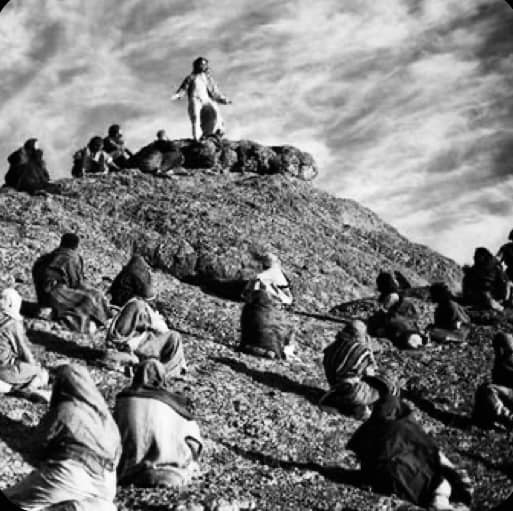
In his gospel, Matthew gathered scattered pieces of Jesus’ teaching and crafted them into a sermon delivered on a mount (ch 5-7); while Luke (6:17-49) reports an abbreviated version in a similar sermon delivered by Jesus on a plain. They both begin with the Beatitudes (cf below s1S#71 2/13/22).
The first beatitude is about the poor.
“ptōchos” ( πτωχος ) is the most common term in the NT for “poor”. While adjective in form it is used mainly as a noun with the sense of being economically destitute, (Mt 11:5, 26:11; Mk 14:5; Lk 4:18, 16:20; John 12:5; Rom 15:26; Gal 2:10; James 2:2). But in Matthew (5:1-12), the word is qualified with “in spirit”. The expression refers to the quality of genuine humility recognizing that one lacks worldly status and honor, which leads to faithful dependence on God. The poverty described is that of the man fully conscious of the poverty of all human resources and knowing his need and desire for God. (According to philologists, the term is based in Hebrew where two words, ‘anawim and ‘aniyim, are virtually synonymous, meaning poor and humble. In short, poverty and humility conjoined). The ultimate example of this is Jesus. By setting aside all his heavenly status to become a man, he perfectly illustrated that spirit of dependence upon God that the condition of poverty was intended to instill in those so affected. He “became poor for our sake” so that we might become rich in spiritual relationship with him, (2 Cor 8:9).
The first beatitude speaks explicitly of the ‘anawim’, but the underlying spirit of authentic poverty is present in all the Matthean beatitudes- to those who mourn, who hunger, who are persecuted, etc. They are considered disadvantaged or deprived of what human beings of any culture suppose and regard as important. But in the eyes of Christ in such circumstances, one can truly realize their need for God and made them rely on him completely. Thus, they are declared blessed, favored, and extolled (by God, the grammatical “theological or divine passive voice”). And as they attempt to cope with the present world they are assured a better lot for they are confident that God will be their ultimate vindicator.
Only God can make us truly blessed. Let us acknowledge our poverty in all things and humbly rely on him in everything. Amen.
s1S#71 2/13/22 Blessed
The adjective ‘makarios’ ( μακάριος ) is used to express NT “beatitudes” or “macarisms”, (cf Mt 5:1-12). Together with the “woes” (cf. Lk 6:20-26) they belong to a literary subform that has been called “ascription” (found also in Egyptian, classical, and Hellenistic Greek literature). It denoted a person’s inner happiness or its exact opposite. When the beatitude form developed, it extolled the good fortune that they have. In the OT Wisdom literature, it took a religious sense as the expression of God’s favor toward the persons connoting a full life, a good wife (Sir 26:1), sons as heirs (Ps 127:3-5), prosperity and honor (Job 29:10-11). While these imply blessings already present, the beatitudes in NT refer to a future or eschatological reward; thus rarely expressing practical wisdom but stressing a reversal of values that people put on earthly things given the kingdom being preached by Jesus. A paradox is often involved in them. The first part describes the condition of the disciples (poor, hungry, weeping, hated…); the second promises their eschatological lot, formulated in the theological passive (they shall be…[by God]).
(cf also #62 12/19/21 Blessed [Mary]).