Sabado, Hunyo 7, 2025

SHARE THE TRUTH

 2,665 total reads

Sabado sa Ika-7 Linggo ng Pasko ng Pagkabuhay

Mga Gawa 28, 16-20. 30-31
Salmo 10, 4. 5. at 7

Poon, ang mga mabuti
ay kapiling mo parati.

Juan 21, 20-25

Saturday of the Seventh Week of Easter (White)

UNANG PAGBASA
Mga Gawa 28, 16-20. 30-31

Pagbasa mula sa Mga Gawa ng Mga Apostol

Pagdating namin sa Roma, si Pablo’y pinahintulutang umupa ng sariling tirahan kasama ang isang kawal na pinakatanod niya.

Makaraan ang tatlong araw, inanyayahan ni Pablo sa isang pulong ang mga pangunahing Judio sa lungsod. Nang magkatipon na sila, sinabi niya, “Mga kapatid, bagamat wala akong ginawa laban sa ating bansa o sa mga kaugalian ng ating mga ninuno, hinuli ako sa Jerusalem at isinakdal sa kinatawan ng pamahalaang Romano. Matapos akong litisin, ako sana’y palalayain na sapagkat wala naman akong ginawa na dapat parusahan ng kamatayan. Ngunit tumutol ang mga Judio, kaya’t napilitan akong dumulog sa Emperador, bagamat wala akong sakdal laban sa ating mga kababayan. Nagagapos ako ng tanikalang ito dahil kay Hesus, ang pag-asa ng Israel. Iyan ang dahilan kung bakit hiniling kong makausap kayo.”

Humigit-kumulang sa dalawang taong nanirahan si Pablo sa Roma, sa bahay na kanyang inuupahan, at tinanggap niya ang lahat ng nagsadya sa kanya. Hayagan at walang sagabal na nangangaral siya tungkol sa paghahari ng Diyos at sa Panginoong Hesukristo.

Ang Salita ng Diyos.

SALMONG TUGUNAN
Salmo 10, 4. 5 at 7

Poon, ang mga mabuti
ay kapiling mo parati.

o kaya: Aleluya!

Ang Panginoong Diyos ay matatagpuan sa banal na templo,
at doon naman sa mataas na langit, naroon ang trono;
at magbuhat doon ay pinagmamasdan ang lahat ng tao,
walang maliligid anuman ang gawin ng lahat ng ito.

Poon, ang mga mabuti
ay kapiling mo parati.

Lahat ng mabuti pati ang masama ay sinisiyasat,
namumuhing lubos siya sa suwail na wala nang batas.
Ang Poon ay tapat, sa gawang mabuti siya’y nalulugod
at sa piling niya, mabubuhay silang sa kanya’y sumunod.

Poon, ang mga mabuti
ay kapiling mo parati.

ALELUYA
Juan 16, 7. 13

Aleluya! Aleluya!
Espiritung isusugo
totoo ang ituturo,
pangako ni Kristong Guro.
Aleluya! Aleluya!

MABUTING BALITA
Juan 21, 20-25

Ang Mabuting Balita ng Panginoon ayon kay San Juan

Noong panahong iyon, lumingon si Pedro at nakita niyang sumusunod ang alagad na minamahal ni Hesus – yaong humilig sa dibdib ni Hesus nang sila’y naghahapunan at nagtanong, “Panginoon, sino po ang magkakanulo sa inyo?” Nang makita siya ni Pedro, tinanong nito si Hesus, “Panginoon, ano po naman ang mangyayari sa taong ito?” Sumagot si Hesus, Kung ibig kong mabuhay siya hanggang sa pagbabalik ko, ano sa iyo? Sumunod ka sa akin!” Kumalat sa mga kapatid ang balitang hindi mamamatay ang alagad na ito, bagamat hindi sinabi ni Hesus na hindi siya mamamatay, kundi, “Kung ibig kong mabuhay siya hanggang sa pagbabalik ko, ano sa iyo?”

Ito nga ang alagad na nagpapatotoo tungkol sa mga bagay na ito; siya rin ang sumulat ng mga ito, at alam naming tunay ang kanyang patotoo.

At marami pang ginawa si Hesus na kung susulating lahat, inaakala kong hindi magkakasya kahit sa buong daigdig ang mga aklat na masusulat.

Ang Mabuting Balita ng Panginoon.

PANALANGIN NG BAYAN
Ikapitong Linggo ng Pasko ng Pagkabuhay
Sabado

Si Jesus, na nakipamuhay sa mga tao upang maglingkod bilang pagsunod sa kanyang Ama, ay nagnanais na unahin natin nang higit sa lahat ang mga bagay na nakalulugod sa Diyos.

Panginoon, dinggin Mo ang aming panalangin.
o kaya
Panginoon, ikaw ang lahat sa amin.

Ang mga pinuno ng Simbahan nawa’y maging mga tunay na lingkod na kumikilos nang may pagmamalasakit na katulad ng ipinakita ni Kristo sa kanyang mga apostol, manalangin tayo sa Panginoon.

Ang mga pinuno ng pamahalaan nawa’y maging tapat sa kanilang mga pananagutan at makatupad sa kanilang mga tungkulin ayon sa diwa ng pag-ibig at paglilingkod, manalangin tayo sa Panginoon.

Ang mga nagdaranas ng kahirapan nawa’y tumanggap ng lakas mula sa Banal na Espiritu, manalangin tayo sa Panginoon.

Ang mga may karamdaman nawa’y maunawaan na ang kanilang pagdurusa, kung titiisin bilang pakikiisa kay Kristo, ay maaaring maging biyaya, manalangin tayo sa Panginoon.

Ang ating mga namayapang kamag-anak at mga kaibigan nawa’y magtamasa ng kapanatagan sa walang hanggang tahanan ng Diyos, manalangin tayo sa Panginoon.

Ama, binigyan ng iyong Anak ng higit na pagpapahalaga sa lahat ang mga bagay na makalulugod sa iyo, kahit humantong pa sa kanyang pagpapakasakit para sa sangkatauhan. Loobin mo na lagi namin siyang maparangalan sa tuwing ginagawa namin siyang pinakamahalaga sa aming buhay. Hinihiling namin ito sa pamamagitan ni Kristo na aming Panginoon. Amen.


Linggo ng Pentekostes
Pagmimisa sa Sabado ng Hapon

Genesis 11, 1-9
o kaya Exodo 19, 3-8a. 16-20b
o kaya Ezekiel 37, 1-14
o kaya Joel 3, 1-5
Salmo 103, 1-2a. 24 at 35k. 27-28. 29bk-30

Espiritu mo’y suguin,
Poon, tana’y ‘yong baguhin.

Roma 8, 22-27
Juan 7, 37-39

Vigil of Pentecost (Red)

UNANG PAGBASA
Genesis 11, 1-9

Pagbasa mula sa aklat ng Genesis

Sa simula’y iisa ang wika ng lahat ng tao sa daigdig. Sa kanilang pagpapalipat-lipat, nagawi sila sa silangan, sa isang kapatagan sa Sinar. Dito sila huminto at namayan. Nagkaisa silang gumawa ng maraming tisa at lutuing mabuti para tumibay. Tisa ang ginagamit nilang bato at alkitran ang kanilang semento. Ang sabi nila, “Ngayo’y magtayo tayo ng isang lungsod na may toreng abot sa langit upang matanyag tayo at huwag nang magkawatak-watak.”

Bumaba ang Panginoon upang tingnan ang lungsod at ang toreng itinatayo ng mga tao. Sinabi niya, “Ngayon ay nagkakaisa silang lahat at iisa ang kanilang wika. Pasimula pa lamang ito ng kanilang mga binabalangkas; hindi magluluwat at gagawa sila ng anumang kanilang maibigan. Ang mabuti’y puntahan natin at guluhin ang kanilang wika upang huwag silang magkaunawaan.” At pinangalat ng Panginoon ang mga tao sa buong daigdig, kaya natigil ang pagtatayo ng lungsod. Babel ang itinawag nila sa lungsod na iyon, sapagkat doo’y ginulo ng Panginoon ang wika ng mga tao. At mula roon, pinapangalat nga niya ang mga tao sa buong daigdig.

Ang Salita ng Diyos.

o kaya:
Exodo 19, 3-8a. 16-20b

Pagbasa mula sa aklat ng Exodo

Noong mga araw na iyon, si Moises ay umakyat sa bundok upang makipag-usap sa Diyos. Sinabi sa kanya ng Panginoon, “Ito ang sabihin mo sa buong angkan ni Jacob, sa buong Israel: ‘Nakita ninyo ang ginawa ko sa mga Egipcio. At tulad ng pangangalaga ng isang agila sa kanyang mga inakay, kayo’y aking kinupkop. Kung susundin ninyo ako at hindi kayo sisira sa pakikipagtipan ko sa inyo kayo ang magiging bayan kong hinirang. Ang buong daigdig ay akin ngunit kayo’y aking itatangi. Kayo’y gagawin kong bayan ng mga saserdote na maglilingkod sa akin, nakatalaga sa akin.’ Iyan ang sabihin mo sa mga Israelita.” Kaya tinipon ni Moises ang mga lider ng Israel at sinabi ang lahat ng iniutos sa kanya ng Panginoon. Sila nama’y parang iisang taong sumagot, “Susundin namin ang lahat ng iniutos ng Panginoon.”

Kinaumagahan ng ikatlong araw, nagkukulog sa bundok at sala-salabat ang kidlat. Ang bundok ay nabalot ng makapal na ulap at narinig ang isang malakas na tunog ng tambuli. Lahat ng tao sa buong kampamento ay nanginig sa takot. Pinangunahan ni Moises ang mga tao papunta sa paanan ng bundok upang humarap sa Diyos. Ang Bundok ng Sinai ay nababalot ng usok sapagkat bumaba ang Panginoon sa anyo ng apoy. Pumailanlang ang usak, tulad ng usok ng isang pugon, at ang mga tao’y pinagharian ng takot. Palakas nang palakas ang tunog ng tambuli. Nagsalita si Moises at sinagot siya ng Diyos sa pamamagitan ng kulog. Ang Panginoon ay bumaba sa tuktok ng Bundok ng Sinai at pinaakyat niya roon si Moises.

Ang Salita ng Diyos.

o kaya:
Ezekiel 37, 1-14

Pagbasa mula sa aklat ni propeta Ezekiel

Noong mga araw na iyon, nadama ko ang kapangyarihan ng Panginoon at sa pamamagitan ng kanyang Espiritu ay dinala niya ako sa isang lambak na puno ng kalansay. Inilibot niya ako sa lugar na yaong puno ng mga kalansay na tuyung-tuyo na. Tinanong niya ako, “Tao, palagay mo ba ay maaari pang mabuhay ang mga kalansay na ito?”

Sumagot ako, “Kayo po lamang ang nakaaalam, Panginoon?”

Sinabi niya sa akin, “Magpahayag ka sa mga kalansay na ito. Sabihin mo: Mga tuyong kalansay, dinggin ninyo ang Salita ng Panginoon. Ito ang ipinasasabi niya: Bibigyan ko kayo ng hininga at kayo’y mabubuhay. Lalagyan ko kayo ng litid at laman, at babalutin ng balat. Bibigyan ko kayo ng hininga at kayo’y mabubuhay. Sa gayun, makikilala nilang ako ang Panginoon.”

Nagpahayag nga ako, tulad ng utos sa akin. Nang ako’y nagsasalita, nagkaroon ng malakas na ugong, at nabuo ang mga kalansay. Nakita kong sila’y nagkaroon ng litid at laman; nabalot sila ng balat ngunit hindi pa humihinga. Sinabi sa akin ng Panginoon, “Tao, tawagan mo ang hangin sa lahat ng dako. Sabihin mong ipinasasabi ko: Hangin, hingahan mo ang mga patay na ito upang sila’y mabuhay.” Nagpahayag nga ako at pumasok sa kanila ang hininga. Nabuhay nga sila at nang magtayuan, sila’y ubod ng dami, parang isang malaking hukbo.

Sinabi sa akin ng Panginoon, “Tao, ang bansang Israel ay tulad ng mga kalansay na ito. Sinasabi nila, ‘Tuyo na ang aming mga buto, wala na kaming pag-asa. Lubusan na kaming pinabayaan.’ Kaya nga, magpahayag ka. Sabihin mong ipinasasabi ko: Bayan ko, ibubukas ko ang inyong libingan. Ibabangon ko kayo at iuuwi sa inyong bayan. Kung maibukas ko na ang inyong libingan at maibangon ko kayo, makikilala ninyong ako ang Panginoon. Hihingahan ko kayo upang kayo’y mabuhay, at ibabalik ko kayo sa inyong sariling bayan. Sa gayon, malalaman ninyo na akong Panginoon ang nagsabi nito at aking gagawin.”

Ang Salita ng Diyos.

o kaya:
Joel 3, 1-5

Pagbasa mula sa aklat ni propeta Joel

Ito ang sinasabi ng Panginoon:
“Ibubuhos ko ang aking Espiritu sa lahat ng tao:
isasaysay ang inyong mga anak ang aking mga salita;
sari-sari ang mapapanaginip ng matatandang lalaki
at makakakita ng mga pangitain ang inyong mga kabataang lalaki.
Sa panahong iyan, ibubuhos ko ang aking Espiritu
pati sa mga alipin, lalaki’t babae.
Magbibigay ako ng mga babala sa araw na yaon
at ito’y makikita sa langit at sa lupa:
Dadanak ang dugo, magkakaroon ng apoy at makapal na usok.
Magdidilim ang araw at ang buwan ay pupulang animo’y dugo
bago dumating ang nakatatakot na Araw ng Panginoon.
Ngunit lahat ng hihingi ng tulong sa Panginoon ay maliligtas.
Gaya ng kanyang sinabi, may mga taong makapangungubli
sa Bundok ng Sion at sa Jerusalem.
Yaong mga pipiliin ng Panginoon ay makaliligtas.”

Ang Salita ng Diyos.

SALMONG TUGUNAN
Salmo 103, 1-2a. 24 at 35k. 27-28. 29bk-30

Espiritu mo’y suguin,
Poon, tana’y ‘yong baguhin.

Pinupuri ka Poong Diyos, nitong aking kaluluwa,
O Panginoong aking Diyos, kay dakila mong talaga,
ang taglay mong kasuuta’y dakila ri’t marangal pa.
Nababatbat ka, Poong Diyos, ng liwanag na maganda.

Espiritu mo’y suguin,
Poon, tana’y ‘yong baguhin.

Sa daigdig, ikaw Poon, kay rami ng iyong likha.
Pagkat ikaw ay marunong kaya ito nagawa.
Sa dami ng nilikha mo’y nalaganapan ang lupa.
Purihin ang Panginoon. O purihin mo nga siya!

Espiritu mo’y suguin,
Poon, tana’y ‘yong baguhin.

Lahat sila’y umaasa, sa iyo ay nag-aabang;
umaasa sa pagkain na kanilang kailangan.
Ang anumang kaloob mo ay kanilang tinatanggap,
mayro’n silang kasiyahan pagkat bukas ang ‘yong palad.

Espiritu mo’y suguin,
Poon, tana’y ‘yong baguhin.

Natatakot mangamatay kung kitlin mo ang hininga;
mauuwi sa alabok, pagkat doon mula sila.
Taglay mo ang Espiritu upang buhay ay ibalik.
Bagumbuhay ay dulot mo sa nilikha sa daigdig.

Espiritu mo’y suguin,
Poon, tana’y ‘yong baguhin.

IKALAWANG PAGBASA
Roma 8, 22-27

Pagbasa mula sa sulat ni Apostol San Pablo sa mga taga-Roma

Mga kapatid: Alam natin na hanggang ngayon ang sangnilikha ay dumaraing sa paghihirap. Hindi lamang sila! Tayo mang tumanggap ng Espiritu bilang unang kaloob ng Diyos ay napapahimutok samantalang hinihintay natin ang pag-aampon sa atin ng Diyos, ang pagpapalaya sa ating mga katawan. Ligtas na tayo at inaasahan natin ang kaganapan nito. Ngunit ang pag-asa ay hindi pag-asa kapag nakikita na ang inaasahan. Sapagkat sino ang aasa sa nakikita na? Ngunit kung umaasa tayo sa hindi natin nakikita, ito’y hinihintay natin nang buong tiyaga.

Gayun din naman, tinutulungan tayo ng Espiritu sa ating kahinaan. Hindi tayo marunong manalangin nang wasto, kaya’t ang Espiritu ang lumuluhog para sa atin, sa paraang di magagawa ng pananalita. At nauunawaan ng Diyos na nakasasaliksik sa puso ng tao, ang ibig sabihin ng Espiritu, sapagkat ang Espiritu’y lumuluhog para sa mga banal, ayon sa kalooban ng Diyos.

Ang Salita ng Diyos.

ALELUYA

Aleluya! Aleluya!
Espiritung aming Tanglaw,
kami’y iyong liwanagan
sa ningas ng pagmamahal.
Aleluya! Aleluya!

MABUTING BALITA
Juan 7, 37-39

Ang Mabuting Balita ng Panginoon ayon kay San Juan

Sa huli at pinakatanging araw ng pista, tumayo si Hesus at malakas na sinabi: “Ang nauuhaw ay lumapit sa akin at uminom. Ayon sa sinasabi ng Kasulatan, ‘Mula sa puso ng nananalig sa akin ay dadaloy ang tubig na nagbibigay-buhay.’” Tinutukoy niya ang Espiritung tatanggapin ng mga nananalig sa kanya. Nang panahong iyon ay hindi pa naipagkakaloob ang Espiritu Santo, sapagkat hindi pa nagaganap ang pagkamatay at muling pagkabuhay ni Hesus.

Ang Mabuting Balita ng Panginoon.
UNARMED STRUGGLE AND DISARMING PEACE

 3,627 total reads

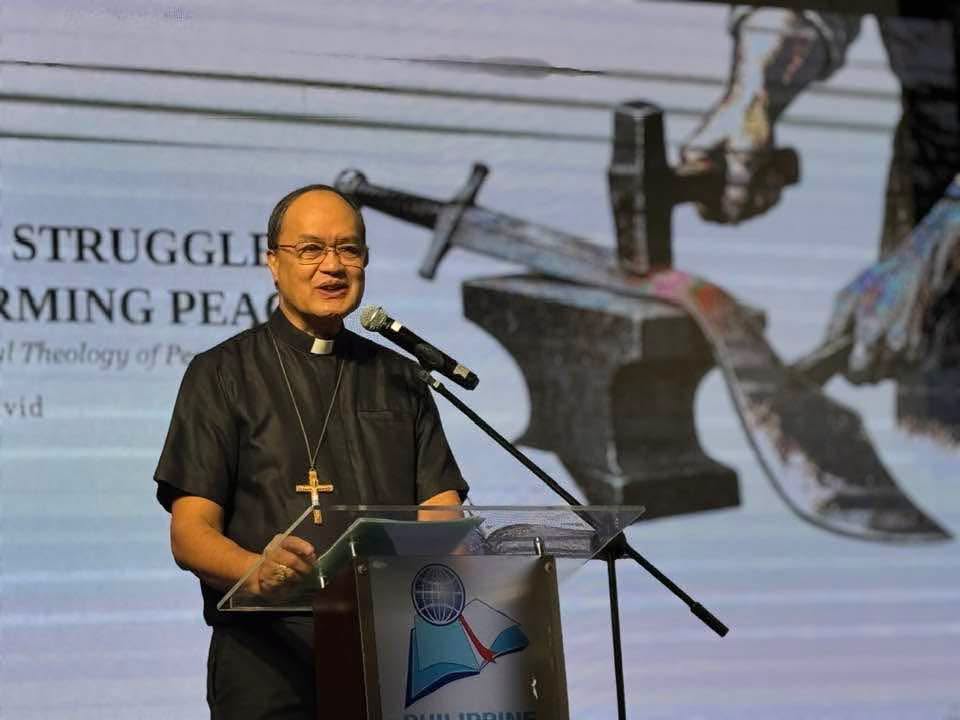
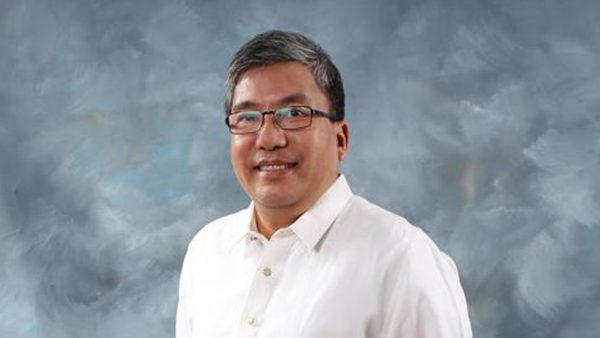
What a joy it was to take part in the recently concluded 27th Annual Convention of my colleagues in the Catholic Biblical Association of the Philippines (CBAP), held at the Philippine Bible Society. It was especially heartwarming to have in our company fellow biblical scholars from Protestant and Evangelical churches, sharing in our common love for the Scriptures and our commitment to making the Word of God speak meaningfully to the world today.

The theme of our convention was “Beat Swords into Plowshares. Be Peacemakers.” I delivered a keynote on the topic “Unarmed Struggle and Disarming Peace: Pope Leo XIV’s Biblical Theology of Peace.”

I began by recalling my youthful activist years, when I found the argument for armed struggle morally compelling in societies where the poor suffered violence through oppression, exploitation and systemic injustice. I have never ceased to believe that poverty itself can be a form of violence. But history has also taught me to ask: What happens when the oppressed finally acquire the gun? How do we prevent yesterday’s slaves from becoming tomorrow’s tyrants?

Drawing from Isaiah’s vision of swords being transformed into plowshares, I reflected on the alarming return of the logic of power and rearmament in our world today. Resources that could sustain life through food security, healthcare, education and care for creation are increasingly being redirected toward instruments of destruction.

Pope Leo reminds us that Christian peace is not passive resignation. It calls for an unarmed struggle against injustice—a struggle that refuses to reproduce the very violence it seeks to overcome. Jesus’ command to put away the sword finds its deepest meaning in the Cross, where he takes upon himself the consequences of human sin without returning evil for evil.

The Risen Christ still bears his wounds, but he does not turn them into weapons. He comes to his frightened disciples with the greeting, “Peace be with you” (Jn 20:19).

Perhaps this is the challenge before us, especially as people entrusted with interpreting the Scriptures: to help liberate the struggle for justice from the logic of vengeance, and to ensure that the Word of God is never turned into a weapon against another people.

As St. Paul reminds us, “Do not be overcome by evil, but overcome evil with good” (Rom 12:21).

That is the unarmed struggle. And perhaps only such a struggle can lead us to a truly disarming peace.

THE LORD ROARS OVER GAZA

 3,634 total reads

A Modern Oracle in the Tradition of Amos 1:6–2:16

Thus says the Lord:

For three transgressions of Israel, and for four, I will not revoke my judgment.

Because you have turned the land of Gaza into a wasteland, and made its people wander like strangers in their own homeland.

Because you have brought down the houses of the poor upon their heads, and reduced their dwellings to heaps of rubble.

Because you have commanded entire communities to leave their homes, yet have given them no place where they may dwell in safety.

Because you have driven the widow from her dwelling and the orphan from his inheritance, and have made the little children weep for the homes to which they may never return.

You say, “We have warned them to leave.”

But where shall they go?
To the sea, where there is no land on which to build their tents? To the south, where the displaced already crowd together under the burning sun? To the streets, where there is no shelter from the heat of the day or the cold of the night?

You say, “We have marked their buildings for destruction.”

But have you marked the tears of the mothers who must gather their children and flee? Have you counted the days of the elderly who have nowhere left to go? Have you measured the anguish of those who must abandon the homes in which they have lived all their lives?

You say, “We are defending our people.”

But shall the suffering of your people justify the suffering of another? Shall the blood of your children be avenged by the blood of other children?

Have I not commanded you, O Israel, to remember that you were once strangers in the land of Egypt? Have I not taught you to protect the widow, the orphan, and the stranger who dwells among you?

You have remembered the promise of the land, but have you forgotten the demands of justice?

You have remembered the covenant, but have you forgotten the God who made it with you?


Therefore, thus says the Lord:

I will not be silenced by the thunder of your weapons, nor shall the cries of the innocent be drowned out by the proclamations of your rulers.

I will call to account those who command the destruction, those who carry it out, and those who justify the suffering of the innocent.

For no nation shall claim my blessing while trampling upon the dignity of another people.

No army shall invoke my name to excuse the destruction of the defenseless.

And no ruler shall hide behind the security of his own people to escape accountability for the suffering of another.

For I am the Lord who hears the cry of the oppressed, and the blood of the innocent cries out to me from the ground.


Thus says the Lord:
For three transgressions of the powerful nations, and for four, I will not revoke my judgment.
Because you have seen the destruction and have turned away your eyes.
Because you have heard the cries of the displaced and have stopped your ears.
Because you have supplied the weapons of war while speaking eloquently of peace.
Because you have weighed the lives of the innocent against your alliances and your interests, and have found the latter more precious.
You gather in your assemblies and speak of human rights. You sign solemn declarations and proclaim the dignity of every human person.
Yet when the children cry out for bread, you offer them resolutions. When the homeless plead for shelter, you offer them expressions of concern. When the wounded cry out for mercy, you calculate the political cost of speaking the truth.


Therefore, thus says the Lord:

I despise your solemn declarations when they are not accompanied by justice.
I take no delight in your conferences when the cries of the oppressed are left unanswered.
Let justice roll down like waters, and righteousness like an ever-flowing stream!
And now, O people of God, hear the word of the Lord.
Do not imagine that these oracles are addressed only to the nations whose names have been spoken.
For the Lord who judges the nations also judges those who profess to worship him.
You who gather in your churches and synagogues, you who bow in your mosques, you who invoke the name of the God of Abraham, what have you done for the least of his children?
Have you allowed your loyalty to your own people to make you indifferent to the suffering of another?
Have you remained silent because the victims do not belong to your nation, your religion, or your community?
Have you condemned the cruelty of your enemies while finding excuses for the cruelty of your friends?
Do you think that your prayers can rise to heaven while the cries of the innocent remain unheard upon the earth?


Thus says the Lord:

I do not ask you to choose which children deserve to live.
I do not ask you to decide which mothers deserve to weep.
I do not ask you to weigh the suffering of one people against the suffering of another.
I ask you to do justice, to love mercy, and to walk humbly with your God.
For the day will come when the weapons shall fall silent, when the ruins shall be cleared, and when the children of Gaza and Israel shall no longer be taught to fear one another.
But that day will not come through the multiplication of graves, nor through the destruction of homes, nor through the humiliation of one people by another.
It will come when justice is restored, when the captives are set free, when the displaced are allowed to return to their homes, and when every child, Palestinian and Israeli alike, can sleep without fear of the night.
For thus says the Lord:
I desire mercy, not vengeance; justice, not domination; and peace, not the silence of the grave.
Let those who have ears hear.
(Scriptural inspiration: Amos 1:3–2:16; 5:21–24; Exodus 22:20–23;

I GREW UP UNDER MARTIAL LAW

 3,643 total reads

21 September 2026 — 54th Anniversary of Martial Law

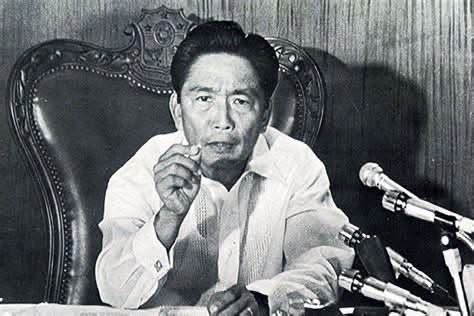
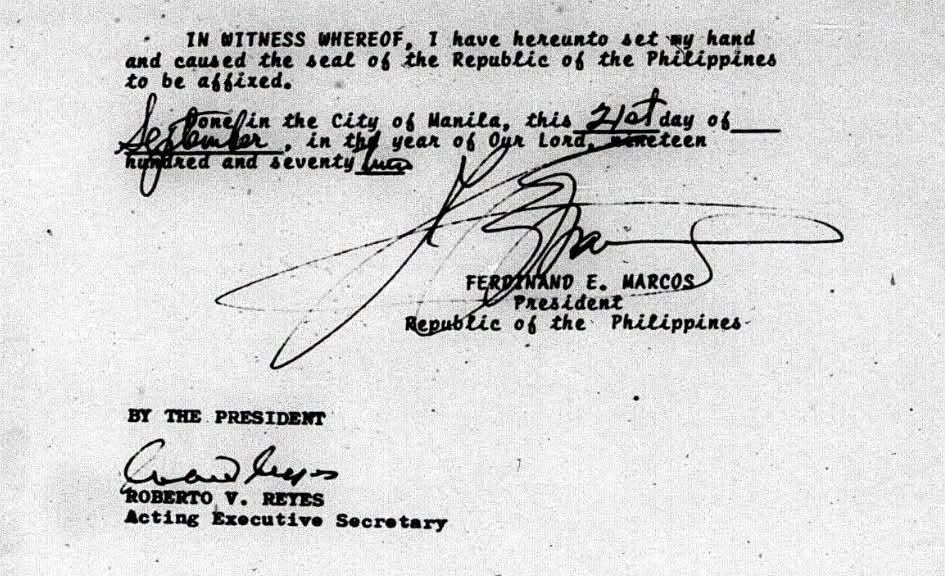
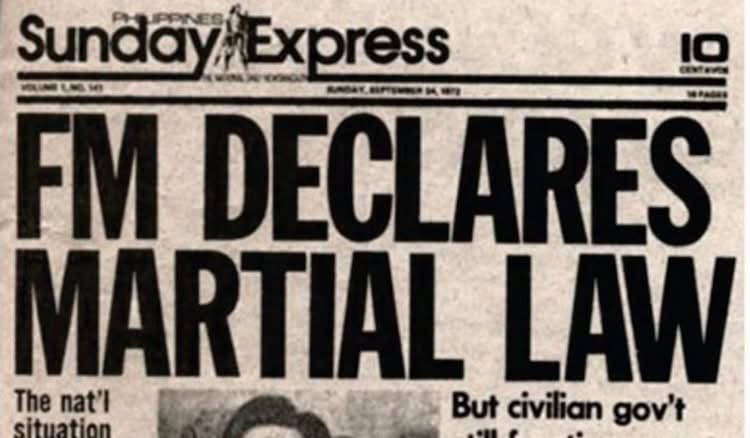
I was thirteen years old, a second-year high school student, when Ferdinand Marcos declared martial law in September 1972. I was too young then to understand fully what was happening to our country. All I knew was that, almost overnight, the Philippines had changed. Newspapers stopped coming out. Television and radio stations went off the air. Soldiers appeared in the streets. Political leaders were being arrested. People began to speak in whispers, afraid that someone might be listening.

I would spend practically all my adolescence, my seminary years, and the first years of my priesthood under the shadow of a dictatorship. By the time it finally ended in February 1986, I was already twenty-six years old.

Marcos justified martial law by invoking the communist insurgency and the threat of rebellion. There were indeed serious problems of political instability and armed conflict in the country. But instead of addressing them within the framework of democratic institutions, he concentrated the powers of government in his own hands. Congress was shut down. Prominent opposition figures, including Senators Benigno Aquino Jr., Jose W. Diokno, and Ramon Mitra Jr., were arrested. Freedom of speech, freedom of assembly, and freedom of the press were severely restricted. Independent newspapers, including the Manila Times, the Manila Chronicle, and the Philippines Free Press, were closed. ABS-CBN and other broadcasting networks were shut down, and their facilities were seized or placed under government control.

Eventually, newspapers and broadcasting stations were allowed to operate again, but largely under the control of businessmen associated with the regime. Roberto Benedicto, a close Marcos associate, acquired extensive interests in broadcasting and the print media. There was no social media then. When the government controlled the newspapers, radio, and television, it could largely determine what the public was allowed to know. The country could be portrayed as peaceful and prosperous, while reports of abuses, corruption, and growing public discontent were suppressed.

I remember the atmosphere of fear. People were careful about what they said, especially in public places. Political conversations were conducted in whispers. One never knew who might be listening or reporting to military intelligence.

In many parts of the countryside, the military presence became even more pronounced. Farmers, workers, students, community organizers, and even church workers could be suspected of subversion because of their involvement in social movements. People were arrested and detained without due process. Some were tortured. Others were abducted and killed. We had a disturbing word for these killings: salvaging. It was the term commonly used then for what we now call extrajudicial killings. Others simply disappeared. We called them the desaparecidos. Their families did not know whether they were still alive, where they were being held, or whether they would ever return.

What was happening in the Philippines was not an isolated phenomenon. We were living in the Cold War, when the world was divided between the United States and its allies on one side, and the Soviet Union and its allies on the other. In the name of containing communism, the United States maintained close relations with several authoritarian governments. Indonesia was under Suharto, South Korea under Park Chung-hee, and Chile under Augusto Pinochet. Brazil had been under military rule since 1964, and Argentina would come under military dictatorship in 1976.

Marcos presented himself as a dependable American ally. The United States maintained important military installations at Clark and Subic, and successive American administrations continued to regard the Philippines as strategically important despite growing documentation of human rights abuses. It was a troubling contradiction for those of us who were growing up during those years. Countries that professed to defend freedom and democracy could nevertheless support authoritarian governments when their economic and geopolitical interests were served.

Marcos did not govern through military force alone. He also sought to give his continued rule a constitutional and legal framework. Under the 1935 Constitution, he was supposed to step down at the end of his second presidential term in 1973. Instead, martial law allowed him to remain in power, and a new Constitution was introduced in 1973. It provided for a modified parliamentary system, but transitional provisions allowed Marcos to exercise both presidential and prime-ministerial powers. The 1976 constitutional amendments expressly made him both president and prime minister. When the Interim Batasang Pambansa was established in 1978, government departments were converted into ministries, and department secretaries became ministers. Marcos continued to rule extensively through presidential decrees, which carried the force of law. He called this system constitutional authoritarianism. Even after martial law was formally lifted in January 1981, the authoritarian political structure remained substantially intact.

During the early years of martial law, the government projected an image of economic progress. There were ambitious infrastructure projects, new highways, government buildings, cultural centers, and large industrial ventures. Many of these were financed through foreign borrowing. But behind this image of modernization, another economic system was taking shape. We came to know it as crony capitalism.

This was an arrangement in which access to economic opportunities depended increasingly on one’s political connections with the ruling family. Favored businessmen were given monopolies, government contracts, loans, regulatory privileges, and control over important industries. Among them were Roberto Benedicto, who exercised extensive influence over the sugar industry and broadcasting, and Eduardo “Danding” Cojuangco Jr., who became a major figure in the coconut industry and banking.

The coconut levy was especially controversial. Funds collected from coconut farmers were used to finance acquisitions and investments associated with powerful political and business interests, while many of the farmers themselves continued to struggle for a decent livelihood.

Meanwhile, the government was accumulating enormous foreign debts. By the early 1980s, the economy was in serious difficulty. The debt crisis, declining investor confidence, economic mismanagement, and political instability eventually produced one of the most severe economic downturns in our postwar history. Businesses closed. Workers lost their jobs. Prices rose, and ordinary families found it increasingly difficult to make ends meet. The economy contracted sharply in both 1984 and 1985. The promised prosperity of the New Society had not materialized for the majority of Filipinos.

Another development during the Marcos years would have lasting consequences for our country: the institutionalization of overseas employment. In 1974, the government promulgated the Labor Code, which established a formal framework for the recruitment and deployment of Filipino workers abroad. Overseas employment was initially presented as a temporary response to domestic unemployment and the growing demand for foreign workers, particularly in the Middle East. But what began as a temporary measure gradually became a permanent feature of Philippine economic life.

As employment opportunities at home remained inadequate, more and more Filipinos sought work abroad. Their remittances helped sustain their families and provided much-needed foreign exchange for the country. Yet the social consequences were profound. Parents had to leave their children behind. Husbands and wives endured years of separation. Children grew up with one or both parents working in distant countries. I have always admired the sacrifices of our overseas Filipino workers. But I have also often wondered what it says about our economic system when millions of our people must leave their own country in order to provide their families with a decent livelihood.

I had already been a priest for a few months when, on August 21, 1983, the news broke that former Senator Benigno “Ninoy” Aquino Jr. had been assassinated at the Manila International Airport. He had just returned from three years of exile in the United States. He was under military escort when he was shot dead on the airport tarmac.

His assassination sent shock waves throughout the country. The fear that had kept so many Filipinos silent for years began to give way to indignation. When his funeral procession took place on August 31, an immense multitude filled the streets of Metro Manila. What began as a funeral became a massive public demonstration against the dictatorship. Protest rallies multiplied. Opposition groups, students, workers, professionals, religious communities, and ordinary citizens began to find common cause in their demand for political change. Ninoy’s widow, Corazon Aquino, gradually emerged as a unifying figure of the opposition.

In November 1985, Marcos announced that he would call a snap presidential election. Corazon Aquino agreed to run against him, with Salvador Laurel as her running mate. The election was held on February 7, 1986, amid widespread reports of intimidation, violence, and electoral fraud. The Batasang Pambansa proclaimed Marcos the winner, but Corazon Aquino rejected the result and called for a campaign of nonviolent civil disobedience.

Then came February 22. Defense Minister Juan Ponce Enrile and Armed Forces Vice Chief of Staff Fidel V. Ramos broke away from Marcos and took refuge in the military camps along EDSA. Cardinal Jaime Sin appealed over Radio Veritas for the people to come to their aid and prevent a military confrontation. What followed was extraordinary. Hundreds of thousands of Filipinos converged on EDSA. Priests, religious sisters, seminarians, students, workers, professionals, and families stood together before soldiers and tanks. People prayed the rosary, sang, offered food to the soldiers, and appealed to them not to fire upon their fellow Filipinos.

On February 25, 1986, Corazon Aquino took her oath as President of the Philippines. That evening, Ferdinand Marcos and his family left Malacañang and departed for exile in Hawaii. The dictatorship had finally ended.

Looking back, I realize that the People Power Revolution did not begin on February 22, 1986. It had been prepared by years of suffering, resistance, organizing, and the gradual awakening of the Filipino people. It was prepared by political prisoners who refused to surrender their convictions, by journalists who continued to seek the truth despite censorship, by lawyers who defended the rights of detainees, and by families who searched tirelessly for their disappeared loved ones. It was prepared by farmers and workers who organized for their rights, by students who challenged the culture of fear, and by priests, religious, and laypeople who accompanied communities subjected to violence and repression.

When millions of Filipinos finally gathered along EDSA in February 1986, they were not merely responding to a disputed election or a military rebellion. They were reclaiming freedoms that had been taken away from them fourteen years earlier.

And now, fast forward to 2026. Forty years after the People Power Revolution, the Philippines is once again governed by a Marcos. Ferdinand “Bongbong” Marcos Jr., the son and namesake of the president whose dictatorship ended in February 1986, was elected president in 2022.

For someone like me, who spent practically all his adolescence and early adulthood under the dictatorship of his father, this is an extraordinary turn in our country’s history. I am reminded of the biblical teaching that children should not be made to bear the guilt of their fathers. Every person must be judged according to his or her own actions. But neither should the return of a Marcos to Malacañang become a reason for us to forget the history of martial law or dismiss the suffering of those who lived through it.

In fact, it brings me back to one of the most important lessons we learned from that painful period of our history: the danger of allowing political power to become concentrated in the hands of one person, one family, or a small circle of privileged families.

When democracy was restored in 1986, the framers of the 1987 Constitution sought to establish safeguards against the recurrence of authoritarian rule. Among these was the provision in Article II, Section 26, which requires the State to guarantee equal access to opportunities for public service and prohibit political dynasties, as may be defined by law.

Yet, for almost four decades, Congress failed to enact the law that would give effect to this constitutional mandate. Political power continued to be concentrated in many of the same families, with public offices sometimes passing from parents to children, from spouses to spouses, or among siblings and other relatives. In some places, elective positions have come to resemble family inheritances rather than opportunities for public service open to all qualified citizens.

This is why the recent decision of the Supreme Court is historically significant. On September 16, the Court declared that Congress’s failure to enact an anti-political dynasty law for 39 years constituted grave abuse of discretion and a continuing violation of its constitutional duty. It directed Congress to enact the appropriate law at the earliest opportunity.

The Supreme Court has left it to Congress to define political dynasties and determine the scope of the prohibition. The challenge now is to give meaningful effect to the constitutional mandate while ensuring that the resulting legislation is clear, fair, and capable of addressing the concentration of political power within families.

It is worth remembering that the 1987 Constitution was born out of our experience of dictatorship. Its safeguards were intended not merely to prevent another declaration of martial law, but also to protect democratic institutions against the excessive concentration and perpetuation of political power.

For my generation, democracy was never simply an abstract political concept. We experienced what it meant to lose it. We saw how easily fear could silence a people, how institutions could be manipulated to perpetuate power, how economic privilege could be concentrated in the hands of a few, and how the language of national security could be used to justify violations of human rights.

We also witnessed how ordinary people, when they overcame their fear and acted together, could recover the freedom that had been taken from them.

The restoration of democracy in 1986 did not solve all our country’s problems. Poverty, corruption, political dynasties, inequality, and abuses of power did not disappear with the departure of Marcos. The work of building democratic institutions and a just society remained unfinished.

As we commemorate the 54th anniversary of the declaration of martial law, I hope we can continue to remember those years with historical honesty, respect for the victims, and a commitment to learning from our past.

Remembering history is not about making children answer for the sins of their parents. It is about ensuring that the suffering of previous generations is not rendered meaningless by forgetfulness.

For those of us who grew up under martial law, the freedom to speak without fear, to question those in power, to demand accountability, and to participate in shaping our country’s future is something we learned never to take for granted.

And perhaps one of the most meaningful ways of honoring the memory of those who struggled to restore our democracy is to ensure that the constitutional safeguards born out of that struggle are finally given their full effect.

After all, the democracy we recovered in 1986 was never intended to become the exclusive inheritance of a few privileged families. It was meant to belong to the Filipino people.

Veritas Editorial

Picture of Rev. Fr. Anton CT Pascual

Rev. Fr. Anton CT Pascual

Mas mabigat kaysa teknikalidad

 31,641 total reads

 31,641 total reads Mga Kapanalig, sa Ebanghelyo ni San Mateo, matutunghayan natin ang pagtuligsa ni Hesus sa mga tagapagturo ng kautusan at sa mga Pariseo. Mababasa

Read More »

Sense of entitlement!

 97,699 total reads

 97,699 total reads Kapanalig, laganap sa ating bayan.. sa ating mga Pilipino, lalu na sa mga lider ng bansa ang ‘culture of superiority’, maging sa loob

Read More »

SIMPLENG LOHIKA

 117,003 total reads

 117,003 total reads Kapanalig, simpleng lohika lamang ang kailangan ng mga Senador-judges para pagbotohan kung iko-convict o hindi si Vice-President Sara Duterte. Ito ang kasagutan ni

Read More »

Paghilom ng ozone layer

 195,390 total reads

 195,390 total reads Mga Kapanalig, break muna tayo sa mga bad news. Pag-usapan naman natin ang isang magandang balita sa usapin ng klima. Naaalala ba ninyo

Read More »

Pagnanakaw sa kabataan

 238,059 total reads

 238,059 total reads Mga Kapanalig, hindi lang sa mga flood control projects may scam. Tila may nakawán ding nangyayari sa mga paaralan!   Lumabas noong isang linggo

Read More »

Watch Live

RELATED TOPICS

Huwebes, Setyembre 24, 2026

 452 total reads

 452 total reads Huwebes ng Ika-25 Linggo sa Karaniwang Panahon (II) Mangangaral 1, 2-11 Salmo 89, 3-4. 5-6. 12-13. 14 at 17 Poon, amin kang tahanan

Read More »

Miyerkules, Setyembre 23, 2026

 2,138 total reads

 2,138 total reads Paggunita kay San Pio ng Pietrelcina, pari Kawikaan 30, 5-9 Salmo 118. 29. 72. 89. 101. 104. 163 Salita mo’y aking tanglaw, patnubay

Read More »

Martes, Setyembre 22, 2026

 3,840 total reads

 3,840 total reads Martes ng Ika-25 Linggo sa Karaniwang Panahon (II) Kawikaan 21, 1-6. 10-13 Salmo 118, 1. 27. 30. 34. 35. 44 Sa pagsunod sa

Read More »

Lunes, Setyembre 21, 2026

 5,239 total reads

 5,239 total reads Kapistahan ni Apostol San Mateo, manunulat ng Mabuting Balita Efeso 4, 1-7. 11-13 Salmo 18, 2-3. 4-5 Laganap na sa daigdig ang kanilang

Read More »

Linggo, Setyembre 20, 2026

 6,182 total reads

 6,182 total reads Ika-25 Linggo sa Karaniwang Panahon (A) Isaias 55, 6-9 Salmo 144, 2-3. 8-9. 17-18 D’yos ay tapat at totoo sa dumadalanging tao. Filipos

Read More »

SUPPORT OUR MISSION

BECOME A KAPANALIG MEMBER AND EUCHARISTIC ADVOCATE!

CATHOLINK

THE PHILIPPINES CATHOLIC CHURCH ONLINE DIRECTORIES

Scroll to Top