

14,748 total reads
25th Sunday C
Am 8:4-7
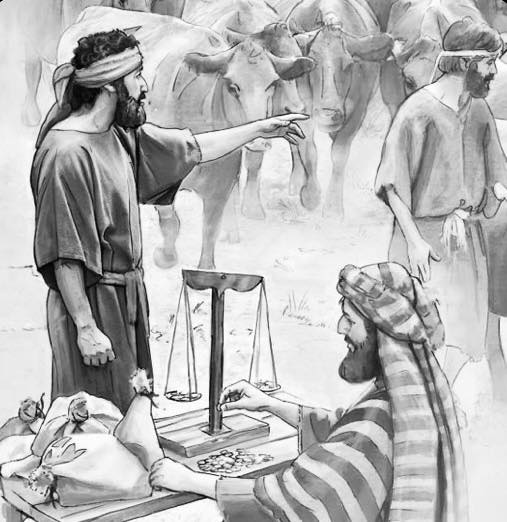
In the eighth century B.C., Amos, a livestock farmer, critiques the injustice in Israel, focusing on merchants who exploit the poor through dishonest practices in buying and selling. He highlights the new moon, a day of rest meant for prescribed sacrifices, which merchants neglect to return to business. Practices like “tipping the scales” were common, where weights were manipulated to the disadvantage of the poor. Despite social abuses, religious formalities persisted. Amos sarcastically addresses the “pride of Jacob,” condemning the country’s exaltation at the expense of its neediest citizens. The Lord is determined to confront this injustice.
1 Tim 2:1-8
The author encourages prayers for everyone, including civil authorities, reflecting early Christians’ concern for being good citizens despite not participating in official religious practices. Paul reasons that these prayers could lead to a peaceful life for Christians and even the conversion of leaders. The passage includes an early liturgical formula emphasizing that there is one God and one mediator, Christ, who bridges the gap between humanity and God through his sacrificial role in salvation. This plan is universal and includes all people, reinforcing the importance of inclusive prayers from the Ephesus community.
Lk 16:1-13
The parable ending with verse 8a centers on a steward praised for his prudent use of finances in a crisis. Misleading if taken out of context, the story highlights his decisive actions amid uncertainty. In Jesus’ time, a buyer’s charges often included a “middle management” fee, which could go to the agent handling the transaction. Accused of mismanagement, the steward, facing being fired, reduces the debts owed by his employer’s debtors, eliminating his service charge. His master commends him for acting decisively with material goods.
The subsequent sayings (vv8b-12) relate to the theme of material stewardship, contrasting unbelievers (children of this world) who use wealth for personal gain, with believers (children of light) who should use it for eternal benefit. The term “dishonest wealth” (v9) refers to how resources are typically used, emphasizing their use for the good of others to achieve eternal happiness.
The parable calls for fidelity in stewardship (vv10-13) and emphasizes the choice between worldly concerns (mammon) and devotion to God. One must choose where to center their trust, as divided loyalties are incompatible with the gospel message.
The gospel invites us to remember that we are entrusted with God’s countless gifts, acting as His stewards in this world. One day, we’ll answer for how we’ve used our time, talents, skills, and resources. It’s essential to leverage these divine gifts through love and service to our neighbors, as doing so paves the way to our heavenly home. This brings to light the critical role of virtuous prudence—the wisdom of the “children of light”.
In a world rife with corruption, (the flood control projects in our country easily come to mind), we cannot ignore the words of the prophet Amos. He boldly condemns the rotten practices and deceit of those who amass wealth while exploiting the vulnerable. Make no mistake—God will bring justice to those who act unjustly.
As we navigate these challenges, let’s take Paul’s message to heart and pray for our civil leaders. Remember also that each of us is called to embody transparency, accountability, and integrity in our lives. Together, let’s strive to be the change we wish to see. Amen!