

13,728 total reads
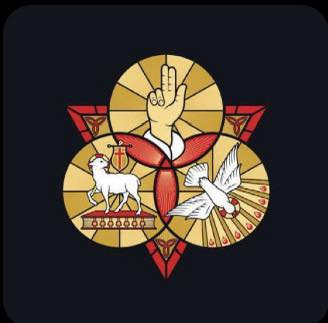
Theme: Love in Three Persons
Readings
Ex 34:4-9
The “calf of gold” incident marks a crucial point in Israel’s desert journey (Ex 32). Due to this sin, Yahweh tells Moses he will no longer be with the people (Ex 33:3). Later, he reconsiders because of his friendship with Moses (33:15ff). Moses then asks to see Yahweh’s glory, which cannot be fully granted due to the spiritual gap between God and mortals (v20), but he is shown a glimpse of God’s back (vv19-23). Today’s reading reflects on that glimpse. Moses climbs Sinai with the two new tablets to replace the broken ones (v4; 34:1), similar to his first covenant ascent (19:3). God’s words to Moses reveal his anthropomorphic view of God, identifying himself as the God of the burning bush (vv5f; Ex 3:14). As a covenant God, qualities like kindness (hesed) and fidelity (emeth) symbolize his concern and faithfulness, emphasizing covenant love (v6; Ps 117:2). God is also just, slow to anger, and will punish transgressions (v6-7), yet forgiving when repentance occurs (v7a). This surpasses earlier descriptions of Yahweh’s justice, which didn’t mention forgiveness (Ex 20:5f). Moses’ view provides a deeper understanding of Yahweh: a faithful, forgiving covenant God and a God of justice.
2 Cor 13:11-13
The reading is about the final advice and encouragement to the troubled Corinthian community, emphasizing joy, peace, and harmony rooted in God’s presence. Paul highlights God’s love and peace, exemplified in the community’s spirit and possibly in liturgical practices like the ‘holy kiss.’ The passage hints at a developing Trinitarian belief, with Christ as the source of grace, God’s love as the mission’s foundation, and the Spirit fostering community fellowship, essential for Corinth’s unity.
Jn 3:16 – 18
The Johannine conversation of Jesus with Nicodemus has its Trinitarian implications. The reference to Moses raising a bronze serpent on a pole (Num 21:6 – 9) is used as a type of the crucifixion. Jesus on the cross is revealed as the divine “I AM” (8:28); acceptance of his claim means salvation. In the Johannine presentation, the various moments of the salvific act are joined together. Christ on the cross is already revealed as Lord and is the source of life.
Jesus here looks at salvation from its two sides, that of God (vv16f) and that of humans (vv18f). It was love alone that launched this divine initiative. The measure of that love is gleaned from the form it took. He gave his only son (v16): The “handing over” (Gr: edoken) and the “only son” echo Abraham’s willingness to sacrifice Isaac. God is willing to offer his Son to bring the world to salvation. The idea of God’s sending his Son with a sentence of condemnation is excluded (v17). The only motive for God’s acting is universal salvation. Notice that John’s eschatology is realized. Belief and eternal life are contemporaneous (v15) as are non-acceptance and condemnation (v18).
The understanding of a God in three persons was alien to the Israelites. It is unique to Christian faith. At best, a Christian reading of the Hebrew scriptures sees a background to later belief in earlier texts. Thus, it can be said that the attributes of mercy and fidelity in the Exodus reading today foreshadow qualities that will be later seen as personal in God. Paul’s prayerful invocation in today’s second reading relates three distinct divine activities to God, Jesus Christ, and the Spirit. The work of the triune God is implied in the Johannine Jesus’ conversation with Nicodemus. Love prompted the Father to send the Son who was the bearer of the Spirit, the source of eternal life.
Trinity” (A)
According to the Catechism of the Catholic Church (no. 261), “the mystery of the Most Holy Trinity is the central mystery of the Christian faith and of Christian life. God alone can make it known to us by revealing himself as Father, Son, and Holy Spirit”; (for the development of the doctrine from its scriptural references to its definition, cf s1S#33, 5/30/21 and s1S#89, 06/12/22). But in our limited way, we understand that God is Three in One. He is Father, Son, and Holy Spirit. Each is a distinct Person. Each fully shares in the one divine nature, (cf CCC nos. 234, 253-256).
In today’s gospel, John 3:16-18, what is implied in the conversation of Jesus with Nicodemus is the work of the Triune God, unraveled in the economy of salvation, fulfilling Their unique mission, yet acting in perfect unison. The Father is the one Who sent the Son into the world and willed that He gives His life for the salvation of all. The Son was sent and perfectly fulfilled the will of the Father, uniting humanity with divinity, (3:16-17). The Holy Spirit is the Promise of Father and Son Who proceeds from Them and descends upon the world, animating and making it possible to share in the very life of the Most Holy Trinity. In other words, love prompted the Father to send the Son who was the bearer of the Spirit, the source of eternal life.
If the mystery is hard to comprehend, it should be. Our limited intellects can only grasp a shadow of the reality of God. But the diverse insights into God’s nature should never be treated abstractly or in a detached doctrinal way. For what the Scriptures reveal to us are Persons in relationship inviting us to share in that very life of the Trinity, the life of love that binds them, the love that saves us and so binds us to them and one another. May we continue to live in “the grace of the Lord Jesus Christ and the love of God the Father and the fellowship of the Holy Spirit”, (2 Cor 13:13). Amen.