

5,599 total reads
33rd Sunday A
Prov 31:10-13, 19-20, 30-31
From Proverbs’ final chapter, this reading praises the worthy wife in an alphabetic poem, with each verse beginning with the next Hebrew letter. Since proverbs often personifies wisdom as feminine (Prov 1:20-32; ch. 8@, it fittingly concludes by celebrating a wife and mother’s practical wisdom.
Her value is beyond measure, like wisdom’s (3:14; 8:11). She brings her husband prosperity, not harm (v.21), and diligently spins, weaves, and sews despite having household help (vv. 13, 15, 19, 21). Compassion and generosity toward the poor, along with reverence for God- the foundation of wisdom (1:7)- outlast physical beauty (v. 30). At the city gates, a center of public life and commerce, her community praises her; there, too, Wisdom makes her plea (1:21).
Though rooted in a culture that largely defined women as wives and mothers, this portrait is strikingly expansive. Read in full, it shows a woman pursuing business and real estate ventures (vv. 16, 18, 24), extending her role in home and society. She uses her gifts for the good of her family and community.
1 Thes 5:1-6
The Lord’s return is central to Paul’s letters to Thessalonica. Having addressed Christians who die before the parousia (4:13–18), Paul now discusses how the living should conduct themselves. Since Christ’s return will come at an unknown time, believers must remain vigilant.
Though end-time speculation was common in Jewish and Christian circles, Paul calls it futile: the Day of the Lord will arrive unexpectedly (vv. 1–3). This expression for history’s final period appears in early prophecy (Am 5:18). While “Lord” originally meant Yahweh, Paul uses it for Christ (Phil 1:10; 2 Cor 1:14). The thief at night (v. 2) conveys surprise, not stealth; the woman in labor (v. 3) conveys inevitability and no escape. The end may come when people least expect it. Paul echoes Jesus’ teaching (Mt 24:36–45; Lk 12:35–40).
Light and darkness (vv. 4–6), familiar in Jewish apocalyptic and the New Testament, also evoke the thief’s nighttime arrival. The Dead Sea Scrolls describe the final battle between the “sons of light” and the “sons of darkness” (1QS 3:13–14). As children of the day, Christians need not fear the night. Light represents the Lord’s reign: its deeds are open and visible. Darkness represents evil, whose deeds are hidden and shameful. Once in darkness, Christians have been brought into Christ’s light (Eph 5:8–14; Col 1:13f). This light guides them toward upright conduct, so they need not fear the Day of the Lord.
Mt 25:14–30
The parable of the talents shows how Christ’s expected return should shape Christian conduct. Disciples must avoid wrongdoing (24:46–51), remain vigilant (25:1–13), and steadily grow in virtue.
Before leaving, a wealthy man gives three servants money to invest (vv. 14–15). “talantov” ( τάλαντον ), refers to the largest unit of currency known at the time. Its value is estimated at around 5,000 to 6,000 denarii, equivalent to the wage of an ordinary worker for fifteen years. Originally a measure of weight the value of which depends on the metal’s worth (gold, silver, or copper), the word “talent” passed into English usage as a synonym for abilities and/or natural endowments, (probably derived from this parable where the two ideas are juxtaposed in v15).
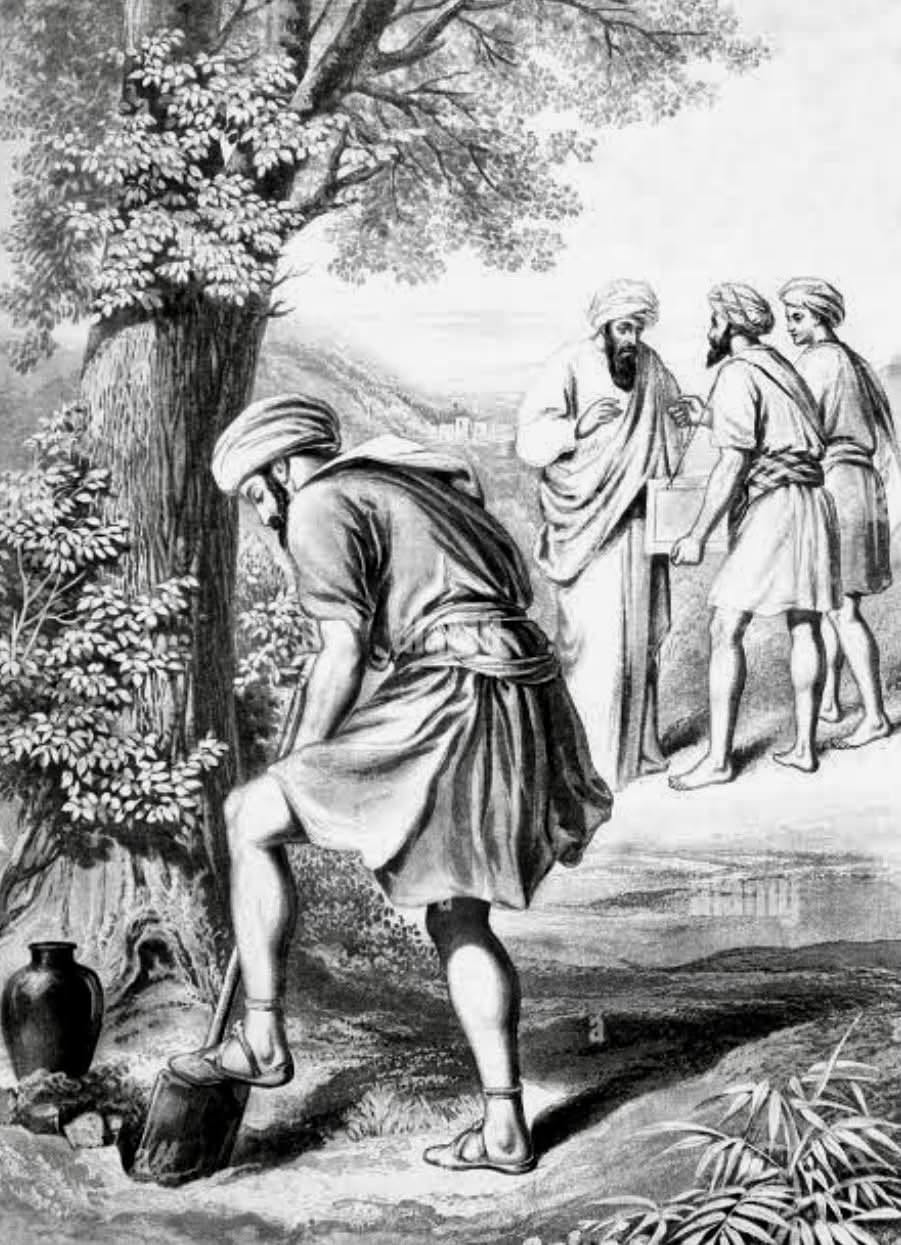
The master’s return “after a long time” (v. 19) reflects the delayed parousia. He rewards the two servants who doubled their money (vv. 20–23). “In small matters” (vv. 21, 23) contrasts their earthly service with the greater place they will receive in God’s reign. Their praise contrasts with the master’s anger at the negligent servant, who buried the money to protect it, as was customary (vv. 25ff). Though he knew the master expected interest (v. 24), he made no investment. His money goes to the productive servant; he loses his position and is cast out. “Wailing and grinding of teeth” (v. 30) describes the sorrow of condemnation (8:12; 13:42).
The message is clear: those who build on baptism through active growth in virtue and apostolic zeal will be richly rewarded. Those who do nothing with this gift will lose what they have and be excluded from God’s reign (v. 29). Christian life demands industry, not idleness.
The parable reminds us of the day of reckoning. And the best preparation for it is our commitment to our faith by a steady and active growth in virtue and apostolic zeal which will surely be more than amply rewarded. Each one is given responsibility according to ability. Those who do nothing with this gift will lose whatever they have in final separation from God’s reign. May we all make good use of what God has given us, living the virtue of industry rather than idleness so that our Christian life may truly be fruitful, so that when we come to the end of our life God will say to us: “Well done, my good and faithful servant, you have been trustworthy in small things. Now share your master’s joy”. Amen.