


4,339 total reads
Ez 34:11–12, 15–17
In a largely pastoral and agricultural society, portraying Yahweh as a shepherd was familiar (Is 40:11; Jer 31:10; Jn 10:1–18). Today’s Ezekiel reading reproaches Israel’s leaders (34:1–10): they exploited the sheep without caring for them. They neglected those nearby and abandoned the straying. While their people faced danger and loss, the leaders looked after themselves, unchanged by others’ suffering.
Now Yahweh will become their shepherd (v. 11), gathering the exiled Jews back to their homeland (vv. 12–13f). He will care for the lost, wandering, wounded, and ill (vv. 15f). “The sleek and the strong” (v. 16) may be a later addition, since it does not fit the verse’s focus on the needy. The central point is that evildoers will face severe judgment, while the needy receive compassion.
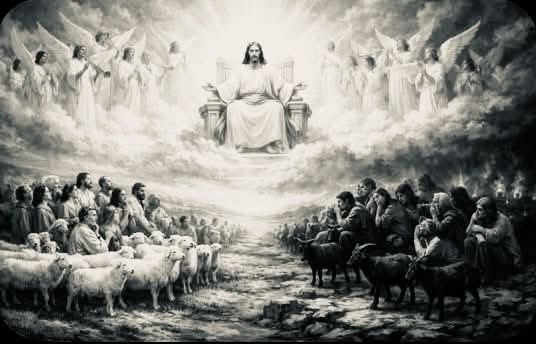
Verse 17 begins a new section portraying Yahweh as judge (34:17–24), balancing compassion with justice. The shepherd’s separation of animals becomes a metaphor for separating the good from the wicked. This passage influenced the final judgment scene in today’s Gospel.
1 Cor 15:20–26, 28
Christ will reign until his mission is complete and all opposition to God is subdued. In today’s reading, Paul describes the resurrection of the just (vv. 20–23) and the subjection of evil to God’s sovereignty (vv. 24ff., 28). Christ, Adam, and death appear as central figures (vv. 20, 22, 26; Rom 5:12–20). Christians are united with each: with Adam by nature, with Christ through grace, and with death through both.
Christ’s resurrection makes him the firstfruits—the prototype of those united with him in the Spirit. Offering the first harvest to God represented the whole harvest; likewise, Christ represents his followers. As all humanity shares Adam’s sin and its consequences (Rom 5:12ff), those united with Christ will share his victory over death at his coming (v. 22; Rom 5:18). The sequence is Christ, then the dead, then those alive at his coming (v. 23; 1 Thes 4:15ff).
After this, history and salvation’s story will end. Paul places God the Father above all (v. 24): Christ first defeats every sinful force. “Sovereignty, authority, power” (v. 24) personifies forces thought to oppose the world’s and humanity’s order. Christ must reign until all are subdued, in the language of the Psalms (vv. 25, 27; Ps 110:1; 8:7).
Death, the final enemy, will then perish (v. 26); after the resurrection, it will be no more. God alone is exempt from subjection (v. 28). The Father entrusted everything to Christ for his saving mission and therefore remains above the Son. When Christ’s redemptive work through death and resurrection is complete, his task ends. He will return the kingdom to the Father (v. 24), with himself and his followers subordinate, as God fills all creation (v. 28). No mediation will then be needed.
Mt 25:31–46
Matthew’s vivid account of the final judgment closes Jesus’ public ministry. After emphasizing preparedness and vigilance (ch. 24–25), the passage shows what alertness means in practice. Found only in Matthew, it reflects key themes: the Son of Man (24:30, 37, 39), separation of good and wicked (24:36–43, 47–50), and a life expressed through good works (ch. 5–7). The universal judgment presents Christ as king (v. 34), Son of Man (v. 31), and Lord (v. 37). The title “Son of Man” draws on Daniel’s eschatological figure, who ushers in the final age (7:13). Though the imagery embraces all peoples, Matthew says the end will come only after the gospel is preached throughout the world (28:19f).
The separation of valuable sheep from less valuable “kids” (v. 32) reflects Palestinian herding, where mixed flocks grazed together before being sorted at day’s end. It also echoes Ezekiel’s image of Yahweh as judge (34:17). The just enter the “reign of God” (v. 34), a life of unending joy. Christ judges by carrying out the Father’s plan (v. 34).
Acceptance depends on love in action—not on a simple division between sinful and sinless conduct or adherence to the Decalogue, but on pursuing others’ genuine good. Love of God and neighbor (22:37ff) are joined: loving one’s neighbor becomes loving God.
The six groups of people in need, later known as the corporal works of mercy, offer a lasting summary of human suffering. The scene’s climax reveals why we must reach out: Christ identifies with the needy (v. 40), called first “brothers” (v. 40) and later “these least ones” (v. 45). Restricting this teaching to Christians ignores Matthew’s broader use of “brothers” (5:22ff, 47; 7:3ff) and the judgment’s universal scope. Christ identifies with all the earth’s underprivileged.
The judgment of the unjust repeats the scene (vv. 41–46), emphasizing the balance required by covenant theology. The two groups receive contrasting, parallel verdicts, even at the cost of repetition. Those who show no concern face eternal condemnation. This severity underscores the teaching: readiness for the Lord’s return means actively practicing virtue and seeing Jesus in society’s most forsaken members.
The powerful last judgment scene in today’s liturgy elicits a great deal of thought. We wonder what this means for us personally. On what basis will we be judged? We should not be surprised that love for the poor takes first place. The Hebrew scriptures depict Yahweh as shepherd repeatedly. The posture of Jesus in his earthly ministry is so eminently pastoral. He is always moving toward the outcasts of society. They appear often in his parables. So it is little wonder that this sense of outreach is what he will first look for in his followers. May we continue to live like Christ serving the least, the lost and the last so that on the day of our reckoning we can confidently face our King and Shepherd. Amen!