1,918 total reads
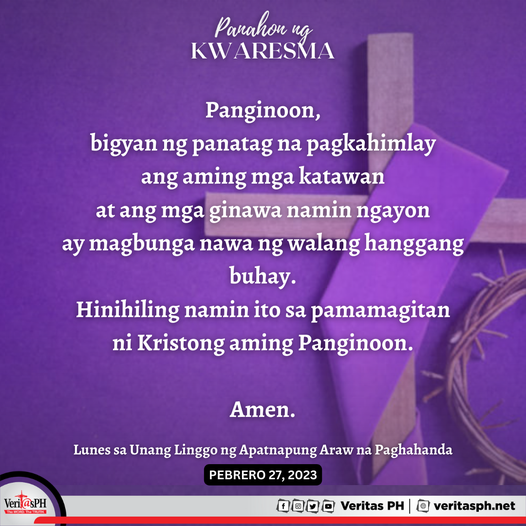
Lunes sa Unang Linggo ng 40Araw na Paghahanda | Pebrero 27, 2023

1,918 total reads
Lunes sa Unang Linggo ng 40Araw na Paghahanda | Pebrero 27, 2023
775 total reads

Homily for the 21st Sunday in Ordinary Time, 23 August 2026
Matthew 16:13β20
We need to do a little Bible study for a start in order to understand our Gospel today. We need it to get to know where Jesus is coming from when he asks his disciples the question: βWho do people say the SON OF MAN is?β
The title βSon of Manβ is important to Jesus. He often uses it to referβnot only to himself, but to the whole movement of his disciples. It is a title loaded with meaning. So we need to do a little Bible study and go back to the books of the Hebrew Bible that use the title βSON OF MAN.β The most important of these, aside from the Psalms, are the prophetic book of Ezekiel and the apocalyptic book of Daniel.
You might ask, do they use this title in the same way? No. In the prophet Ezekiel, whenever God calls the prophet SON OF MAN, it is a reminder that he must remain humble. Even if the word of God has been entrusted to him, that should not be a reason for it to go to his head. For Ezekiel, βSon of Manβ means a child of Adam and Eveβfallen, weak, and sinful.
But in the Book of Danielβmy favorite book in the Old Testamentβit is different. It is in Daniel that the meaning of the title βSon of Manβ begins to change. We need to go back to chapter seven of his book. There, the βSon of Manβ is a character in a vision.
According to Daniel, in his dream he first sees four ferocious beasts appearing one after another. Later, the angel explains that these four beasts represent four powerful empires of the world. For Daniel, they symbolize a humanity that no longer behaves humanly but acts like a beast. It desires nothing but power, even if it means trampling on human dignity. Its only principle is the survival of the fittest. No mercy, no restraint, no respect.
But in the prophetβs vision, there is a fifth character who appears after the four beasts. And this is the one he calls the βSon of Man.β This time, the representation is different. He is no longer associated with human frailty, cruelty, or sinfulness. Why? Because Daniel contrasts him with the beastly behavior of the monsters. He comes riding upon the clouds. He is lifted up and brought before another figure, an βAncient One,β seated upon a throne in judgment. He represents God. And he bestows upon the Son of Man all dominion, power, and glory.
In the angelβs explanation, this Son of Man represents the wise ones of Israel, models of wisdom, holiness, and courage. People who are truly human. Examples of people of genuine human dignity, true images of God. This account in Daniel chapter seven is almost like an oracle about the fulfillment of Godβs original plan for humanity: that the human being should truly become Godβs image and likeness. A human being who resembles God.
So there is a context to Jesusβ question: βWho do people say the SON OF MAN is?β In short, who is this figure whom Daniel regards as the model of true human dignity, the one who will inherit the Kingdom of God? And the first answers of the disciples are people remembered as models of courage in the history of Israel. First they mention John the Baptist. Then Elijah, Jeremiah, or one of the prophets.
But suddenly Jesus changes the question: βBut who do you say that I am?β And Simon Peter is the one who dares to answer. He says, βYou are the Christ, the Son of the living God.β This is his way of sayingββYou are not merely a model of true humanity. You are the Anointed One. You are not only the βSon of Manβ; you are the βSon of God.ββ
And in his response to Peter, Jesus takes us back to Danielβs vision. What Daniel saw in his dream was explained or revealed to him not by a human being, but by a heavenly messenger. And so Jesus says to Peter, βBlessed are you, for flesh and blood has not revealed this to you, but my Father in heaven.β
In St. Markβs version of this same scene, immediately after Peter says, βYou are the Christ,β Jesus follows it with a grim prophecy about the suffering and death that the Son of Man must undergo before rising again (Mk 8:31).
There, the Son of Man refers not only to himself, but to the whole movement or community of his disciples. We, who represent Danielβs βSons of Manβ are destined to first pass through suffering and death before the resurrection.
In other words, the mission to which Jesus invites us is to bring Godβs purpose to fulfillmentβthat the children of humanity might become children of God; that human beings might overcome the impulses of frailty, sin, and beastliness, so that the image of God may truly shine upon the human face. To be able to react spontaneously when our humanity is degraded by violence, cruelty, and disrespect. To say, βNo, thatβs not what it means to be human!β
This will be the mission of the Church that Jesus establishes. And so he says to Simon, βYou are Peter, and upon this rock I will build my Church.β Meaning, no longer something weak, but a solid foundation, one that even the powers of death will not be able to destroy.
Have you noticed how Jesus keeps changing the images or symbols he uses in his response to Peter? First: the rock, symbol of a firm foundation. Second: the key, symbol of stewardship of the Kingdom. Third: one who binds and one who loosens. The rock and the key are clear enough. But what is this business about binding and loosening?
Remember, Simon was a fisherman. And wasnβt it when Jesus first encountered him by the lakeshore that he found him tending or mending his nets? The net, after all, is the fishermanβs principal instrument, aside from his boat, for catching fish. And didnβt the Lord say to him when he called him, βYou will be a fisher of menβ? From then on, it would be people whom his net would gather for the Kingdom of God.
For fishermen, there are two important things that need to be done when repairing the nets after fishing. As nets grow old, some of their strands break, while other parts become tangled. And so there are two tasks:
1. Binding together the parts of the net that have been torn apart.
2. Loosening the parts that have become tangled.
After all, how can a net make a good catch if it is full of holes because its strands have broken apart, or if parts of it have become all tangled up?
Isnβt life like that too, especially our relationships? Sometimes we begin with beautiful relationships, connections, even projects, and then suddenly things fall apart. Connections are broken. People separate. We go our own ways. At other times, something that started out very simple becomes terribly complicated. Everything gets tangled up.
And so it is as though the Lord were saying, βYes, you will still go through all sorts of failures. But do not surrender your humanity to failure and sin. If you wish to inherit the Kingdom, then live out your calling. Stand by your mission.β
And that mission is to become menders of nets. To repair what has been broken in our lives. To bind together relationships that have been torn apart. To loosen the knots of relationships that have become tangled.
And in this way, we fulfill the mission God has entrusted to us: to become fishers of people for his Kingdomβso that the image of the SON OF MAN may shine forth, and on our human faces, people may catch a glimpse of the SON OF GOD.

1,081 total reads
Gospel Reading for August 23, 2026 – Matthew 16: 13-20
ALWAYS PREVAIL OVER EVIL
Jesus went into the region of Caesarea Philippi and he asked his disciples, “Who do people say that the Son of Man is?” They replied, “Some say John the Baptist, others Elijah, still others Jeremiah or one of the prophets.” He said to them, “But who do you say that I am?” Simon Peter said in reply, “You are the Christ, the Son of the living God.” Jesus said to him in reply, “Blessed are you, Simon son of Jonah. For flesh and blood has not revealed this to you, but my heavenly Father. And so I say to you, you are Peter, and upon this rock I will build my church, and the gates of the netherworld shall not prevail against it. I will give you the keys to the kingdom of heaven. Whatever you bind on earth shall be bound in heaven; and whatever you loose on earth shall be loosed in heaven.” Then he strictly ordered his disciples to tell no one that he was the Christ.
ββββ
The Catholic Church has existed as a distinct institution for about 1,993 years.
Its journey has not been smooth sailing. The early Christians endured severe persecution, torture, and death under the Roman emperors. The Church was later divided into two major branchesβthe Western (Catholic) Church and the Eastern (Orthodox) Churchβbecause of theological and political disagreements. Then came the Protestant Reformation, which arose in protest against corruption and certain Church teachings. There was also the period when the Papacy was moved from Rome to France, creating great confusion as multiple men claimed to be the true Pope at the same time. The Crusades, fought to reclaim the Holy Land from Muslim control, brought immense violence and suffering. Later, the Inquisition established Church courts to identify and punish those who taught ideas contrary to Catholic beliefs, often through harsh methods.
Jesus could have simply left the apostles to do what they thought was right on their own. He did not have to establish the Church. Yet he chose to do so, ensuring that his work of salvation would continue and flourish until the end of time by entrusting Peter (who himself was imperfect), the first Pope, with the keys to the Kingdom of Heaven.
Despite everything that has happened throughout history, and despite the challenges the Church continues to face today, Jesus assures us in todayβs Gospel that the Church will remain strong and will ALWAYS PREVAIL OVER EVIL.
Lord Jesus, we claim your eternal victory over sin. We believe that the gates of the netherworld shall never prevail against your Church. Help us always to live in the light of your Holy Spirit for as long as we live. Amen.

1,400 total reads
Lord My Chef Sunday Recipe for Soul by Fr. Nicanor F. Lalog II Twenty-first Sunday in Ordinary Time, Cycle A, 23 August 2026 Isaiah 22:19-23 ><}}}}*> Romans 11:33-36 ><}}}}*> Matthew 16:13-20

Last Saturday at the Solemnity of the Assumption, we reflected on the need to ask the right β and difficult β questions in our life like Mary. It does not really matter if we donβt get answers right away because along the way, God reveals and shows us himself and his plans for us if we keep asking him with our questions.
That is why this Sunday as Jesus continued to travel into pagan territory, he asks us like his disciples along the way his most definitive question of all, βwho do you say that I am?β
Jesus went into the region of Caesarea Philippi and he asked his disciples, βWho do people say that the Son of Man is?β They replied, βSome say John the Baptist, others Elijah, still others Jeremiah, or one of the prophets.β He said to them, βBut who do you say that I am?βΒ (Matthew 16:13-15)

After healing the possessed daughter of a Canaanite woman last week in the district of Tyre and Sidon, Jesus and his disciples reached Caesarea Philippi that used to be the summer capital of the Roman officials in northern Israel. It had an abundant supply of water that is why the Romans built many buildings including a temple to one of their major goddesses.
Imagine such an affluent backdrop for Christβs intensive βlecture seriesβ about discipleship to the Twelve: first, he surveyed them what the people were saying βwho the Son of Man isβ before asking them directly, βbut who do you say that I am?β.
In 2009, the British-American author and inspirational speaker on business leadership Simon Sinek published his bookΒ Start with WhyΒ because the questionΒ whyΒ helps us clear motivation in every undertaking we make. Starting withΒ whyΒ is to get to the very core, the raison dβetre of our business or plan or project.
However, we are not only dealing with projects in life; life itself is our very project too which is addressed by the questionΒ who. Actually, Sinekβs model of starting withΒ whyΒ is anchored on persons and relationships that are directly concerned with theΒ whoΒ because everyΒ whyΒ is sustained by aΒ who. No project nor plan nor business nor whatever endeavor by humans would continue without persons addressed by the questionΒ who!

More than a person,Β whoΒ is a relationship, a meaning for us to continue with ourΒ whyΒ like in fulfilling our mission in Jesus, in answering his call to follow him.
As a continuation of our reflection last Sunday about faith and intimacy in the Lord, clarifying who is Jesus Christ for us deepens that faith and intimacy we have in him.
It is only when we are clear and convinced withΒ who isΒ JesusΒ shall we become clearly convinced with our call and mission in him by finding him among everyone and whatever circumstances we may get into in life. Even in our human relationships.
Relationships and friendships, marriages and ties are shattered and broken these days not merely because of infidelity and betrayals which start to happen the moment we take our beloved for granted. We betray one another not when we speak against them or turn against them; it all starts the moment we no longer recognize them as a beloved, our loved one or friend.
Would you exchange a family member or a friend for any amount of money or thing or property? Or your wife or husband for another better looking woman or man?

Normally, we deal with every question first with our minds like when the apostles gave Jesus varied answers of leading religious figures like John the Baptist and the prophets as what the people thought of him. But, it took on a different dimension when Jesus asked βBut who do you say that I am?β that is pointed into our hearts.
And here we find a remarkable quality β sometimes deficiency β of Peter. He was always baring his heart and soul; he easily opens us whatβs in him and clearly here as Jesus later explained, Peter allowed the Spirit to speak from his heart, βYou are the Christ, the Son of the living God.β
Notice in Peterβs response we find traces of Sinekβs starting withΒ why. Peter with his his brother Andrew and fishing partners James and John were the first disciples called by Jesus, following him longest than the rest of the Twelve. For Peter, more than finding in Jesus the answers to his starting question ofΒ whyΒ about life, he had remained with Christ primarily of theΒ whoΒ he is to him. Despite that he would waver on this many times, he remained faithful to Jesus with his own martyrdom.
See that in Matthewβs account, Peter said the words βYou are the Christ, the Son of the living Godβ while Mark and Luke merely reported Peter as saying βYou are the Messiah/Christβ (Mk.8:29 and Lk.9:20). Peter saying Jesus as βSon of the living Godβ reveals something deeper in who is Jesus for him as he speaks of a relationship. Not just details and facts.
Most likely, Peter must have experienced something so deep as in βlivingβ, so alive like when he saw that miraculous catch of fish before being called to become fisher of men. It was an experience that Paul describes to us in the second reading, of having experienced personally the βdepth of the riches and wisdom of Godβ (Rom.11:33).

That is how we are with those most dearest to us β there are things so deep for words, so profound realities we have experienced that we have come to be so convinced, so in love with someone we follow or regard. Someone like βa peg in a sure spotβ as God described Eliakim to Shebna according to Isaiah (22:23).
More than theΒ whyΒ of doing, theΒ whoΒ leads us to our being. And the more we get to know Jesus, the more we also get to know who we are. Our identity as a person does not depend on what social media portray or what others say. The more we get to know Jesus, the more we get to know ourselves, the more we become at home with our weaknesses and failures, sins and shortcomings.

This may sound simplistic: all these problems we have about school violence, degradation of our moral values as a nation that perpetuate in office corrupt and inept officials while destroying our environment with our disregard for proper disposal of waste and garbage, may be due to our disregard for who is Jesus to us.
The questionΒ whoΒ connects us with God and everyone. And with our very self. How sad that in this age of too much digitization, we have been so focused on techniques of doing likeΒ whatΒ andΒ how, forgetting being, the focus ofΒ who.
From Caesarea Philippi which is up north, Jesus and his disciples would take a U-turn down towards Jerusalem that is their true destination. After this scene comes the Transfiguration of Jesus and the triple predictions of Jesus of his coming passion, death and resurrection. Let us know who Jesus is so that we can follow him more closely as his disciples.Β Amen. A blessed, hopefully warmer and drier week ahead to everyone!
67,749 total reads
67,749 total reads Kapanalig, sa nakalipas na dalawang lingo sa buwan ng Agosto 206., ating nasaksihan, ating naranasan kung paano naging βwaterworldβ ang maraming bahagi ng
161,974 total reads
161,974 total reads Mga Kapanalig, isinagawa na noong Biyernes ang kauna-unahang βtruth-telling sessionβ ng Truth Commission tungkol sa madugong war on drugs ng administrasyon ni dating
222,462 total reads
222,462 total reads Mga Kapanalig, hindi lang korapsyon sa mga flood control projects ang umaalingasaw tuwing tag-ulan. Nangangamoy din ang baho ng bigΓ³ng pagtugon natin sa
236,370 total reads
236,370 total reads Mga Kapanalig, βpeople over profitβ at βlabor over capitalβ ang ilan sa mga prinsipyong itinataguyod ng mga panlipunang turo ng ating Simbahan kapag
315,507 total reads
315,507 total reads Kapanalig sa 15 ng impeachment trial ni Vice President Sara Duterte, hindi pa rin nabubutasan o napahina ng depensa ang prosecution theory at
299,454 total reads
299,454 total reads Ika-14 na Linggo sa Karaniwang Panahon (B) Ezekiel 2, 2-5 Salmo 122, 1-2a. 2bkd. 3-4 Mata namiβy nakatuon sa awa ng Panginoon. 2

343,034 total reads
343,034 total reads ππ¨π§π¨π«π’π§π ππ‘π πππ’π§π π¨π ππ‘π πππ²: π πππππ¨π§ π¨π π ππ’ππ‘ ππ§π ππ§π¬π©π’π«πππ’π¨π§ πππ«ππ‘ π β’ ππ. π π«ππ§πππ¬ π¨π ππ¨π¦π ππππππ Saint Frances of

343,063 total reads
343,063 total reads ππ¨π§π¨π«π’π§π ππ‘π πππ’π§π π¨π ππ‘π πππ²: π πππππ¨π§ π¨π π ππ’ππ‘ ππ§π ππ§π¬π©π’π«πππ’π¨π§ πππ«ππ‘ π β’ ππ. ππ¨π‘π§ π¨π ππ¨π ππππππ ππ’πͺπ―π΅ ππ°π©π― π°π§

343,041 total reads
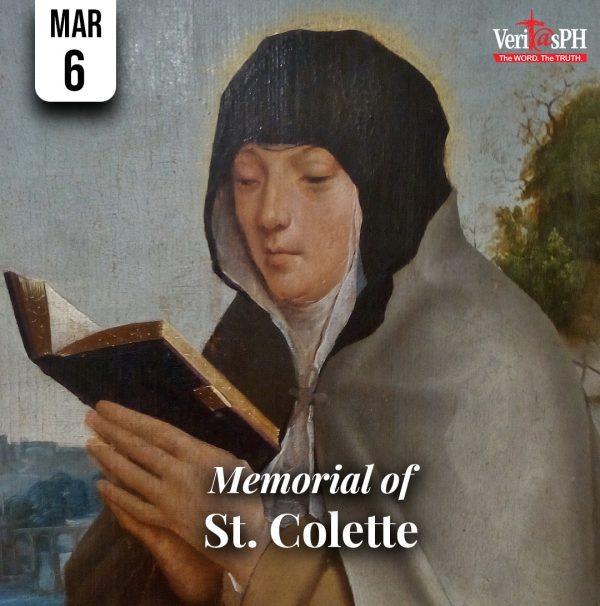
343,041 total reads ππ¨π§π¨π«π’π§π ππ‘π πππ’π§π π¨π ππ‘π πππ²: π πππππ¨π§ π¨π π ππ’ππ‘ ππ§π ππ§π¬π©π’π«πππ’π¨π§ πππ«ππ‘ π β’ ππ. ππ¨π₯ππππ ππππππ π π’π΄π¬ πΊπ°πΆ π΅π° πͺπ―π΅π¦π³π€π¦π₯π¦

343,053 total reads
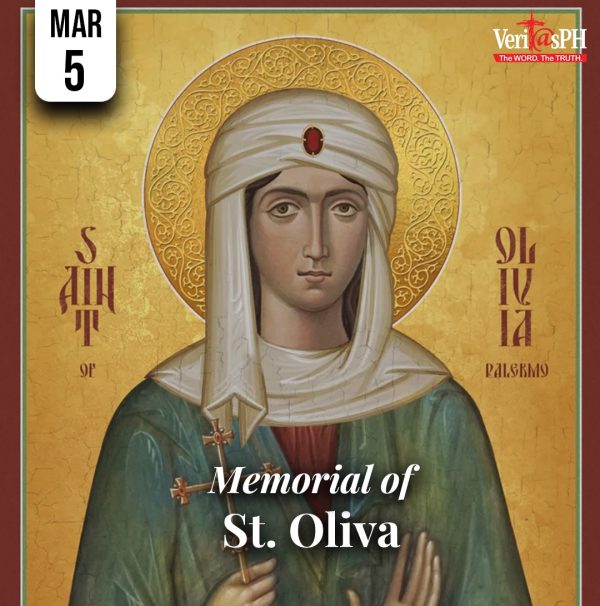
343,053 total reads ππ¨π§π¨π«π’π§π ππ‘π πππ’π§π π¨π ππ‘π πππ²: π πππππ¨π§ π¨π π ππ’ππ‘ ππ§π ππ§π¬π©π’π«πππ’π¨π§ πππ«ππ‘ π β’ ππ. ππ₯π’π―π ππππππ π ππ’πͺπ―π΅ πππͺπ·πͺπ’, π±π’π΅π³π°π―π¦π΄π΄ π°π§
BECOME A KAPANALIG MEMBER AND EUCHARISTIC ADVOCATE!
THE PHILIPPINES CATHOLIC CHURCH ONLINE DIRECTORIES