Lunes, Marso 31, 2025

SHARE THE TRUTH

 4,704 total reads

Lunes sa Ika-4 na Linggo
ng Apatnapung Araw na Paghahanda

Isaias 65, 17-21
Salmo 29, 2 at 4. 5-6. 11-12a at 13b

Poong sa aki’y nagligtas,
ang dangal mo’y aking galak.

Juan 4, 43-54

Monday of the Fourth Week of Lent (Violet)

UNANG PAGBASA
Isaias 65, 17-21

Pagbasa mula sa aklat ni propeta Isaias

Ang sabi ng Panginoon:
“Ako ay lilikha,
isang bagong lupa’t isang bagong langit;
mga pangyayaring pawang lumipas na
ay di na babalik!
Kaya naman kayo’y
dapat na magalak sa aking nilalang,
yamang nilikha ko itong Jerusalem
na ang aking pakay maging kagalakan ng mga hinirang.
Ako mismo’y magagalak
dahil sa Jerusalem at sa kanyang mamamayan.
Doo’y walang panambitan o kaguluhan.
Doo’y wala nang sanggol na papanaw,
lahat ng titira roon ay mabubuhay nang matagal.
Ituturing pa rin na kabataan pa ang edad sandaan,
ang hindi umabot ng gulang na ito ay pinarusahan.
Magtatayo sila ng mga tahanang kanilang titirhan,
sa tanim na ubas ay sila ang aani.”

Ang Salita ng Diyos.

SALMONG TUGUNAN
Salmo 29, 2 at 4. 5-6. 11-12a at 13b

Poong sa aki’y nagligtas,
ang dangal mo’y aking galak.

O Panginoon ko,
sa iyong ginawa, kita’y pinupuri’t ako’y iniligtas,
kaya kaaway ay di na nakuhang matuwa’t magalak.
Mula sa libingang
daigdig ng patay, hinango mo ako at muling binuhay;
ako, na kasama nilang napabaon sa kailaliman.

Poong sa aki’y nagligtas,
ang dangal mo’y aking galak.

Purihin ang Poon,
siya ay awitan ng lahat ng tapat na mga hinirang.
Iyong gunitain ang mga ginawa ng Diyos na Banal,
ang kanyang ginawa ay alalahanin at pasalamatan!
Hindi nagtatagal
yaong kanyang galit, at ang kabutihan niya’y walang wakas.
Ang abang may hapis at tigmak sa luha sa buong magdamag,
sa bukang-liwayway ay wala nang lungkot, kapalit ay galak.

Poong sa aki’y nagligtas,
ang dangal mo’y aking galak.

Kaya’t ako’y dinggin,
ikaw ay mahabag sa akin, O Poon, ako ay pakinggan,
mahabag ka, Poon! Ako ay dinggin mo at iyong tulungan.
Nadama ko’y galak nang iyong hubarin ang aking panluksa.
Sa pasasalamat sa iyo, O Poon, ay di magsasawa.

Poong sa aki’y nagligtas,
ang dangal mo’y aking galak.

AWIT-PAMBUNGAD SA MABUTING BALITA
Amos 5, 14

Matuwid ang dapat gawin,
masama’y iwasan natin,
at tayo ay bubuhayin;
ang Diyos ay sasaatin,
atin s’yang makakapiling.

MABUTING BALITA
Juan 4, 43-54

Ang Mabuting Balita ng Panginoon ayon kay San Juan

Noong panahong iyon, umalis si Hesus sa Samaria at nagtungo sa Galilea. Sapagkat si Hesus na rin ang nagsabing ang isang propeta’y hindi iginagalang sa kanyang sariling bayan. Pagdating niya sa Galilea ay mabuti ang pagtanggap sa kanya ng mga tagaroon, sapagkat nasa Jerusalem din sila noong Pista ng Paskuwa at nakita nila ang lahat ng kanyang ginawa roon.

Nagpunta uli si Hesus sa Cana, Galilea. Doon niya ginawang alak ang tubig. Doon naman sa Capernaum ay may isang mataas na pinuno ng pamahalaan; at may sakit ang kanyang anak na lalaki. Nang mabalitaan niyang bumalik si Hesus sa Galilea mula sa Judea, pinuntahan niya ito. Pinakiusapan niya itong pumunta sa Capernaum at pagalingin ang kanyang anak na naghihingalo. Sinabi sa kanya ni Hesus, “Hangga’t hindi kayo nakakikita ng mga palatandaan at mga kababalaghan, hindi kayo mananampalataya.” Ngunit sinabi ng pinuno, “Tayo na po, Ginoo, bago mamatay ang aking anak.” Sumagot si Hesus, “Umuwi na kayo; magaling na ang inyong anak.” Naniwala ang lalaki sa salita ni Hesus, at umuwi nga siya. Sa daan pa’y sinalubong na siya ng kanyang mga alipin at sinabing magaling na ang kanyang anak. Tinanong niya sila, “Anong oras siya gumaling?” “Siya po’y inibsan ng lagnat kahapong mag-aala-una ng hapon,” tugon nila. Naalaala ng ama na noong oras na iyon sinabi sa kanya ni Hesus, “Magaling na ang inyong anak.” Kaya’t siya at ang kanyang buong sambahayan ay sumampalataya kay Hesus.

Ito ang pangalawang kababalaghang ginawa ni Hesus sa Galilea pagpunta niya roon buhat sa Judea.

Ang Mabuting Balita ng Panginoon.

PANALANGIN NG BAYAN
Ikaapat na Linggo ng Kuwaresma
Lunes

Dahil sa pagtitiwalang tutugunin ng Diyos Ama nang buong kalugud-lugod ang ating mga kahilingan kung tayo ay mananalangin sa kanya nang may pananampalataya, ilapit natin ngayon sa kanya ang ating mga pangangailangan.

Panginoon, dinggin Mo ang aming panalangin.
o kaya
Ama, pagalingin Mo kami sa pamamagitan ni Jesus.

Ang Simbahan sa buong mundo nawa’y maging isang simbolo ng mapagpagaling na gawain ni Kristo sa pamamagitan ng kanyang pagkalinga sa mga may karamdaman sa katawan, isip, at kaluluwa, manalangin tayo sa Panginoon.

Ang mga doktor, nars, at iba pang nangangalaga sa mga maysakit nawa’y magpakita ng habag at kabutihan ni Jesus sa pagkalinga sa pinakamaliit ng lipunan, manalangin tayo sa Panginoon.

Itong Kuwaresma nawa’y maging panahon ng paghilom at pagkakasundo para sa mga pamilya at pamayanan, manalangin tayo sa Panginoon.

Ang mga maysakit at nagdurusa nawa’y makatanggap ng pagpapaginhawa at pagtataguyod mula sa kanilang pamilya, mga kaibigan, at mga kapitbahay, manalangin tayo sa Panginoon.

Ang mga mahal natin sa buhay na yumao na, ay magtamasa nawa nang walang katapusang gantimpala bunga ng kanilang pananampalataya, manalangin tayo sa Panginoon.

Ama naming nasa Langit, tulungan mo kaming patuloy na magtiwala sa iyo at sumampalataya sa nakapagpapagaling na kapangyarihan ng iyong Anak na gumagamot sa lahat ng aming mga sugat. Hinihiling namin ito sa pamamagitan ni Kristo na aming Panginoon. Amen.
STRONG WORDS FROM THE SC TO CONGRESS: “GRAVE ABUSE OF DISCRETION”

 259 total reads

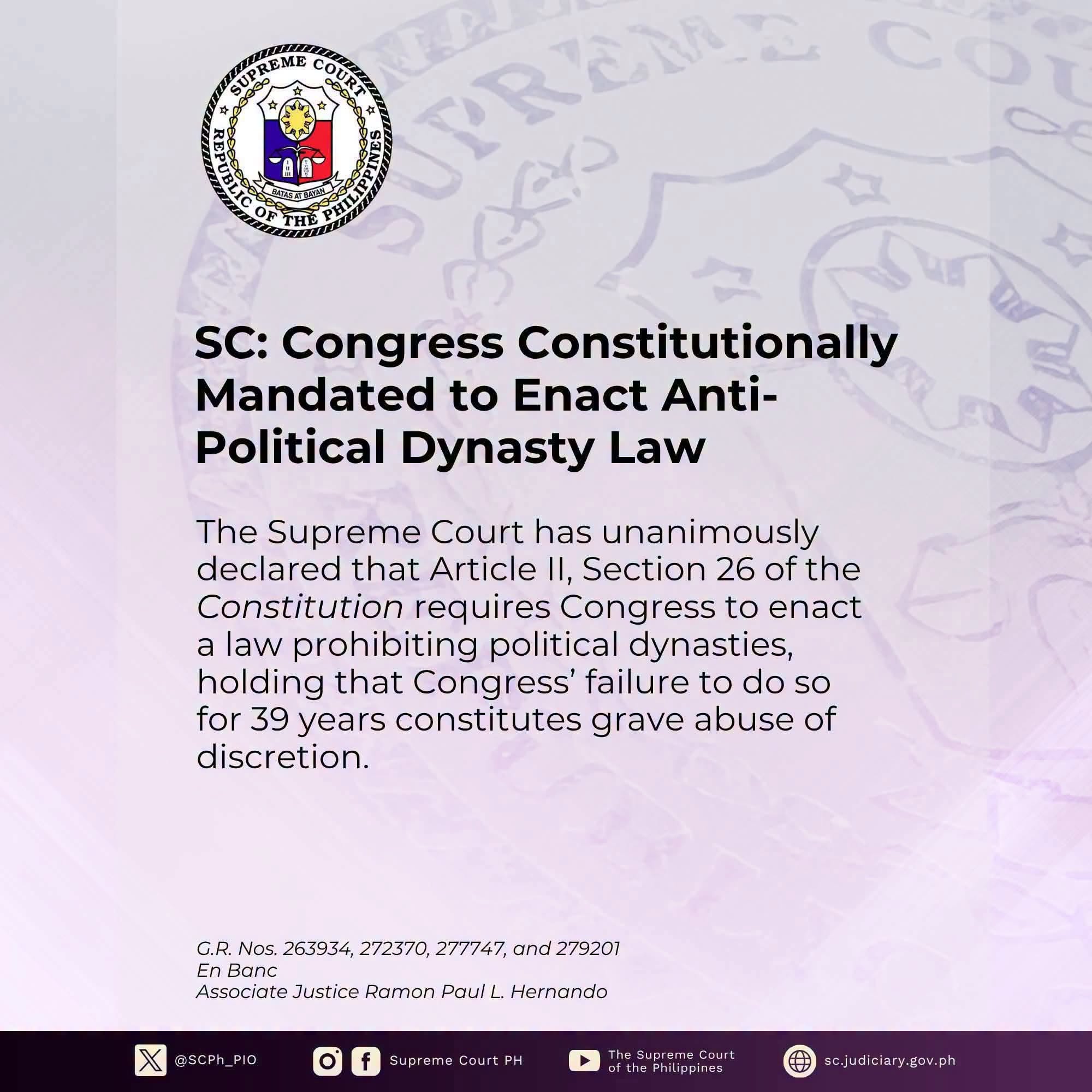
Thirty-nine years. That is how long Congress has failed to enact the law required by the 1987 Constitution to prohibit political dynasties.

Today the Supreme Court finally said: enough.

In a unanimous decision, the Court declared that Congress has a mandatory constitutional duty to enact an anti-political dynasty law, and that its prolonged failure to do so constitutes “grave abuse of discretion” and a continuing violation of its constitutional duty. The Court directed Congress to act “with utmost urgency” and enact the law “at the earliest opportunity.”

Those are exceptionally strong words.
Article II, Section 26 of our Constitution declares: “The State shall guarantee equal access to opportunities for public service, and prohibit political dynasties as may be defined by law.”

For almost four decades, the constitutional command remained largely unrealized because Congress itself was entrusted with defining what constitutes a political dynasty. The Court noted that dynasties have meanwhile remained widespread, extending even into the party-list system.

Perhaps this ruling raises a question larger than political dynasties themselves: What happens when those entrusted with making the law have a personal interest in not making it?

This is precisely why constitutional institutions exist—to place limits on power, including the power of those who make our laws.

Thirty-nine years is long enough.
Congress, the Supreme Court has spoken. Now enact the law.

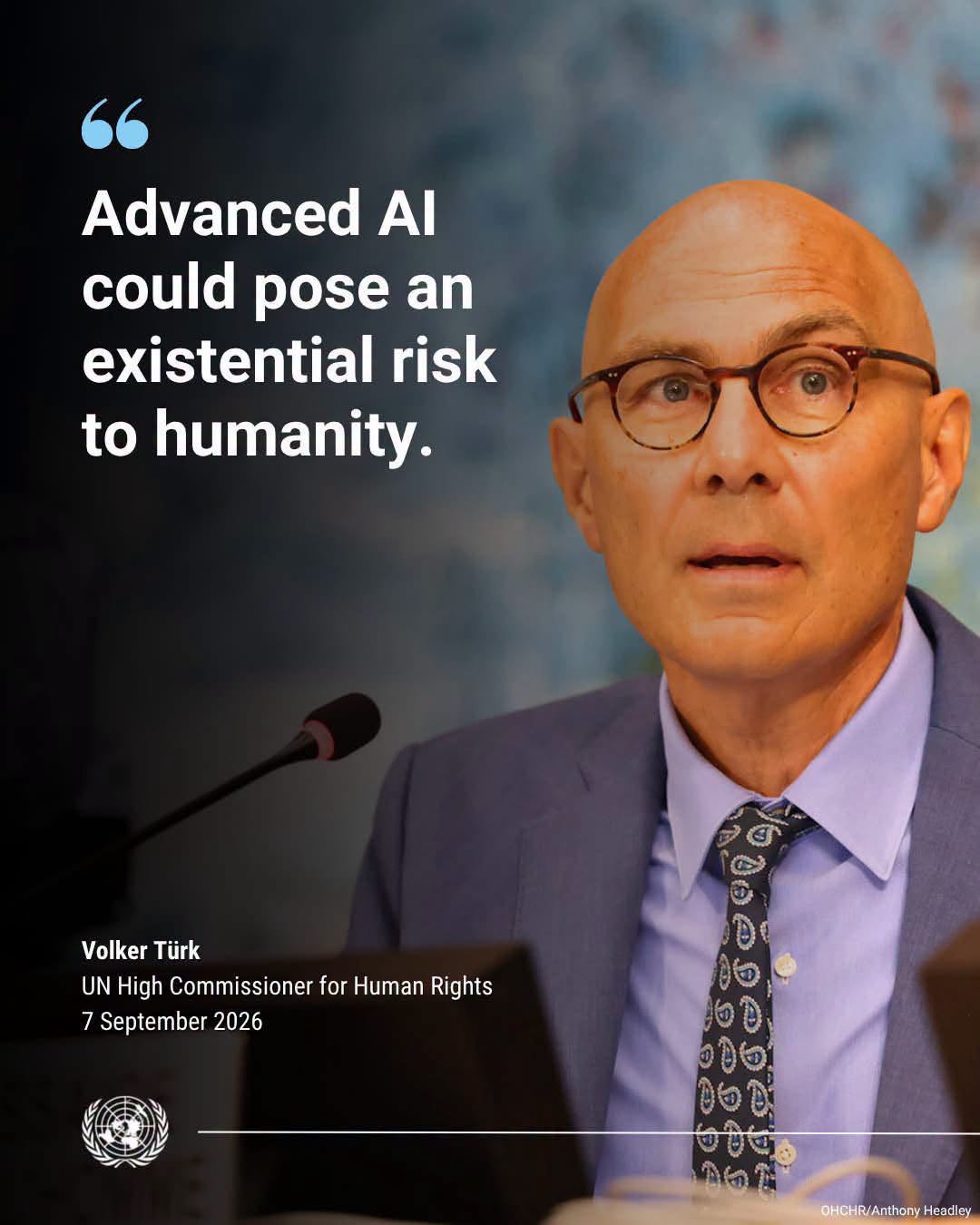
THE NEW ARMS RACE: AI RACE

 260 total reads

President Donald Trump has reportedly dismissed the growing warnings about the dangers of Artificial Intelligence as a “hoax.” His reason is revealing: America must stay ahead because, as he puts it, “whoever wins AI wins.”

Perhaps that statement itself should set alarm bells ringing.

We have heard this logic before. During the Cold War, one superpower could not stop developing more powerful weapons because the other might get ahead. Each side’s fear became the justification for the other’s escalation. And humanity found itself trapped in an arms race capable of destroying the very civilization it claimed to defend.

The Church did not remain silent.

In 1963, shortly after the Cuban Missile Crisis brought humanity frighteningly close to nuclear catastrophe, Pope St. John XXIII issued Pacem in Terris. He called explicitly for “a cessation to the arms race,” for the reduction of armaments, the banning of nuclear weapons, and agreements accompanied by effective systems of mutual control.

Paul VI carried that appeal to the United Nations. John Paul II repeatedly called for an end to the nuclear arms race. Benedict XVI and Francis continued the Church’s advocacy for disarmament, with Francis eventually declaring even the possession of nuclear weapons morally unacceptable.

Today we may be facing a new arms race—the AI race.

It is already inseparable from modern warfare. Artificial intelligence is being integrated into surveillance, targeting, autonomous weapons, cyberwarfare and military decision-making. But an even more fundamental race is taking place among nations and corporations: the race toward increasingly powerful AI—and ultimately toward a possible superintelligence.

The logic sounds disturbingly familiar.

America cannot slow down because China might get ahead.

China cannot slow down because America might get ahead.

One AI company cannot slow down because its competitors might get ahead.

And so nobody can afford to be prudent.

This is why I find it significant that some of the very people building the world’s most powerful AI systems are themselves beginning to call for restraint, regulation, independent monitoring and international cooperation. They are warning us that capabilities are advancing faster than our capacity to understand and control them.

The issue is not whether AI is good or evil. AI has enormous potential for good. The deeper question is whether we are racing toward a point at which human intelligence may no longer be able to hold the reins.

Pope Leo XIV has already given the Church a powerful expression for this in Magnifica Humanitas: we must “disarm AI.”

Perhaps the time has come to translate that principle into a more urgent global appeal—calling together governments, AI developers, scientists, ethicists and religious leaders to consider internationally agreed red lines on the development of superintelligence: reciprocal commitments, independent monitoring, verification and effective safeguards before capabilities are developed that humanity may no longer be able to control.

The Church helped humanity find its moral voice during the nuclear arms race. Perhaps she is being called to exercise that prophetic role again.

Because the real question is not: Who will win the AI race? The question is: What if humanity loses it?

LOVE and COMPASSION

 636 total reads

Gospel Reading for September 17, 2026 – Luke 7: 36-50

LOVE and COMPASSION

A certain Pharisee invited Jesus to dine with him, and he entered the Pharisee’s house and reclined at table. Now there was a sinful woman in the city who learned that he was at table in the house of the Pharisee. Bringing an alabaster flask of ointment, she stood behind him at his feet weeping and began to bathe his feet with her tears. Then she wiped them with her hair, kissed them, and anointed them with the ointment. When the Pharisee who had invited him saw this he said to himself, “If this man were a prophet, he would know who and what sort of woman this is who is touching him, that she is a sinner.”

Jesus said to him in reply, “Simon, I have something to say to you.” “Tell me, teacher,” he said.

“Two people were in debt to a certain creditor; one owed five hundred days’ wages and the other owed fifty. Since they were unable to repay the debt, he forgave it for both. Which of them will love him more?” Simon said in reply, “The one, I suppose, whose larger debt was forgiven.” He said to him, “You have judged rightly.”

Then he turned to the woman and said to Simon, “Do you see this woman? When I entered your house, you did not give me water for my feet, but she has bathed them with her tears
and wiped them with her hair. You did not give me a kiss, but she has not ceased kissing my feet since the time I entered. You did not anoint my head with oil, but she anointed my feet with ointment. So I tell you, her many sins have been forgiven; hence, she has shown great love. But the one to whom little is forgiven, loves little.” He said to her, “Your sins are forgiven. The others at table said to themselves, “Who is this who even forgives sins?” But he said to the woman, “Your faith has saved you; go in peace.”

————

The Pharisees seemed to have a lot of time keeping track of what people were doing and putting labels on them. They were particularly fond of labeling people as “sinners.”

The word Pharisee comes from the Hebrew word prushim, which means “separated ones.” They thought of themselves as HOLY simply because they observed practices that kept them from ritual impurity. This explains why Jesus was often angry with them, especially because of their hypocrisy. Their judgmental attitude discouraged the so-called “sinners” from having a change of heart. More often than not, people do not change because of the labels placed on them. It is LOVE and COMPASSION that can change hearts. That is the way of Jesus.

The woman in the Gospel showed genuine repentance, and it touched Jesus’ heart and led Him to forgive her.

As for us, it is only when we recognize and admit that we too are sinners, and sincerely repent of our sins, that we receive God’s forgiveness.

Lord Jesus, may we always be humble enough to admit that we too sin against God and are also in need of Your forgiveness. Amen

Veritas Editorial

Picture of Rev. Fr. Anton CT Pascual

Rev. Fr. Anton CT Pascual

Paghilom ng ozone layer

 38,801 total reads

 38,801 total reads Mga Kapanalig, break muna tayo sa mga bad news. Pag-usapan naman natin ang isang magandang balita sa usapin ng klima. Naaalala ba ninyo

Read More »

Pagnanakaw sa kabataan

 83,112 total reads

 83,112 total reads Mga Kapanalig, hindi lang sa mga flood control projects may scam. Tila may nakawán ding nangyayari sa mga paaralan!   Lumabas noong isang linggo

Read More »

Takót sa sariling multo

 120,110 total reads

 120,110 total reads Mga Kapanalig, nag-alangan pumasok si Vice President Sara Duterte sa Quezon City Regional Trial Court noong Setyembre 5 para maglagak ng piyansa isang

Read More »

AN INCUMBENT CONGRESSMAN

 226,989 total reads

 226,989 total reads Kapanalig, kung normal na sa bansa natin ang corruption na kinasasangkutan mismo ng mga halal na opisyal at pinuno ng mga ahensiya ng

Read More »

Fashion show sa baha

 269,932 total reads

 269,932 total reads Mga Kapanalig, ano ang datíng kapag ang mga pulitiko na nakikiramay sa mga binaha ay nakasuot ng mamahaling damit? Ang Pampanga ay ang

Read More »

Watch Live

RELATED TOPICS

Sabado, Setyembre 19, 2026

 552 total reads

 552 total reads Sabado ng Ika-24 na Linggo sa Karaniwang Panahon (II) o kaya Paggunita kay San Januario (Jenaro), obispo at martir o kaya Paggunita sa Mahal na

Read More »

Biyernes, Setyembre 18, 2026

 1,874 total reads

 1,874 total reads Biyernes ng Ika-24 Linggo sa Karaniwang Panahon (II) 1 Corinto 15, 12-20 Salmo 16, 1. 6-7. 8b at 15 Paggising ko, Poong sinta,

Read More »

Huwebes, Setyembre 17, 2026

 3,692 total reads

 3,692 total reads Huwebes ng Ika-24 Linggo sa Karaniwang Panahon (II) o kaya Paggunita kay San Roberto Belarmino, obispo at pantas ng Simbahan o kaya Paggunita kay St.

Read More »

Miyerkules, Setyembre 16, 2026

 4,841 total reads

 4,841 total reads Paggunita kay San Cornelio, papa, at San Cipriano, obispo, mga martir 1 Corinto 12, 31 – 13, 13 Salmo 32, 2-3. 4-5. 12

Read More »

Martes, Setyembre 15, 2026

 6,787 total reads

 6,787 total reads Paggunita sa Mahal na Birheng Maria na Nagdadalamhati Hebreo 5, 7-9 Salmo 30, 2-3a. 3bk-4. 5-6. 15-16. 20 Poong D’yos na maibigin ako

Read More »

SUPPORT OUR MISSION

BECOME A KAPANALIG MEMBER AND EUCHARISTIC ADVOCATE!

CATHOLINK

THE PHILIPPINES CATHOLIC CHURCH ONLINE DIRECTORIES

Scroll to Top