
Homily for March 11, 2022, Friday of the First Week of Lent, Mt 5:20-26
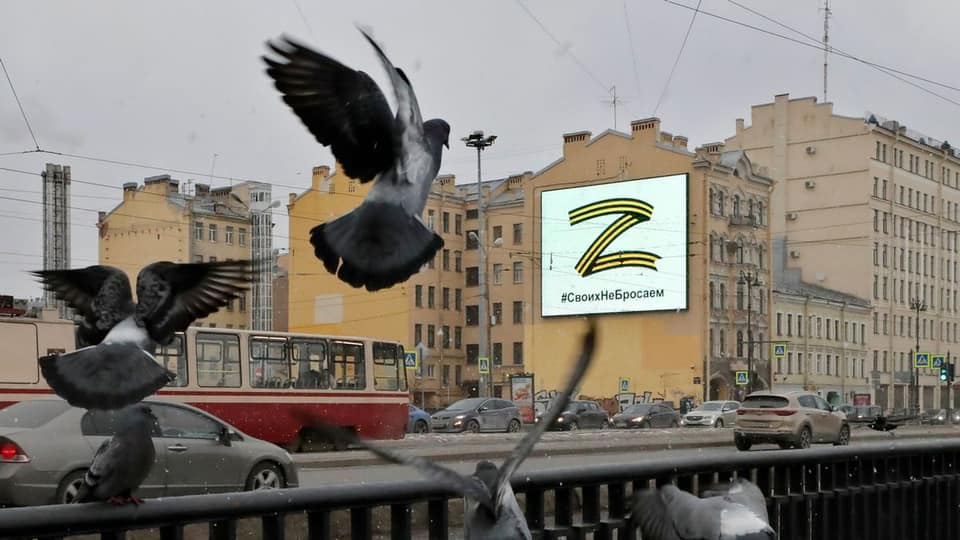
A young man living in Ukraine was surprised when he finally got a call from his father who was living in Russia. His father spoke very casually as if there was no war going on in Ukraine. When the young man told his father that he, his wife, and his son were inside a bomb shelter and that he was not sure if their house would still be standing after the bombings, his father said, “What are you talking about? Why would you be hiding in a shelter? The last news that I got was that the special military operation in Ukraine is about to be finished, that the Russian soldiers are close to liberating Ukraine, and that the neoNazi government there is about to surrender.”
He couldn’t believe what his father was saying him. He tried to explain to his father that what was going on was a war, not a “special military operation”, and that Russia was actually invading Ukraine, bombing the cities and killing civilians. And his father’s reply was, “No, don’t believe that. That’s just propaganda from the fascists. That’s not true.” He tried and tried to explain but his father just wouldn’t believe him or even listen to him. He just seemed totally convinced about the news that he was getting inside Russia.
And so he posted on his FB page, “My father who lives in Russia does not believe me that Russia had declared a war against Ukraine.” Soon, he started getting comments from other Russians living in Ukraine saying, “My parents in Russia said the same thing to me and just wouldn’t believe me.” Within a few hours he already had more than a thousand others saying the same thing. You see, sometimes people simply believe what they choose to believe, and nothing that you say can convince them that you’re telling the truth.
Today’s first reading from the prophet Ezekiel is talking about changing one’s mind, whether for good or for evil. How changing one’s mind for good can save even the most wicked sinner, and how changing one’s mind for evil can lead to a person’s doom, even if he has been good for most of his life.
In the Gospel, Jesus is giving us a commentary about the fifth commandment, THOU SHALT NOT KILL. He says it’s not just the killer who is liable to judgment but the one who has allowed his soul to be poisoned by hatred or resentment. Hitler did not begin the murder of the millions of Jews when he actually put them inside gas chambers and later incinerated them. He started it by planting seeds of hatred and resenment in the hearts of the German people against the Jews, so that the Germans would not care when he actually ordered the genocide, or so that they would choose not to believe when the massacre was being committed already.
Jesus’ main point is that the physical murder, more often than not, is preceded by a spiritual murder, that it begins in the heart.
And so, in the same way, if we want peace and reconciliation, there is no way we can achieve it without addressing the very root causes of conflict and violence—namely, the poisoning of minds with a sense of victimhood, so can make people believe that they are under attack, that their violent reaction is for their own self-preservation. How to save people from other people is sometimes easier to do than saving them from themselves, from their own state of delusion or paranoia, from their own conviction that they are right, from their incapacity to listen to the truth because they have made up their minds about what they think is true.
In Matthew 10,26-28, Jesus gave these reassuring words, “Nothing is hidden that will not be revealed, nor secret that will not be known. What is said in the darkness, speak in the light; what you hear said in whispers, proclaim on the housetops. And do not be afraid of those who kill the body but cannot kill the soul; rather, be afraid of the one who can destroy both soul and body in hell.” Take note, he is referring to Satan, the prince of lies, the spiritual murderer who can only be cast out by the blood and water that flowed out of the wounded side of the crucified God.