

9,331 total reads
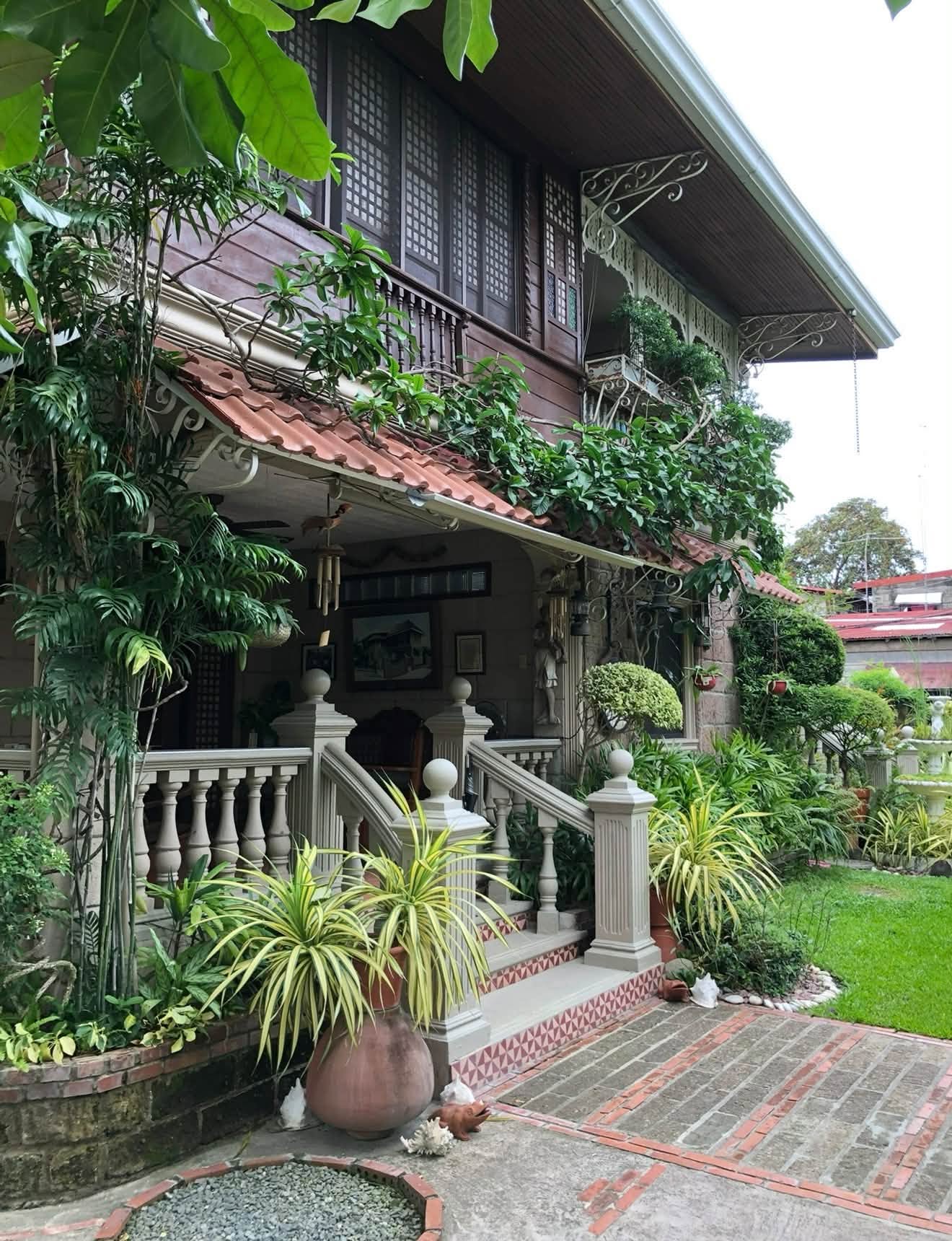
Our ancestral home in Betis survived Pinatubo and the lahar. We saved the old house by hydraulically raising its original wooden upper floor by almost twelve feet and supporting it on concrete posts. We then rebuilt the ground floor, determined that floodwaters would never reach it again.
The street itself had already been elevated by almost four feet, so we filled up the garden by about five feet and raised the new ground floor by another four.
We thought that should be high enough. Apparently, it wasn’t. The flood water rose up to five feet and turned our garden into a huge fishpond. This time it reached even the elevated first floor—atrium, kitchen, dining room, bedrooms, etc.
Our house caretaker, Jason, tried to make light of the situation. He sent pictures of tiny tilapias he had caught swimming in the flooded garden. We laughed at his “catch”—baby tilapias!—and jokingly wondered whether fish that small already knew how to swim.
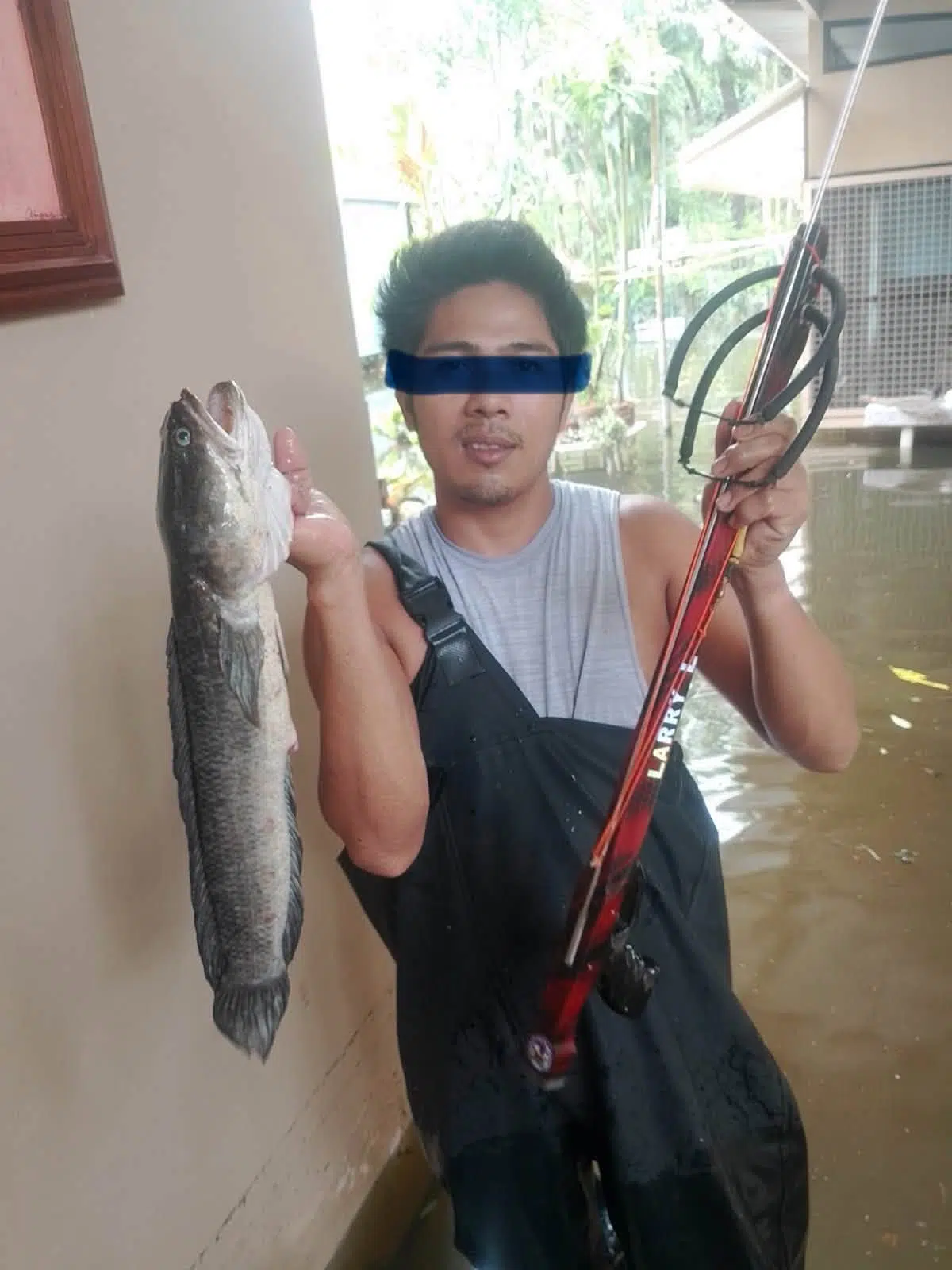
Then the other day Jason sent another photograph, this time proudly displaying his latest catch: a big fish—a “bulig,” as we Kapampangans call the “dalag” or mudfish.
I found myself thinking: At last, may nahuling “malaking isda” sa baha. If only we could say the same about the other kind of flood.
I still remember the 2024 SONA, when the President proudly announced that more than 5,500 flood-control projects had already been completed. Just days later, the southwest monsoon intensified by Typhoon Carina submerged large parts of Metro Manila. It was perhaps the first warning of a serious disconnect between the projects reported on paper and the reality on the ground.
By the 2025 SONA, the tone had changed completely. No more boasting. This time, there was anger: “Mahiya naman kayo sa inyong kapwa Pilipino!”—“Have some shame before your fellow Filipinos!” Thunderous applause. Standing ovation. The legislators themselves rose to applaud!!!
Then came the investigations—and a different kind of flood, what Jessica Soho aptly called “PAGBAHA NG KASAKIMAN”—A FLOOD OF GREED.
In August 2025, the President himself released the results of a preliminary review: 9,855 flood-control projects worth about ₱545.6 billion from July 2022 to May 2025. Out of 2,409 contractors, just 15 companies had obtained about ₱100 billion worth of contracts—roughly 20% of the total.
Then came an unusual twist. Malacañang launched the Sumbong sa Pangulo website, where ordinary citizens could look up flood-control projects in their communities and report those that were unfinished, defective—or simply nonexistent.
And the revelations came one after another: alleged ghost projects in Bulacan and elsewhere; testimonies about “SOP,” percentages and mock bidding; photographs of huge piles of ₱1,000 bills; allegations about how commissions were prorated. The trail led from contractors to district engineers, to higher DPWH officials—and eventually to the very process by which projects found their way into the national budget.
For this was not just about stealing from projects after they had been awarded. The deeper problem was a system that had made public infrastructure vulnerable to political patronage from the budgeting stage itself—through so-called “allocables,” patronage-based priority projects, controversial bicam insertions and “parking,” and huge Unprogrammed Appropriations.
Flood-control projects could become political currency. Instead of beginning with the question, What does this watershed or river basin actually need?, the process could be distorted by another question: Who has an allocation, where will it be placed, who gets the contract, and who gets a share?
When politics dictates engineering, the question ceases to be “Where does the water flow?” It becomes “Where does the money flow?”
No wonder public anger spilled into the streets, culminating in the Trillion Peso March. It is difficult to forget the images of money piled high on tables while ordinary families were shoveling mud out of their flooded homes.
That is why the latest developments do matter. I hear that some powerful figures have been charged with plunder over the alleged multibillion-peso kickback scheme involving government projects. The Sandiganbayan has found probable cause and ordered their arrest. Of course, a charge is not a conviction. Those charged remain entitled to due process and the presumption of innocence.
But let us hope that this time, those truly responsible for the plunder of public funds—no matter how powerful or well-connected—will finally be held to account. We cannot allow this to end with hearings, exposés and headlines. There must be accountability before the law.
I admit I was not at all optimistic that the investigations would eventually lead to the prosecution—and, where the evidence warrants it, the conviction—not only of the small fry but of some of the so-called “big fish” as well. I hope I am proven wrong.
Because even now, communities where billions have supposedly been spent on flood control continue to go under water. Perhaps this is what happens when projects are determined by political boundaries and allocations rather than watersheds, river basins, sound engineering and the actual behavior of water.
Let the evidence lead wherever it must. No sacred cows. No selective justice. And let those proven guilty be held accountable according to law.
Jason managed to catch his big fish in our flooded garden. Let us hope our justice system can do a little better than Jason and catch the bigger ones.
Public money is people’s money. And when money meant to protect people from floods is stolen, it is not just money that disappears. Homes, livelihoods, futures—and sometimes lives themselves—are swept away.