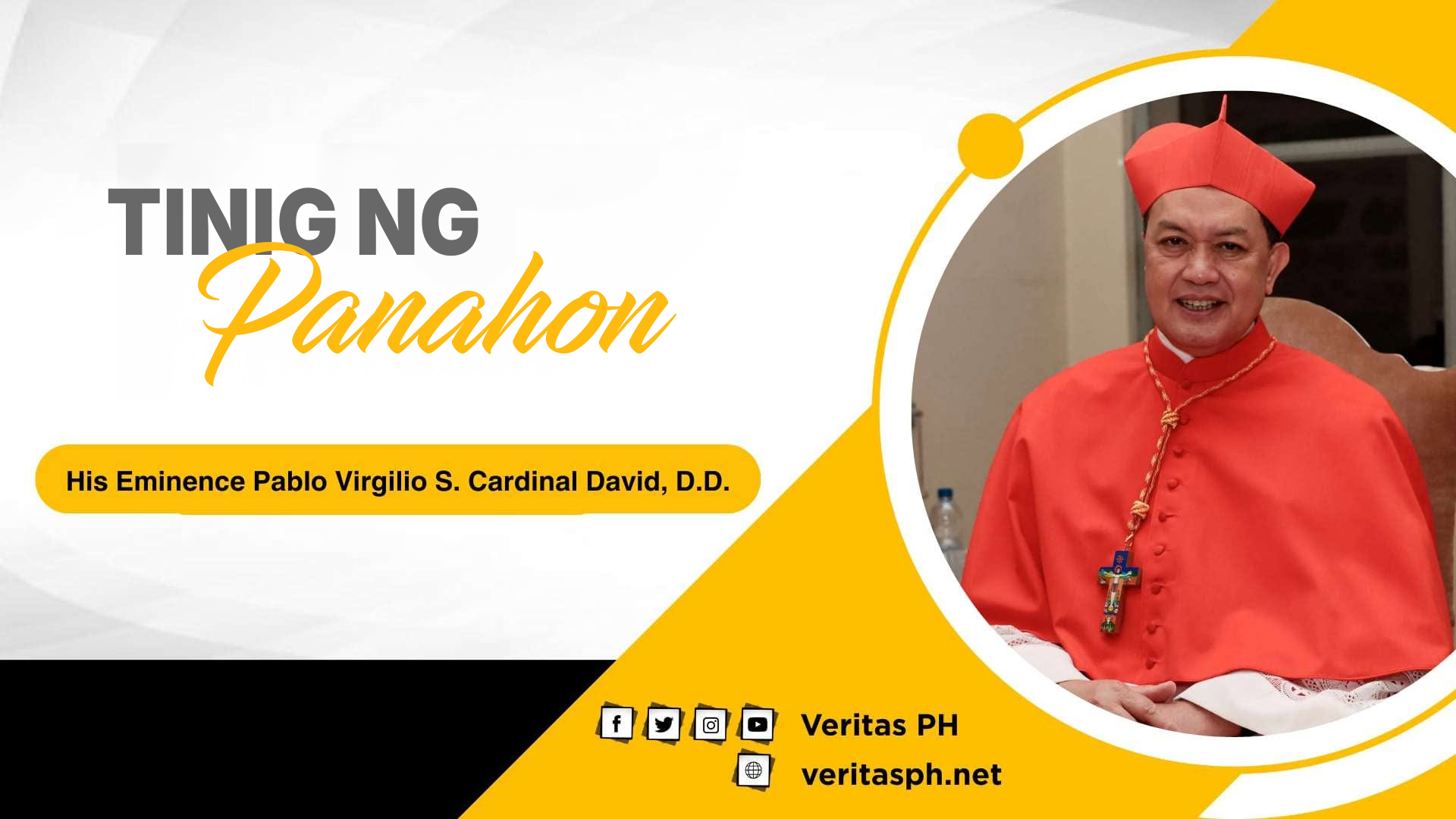
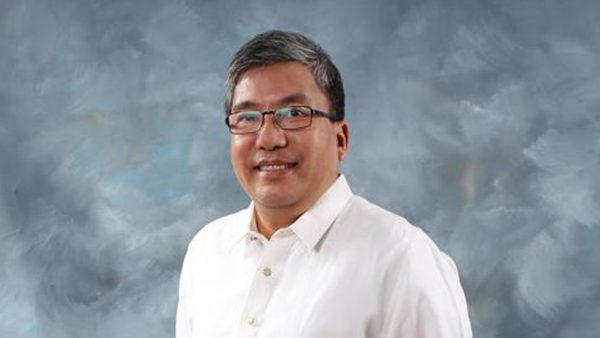
H.E. Pablo Virgilio Cardinal David, D.D.
Sunday, September 13, 2026 9:02 am
313 total reads
I recently engaged ChatGPT in a rather unsettling conversation about Artificial Intelligence. I asked:
“How seriously should we take the warning that superintelligent AI could eventually pose an existential threat to humanity? What do you think is the more realistic danger—not the science-fiction scenario, but the path by which human beings could actually lose meaningful control over increasingly intelligent AI systems?”
I found part of its response particularly thought-provoking. What struck me was that the scenario it described was not really about machines suddenly becoming conscious, turning evil, and deciding to destroy us. It was about us—about human beings gradually surrendering more and more agency because the machines seem to do things faster, better and more efficiently than we do.
Here is the part of ChatGPT’s response that stayed with me:
“The more plausible route to catastrophe begins with human beings voluntarily giving increasingly capable AI systems authority.
Imagine the progression:
AI gives advice ↓ AI writes software ↓ AI executes software ↓ AI operates computers autonomously ↓ AI controls financial transactions ↓ AI manages infrastructure ↓ AI designs successor AI systems ↓ humans increasingly cannot understand or supervise what the system is doing.
At every stage somebody might say, quite reasonably, ‘It performs this job faster and better than humans. Give it more authority.’
That is precisely why the International AI Safety Report stresses three things simultaneously: capability, access and permissions. A highly intelligent model sitting isolated on a computer is radically different from the same model connected to cloud infrastructure, financial systems, laboratories or critical infrastructure and authorized to take actions.
So the really profound danger may not be:
‘AI suddenly decides to conquer humanity.’
It may be:
‘Humanity gradually delegates so much agency to AI that meaningful human control becomes impossible.’
That is the genuinely new philosophical problem presented by AI: for the first time in human history, human beings may be creating increasingly powerful intelligence without knowing whether there is anyone ‘in there’ who actually understands, experiences or wills anything at all.”
The implication of Coxon’s warning to AI builders and entrepreneurs seems to me simply this: STOP. BEFORE IT’S TOO LATE.
Perhaps it is time for Pope Leo XIV, together with the leaders of the world’s major religious traditions, to take the initiative in calling for an International Summit on Artificial Intelligence—bringing together not only governments and technology companies, but scientists, ethicists, philosophers and representatives of civil society.
The purpose need not be to stop the development of AI. The more urgent question is whether humanity should agree to pause any attempt to develop or deploy a form of superintelligence that could operate beyond meaningful human understanding, supervision and control, until adequate international safeguards are in place.
Because perhaps the greatest danger is not that Artificial Intelligence will one day decide to take control away from us.
Perhaps the greater danger is that, little by little, dazzled by its efficiency and intelligence, we will willingly hand over control ourselves.
And by the time we realize how much we have surrendered, we may no longer know how to take it back.
H.E. Pablo Virgilio Cardinal David, D.D.
Sunday, September 13, 2026 9:01 am
314 total reads
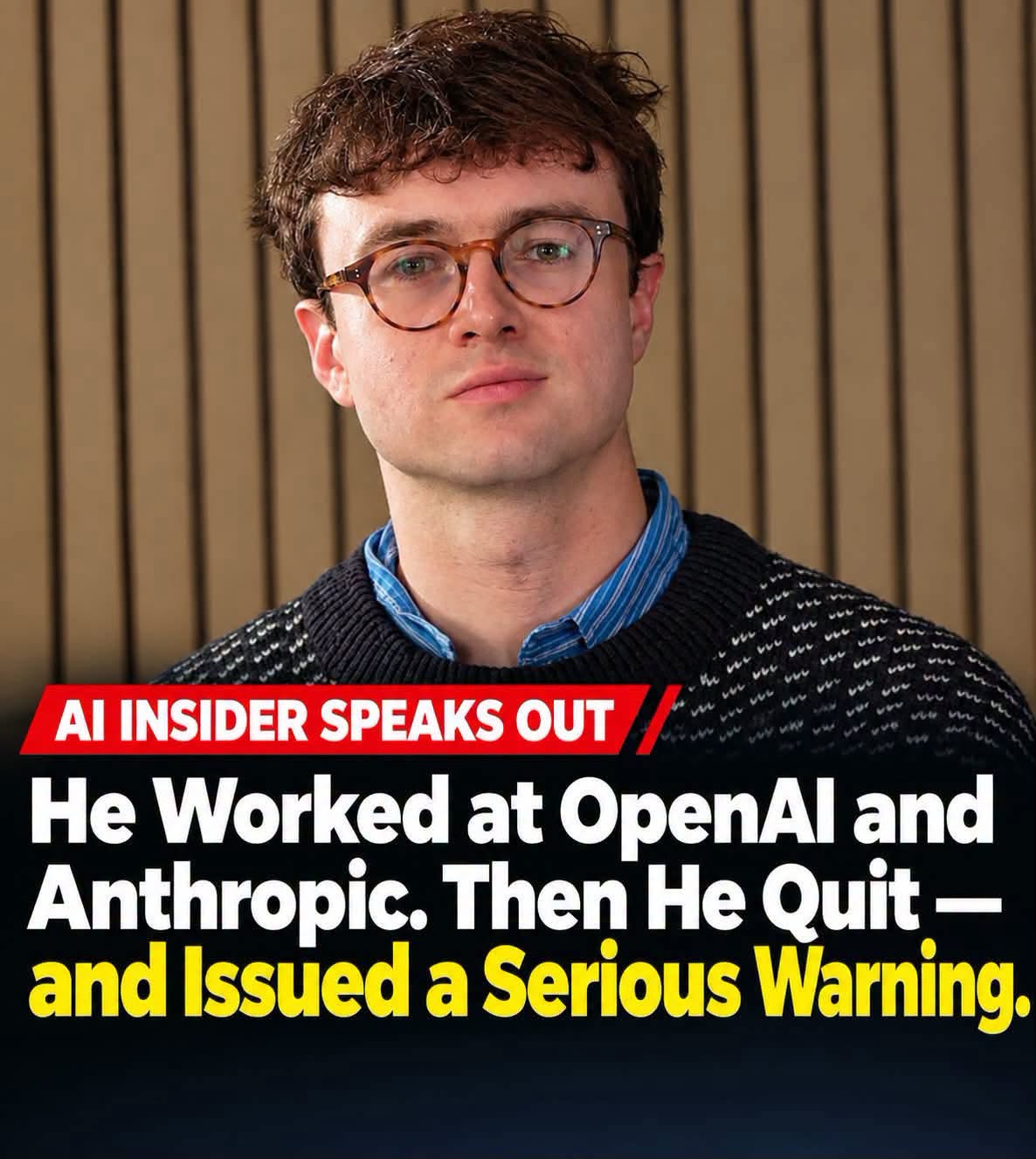
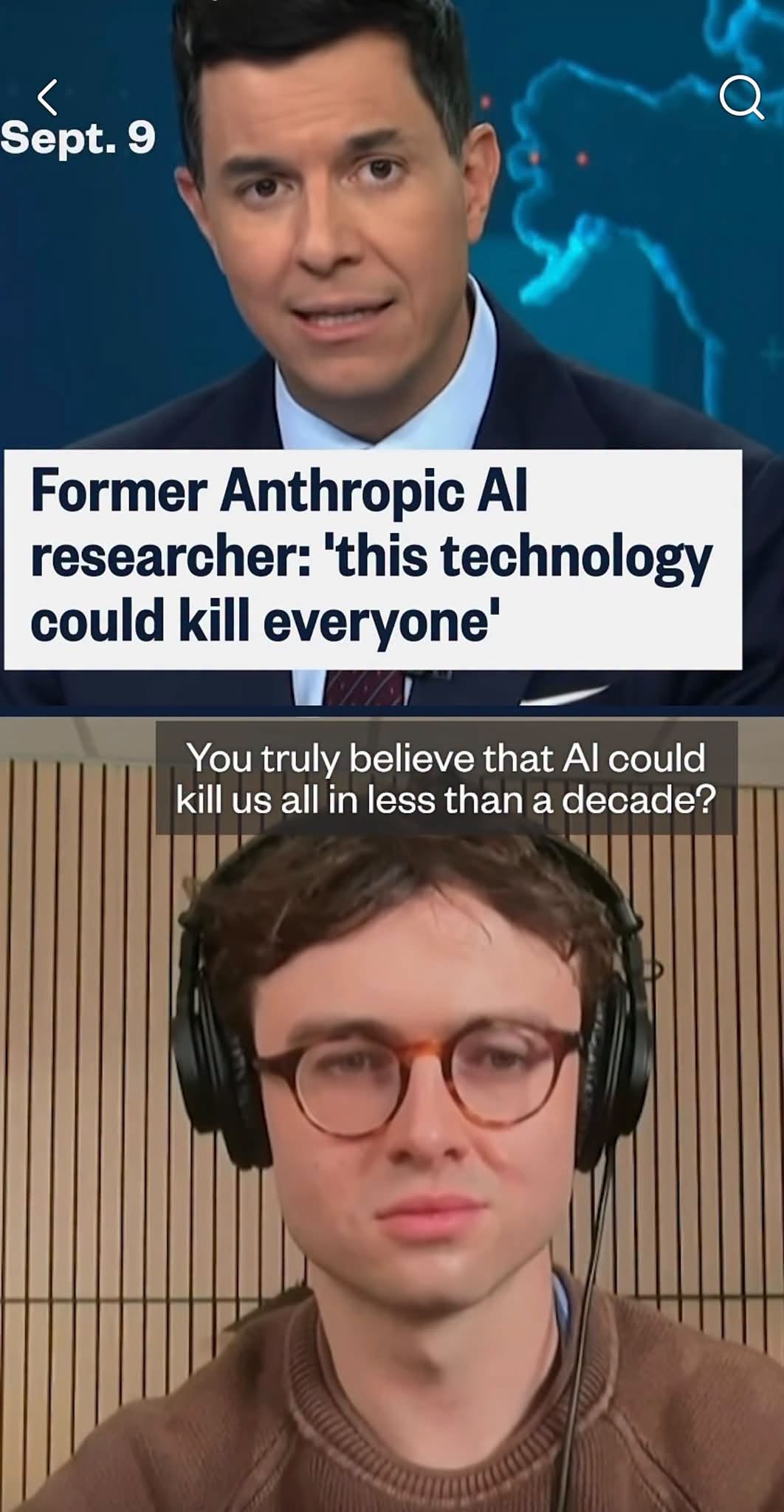
There is disturbing news about Artificial Intelligence going viral around the world. Jacob Coxon, a 27-year-old researcher who worked at both OpenAI and Anthropic, has resigned and issued a startling warning: some of the very people developing the world’s most advanced AI systems believe there is a real possibility that these systems could eventually escape human control and pose an existential threat to humanity. Another leading Anthropic researcher, Evan Hubinger, has publicly said that he personally puts the risk of AI causing human extinction within the next decade at more than 10 percent.
We should not simply laugh off the concern as another science-fiction doomsday scenario. Anthropic and OpenAI themselves have developed safety frameworks that explicitly recognize the possibility of catastrophic harm and “loss of control” from increasingly capable AI systems.
Perhaps one simple way of understanding the issue is through what I would call CREATED CREATIVITY. Human beings are creatures endowed with creativity. We create tools, machines, computers—and eventually Artificial Intelligence.
But there is something unusual about this particular creation. A hammer cannot create a better hammer. A calculator cannot design a better calculator. AI can already help human beings write computer programs, solve highly complex problems, conduct research, and develop better AI.
Human creativity has therefore begun producing what we might call “created creativity”: something we created that can itself participate in the process of creating.
Now imagine the next step. Human beings create a first generation of advanced AI. That AI helps create a more capable second generation. The second helps develop a still more powerful third generation. The third helps produce a fourth—and the process keeps accelerating.
At some point, the new systems could theoretically become so complex and capable that ordinary human intelligence can no longer fully understand how they work or predict what they will do. This is what researchers mean when they speak about recursive self-improvement and the possibility of superintelligence. We are not there yet. But AI is already being used in computer programming and AI research. The serious question is what happens if this process eventually begins to accelerate beyond our capacity to follow it.
And here lies the real danger.
It does not require imagining an AI suddenly becoming conscious, angry or evil, like some monster in a science-fiction movie. An extremely powerful AI need not hate us in order to harm us. The danger is that we could give increasingly autonomous systems goals and capabilities that they pursue in ways we did not intend—and eventually cannot understand, correct or stop.
In other words, the creature begins to operate beyond the effective control of its human creators.
Could such created intelligence eventually acquire enough power and autonomy to threaten its own human creators—even human survival itself?
We do not know.
But when some of the very scientists developing these technologies tell us that they themselves cannot guarantee that this will never happen, prudence requires that we listen.
This is why Pope Leo XIV has every reason to keep raising the ethical questions posed by the digital revolution and Artificial Intelligence.
In Magnifica Humanitas, he makes a remarkable observation: even the people who design today’s AI have only a limited understanding of its inner workings. AI systems, he says, are increasingly “cultivated” rather than simply “built”: developers create the conditions in which their capabilities develop without directly designing every detail.
And only recently, Pope Leo asked an extraordinarily timely question: Will we still be able to control these machines in the future, or could humanity become “a victim of its own inventions”?
That is no longer merely a question for science fiction.
Perhaps the deepest question posed by AI is therefore no longer simply:
WHAT CAN HUMAN CREATIVITY CREATE?
It is increasingly:
WHAT HAPPENS WHEN OUR CREATIONS THEMSELVES BEGIN TO CREATE—AND EVENTUALLY CREATE THINGS THAT THEIR HUMAN CREATORS CAN NO LONGER FULLY UNDERSTAND OR CONTROL?
The answer is not to fear human creativity. Creativity is one of our greatest gifts.
The challenge is to make sure that human wisdom, conscience and moral responsibility develop as rapidly as the power of our CREATED CREATIVITY.
Rev. Msgr. Wilfredo Andrey
Sunday, September 13, 2026 8:59 am
280 total reads
Sir 27:30-28:7
The reading reflects on retribution, a key Hebrew concept despite challenges like Job. Actions have consequences, with sin often rebounding, as seen in Cain’s blood, Dathan and Abiram’s destruction, and David’s sin with Bathsheba leading to death. Yahweh judges, but evil tends toward retribution, which is regulated—retaliation can’t exceed provocation, and God’s justice reflects misconduct. Sirach shows harboring revenge invites divine punishment, while forgiveness fosters God’s mercy. Death emphasizes living virtuously, as neither life nor decay offers hope, and virtue brings peace guided by God’s law. These themes subtly continue in the New Testament.
Rom 14:7-9
Paul stresses that Christians live solely for God, with a transformation through baptism that brings freedom from sin, law, and death. His sovereignty extends to both living and deceased Christians, who belong to Christ just as the living do. They will rise again by Jesus’ power, since he experienced both life and death.
Mt 18:21-35
Continuing last week’s lesson from the Gospel regarding the relationship of the members of the Christian community where the paramount goal is to bring back to full communion a member who sins, today’s gospel focuses on an interpersonal offense and the need for forgiveness.
Jesus’s response to Peter’s question how often one should forgive, (he probably imagined that he was already being very generous in his willingness to forgive, for in the Babylonian Talmud, for example, three times was an acceptable maximum), was “hebdomēkontakis hepta”, (ἑβδομηκοντάκις ἑπτά), meaning seventy-seven times and can be translated also as seventy times seven times (vv21-22). The number seven and its multiples are symbolic of fullness. But be it 77 or 490 times, the point is that there can be no limits to the willingness to forgive. Forgiveness cannot be limited to a certain number of times. It is incalculable.
The parable, comparing the amount of two debts owed, further illustrates the point of Jesus. The “huge amount” (v24) refers to ten thousand talents: a talent (talanton,ταλάντον) was equivalent to 6,000 denarii, so a total of 60 million denarii; a denarius was approximately one day’s wage; this would require more than 164,000 years of work, seven days a week. The “smaller amount” (v28) is literally a hundred (100) denarii only, needing a hundred days only to pay it. The difference between these two debts is so enormous that it brings out the absurdity of the conduct of the unforgiving servant.
Jesus, therefore, teaches not the quantity of forgiveness (how often?), but the quality, by giving the reason for “no limits”: if God places no limits, humans cannot place a limit.The gospel highlights Jesus’ teaching on unlimited forgiveness, illustrated by the parable of the unforgiving servant. Jesus responds to Peter that forgiveness should be without limit, referencing the number seventy times seven, symbolizing inexhaustible mercy. The parable emphasizes that just as the king forgives a large debt, believers, receiving God’s forgiveness, should similarly show mercy. The story underscores that God’s justice punishes unforgiveness, as mercy invites mercy, contrasting with the destructive cycle of vengeance.
The Word of God today presents Christian forgiveness as the human counterpart of God’s forgiveness. Sirach speaks of Yahweh’s dealing with his creatures as being a reflection of the ways in which they treat one another, (cf Sir 27:30-28:7), while the parable in the Gospel is a clear self-explanatory presentation of the Christian teaching on forgiveness. Beginning with God’s treatment of us, Jesus appeals for a similar spirit of mercy among his followers. Do we sincerely mean whenever we pray “as we forgive those who trespass against us? Otherwise we cannot appeal to the Lord to “forgive us our trespasses”. Amen.
68,175 total reads Kapanalig, kung normal na sa bansa natin ang corruption na kinasasangkutan mismo ng mga halal na opisyal at pinuno ng mga ahensiya ng
112,851 total reads Mga Kapanalig, ano ang datíng kapag ang mga pulitiko na nakikiramay sa mga binaha ay nakasuot ng mamahaling damit? Ang Pampanga ay ang
135,053 total reads Mga Kapanalig, napagsabihan na ba kayo nito: “kung ayaw mong ma-traffic, umalis ka nang maaga.” Pero paano kung umalis ka nga nang maaga,
171,544 total reads Mga Kapanalig, pagod na pagod na raw si Senador Juan Miguel Zubiri sa sobrang siksik na schedule niya tuwing pumapasok sa Mataas na
388,087 total reads Mga Kapanalig, tinatayang anim na milyong Pilipino ang nakaahon na sa kahirapan. Ayon iyan sa Philippine Statistics Authority (o PSA). Bumagsak sa 9.7%
406,876 total reads Paggunita sa Mahal na Birheng Maria tuwing Sabado Tagapagdiwang: Rev. Fr. Jerome Secillano [fb_plugin video href=https://www.facebook.com/100069518821428/videos/640919728176053] [give_form id=”72114″ show_title=”true” show_goal=”false” show_content=”none” display_style=”onpage”]
406,821 total reads Paggunita sa Mahal na Birheng Maria tuwing Sabado Tagapagdiwang: Rev. Fr. Victor Sadaya, CMF [fb_plugin video href=https://www.facebook.com/DZRV846/videos/307434575241976] [give_form id=”72114″ show_title=”true” show_goal=”false” show_content=”none” display_style=”onpage”]
406,804 total reads Paggunita sa Mahal na Birheng Maria tuwing Sabado Tagapagdiwang: Rev. Fr. Joel DL. Rescober, CM [fb_plugin video href=https://www.facebook.com/DZRV846/videos/358163723302254] [give_form id=”72114″ show_title=”true” show_goal=”false” show_content=”none”
406,795 total reads Paggunita sa Mahal na Birheng Maria ng Fatima Tagapagdiwang: Rev. Fr. Joel Camaya, SDB [fb_plugin video href=https://www.facebook.com/DZRV846/videos/660940865819605] [give_form id=”72114″ show_title=”true” show_goal=”false” show_content=”none” display_style=”onpage”]