


14,369 total reads
“Love your enemies, do good to those who hate you, bless those who curse you, pray for those who mistreat you.” (Lk 6:27–28)
I have always thought that this must be the most radical of all the teachings of Jesus. It asks for something that seems almost contrary to our instincts. We naturally love those who love us, defend ourselves against those who hurt us, and return hostility with hostility. Jesus asks us to break that cycle.
Perhaps this is also the deepest foundation of the late Pope Francis’ persistent insistence on mercy. Mercy is not weakness. It is the strength to refuse to become like the one who has hurt us. It is the freedom to stop evil from reproducing itself through us.
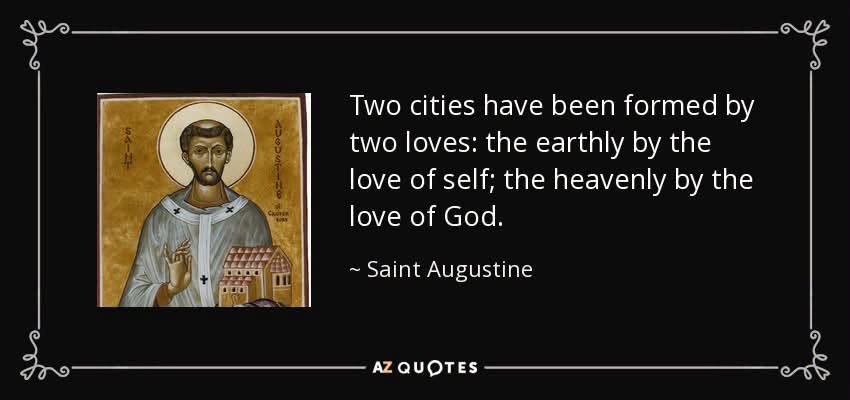
Pope Leo XIV speaks often of building a civilization of love, picking up a vision already articulated by his predecessors. But there is something profoundly Augustinian about it as well: the contrast between two ways of building a city, two ways of imagining human greatness.
Genesis 11 gives us the image of Babel. “Come, let us build ourselves a city and a tower…and make a name for ourselves.” It is civilization built on power, uniformity and self-glorification. Everyone speaks the same language, everyone is enlisted in the same project, everyone looks upward—but toward human greatness rather than toward God. And it ends not in communion but in dispersion.
Perhaps humanity had to learn the hard way that true unity cannot be built by making everyone speak the same language. The City of God is built by learning to live with many languages, cultures, peoples and differences—and discovering within that plurality a higher language capable of creating communion: the language of love.
That is why the command of Jesus to love our enemies is so radical. He is not simply teaching us to be nice to difficult people. He is proposing a higher form of humanity.
In an age that is returning so easily to the language of power, domination, retaliation and “making a name for ourselves,” the Gospel proposes another way of building the human city: not Babel, but the New Jerusalem; not uniformity, but communion; not domination, but mercy.
Perhaps a civilization of love begins precisely there: when hatred reaches us, and we refuse to pass it on.