


6,049 total reads
2nd Sunday of Easter
Acts 5:12-16
In this third summary of early Christian life (cf 2:42-47; 4:32-37), the apostles are highlighted as the unifying force of the community. Their regular gatherings in the temple area linked them to Jewish worship, which was expected before the separation of Judaism and the church. The people’s growing awe for the apostles (vv13, 11) paralleled the increasing number of converts (v14). The apostles continued Jesus’ ministry by healing the sick (vv15f; Mk 6:55f), contributing to the church’s growth and a notable increase in members.
Ps 118
This thanksgiving psalm expresses gratitude to Yahweh for deliverance in liturgical terms connected with temple worship.
Rev 1:9-11, 12-13, 17-19
John addresses seven churches in Asia Minor using apocalyptic imagery of the victorious, post-Easter Christ. The “Lord’s day” refers to the resurrection Sunday. John hears a voice “loud as a trumpet,” reminiscent of biblical theophanies (Ex 19:16, 19), and is instructed to write down the vision of Christ.
Christ is depicted against the temple lampstand, signifying the fulfillment of Israelite hopes, with seven lamps as foretold in Zechariah (Zech 4:2). The title “Son of Man” connects to Daniel’s prophecy of the restored faithful Israel (Dan 7:13f). John falls prostrate before the celestial figure, Jesus, who identifies Himself as the eternal, immortal one with authority over creation, even in Sheol (v17-18).
The seer’s writings are to be sent to the seven churches, detailing current issues and God’s future plans, forming the apocalyptic essence of much of the book.
John 20:19-31
Jesus first appears to his disciples on the evening of the resurrection, having already ascended to the Father. His glorified state is highlighted by his ability to enter locked rooms and by his conferral of peace and the Spirit. Unlike Luke, John presents post-Easter events as aspects of the singular event of Jesus’ resurrection and exaltation.
The narrative aligns with earlier traditions but is shaped by John’s unique perspective. The Spirit, a gift of the resurrection, brings peace and the power to forgive sins, fulfilling Jesus’ promise. This peace restores harmony between God and creation (Col 1:20).
Jesus entrusts the apostles with the mandate to serve as witnesses and grants them the authority to forgive sins, a power rooted in the church’s authority articulated in Matthew (Mt 16:19; 18:18). The breathing of the Spirit evokes God’s creation of life in Adam (Gen 2:7) and symbolizes new life from God.
The narrative emphasizes the continuity between the crucified and risen Christ, particularly through the presentation of Jesus’ wounds and the exchange with Thomas, who acknowledges Jesus as both Lord and God. This highlights the faith of early Christians who believed without having seen the risen Christ.
The passage concludes with remarks on the selective nature of the gospel, which aims to foster faith in Jesus as the Messiah and Son of God (1:41, 49). It suggests believers may come to faith or continue in faith, with the latter seeming more fitting for the community it addresses.
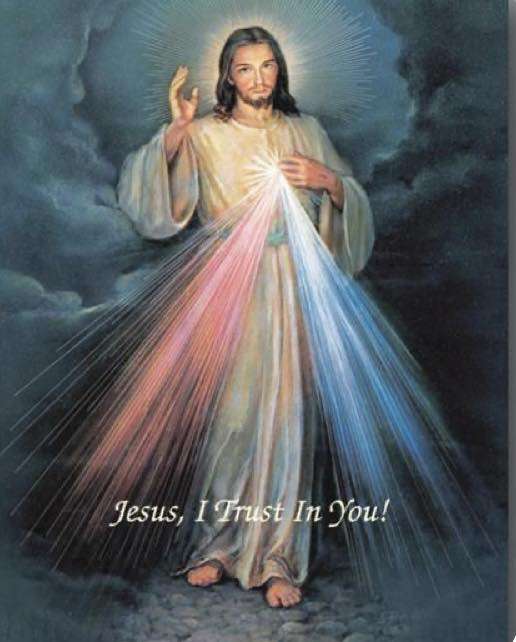
As we celebrate the Sunday of Divine Mercy, let us earnestly seek the profound peace of the Risen Christ. May we pray for the restoration of harmony between God and creation, as well as within the created order itself, accomplished through the Spirit of the resurrection. We strive for peace in the world, especially in areas plagued by war, during this election period in our country, within our homes, and in every heart. Jesus, King of Mercy, I trust in you. Amen.
s1S#26 Mercy
11/04/21
In the OT the Hebrew word ‘chesed’ (חֶ֖סֶד ), occurring around 250 times, translated in LXX ‘eleos’ ( ἐλεος ) and used also in NT, while ‘misrericordia’ in Vg (Latin Vulgate), is generally rendered ‘mercy’ in English. But biblical scholars are one in saying that it is too narrow a rendition of a complex and multi-faceted biblical motif and there is no single English word which can comprehensively express its meaning. Thus other renderings such as kindness, steadfast love, loving kindness, loyalty, fidelity, etc., are invariably used.
In the OT, the right understanding of the term ‘mercy’ is bound up with the divine covenant with Israel, (Ex 20:6, 34:6); thus it points to Yahweh’s loyalty and devotion to the covenant, expressed in his steadfast love, for example, to Abraham (Gen 24:27), to Joseph (Gen 39:21), to the people of Israel (Ex 15:13; Is 54:8, 63:7; Jer 31: 3; Hos 2:19), to David (2Sm 7:15; Ps 51:1). Another nuance worth noting is its association with the will of Yahweh to save and all about salvation, (Ps 13:6, 85:11) and peace it brings, (Jer 16:5). Thus the entire history of the dealing of Yahweh with Israel can be summed up as ‘chesed’ or ‘mercy’- the dominating motive which appears in his deeds and which gives unity and intelligibility to all his dealings with men (including anger, judgement and basis of righteousness).
In the NT, God’s merciful faithfulness is attributed to his sending of Jesus and saving his people, and the rest of the world (Lk 1:58; Eph 2:4; Rom 11:30-32, 15:9; cf. also the Benedictus and Magnificat in Lk 1). Thus it is much more easily understood as God’s saving will which is antecedent to any deed of man, thus unmerited, initiated and consummated in Christ, and even perfected by him, (cf John 1:14d, 16-17, where two words were used to to understand further this biblical ‘mercy’ motif, namely grace and truth). During his ministry, Jesus shows mercy to the needy, with accompanying senses of compassion and pity, (Lk 17:13, 18:38), those who are diseased or disabled like the blind, the lepers, the demoniac and of course the sinners, (Mt 9:27; Lk 17: 13; Mk 5:19; Mt 18:33). In turn, Jesus asks each one the same expression of ‘mercy’ if one expects to receive it and to consider it as a primary duty to one another to enter the Kingdom of God (Mt 5:7, 9:13, 12:7; 18:33; Lk 10:37; Rom 12:8; Ja 2:13).
After a week-long celebration of Easter, where we experience anew the saving mysteries of God accomplished in Jesus out of his enduring ‘mercy’, may we continually be overwhelmed by his steadfast love and mercy, strengthening us to courageously face the seemingly endless and hopeless (pandemic) situation and at the same time become living presence of his mercy to others specially to those who are in greater need of our care and attention.
Jesus, King of Mercy, I trust in you! Amen.