
God comes any where, any time

SHARE THE TRUTH

Send your Love Offering

SAVINGS ACCOUNT NAME

DZRV Radio Veritas Foundation, Inc.

  1. Metrobank Savings Account No.: 076-3-076270210
  2. Banco De Oro Savings Account No.: 001-630011876
  3. BPI Savings Account No.: 0213-3251-91
  4. PNB – Savings account No.: 105-910-013-091

 4,842 total views

The Lord Is My Chef Daily Recipe for the Soul by Fr. Nicanor F. Lalog II
Misa De Gallo V, Wednesday, 20 December 2023
Isaiah 7:10-14 <*((((>< + ><))))*> Luke 1:26-38
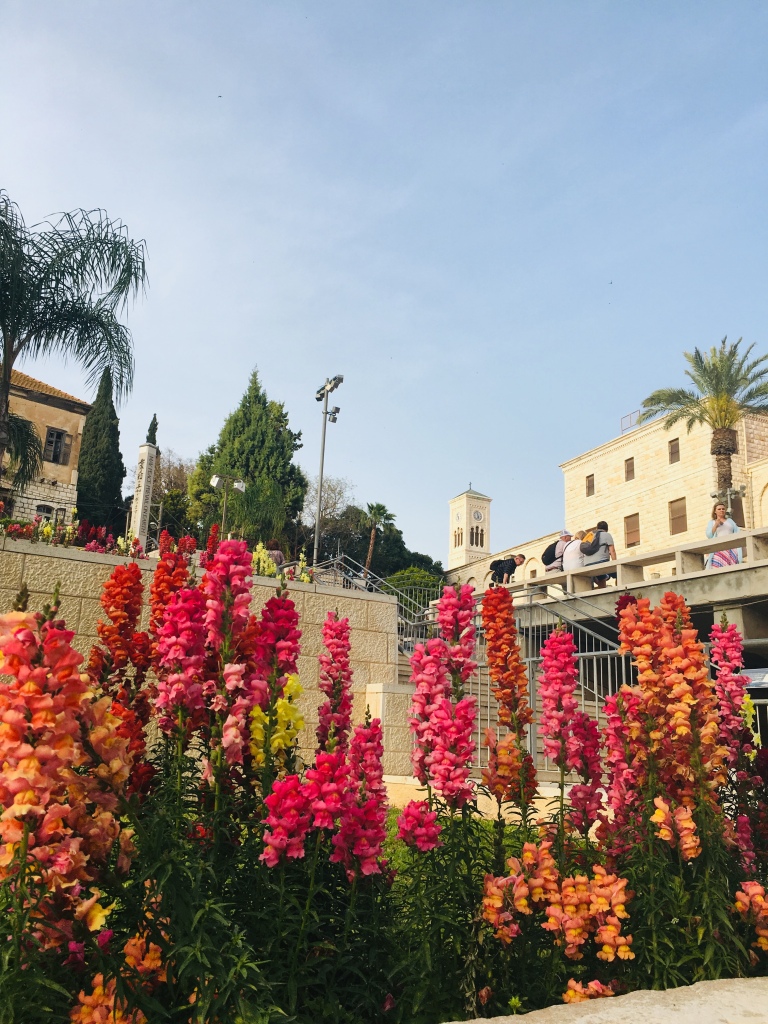
Photo by author, flower garden outside the Basilica of the Annunciation, Nazareth, Israel, May 2019.

Experts tell us that much of human communications are non-verbal in nature. And most often, people rely more to our non-verbal than verbal communication because it is more truthful by nature as actions speak louder than words.

For our reflection this fifth day of our Christmas novena, let us examine the two kinds of non-verbal communications employed by St. Luke to portray God’s immense love for us as well as his sublime uniqueness as perfect communicator. These are proxemics or the communication of spaces, of how places are designed or designated to convey something special and profound. The second i which is the use of time in non-verbal communication like time perceptions of punctuality, willingness to wait, and, “timing”.
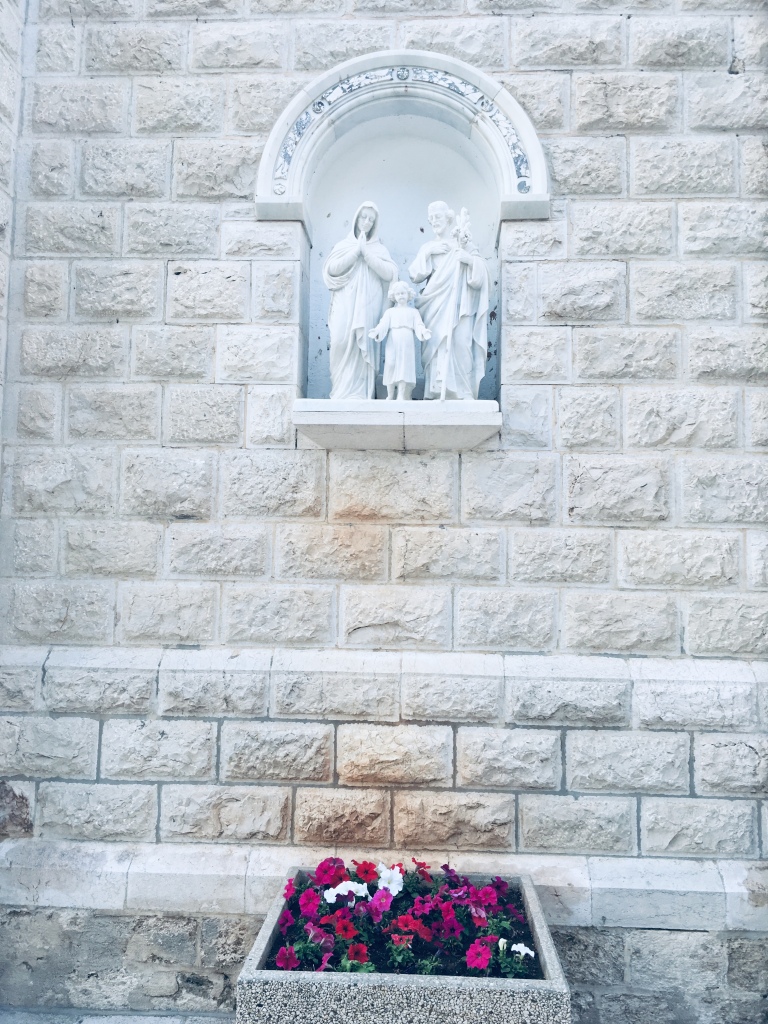
Photo by author, Basilica of the Annunciation, Nazareth, Israel, May 2019.

See how St. Luke extensively employed these modes of non-verbal communications in his infancy narrative to show us that God is everywhere, any time.

In the sixth month, the angel Gabriel was sent from God to a town of Galilee called Nazareth, to a virgin betrothed to a man named Joseph, of the house of David, and the virgin’s name was Mary.

Luke 1:26-27

Right away St. Luke established here the direct correlation between John the Baptist and Jesus Christ, of how their respective mission are directly linked with each other that our Lord was conceived six months after his Precursor’s conception.

More than the time frame conveyed by the six month difference in their births, we find behind it a deeper meaning about their differences as well in stature and nature wherein John was completely human flowing with time while Jesus is both human and divine with God directly intervening in our time. John was born June 24, the summer solstice when days are longer and brightest while Jesus was born December 25 when nights are longest and darkest!

The chronemics and proxemics are undeniably hinting on something deep, of how our eternal God entered through our temporal time so that within we can have that cosmic experience of “the here and not yet” when time seems to stand still because we are being wrapped in God’s eternal embrace of love made possible by Christ’s birth, passion, death and resurrection. This we can see at the contrasting circumstances between the advent of John the Baptist and Jesus Christ where we find God most unique, immensely loving us.
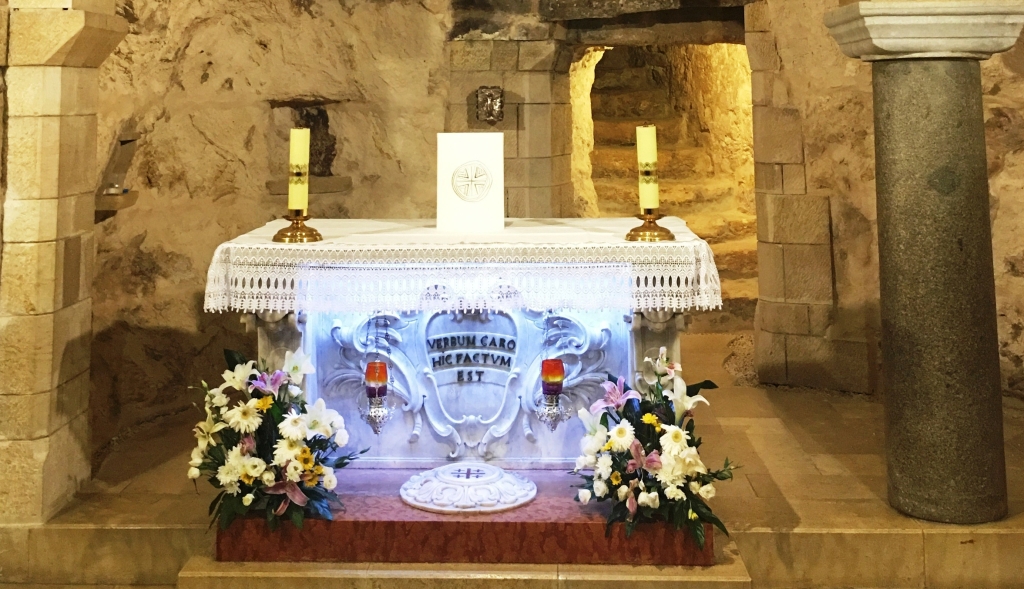
Photo by author of the site of the Annunciation at the basement of the Basilica of the Annunciation in Nazareth, Israel, May 2019.

First, Zechariah was a priest while Mary was a commoner. It was natural for God to work through his ministers but in choosing Mary an ordinary woman was something else not because of any special quality she had but simply because God is good. The angel clearly told this to Mary, “you have found favor with God”.  God does not call the qualified but he qualifies the call! Today, God is telling us Jesus is coming through us, no matter who we are or what we have gone through and did in life.

Second, God used the setting of the Temple of Jerusalem in yesterday’s account because that is where he is supposed to dwell but today, everything happened in a very simple house in Nazareth, the only place of significance and importance in the New Testament never mentioned in the Old Testament. It was a place looked down upon by many like St. Bartholomew asking Philip, “can anyone good come from Nazareth?”

The word “Nazoraios” or Nazarene mentioned by Matthew refers to the overall designation of Jesus by the prophets as the hope and fulfillment of God’s promise that there shall come forth a “shoot from the stump of Jesse” (Is. 11:1)Shoot in Hebrew is from the word nezer which is also the context used by Isaiah in chapters 7 and 9 found in Isaiah 11:1 cited by Matthew. Therefore, Jesus being called a Nazarene or Nazorean is more than a reference to his place of origin but most of all his very essence – a shoot from God, someone totally consecrated to God.

And that is also who we are! St. Paul’s letters teem with this beautiful theme of us being called and justified in Christ by God.

Today, God is telling us to never lose hope in life, to never give up because he will never give up on us because we are from him, we are his. For as long as we are alive, God will make a way to make a shoot or nezer bud forth from a stump to bring us back to life.

Yesterday, it was the imagery of barrenness of Elizabeth, of her being fruitless and therefore empty. Many times, that is just what God needs from us, an entry point, an opportunity when we are so weak so he can mightily work with his powers.

One of my hopes after Christmas is to celebrate Mass at the Quiapo Church, to cultivate a devotion to Jesus Nuestro Padre Nazareno. I just feel drawn to him as I have personally met so many people including non-Catholics with devotion to the Nazareno of Quiapo after granting them their almost impossible petitions and prayers.
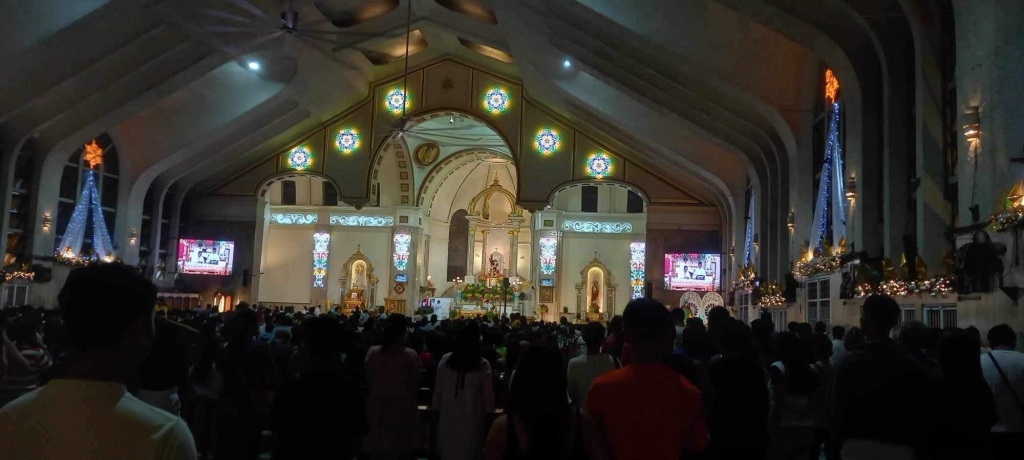
Photo by Mr. Boy Cabrido, Quiapo Church, Misa de Gallo, 17 December 2023.

Third, there was a major feast going on, the Yom Kippur, with a lot of people present when Zechariah was informed of the birth of John; Mary was alone in her house when the angel came to announce to her the birth of Jesus on the sixth month after going to Zechariah. Again, here we find both the place and time conveying something deeper than mere locations and settings. This is what the Church has always been insisting, most especially lately after the lockdown during pandemic when people got the wrong impression that online Masses are enough or can replace actual participation in our Eucharistic celebrations especially on Sundays.

Yes, God comes to us personally as individuals but with Jesus Christ, we have been more interconnected than ever as we have seen how his birth was linked with John’s birth too. Faith and worship, life itself can never be relegated to just a personal matter. There is always the communal aspect of our faith and of life itself because man is a social being, created by God to relate which is what communication is all about.
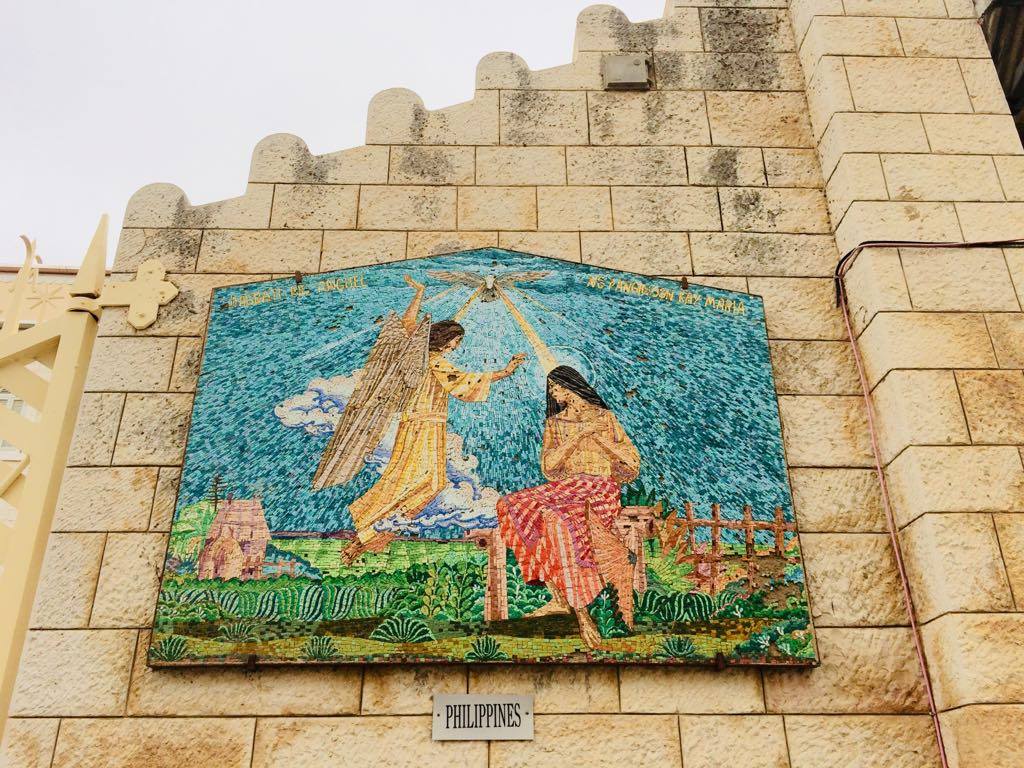
Photo by author of a Filipino painting of the Annunciation scene on the facade of the Basilica of the Annunciation in Nazareth, Israel, May 2017.

In the first reading we found Ahaz refusing to ask for a sign on the pretext he did not want to offend God but actually because he did not want to show his faith like some people these days who try to see everything on the practical side, on the material side and most of all, the personal side.  This is the tragedy of our time even in our Church that has become secularized in certain aspects.  See those different guidelines of every diocese and archdiocese about the Simbang Gabi, with others allowing anticipated Masses we have long tried educating people that it is an oxymoron. Many times, we in the Church have overextended or over-interpreted many of our rubrics and traditions just to accommodate others in the name of inclusiveness and other woke ideas.

On this fifth day of our Simbang Gabi, the Annunciation of the birth of Christ invites us to ask ourselves how do we show others that the Lord is with us like Mary? If God is every where, all the time, how come so many have lost him or could not find him? Maybe we no longer have him. Let’s ger him back again today! Amen. Have a blessed Wednesday!

Photo by author, Basilica of the Annunciation, Nazareth, Israel, May 2019.

Isabuhay ang paglilingkod sa kapwa, apela ng Papal Nuncio sa MOP

 10,817 total views

Hinikayat ni Apostolic Nuncio to the Philippines, Archbishop Charles Brown, ang mga chaplain at mga kasapi ng Military Ordinariate of the Philippines (MOP) na patuloy na isabuhay ang diwa ng paglilingkod kay Kristo sa pamamagitan ng paglilingkod sa kapwa.

Ito ang apela ng nuncio sa paglulunsad ng pagdiriwang ng ika-40 anibersaryo ng pagiging Military Ordinariate ng institusyon.

Sa kaniyang homiliya sa banal na misa para sa Kapistahan ni San Ignacio de Loyola sa St. Ignatius Cathedral sa Camp General Emilio Aguinaldo, sinabi ng kinatawan ng Santo Papa na ang ministeryo ng Military Ordinariate ay hindi para sa pansariling kapakanan kundi para sa tapat na paglilingkod sa kapwa.

“We should always ask ourselves: Whom are we serving? Jesus says in the Gospel: ‘Unless you renounce your possessions, you cannot be my disciple.’ That means we cannot serve ourselves. We should not be serving ourselves. We should be serving others and seeing Christ in others,” ayon sa pagninilay ni Archbishop Brown.

Ipinaliwanag ng nuncio na ang bokasyon ng isang military chaplain ay nakaugat sa halimbawa ni San Martin of Tours, ang sundalong naging banal na nagbahagi ng kaniyang balabal sa isang dukha, isang pangyayaring pinagmulan ng salitang “chaplain.”

Ayon kay Archbishop Brown, ang tunay na paglilingkod ng mga chaplain ay ang pagkilala sa presensya ni Kristo sa bawat taong kanilang pinaglilingkuran.

“That is what it means to serve as a chaplain: to have eyes that distinguish, that discern, the presence of Jesus in others. When we serve others as chaplains, we are serving Christ,” aniya.

Binigyang-pugay rin ni Archbishop Brown ang apat na dekadang paglilingkod ng mga pari ng Military Ordinariate sa iba’t ibang sangay ng uniformed services sa bansa.

“Today we say a heartfelt thank you to God for all the chaplains in these different armed services and uniformed services in the Philippines who have served so selflessly and so beautifully over these past 40 years,” ayon pa kay Archbishop Brown.

Samantala, sa panayam ng Radio Veritas kay Msgr. John Brillantes, tagapagsalita ng military ordinariate, sinabi nitong ang misyon ng MOP ay higit pa sa pagbibigay ng mga sakramento dahil nakatuon din ito sa paghubog ng moralidad at pananampalataya ng mga kawal at kanilang mga pamilya.

“Our mission is truly extensive. More specifically, it is to provide for the spiritual and moral welfare of our soldiers and our uniformed men and women,” ayon kay Msgr. Brillantes.

Ipinaliwanag ng pari na sa kasalukuyan ay may humigit-kumulang 180 aktibong pari ang military ordinariate, kung saan 122 sa mga ito ay sariling hinubog at inordenahan ng MOP matapos nitong magkaroon ng sariling seminaryo kasunod ng pagiging ganap na ordinariate noong 1986.

Bukod sa pagdiriwang ng misa at pagbibigay ng mga sakramento, nagsisilbi rin ang mga military chaplain bilang spiritual advisers’ ng mga commander, tagapag-ugnay sa pagitan ng militar at sibilyan, mga guro sa mga military academy, at maging bahagi ng negotiation teams sa panahon ng mga krisis at iba pang emergency situations.

Ibinahagi rin ni Msgr. Brillantes na isinasabuhay na ng military ordinariate ang panawagan ni Pope Francis sa synodality sa pamamagitan ng pakikinig at paglalakbay kasama ng mga sundalo at kanilang mga pamilya.

“We emphasize the need to listen to our people and to walk with them. You listen to the soldiers, you listen to their families, and from there, we are able to discern how we can better respond to their needs,” paliwanag pa ni Msgr. Brillantes.

Apela ng pari sa publiko na ipanalangin ang mga uniformed personnel, lalo na ang mga nakatalaga sa mga frontline areas.

“Please pray for our uniformed men and women. Especially those at the front line, it is difficult to be a soldier. We enjoy the freedom and security of our nation because of the sacrifices of these brave men and women. They leave their homes and families to serve on the front lines, allowing the rest of us to live comfortably and securely,” dagdag ng pari.

Ayon kay Msgr. Brillante, kabilang sa mga dapat ipanalangin ang mga sundalong nakatalaga sa Pag-asa Island, Batanes, gayundin ang mga kasapi ng Armed Forces of the Philippines, Philippine National Police, Philippine Coast Guard, Bureau of Fire Protection, at Bureau of Jail Management and Penology.

Ang paglulunsad ng ika-40 anibersaryo ng Military Ordinariate of the Philippines ay hudyat ng isang taong paggunita sa apat na dekadang paglilingkod ng Simbahan sa espirituwal at moral na pangangailangan ng mga kalalakihan at kababaihan ng mga uniformed services na nangangalaga sa kalayaan, seguridad, at kapayapaan ng bansa.

Kasabay ng pagdiriwang ay pinangunahan nina Archbishop Brown katuwang si Military Bishop Oscar Jaime Florencio ang pagsasapubliko ng pananda sa apat na dekadang paglilingkod ng MOP kung saan pinahintulutan din ng Vatican ang pagkakaloob ng plenary indulgence sa mga mananampalatayang dadalaw sa mga itinalagang jubilee churches ng MOP alinsunod sa mga kondisyon ng pagtanggap ng indulhensya.

Ang Military Ordinariate of the Philippines ay itinatag bilang Military Vicariate noong 1950 sa panahon ni Pope Pius XII at itinaas bilang Military Ordinariate, o katumbas ng isang diyosesis, noong July 21, 1986 sa pamamagitan ng Apostolic Constitution na

Spirituali Militum Curae ni St. John Paul II upang higit pang mapalawak ang pastoral na pangangalaga sa mga miyembro ng Armed Forces at iba pang uniformed services.

Pax Silica project, nararapat ipaliwanag at maunawaan ng mga Pilipino—Cardinal David

 11,744 total views

Nilinaw ni Kalookan Bishop Pablo Virgilio Cardinal David na ang tunay na usapin sa proyekto ng Pax Silica ay hindi lamang kung makatutulong ito sa pag-unlad ng ekonomiya o teknolohiya, kundi kung paano nito mapapakinabangan ang sambayanang Pilipino at mapangangalagaan ang dignidad ng tao.

Sa kanyang pahayag sa personal na Facebook page na may titulong “What’s the Real Issue with Pax Silica?”, sinabi ng Cardinal na likas lamang sa bawat bansa na isulong ang sariling pambansang interes, tulad ng ginagawa ng Estados Unidos at China sa larangan ng artificial intelligence, semiconductors, at iba pang makabagong teknolohiya.
Gayunman, binigyang-diin ni Cardinal David na ang mahalagang tanong para sa Pilipinas ay kung tunay bang makatutulong ang Pax Silica sa pagpapalakas ng kakayahang pang-agham, inobasyong teknolohikal, at industriyal na katatagan ng bansa, o kung magsisilbi lamang ito sa interes ng ibang bansa habang ang Pilipinas ang maglalaan ng lupa, likas na yaman, tubig, enerhiya, insentibong pangbuwis, at lakas-paggawa.

“These are legitimate questions—not because we oppose foreign investment, but because genuine partnership should strengthen the nation that hosts it,” Ayon kay Cardinal David.
Dahil dito, nanawagan ang Cardinal ng higit na transparency, makabuluhang partisipasyon ng mga Pilipinong siyentipiko at industriya, wastong pangangalaga sa kalikasan, at malinaw na programa para sa technology transfer upang umangat ang bansa sa value chain at hindi manatiling tagapagluwas lamang ng raw materials at murang lakas-paggawa.

Binigyang-diin din ni Cardinal David na higit pa sa usaping pang-ekonomiya ang dapat isaalang-alang sa pag-unlad ng artificial intelligence, kung saan ayon sa Cardinal nasasaad sa Magnifica Humanitas ang pagpapaalala ni Pope Leo XIV na ang mahalagang tanong ay hindi kung ano ang kayang gawin ng artificial intelligence, kundi kung anong uri ng tao ang hinuhubog nito.

” In Magnifica Humanitas, Pope Leo XIV reminds us that the decisive issue is not what artificial intelligence can do, but what kind of human beings we are becoming. Technology must remain the servant of humanity, never its master.” Dagdag pa ni Cardinal David.

Tinukoy rin ng Cardinal ang katuruan ni Pope Francis sa Fratelli Tutti na hindi dapat nakabatay lamang sa kompetisyon ng mga pambansang interes ang kinabukasan ng sangkatauhan, sapagkat ang ganitong pananaw ay madalas humahantong sa hidwaan at digmaan.

Ayon kay Cardinal David, bilang isang pandaigdigang pamayanan ng pananampalataya, patuloy na isinusulong ng Simbahang Katolika ang pananaw na ang mga pambansang interes ay dapat magsilbi sa kabutihang panlahat ng buong sambayanan.

Sa huli, sinabi ng Cardinal na ang tunay na sukatan ng Pax Silica ay hindi kung gaano nito mapalalakas ang ekonomiya o artificial intelligence, kundi kung makatutulong itong maitaguyod ang isang lipunang nakabatay sa dignidad ng tao, pagkakapatiran, pangangalaga sa kalikasan, at kapayapaan.
Paliwanag ni Cardinal David, “The real question is whether it will help build what Pope Leo calls a civilization of love rather than a culture of power—a future in which technological progress serves human dignity, social fraternity, care for our common home, and peace among nations.”

Pag-aruga sa mga matatanda, panawagan ni Pope Leo XIV sa mga kabataan at pamayanan

 11,507 total views

Kasabay ng paggunita ng World Day for Grandparents and the Elderly, ipinaalala ni Pope Leo XIV sa mga kabataan at pamayanan ang kahalagahan ng pagdalaw at pag-aaruga sa mga nakatatanda, lalo na sa mga nalilimutan at nag-iisa

Ayon kay Fr. Greg Gaston, rector ng Pontificio Collegio Filippino at Vatican correspondent ng Radyo Veritas, binigyan-diin ng Santo Papa ang kahalagahan ng mga nakatatanda sa paghubog ng kasaysayan, lipunan at sa simbahan.

Ipinaalala ni Fr. Gaston ang mensahe ni Pope Leo XIV para sa mga nakatatanda, lalo na sa paggunita sa mga kapistahan nina San Joaquin at Santa Ana, mga magulang ng Mahal na Birheng Maria at mga lolo’t lola ni Hesus.

Ayon sa pari, binigyang-diin ng Santo Papa na hindi nakakalimot ang Diyos sa bawat tao, lalo na sa mga matatanda na maaaring makaramdam ng pag-iisa o pagiging hindi na mahalaga sa lipunan.

“Ang Panginoon hindi nakakalimot. Kahit minsan nakakalimutan tayo ng mga tao, ng ating lipunan, ng ating pamilya, ang Panginoon ay hindi nakakalimot sa atin,” bahagi ng pagbabahagi ni Fr. Gaston.

Hinimok naman niya ang mga pamilya na huwag pabayaan ang mga magulang, lolo at lola, dahil ang kanilang buhay at sakripisyo ay malaking biyaya na patuloy na nagbibigay ng gabay sa mga susunod na henerasyon.

“Napakalaking biyaya ang ibinigay ng Panginoon sa atin sa pamamagitan ng ating mga magulang. Kung wala na sila, mula sa langit ay patuloy pa rin ang kanilang pagmamahal at panalangin para sa atin,” ani Fr. Gaston.
Pilipinas, papunta sa aging population
Nagpahayag naman ng pangamba ang pari sa mabilis na pagdami ng populasyon ng mga nakatatanda kasabay ng bumababang bilang ng mga ipinapanganak sa Europa, at maging sa iba pang mga bansa kabilang na ang Pilipinas.

Ayon kay Fr. Gaston, mahalagang pag-aralan ng bansa ang mga magiging epekto sa ekonomiya at lipunan ng patuloy na paglaki ng sektor ng mga senior citizen.

Aniya, hindi lamang usapin ng dami ng populasyon ang dapat tingnan, kundi kung paano haharapin ng lipunan ang pangangailangan ng lumalaking bilang ng matatanda.

Ipinaliwanag ni Fr. Gaston na nagbabago na ang larawan ng populasyon ng Pilipinas. Kung noon ay karaniwan ang malalaking pamilya, mas marami na ngayon ang may isa o dalawang anak lamang.

“Dati, kung apat ang anak, maliit na pamilya. Ngayon, kapag apat ang anak, malaking pamilya na iyon,” aniya.

Binanggit din ni Fr. Gaston ang mga pag-aaral ng United Nations at UP Population Institute na nagpapakita ng patuloy na pagtanda ng populasyon, dahilan upang maging mahalagang paghandaan ang epekto nito sa ekonomiya, serbisyong pangkalusugan, at social protection.

Ipinaliwanag ni Fr. Gaston na ayon sa datos ng Philippine Statistics Authority at Commission on Population and Development, bumaba na sa humigit-kumulang 1.9 children per woman ang fertility rate ng Pilipinas, mas mababa sa replacement level na 2.1 children per woman, na itinuturing na kinakailangan upang mapanatili ang laki ng populasyon sa paglipas ng panahon.

“Napakaraming bansa ay hindi na makapag-replace ng population. Maraming bansa ay wala nang mga bata. Ibig sabihin, bumaba sila sa replacement level. Kasi sa isang bansa, kailangan mo ng 2.1 children per woman. Bakit 2.1 children? Kasi dalawang parents, mamamatay, papalitan mo yan. And then 0.1, kasi hindi naman lahat ng mga tao na pinapanganak ay nanganganak din. Yung iba baka walang asawa, iba infertile, iba bata pa lang namatay na. Kaya kailangan mo ng 2.1 na anak sa bawat babae. Hindi sa bawat pamilya, kundi bawat babae,” ayon kay Fr. Gaston.

Sa kabila nito, sinabi niyang patuloy pa ring lumalaki ang kabuuang populasyon dahil sa pagdami ng matatanda at mas mahabang haba ng buhay ng mga tao.

“Ngayon, lumalaki pa ang population, hindi dahil sa maraming bata, kundi sa bigat ng population, UP Population Institute noong 2007, may study sila, sabi nila, the fastest growing sector in Philippine society is the elderly. Ang pinakamabilis dumami sa Pilipinas, ang matatanda. 2007 pa po yun. 2007.,” paliwanag niya.

Aniya, maraming mga pamilya sa kasalukuyan ay mayroon na lamang isa hanggang sa dalawang mga anak.

Hamon sa kinabukasan

Ayon kay Fr. Gaston, dapat paghandaan ng bansa ang mga epekto nito sa ekonomiya, kabilang ang pangangalaga sa kalusugan, social protection, at suporta sa mga senior citizen.

“Sana mapag-aralan pa ang consequence sa economy, ano mangyayari pag marami ang matanda,” dagdag pa ng pari.

Giit ng pari, mahalagang magkaroon ng pagtingin sa hinaharap upang matiyak na ang mga matatanda ay hindi magiging pasanin kundi mananatiling mahalagang bahagi ng lipunan.

Iniugnay niya ito sa panawagan ni Pope Leo XIV na ipakita ang pagmamahal at malasakit sa mga nakatatanda.

“Alagaan natin sila dahil darating ang panahon na tayo rin ay tatanda. Parang paying forward ito — kung paano natin inalagaan ang mga bata ngayon, sana sila rin ang mag-alaga sa atin sa hinaharap,” ani Fr. Gaston.

BE OUR PARTNERS

THIS PORTION IS BROUGHT YOU BY

ADVOCATE

Radyo Veritas Advocacy Category by Author

Veritas Editorial

Picture of Rev. Fr. Anton CT Pascual

Rev. Fr. Anton CT Pascual

Para sa isang smartphone?

 106,225 total views

 106,225 total views Mga Kapanalig, sinong ayaw manalo ng pinakabago at pinakasikat na smartphone? Ganito inakit ng isang sikat na social media influencer ang mahigit 50

Read More »

Pax Silica

 145,531 total views

 145,531 total views Mga Kapanalig, hindi man natin namamalayan, nagiging parte naang artificial intelligence (o AI) ng ating pang-araw-araw na buhay. Pero anong uri ng kinabukasan

Read More »

Sino ang dapat hindi “one-sided”?

 177,704 total views

 177,704 total views Mga Kapanalig, sa pagtatapos ng pagdinig ng impeachment court sa Article 4 na may kaugnayan sa pagbabanta umano ni Vice President Sara Duterte

Read More »

CONVERSION OF RELATIONSHIP

 293,041 total views

 293,041 total views “A Filipino culture ruined by politics, of indifference, ideology, self-interest”. Kapanalig, likas sa ating mga Pilipino ang kultura ng pakikipagkapwa o pakikitungo sa

Read More »

NASAAN ANG SIMBAHAN

 316,137 total views

 316,137 total views Kapanalig, malimit nating naririnig ang katanungang, “NASAAN ANG SIMBAHAN”? Kapag may nangyaring trahedya., sakuna., man-made calamities., kawalan ng moral na pamumuno., WHERE IS

Read More »

Watch Live

RELATED ARTICLES

Intimacy, idolatry

 16,264 total views

 16,264 total views Lord My Chef Daily Recipe for Soul by Fr. Nicanor F. Lalog II Monday in the Seventeenth Week of Ordinary Time, Year II,

Read More »

Two evils we continue

 11,717 total views

 11,717 total views Lord My Chef Daily Recipe for Soul by Fr. Nicanor F. Lalog II Thursday in the Fifteenth Week of Ordinary Time, Year II,

Read More »
Scroll to Top