

217 total reads
At a time when many Filipinos are becoming cynical about politics and losing hope in our democratic institutions, people like Ken Abante and his fellow “Angry Nerds” give me reason to hope.
Ken is a public policy advocate, co-founder of WeSolve, and co-convenor of the People’s Budget Coalition (PBC). Together with thousands of citizen volunteers, popularly called the “Angry Nerds,” they are doing something remarkable: scrutinizing our national budget, line by line, project by project, using data and technology to expose questionable allocations of taxpayers’ money.
Today, October 26, Ken presented before the Senate the coalition’s latest findings on the House-approved version of the proposed ₱7.2-trillion national budget for 2027. They are deeply disturbing.
According to PBC’s preliminary analysis, the House inserted nearly 7,000 infrastructure projects worth ₱190 billion without publicly available supporting project documents. These include:
* ₱172 billion for nearly 6,200 DPWH projects, many involving multipurpose buildings;
* More than ₱2 billion for over 180 new health facilities, even as the overall health facilities budget was reduced;
* Nearly ₱6 billion for over 350 farm-to-market roads, some with coordinates inexplicably pointing to the sea;
* More than ₱7 billion for over 200 irrigation projects, some with questionable cost estimates.
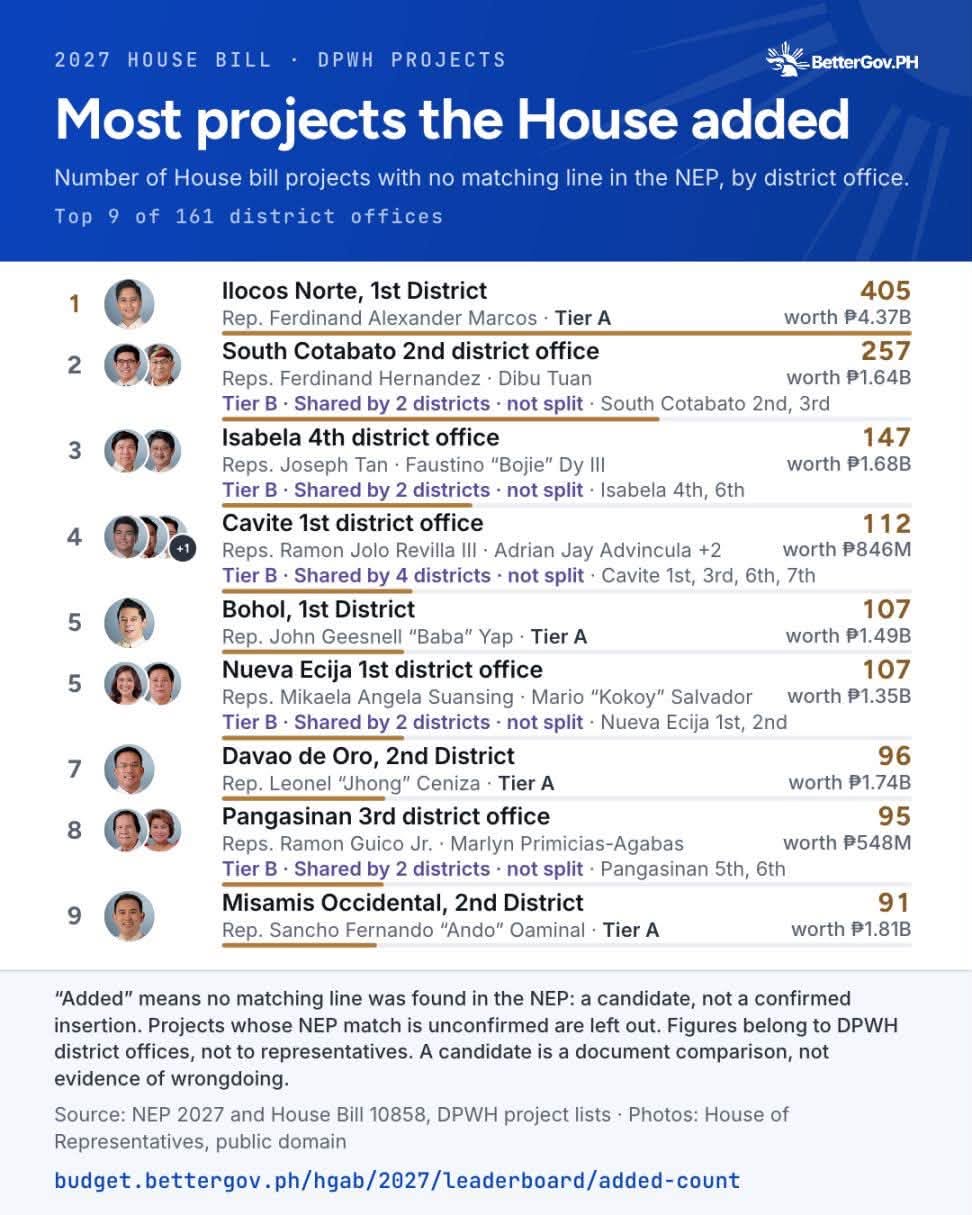
What is especially disturbing is the concentration of House-added infrastructure allocations in certain congressional districts. According to PBC’s preliminary findings, the largest include Ilocos Norte’s First District (₱4.375 billion), Misamis Occidental’s Second District (₱1.8 billion), Davao de Oro’s Second District and Isabela’s Fourth District (₱1.7 billion each), and South Cotabato’s Second District (₱1.6 billion). Nueva Ecija’s First District is also among those flagged, with ₱1.3 billion.
These figures refer to allocations associated with DPWH district engineering offices. They do not establish that the district representatives personally proposed the projects, much less that corruption has occurred.
Nevertheless, the House leadership, which approved this version of the national budget, owes the public an explanation.
Has the House of Representatives learned nothing from the flood control corruption scandal? The country has yet to see full accountability for that scandal, and already we are being warned about the possible repetition of the same questionable practices in other government agencies!
To be clear, as Ken himself emphasized, not every insertion is necessarily corrupt. Our communities need roads, health facilities, irrigation systems, and public infrastructure. But why should projects involving billions in public funds be approved without the documentation necessary for public scrutiny?
The ball is now in the Senate’s court. It must exercise its constitutional responsibility to scrutinize and remove insertions that cannot be properly justified and documented. And if these survive Congress, the President must exercise his power of veto.
I am grateful to Ken and the citizen volunteers who refuse to surrender to cynicism. They remind us that democracy is not merely about electing representatives every three years. It is about citizens remaining vigilant and holding their representatives accountable between elections.
As Ken puts it, “Buwis natin ’to, boto natin ’to, at budget natin ’to.”
May these “Angry Nerds” inspire more Filipinos to turn their anger into informed, organized, and constructive democratic participation.
I am sharing a summary of Ken Abante’s testimony before the Senate today, October 26. You can also examine the budget allocations yourself through the citizens’ Budget Insertions Tracker at