
88 total reads
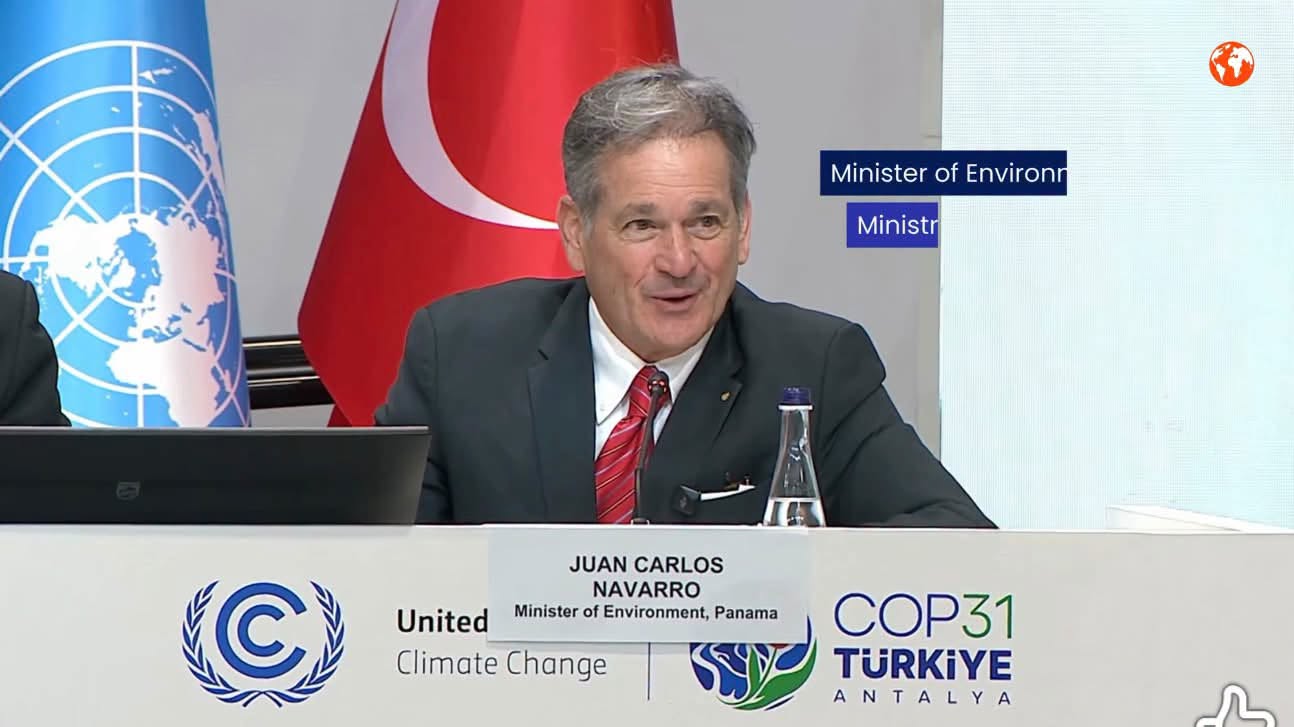
One of the most striking speeches delivered at COP31 in Antalya, Türkiye, came from Panama’s Minister of Environment, Juan Carlos Navarro.
Speaking at a press conference on November 18, 2026, where a growing coalition of 30 countries was calling for an international treaty to phase out fossil fuels, Navarro dispensed with the usual diplomatic language and said:
“We are being held hostage by the petroleum mafia. Not only that, we have all been stricken by Stockholm disease. We are in love with our kidnappers.
“We love the petroleum guys. We can’t live without them, and they are so smart that they have convinced us that they are actually doing this for our own good.
“They torture us for our own good. They destroy our planet for our own good. They destroy nature to help us, and they demand our unrequited, endless, unlimited, boundless love.”
He went on to challenge individual nations to take responsibility for their own ecological policies, citing the example of Vanuatu, Tuvalu and Fiji:
“And so we must act with urgency, we must act with political will at the national level, and we must start by facing the truth. If we keep going the way we are at this COP, we’re going nowhere. I call for radical change of course. We must radically change the way we go about taking care of the Earth.”
His speech drew enthusiastic applause and quickly became one of the most talked-about interventions at the summit.
What struck me about Navarro’s speech was his readiness to acknowledge our own complicity. He was not simply accusing the petroleum industry. He was also calling attention to our collective dependence on the very industry whose products are contributing enormously to the destruction of our common home.
Is this not precisely why Pope Francis, in Laudato Si’, called for an ecological conversion? And why, eight years later, in Laudate Deum, he expressed mounting frustration over the inability of international institutions to respond effectively to the climate crisis?
I wonder what position our own Philippine delegation took on the proposed Fossil Fuel Treaty. Did we stand alongside Panama, Vanuatu, Tuvalu and Fiji? As one of the countries most vulnerable to climate disasters, should we not have a particularly strong voice in this conversation?
We cannot keep demanding assistance for the victims of climate change without also confronting the principal causes of climate change.
There is something deeply disturbing about our inability to break free from a system that is destroying the very conditions that make life possible on this planet.