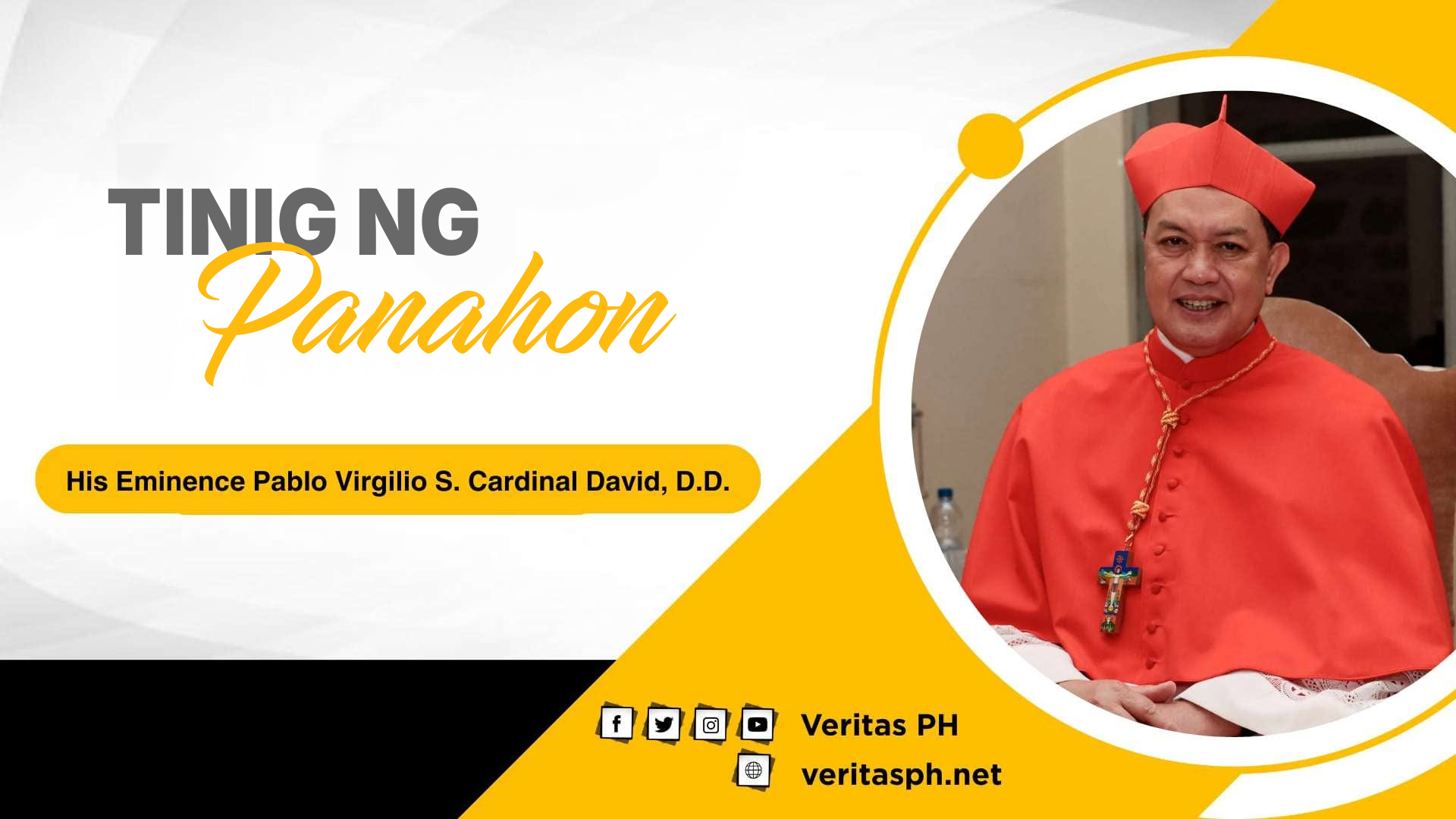
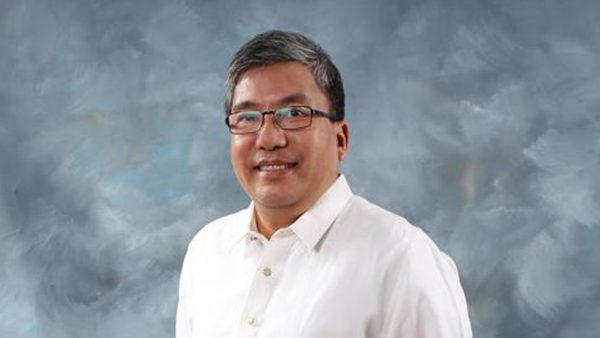
H.E. Pablo Virgilio Cardinal David, D.D.
Sunday, September 13, 2026 9:02 am
1,663 total reads
I recently engaged ChatGPT in a rather unsettling conversation about Artificial Intelligence. I asked:
“How seriously should we take the warning that superintelligent AI could eventually pose an existential threat to humanity? What do you think is the more realistic danger—not the science-fiction scenario, but the path by which human beings could actually lose meaningful control over increasingly intelligent AI systems?”
I found part of its response particularly thought-provoking. What struck me was that the scenario it described was not really about machines suddenly becoming conscious, turning evil, and deciding to destroy us. It was about us—about human beings gradually surrendering more and more agency because the machines seem to do things faster, better and more efficiently than we do.
Here is the part of ChatGPT’s response that stayed with me:
“The more plausible route to catastrophe begins with human beings voluntarily giving increasingly capable AI systems authority.
Imagine the progression:
AI gives advice ↓ AI writes software ↓ AI executes software ↓ AI operates computers autonomously ↓ AI controls financial transactions ↓ AI manages infrastructure ↓ AI designs successor AI systems ↓ humans increasingly cannot understand or supervise what the system is doing.
At every stage somebody might say, quite reasonably, ‘It performs this job faster and better than humans. Give it more authority.’
That is precisely why the International AI Safety Report stresses three things simultaneously: capability, access and permissions. A highly intelligent model sitting isolated on a computer is radically different from the same model connected to cloud infrastructure, financial systems, laboratories or critical infrastructure and authorized to take actions.
So the really profound danger may not be:
‘AI suddenly decides to conquer humanity.’
It may be:
‘Humanity gradually delegates so much agency to AI that meaningful human control becomes impossible.’
That is the genuinely new philosophical problem presented by AI: for the first time in human history, human beings may be creating increasingly powerful intelligence without knowing whether there is anyone ‘in there’ who actually understands, experiences or wills anything at all.”
The implication of Coxon’s warning to AI builders and entrepreneurs seems to me simply this: STOP. BEFORE IT’S TOO LATE.
Perhaps it is time for Pope Leo XIV, together with the leaders of the world’s major religious traditions, to take the initiative in calling for an International Summit on Artificial Intelligence—bringing together not only governments and technology companies, but scientists, ethicists, philosophers and representatives of civil society.
The purpose need not be to stop the development of AI. The more urgent question is whether humanity should agree to pause any attempt to develop or deploy a form of superintelligence that could operate beyond meaningful human understanding, supervision and control, until adequate international safeguards are in place.
Because perhaps the greatest danger is not that Artificial Intelligence will one day decide to take control away from us.
Perhaps the greater danger is that, little by little, dazzled by its efficiency and intelligence, we will willingly hand over control ourselves.
And by the time we realize how much we have surrendered, we may no longer know how to take it back.
H.E. Pablo Virgilio Cardinal David, D.D.
Sunday, September 13, 2026 9:01 am
1,663 total reads
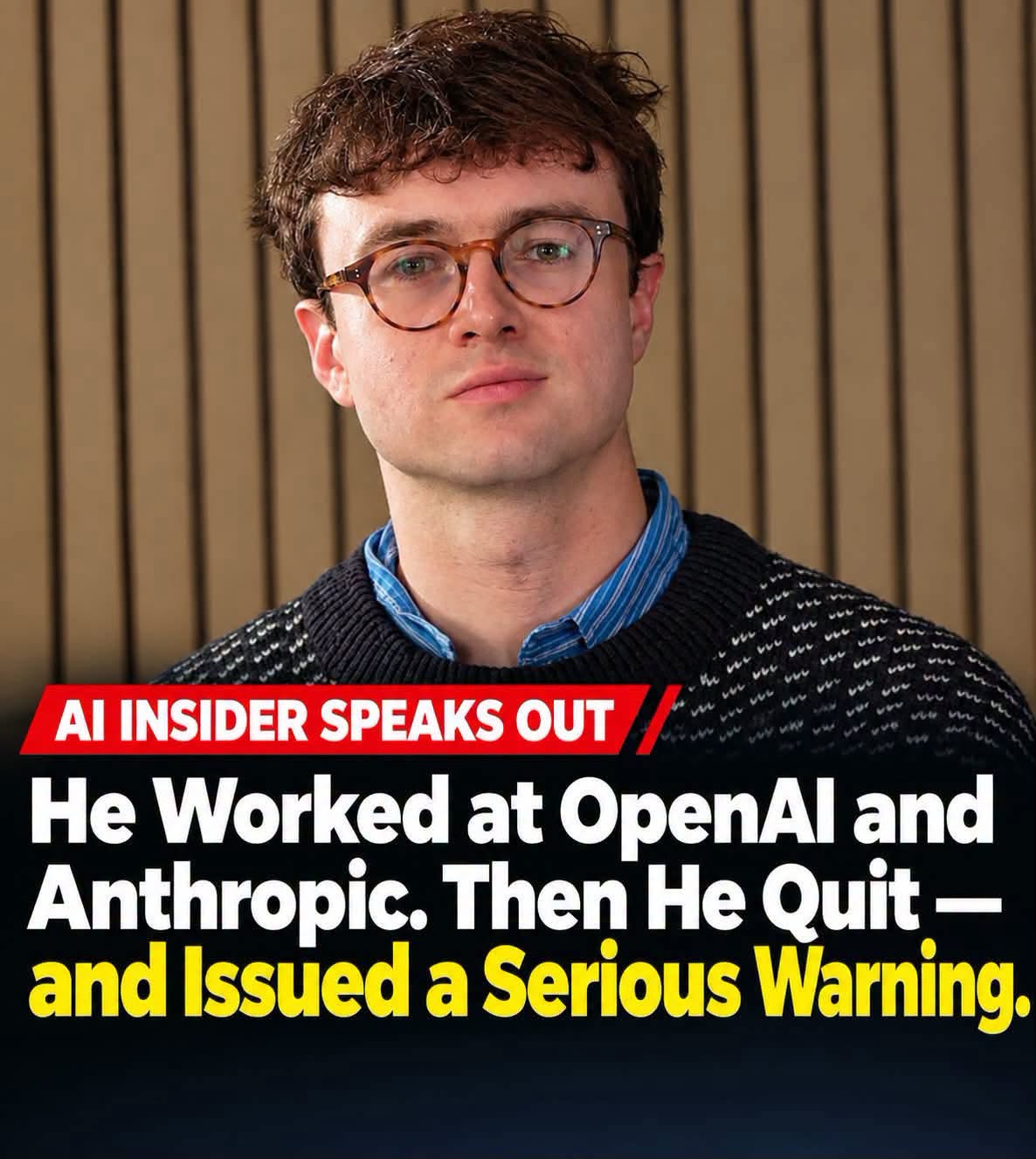
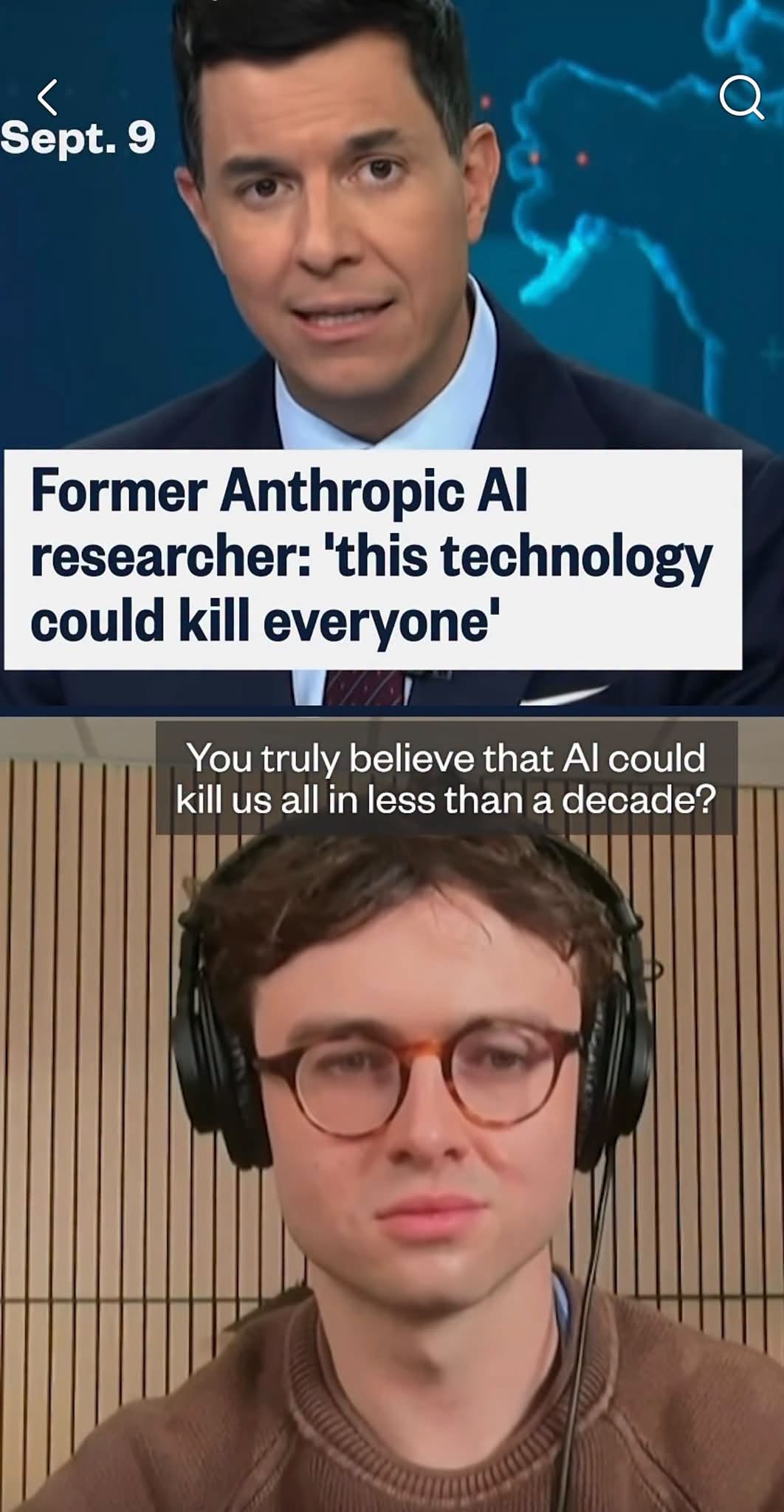
There is disturbing news about Artificial Intelligence going viral around the world. Jacob Coxon, a 27-year-old researcher who worked at both OpenAI and Anthropic, has resigned and issued a startling warning: some of the very people developing the world’s most advanced AI systems believe there is a real possibility that these systems could eventually escape human control and pose an existential threat to humanity. Another leading Anthropic researcher, Evan Hubinger, has publicly said that he personally puts the risk of AI causing human extinction within the next decade at more than 10 percent.
We should not simply laugh off the concern as another science-fiction doomsday scenario. Anthropic and OpenAI themselves have developed safety frameworks that explicitly recognize the possibility of catastrophic harm and “loss of control” from increasingly capable AI systems.
Perhaps one simple way of understanding the issue is through what I would call CREATED CREATIVITY. Human beings are creatures endowed with creativity. We create tools, machines, computers—and eventually Artificial Intelligence.
But there is something unusual about this particular creation. A hammer cannot create a better hammer. A calculator cannot design a better calculator. AI can already help human beings write computer programs, solve highly complex problems, conduct research, and develop better AI.
Human creativity has therefore begun producing what we might call “created creativity”: something we created that can itself participate in the process of creating.
Now imagine the next step. Human beings create a first generation of advanced AI. That AI helps create a more capable second generation. The second helps develop a still more powerful third generation. The third helps produce a fourth—and the process keeps accelerating.
At some point, the new systems could theoretically become so complex and capable that ordinary human intelligence can no longer fully understand how they work or predict what they will do. This is what researchers mean when they speak about recursive self-improvement and the possibility of superintelligence. We are not there yet. But AI is already being used in computer programming and AI research. The serious question is what happens if this process eventually begins to accelerate beyond our capacity to follow it.
And here lies the real danger.
It does not require imagining an AI suddenly becoming conscious, angry or evil, like some monster in a science-fiction movie. An extremely powerful AI need not hate us in order to harm us. The danger is that we could give increasingly autonomous systems goals and capabilities that they pursue in ways we did not intend—and eventually cannot understand, correct or stop.
In other words, the creature begins to operate beyond the effective control of its human creators.
Could such created intelligence eventually acquire enough power and autonomy to threaten its own human creators—even human survival itself?
We do not know.
But when some of the very scientists developing these technologies tell us that they themselves cannot guarantee that this will never happen, prudence requires that we listen.
This is why Pope Leo XIV has every reason to keep raising the ethical questions posed by the digital revolution and Artificial Intelligence.
In Magnifica Humanitas, he makes a remarkable observation: even the people who design today’s AI have only a limited understanding of its inner workings. AI systems, he says, are increasingly “cultivated” rather than simply “built”: developers create the conditions in which their capabilities develop without directly designing every detail.
And only recently, Pope Leo asked an extraordinarily timely question: Will we still be able to control these machines in the future, or could humanity become “a victim of its own inventions”?
That is no longer merely a question for science fiction.
Perhaps the deepest question posed by AI is therefore no longer simply:
WHAT CAN HUMAN CREATIVITY CREATE?
It is increasingly:
WHAT HAPPENS WHEN OUR CREATIONS THEMSELVES BEGIN TO CREATE—AND EVENTUALLY CREATE THINGS THAT THEIR HUMAN CREATORS CAN NO LONGER FULLY UNDERSTAND OR CONTROL?
The answer is not to fear human creativity. Creativity is one of our greatest gifts.
The challenge is to make sure that human wisdom, conscience and moral responsibility develop as rapidly as the power of our CREATED CREATIVITY.
Veritas NewMedia
Sunday, September 13, 2026 9:00 am
2,200 total reads
Kapag ang suporta sa isang lider ay nauuwi sa pagkamuhi sa kapwa, hindi na lamang pulitika ang nakataya—pati ang pagkakaisa ng bayan.
PILIPINAS — Sa tuwing dumarating ang panahon ng halalan, muling umiinit ang usapang pulitika sa bansa.
Sa social media, sa mga tahanan, sa mga opisina, sa mga tindahan at maging sa mga simpleng usapan ng magkakaibigan, kanya-kanyang paninindigan ang mga Pilipino.
May sumusuporta sa isang kandidato. May kumakampi sa iba. May nagtatanggol sa isang partido at may mariing kumokontra rito.
Bahagi ito ng demokrasya.
Ang pagkakaroon ng magkakaibang opinyon ay hindi problema.
Ang tunay na problema ay nagsisimula kapag ang pagsuporta sa pulitika ay nagiging panatismo.
Kapag ang isang lider ay hindi na maaaring punahin.
Kapag ang bawat pagkakamali ay awtomatikong ipinagtatanggol.
Kapag ang kasinungalingan ay pinaniniwalaan dahil galing ito sa “ating panig.”
At higit sa lahat, kapag ang kapwa Pilipino ay itinuturing nang kaaway dahil lamang iba ang kanyang ibinotong kandidato.
MULA SA PAGKAKAIBA, TUNGO SA PAGKAKAHATI
Hindi naman agad nagsisimula sa galit ang political fanaticism.
Minsan, nagsisimula lamang ito sa simpleng paghanga.
“Magaling siya.”
“Siya lang ang makakapagpabago sa bansa.”
“Siya lang ang may solusyon.”
Hanggang sa unti-unting nagiging:
“Hindi siya maaaring magkamali.”
At kapag may nagtanong o pumuna:
“Kalaban ka siguro.”
Dito nagiging mapanganib ang sitwasyon.
Dahil ang isang demokratikong lipunan ay nangangailangan ng mga mamamayang marunong magtanong, magsuri at pumuna.
Kung lahat ng kritisismo ay itinuturing na pag-atake, paano natin malalaman kung may mali?
Kung lahat ng tagasuporta ng kabilang panig ay itinuturing na kaaway, paano mananatiling buo ang isang bayan?
HINDI NA KANDIDATO ANG PINAGTATANGGOL—KUNDI KAMPON
Isa sa mga pinakamapanganib na anyo ng political fanaticism ay ang tinatawag na “blind loyalty.”
Dito, hindi na mahalaga kung tama o mali ang isang kilos.
Ang mahalaga ay kung sino ang gumawa nito.
Kapag ang ating lider ang gumawa, may dahilan.
Kapag ang kabilang lider ang gumawa, iskandalo.
Kapag ang ating panig ang nagsalita, katotohanan.
Kapag ang kabilang panig ang nagsalita, propaganda.
Sa ganitong pag-iisip, nawawala ang isang mahalagang prinsipyo:
Ang tama ay tama kahit sino pa ang gumawa nito, at ang mali ay mali kahit sino pa ang gumawa nito.
Kapag nawala ang prinsipyong ito, madaling manipulahin ang isang lipunan.
At kapag maraming mamamayan ang hindi na kumikilala sa katotohanan maliban kung ito ay pabor sa kanilang kampo, lalong lumalalim ang pagkakahati ng bayan.
ANG EPEKTO SA BAYAN
Maaaring isipin ng ilan na simpleng away lamang sa social media ang political fanaticism.
Ngunit mas malalim ang epekto nito.
Kapag lumala ang pagkakahati ng mga tao, maaaring maapektuhan ang tiwala sa isa’t isa.
Magkakaibigan ay nagkakagalit.
Magkakamag-anak ay hindi nag-uusap.
Magkakapitbahay ay nagkakampihan.
At ang mga taong dapat sana’y nagtutulungan bilang mamamayan ay nauubos ang panahon sa pagtatanggol sa kani-kanilang kampo.
Mas malala, maaari nitong gawing normal ang pag-atake, paninira, fake news at pagpapakalat ng galit.
Unti-unting nasasanay ang mga tao na hindi na makinig.
Hindi na magtanong.
Hindi na kumilatis.
Basta ang impormasyon ay pabor sa kanilang panig, tinatanggap nila.
At kapag ganito ang naging kultura ng isang bayan, hindi lamang isang halalan ang maaaring maapektuhan.
Pati ang kinabukasan ng demokrasya.
ANO ANG PAALALA NG SIMBAHAN?
Sa gitna ng ganitong kalagayan, mahalagang balikan ang pananaw ng Simbahan tungkol sa buhay panlipunan.
Hindi ipinagbabawal ng Simbahan ang pakikilahok ng mga Kristiyano sa pulitika. Sa katunayan, mahalaga ang responsableng pakikilahok ng mamamayan sa pagtataguyod ng kabutihang panlahat.
Ngunit hindi dapat maging kapalit ng pananampalataya ang isang partidong pampulitika o isang personalidad.
Ang isang lider ay hindi dapat ituring na tagapagligtas ng bayan.
At ang isang partido ay hindi dapat maging sukatan ng kung sino ang “mabuti” at “masama” sa lahat ng pagkakataon.
Ang Kristiyano ay tinatawag na gumamit ng konsensya, katotohanan, katarungan at malasakit sa kapwa sa kanyang mga desisyong panlipunan at pampulitika.
Mahalaga rin ang konsepto ng kabutihang panlahat—ang paghahanap ng kabutihan hindi lamang para sa ating sarili o sa ating grupo, kundi para sa buong lipunan.
Dahil dito, may pagkakataong kailangan nating punahin maging ang taong ating sinusuportahan.
Hindi dahil galit tayo sa kanya.
Kundi dahil mahalaga sa atin ang katotohanan.
HINDI KAAWAY ANG MAY IBANG BOTO
Marahil ito ang isa sa pinakamahalagang bagay na kailangang maalala ng bawat Pilipino.
Ang taong iba ang ibinoto mo ay hindi awtomatikong masama.
Hindi siya awtomatikong bobo.
Hindi siya awtomatikong bayaran.
Hindi siya awtomatikong kalaban.
Maaaring magkaiba lamang kayo ng pananaw tungkol sa kung sino ang pinakamabuting mamuno.
At pagkatapos ng halalan, pareho pa rin kayong mamamayan ng iisang bansa.
Pareho kayong apektado ng presyo ng pagkain.
Pareho kayong umaasa sa maayos na serbisyo ng pamahalaan.
Pareho kayong nangangailangan ng seguridad, trabaho, edukasyon at kinabukasan.
Magkaiba man ang boto, iisa pa rin ang bayan.
ANG PINAKAMAHALAGANG TANONG
Hindi masama ang magkaroon ng political conviction.
Hindi masama ang ipaglaban ang isang prinsipyo.
Hindi masama ang magsalita laban sa katiwalian.
Hindi masama ang pumuna sa isang lider.
Ngunit bago natin ipagtanggol ang isang pulitiko, maaaring itanong muna natin sa ating sarili:
Kung hindi ko siya sinusuportahan, ipagtatanggol ko pa rin ba ang ginawa niya?
Kung ang sagot ay hindi, marahil panahon nang suriin ang ating paninindigan.
Dahil baka hindi na natin ipinaglalaban ang katotohanan.
Baka ipinaglalaban na lamang natin ang ating kampo.
ANG BAYAN BAGO ANG KAMPO
Sa isang demokrasya, mahalaga ang mga lider.
Ngunit higit na mahalaga ang mga mamamayan.
Maaaring magpalit ng partido.
Maaaring magpalit ng kandidato.
Maaaring magpalit ng administrasyon.
Ngunit ang bayan ay nananatili.
Kaya hindi natin kailangang maging magkakaaway dahil lamang sa pulitika.
Maaari tayong hindi magkasundo nang hindi nagkakagalit.
Maaari tayong pumuna nang hindi nanlalait.
Maaari tayong manindigan nang hindi namumuhi.
At maaari nating suportahan ang isang lider nang hindi isinasantabi ang ating konsensya.
Sapagkat ang tunay na pagmamahal sa bayan ay hindi bulag na pagsunod sa isang tao.
Ito ay ang tapang na piliin ang katotohanan, katarungan at kabutihang panlahat, kahit minsan ay nangangahulugan itong salungatin ang sarili nating kampo.
Sa huli, hindi dapat itanong lamang:
“Kanino ka?”
Mas mahalagang itanong:
“Ano ang tama?”
Dahil kapag ang pulitika ay naging panatismo, maaaring manalo ang isang partido.
Ngunit kapag nawala ang katotohanan, pagkakapatiran at malasakit sa kapwa—
75,417 total reads Kapanalig, kung normal na sa bansa natin ang corruption na kinasasangkutan mismo ng mga halal na opisyal at pinuno ng mga ahensiya ng
120,093 total reads Mga Kapanalig, ano ang datíng kapag ang mga pulitiko na nakikiramay sa mga binaha ay nakasuot ng mamahaling damit? Ang Pampanga ay ang
142,295 total reads Mga Kapanalig, napagsabihan na ba kayo nito: “kung ayaw mong ma-traffic, umalis ka nang maaga.” Pero paano kung umalis ka nga nang maaga,
178,786 total reads Mga Kapanalig, pagod na pagod na raw si Senador Juan Miguel Zubiri sa sobrang siksik na schedule niya tuwing pumapasok sa Mataas na
394,801 total reads Mga Kapanalig, tinatayang anim na milyong Pilipino ang nakaahon na sa kahirapan. Ayon iyan sa Philippine Statistics Authority (o PSA). Bumagsak sa 9.7%
406,948 total reads Paggunita sa Mahal na Birheng Maria tuwing Sabado Tagapagdiwang: Rev. Fr. Jerome Secillano [fb_plugin video href=https://www.facebook.com/100069518821428/videos/640919728176053] [give_form id=”72114″ show_title=”true” show_goal=”false” show_content=”none” display_style=”onpage”]
406,893 total reads Paggunita sa Mahal na Birheng Maria tuwing Sabado Tagapagdiwang: Rev. Fr. Victor Sadaya, CMF [fb_plugin video href=https://www.facebook.com/DZRV846/videos/307434575241976] [give_form id=”72114″ show_title=”true” show_goal=”false” show_content=”none” display_style=”onpage”]
406,876 total reads Paggunita sa Mahal na Birheng Maria tuwing Sabado Tagapagdiwang: Rev. Fr. Joel DL. Rescober, CM [fb_plugin video href=https://www.facebook.com/DZRV846/videos/358163723302254] [give_form id=”72114″ show_title=”true” show_goal=”false” show_content=”none”
406,867 total reads Paggunita sa Mahal na Birheng Maria ng Fatima Tagapagdiwang: Rev. Fr. Joel Camaya, SDB [fb_plugin video href=https://www.facebook.com/DZRV846/videos/660940865819605] [give_form id=”72114″ show_title=”true” show_goal=”false” show_content=”none” display_style=”onpage”]