Lunes, Hulyo 28, 2025

SHARE THE TRUTH

 4,783 total reads

Lunes ng Ika-17 Linggo sa Karaniwang Panahon (I)

Exodo 32, 15-24. 30-34
Salmo 105, 19-20. 21-22. 23

Pasalamat tayo sa D’yos,
kabutihan niya’y lubos.

Mateo 13, 31-25

Monday of the Seventeenth Week in Ordinary Time (Green)

UNANG PAGBASA
Exodo 32, 15-24. 30-34

Pagbasa mula sa aklat ng Exodo

Noong mga araw na iyon, si Moises ay bumaba na ng bundok. Dala niya ang dalawang tapyas na batong kinasusulatan ng mga utos na ang Diyos mismo ang sumulat.

Nang pabalik na sila, narinig ni Josue ang sigawan ng mga tao. Sinabi niya kay Moises, “Parang may digmaan sa kampo.”

“Ang naririnig ko’y hindi sigaw ng tagumpay o ng pagkatalo, kundi awitan,” sagot ni Moises.

Nang sila’y malapit na sa kampo, nakita ni Moises ang guya at ang mga taong nagsasayawan. Dahil dito, nagalit siya. Ibinalibag niya sa paanan ng budok ang mga tapyas na bato at ito’y nadurog. Kinuha niya ang guya at sinunog. Pagkatapos, dinurog niya ito nang pino saka ibinuhos sa tubig at ipinainom sa mga Israelita. Hinarap niya si Aaron, “Ano ba ang nangyari sa iyo at pumayag kang gawin ang kasamaang ito?”

Sumagot si Aaron, “Huwag ka nang magalit sa akin, kapatid ko. Alam mo naman kung gaano katigas ang kanilang ulo. Hindi ko sila mapigil sa paggawa ng kasamaang ito. Sinabi nila sa akin na igawa ko sila ng diyos na mangunguna sa kanila sapagkat hindi nila alam kung ano na ang nangyari sa iyo. Kaya’t tinanong ko sila kung sino ang may ginto. Ibinigay nila sa akin ang mga alahas, tinunaw ko sa apoy at lumabas ang guyang iyon.”

Kinabukasan, sinabi ni Moises sa mga tao, “Napakalaki ng nagawa ninyong kasalanan. Aahon ako ngayon sa bundok at makikipagkita sa Panginoon, baka sakaling maihingi ko kayo ng tawad.” Umahon nga sa bundok si Moises at dumaing sa Panginoon. Sinabi niya, “Napakalaking kasalanan ang nagawa ng mga tao; gumawa sila ng diyos-diyosang ginto. Ipinakikiusap ko pong patawarin na ninyo sila. Kung hindi ninyo sila mapatatawad, burahin na ninyo sa inyong aklat ang aking pangalan.”

Sumagot ang Panginoon, “Kung sino ang nagkasala sa akin ay siya kong buburahin sa aking aklat. Ngayon, pangunahan mo sila sa lugar na sinabi ko sa iyo at papatnubayan kayo ng aking anghel. Ngunit darating ang araw na parurusahan ko ang mga Israelita dahil sa kanilang mga kasalanan.”

Ang Salita ng Diyos.

SALMONG TUGUNAN
Salmo 105, 19-20. 21-22. 23

Pasalamat tayo sa D’yos,
kabutihan niya’y lubos.

o kaya: Aleluya.

Sa may Bundok ng Horeb, doon ay naghugis niyong gintong baka,
matapos mahugis ang ginawa nila’y kanilang sinamba.
Ang dakilang Diyos ay ipinagpalit sa diyos na nilikha,
sa diyos na baka na ang kinakain ay damong sariwa.

Pasalamat tayo sa D’yos,
kabutihan niya’y lubos.

Kanilang nilimot ang Panginoong Diyos, ang Tagapagligtas,
na yaong ginawa doon sa Egipto’y kagila-gilalas.
Sa lupaing iyon ang ginawa niya’y tunay na himala.
Sa Dagat na Tambo yaong nasaksihan ay kahanga-hanga.

Pasalamat tayo sa D’yos,
kabutihan niya’y lubos.

Ang pasiya ng Diyos sa ginawa nila’y lipulin pagdaka,
agad na dumulog sa Poon, si Moises namagitan siya,
at hindi natuloy yaong kapasiyahan na lipulin sila.

Pasalamat tayo sa D’yos,
kabutihan niya’y lubos.

ALELUYA
Santiago 1, 18

Aleluya! Aleluya!
Magulang nati’y D’yos Ama,
anak ng salita niya
tayong mga aning una.
Aleluya! Aleluya!

MABUTING BALITA
Mateo 13, 31-25

Ang Mabuting Balita ng Panginoon ayon kay San Mateo

Noong panahong iyon, isa na namang talinghaga ang inilahad ni Hesus sa mga tao, “Ang paghahari ng Diyos ay katulad nito: may isang taong nagtanim ng isang butil ng mustasa sa kanyang bukid. Pinakamaliit ito sa lahat ng binhi, ngunit kapag natanim na at lumago ay nagiging pinakamalaki sa lahat ng puno ng gulay. Ito’y nagiging punongkahoy, anupat napamumugaran ng mga ibon ang mga sanga nito.”

Nagsalaysay pa siya ng ibang talinghaga. “Ang paghahari ng Diyos ay katulad ng lebadura na inihalo ng isang babae sa tatlong takal na harina, at umalsa ang buong masa.”

Sinabi ni Hesus sa mga tao ang lahat ng ito sa pamamagitan ng mga talinghaga at wala siyang sinabi sa kanila nang hindi gumagamit ng talinghaga. Ginawa niya ito upang matupad ang sinabi ng propeta:

“Magsasalita ako sa kanila sa pamamagitan ng mga talinghaga,
ihahayag ko sa kanila ang mga bagay na nalihim mula nang likhain ang sanlibutan.”

Ang Mabuting Balita ng Panginoon.

PANALANGIN NG BAYAN
Ika-17 Linggo sa Karaniwang Panahon
Lunes

Tayo ay mga anak ng Diyos, subalit sa mapagpakumbabang-loob na panalangin, lumalapit tayo sa kanya bilang mga lingkod ng Kaharian na naglalayon lamang na gawin ang ating tungkulin. Hilingin natin sa kanya na palalimin pa ang ating pananampalataya.

Panginoon, dinggin mo ang aming panalangin.
o kaya
Panginoong Diyos, umunlad nawa kami sa iyong biyaya.

Ang mga Kristiyano at lahat ng nagpapahayag ng pananalig kay Kristo nawa’y umunlad sa pananampalataya at pag-ibig sa isa’t isa bilang tanda ng paghahari ng Diyos, manalangin tayo sa Panginoon.

Ang ating personal na pananampalataya nawa’y umunlad at lubos nating kilalanin ang ating pagsandig sa Diyos, manalangin tayo sa Panginoon.

Ang mga nanlamig sa pananampalata at nawalan na ng pag-asa at puno ng pag-aagam nawa’y mabiyayaan ng bagong sigla upang panibaguhin ang kanilang pagtatalaga kay Kristo, manalangin tayo sa Panginoon.

Ang mga nagdurusa nawa’y patuloy na manalig sa Diyos sa gitna ng hindi magandang kalusugan at karamdaman, manalangin tayo sa Panginoon.

Ang mga yumao na naglingkod sa Panginoon sa kanyang Kaharian dito sa lupa nawa’y tanggapin sa buhay na walang hanggan, manalangin tayo sa Panginoon.

Ama naming Diyos, batid naming wala kaming magagawa kung aasa lamang kami sa aming sarili. Tulungan mo nawa kaming matibay na kumapit sa iyo sa pananampalataya. Hinihiling namin ito sa pamamagitan ni Kristong amingg Panginoon. Amen.

Watch and Pray

 1,285 total reads

1st Sunday Advent B

Isaiah 63:16–17, 19; 64:2–7
This reading from Isaiah’s post-exilic book is a psalm of lament, pleading for God’s forgiveness and help as Israel struggles to rebuild after returning from Babylonian exile.
The author employs two of Yahweh’s most familiar titles: father and redeemer (v19; cf. Ex 4:22; 15:13). He twice addresses the Lord as “our father,” an unusually intimate title in the Old Testament. Each time, “father” is “redeemer” in the opening verse and “potter” in the final one. The Hebrew word ‘go’el’ means a close relative who protects family members’ life, land, and freedom. “Potter” recalls God forming humanity from clay in Genesis 2 and the potter allegory in Jeremiah 18. Together, these images present God as both our creator and our intimate protector.
Acknowledging the people’s guilt and helplessness, Isaiah asks God to “rend the heavens and come down.” We cannot save ourselves from sin; we need God’s intervention.


1 Cor 1:3–9
The reading comes from the opening of 1 Corinthians. Though greetings and thanksgiving were standard in Hellenistic letters, Paul gives this formulaic opening theological depth. His greeting, “Grace to you and peace,” appears in all his letters except 1 and 2 Timothy and Titus, which use a slightly different form.

Drawing on his Israelite heritage, Paul includes the customary Jewish greeting ‘shalom’, or “peace,” as in the risen Christ’s greetings in Luke 24:36 and John 20:19. He joins it with “grace,” a central theme in his theology, perhaps punning on the similar-sounding Greek ‘chaire’ (“greetings”) and ‘charis’ (“grace”). He then thanks God specifically “for the grace of God.”
The Advent theme of waiting emerges as Paul reminds us that we “wait for the revelation of our Lord Jesus Christ.” His words that God “will keep you firm to the end” also point to Christ’s second coming. The early Church strongly expected Christ’s return in glory. Though this expectation is less prominent today, each liturgical year begins with reflection on the belief that Christ will come again.


Mk 13:33–37
The Gospel reading is brief and direct. From chapter 13, sometimes called the “Marcan apocalypse” or the “eschatological discourse,” it follows Jesus’ prediction of the Temple’s destruction (Mark 13:2) and describes his second coming and final judgment (Mark 13:26-27).

Referring to these events, Jesus says, “You do not know when the time will come.” Like the first and second readings, today’s Gospel points to God’s future intervention in human history, Christ’s second coming, though Jesus’ words also speak to other endings: the Temple, our lives, and the world. Because these events are certain but their timing is unknown, Jesus tells his disciples, “Be watchful! Be alert!” and “Watch!”

Today’s reading from the third section of Isaiah is a prayer for God’s inbreaking in history, a fitting first reading for Advent. It reminds us of our need for God and urges us to pray for God to come into our lives and world to save us. The gospel points Mark’s readers to the second coming, with assurance grounded in the word of Christ himself. They are to be ready. Paul tells the Corinthians that the best preparation for Christ’s return is to produce the fruits of holiness made possible by the action of God’s Spirit within them.

At the start of a new Church year, these words remind us to watch and pray always. We do not know when that time will come.

Amen!

HALINA JESUS, HALINA!

 1,778 total reads

Gospel Reading for November 29, 2026 – Mark 13: 33-37

HALINA JESUS, HALINA!

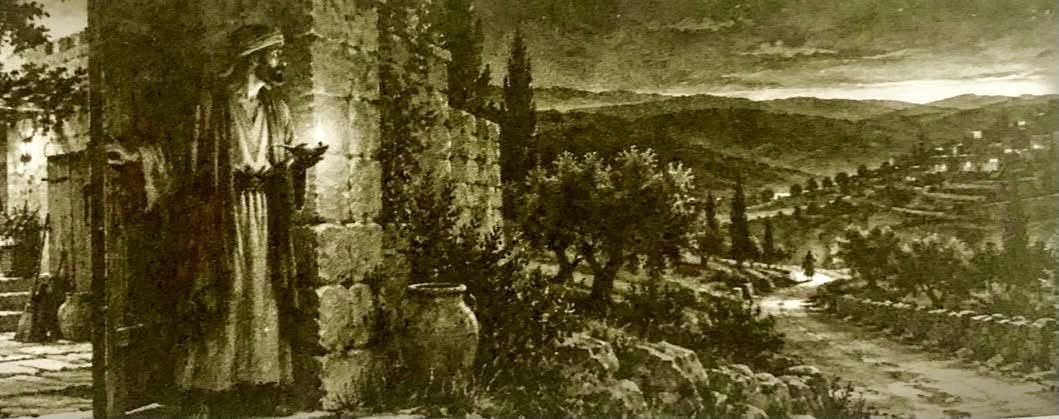
Jesus said to his disciples: “Be watchful! Be alert! You do not know when the time will come. It is like a man traveling abroad. He leaves home and places his servants in charge, each with his own work, and orders the gatekeeper to be on the watch. Watch, therefore; you do not know when the lord of the house is coming, whether in the evening, or at midnight, or at cockcrow, or in the morning. May he not come suddenly and find you sleeping. What I say to you, I say to all: ‘Watch!’”

————

Today marks the beginning of the Catholic Church’s Liturgical Year with the Season of Advent (from the Latin adventus) – a time of joyful waiting for the coming of the Lord on Christmas Day.
The Advent Wreath, with its four candles dedicated to Hope (1st Sunday), Peace (2nd Sunday), Joy (3rd Sunday), and Love (4th Sunday), symbolizes God’s unending love and eternal life.

Filipinos are well known for their hospitality – the friendly and generous reception and treatment of guests and visitors. Long before guests and visitors arrive, preparations are already underway. They prepare the rooms as best they can, cleaning them and making the beds comfortable. They plan the menu of food that will be served each day. They prepare an itinerary of places to visit, and so on and so forth.

If we can do all these things for our guests and visitors, shouldn’t our preparation for the coming of Jesus surpass all these? Perhaps, we need to prepare our hearts as best we can and clean up the clutter of hatred and unforgiveness within them. We can partake of the Eucharistic Meal on the Sundays of Advent and at the Aguinaldo Masses. We can also make an effort to keep our families united in prayer so that Jesus may visit our homes on his birthday.

There are many more things we can do to prepare for the Lord’s coming. What we do during the Season of Lent, we may also do during the Season of Advent – Prayer, Fasting, and Almsgiving. These are very significant acts that will help us avoid being caught sleeping when our Lord and Master comes.

HALINA JESUS, HALINA!

Advent is Jesus coming in us, in others

 2,137 total reads

Lord My Chef Sunday Recipe for Soul by Fr. Nicanor F. Lalog II
First Sunday of Advent, Cycle B, 29 November 2026
Isaiah 63:16-17, 19;64:2-7  ><}}}}*>  1Corinthians 1:3-9  ><}}}}*>  Mark 13:33-37
Photo by author, Malolos Cathedral, 08 December 2019.

Every year at this time I greet you with a happy new year because the First Sunday of Advent is indeed the new year in our Church calendar. The Mass we celebrate on the evening of December 31 and January 1 is the Solemnity of Mary Mother of God, not the New Year. That is why it is erroneous and so unChristian to greet “Happy New Year” after Christmas Day; keep greeting one another a Merry Christmas until the Epiphany!

This first Sunday of Advent, our new year, let me imitate St. Paul in his greetings to the Corinthians we heard in the second reading, “Brothers and sisters: Grace to you and peace from God our Father and the Lord Jesus Christ” (1Cor.1:3). It is one of the best greetings we can share with others that is why it is used too at the start of the Mass in acknowledgment of Jesus Christ’s presence in each one of us that we often fail, even refuse to recognize including all the other “grace God has bestowed on us so that we are not lacking in any spiritual gift as we await for the revelation of our Lord Jesus Christ” (1Cor.1:4, 7).

Photo by author, First Sunday of Advent, Basic Education Department Chapel, Our Lady of Fatima University, Valenzuela City, 2021.

Let yourself hear that greeting of “grace and peace to you from God” addressed to you personally while reflecting on what are you hoping for this Advent and Christmas, this coming 2027?

Be still in that hope and longing you have because “God is faithful” (1Cor.1:9) as St. Paul assured us too in the first reading. Look back with gratitude to God for all the blessings we have received despite the wars that have caused prices to soar, forcing many of us to cancel or postpone travels abroad while some of us got sick or may have lost a loved one while many others have failed in their various endeavors and projects in life.

Despite these setbacks in life, there are still more for us to be thankful than to be sorry or complain about because Jesus never abandoned us, always coming to us especially when storms and dark clouds hovered above us, when the nights were so long and too slow.

Jesus said to his disciples: “Be watchful! Be alert! You do not know when the time will come… Watch, therefore; you do not know when the lord of the house is coming, whether in the evening, or at midnight, or at cockcrow, or in the morning. May he not come suddenly and find you sleeping. What I say to you, I say to all: ‘Watch!’” (Mark 13:33, 35-37).

Photo by author, Advent 2019, St. John the Evangelist Parish, Bagbaguin, Sta. Maria, Bulacan.

The first Sunday of Advent every year reminds us of the suddenness of Jesus Christ’s Second Coming; beginning today until December 16, that is the focus of our readings and prayers that will shift on December 17-24 into the events that led into the first Christmas, Christ’s first coming on December 25.

See how during this season when darkness comes earlier, when nights are longer and darkest specially on the 24th and the 25th of December, reminding us that Jesus comes to us during the darkest nights of the year, that he is nearest to us during the dark moments of our lives.

During the time of Jesus, people rarely left their homes or traveled at night as it was very dangerous with evil people literally lurking. Unlike these days despite the many dangers in most cities, people can enter their homes at any time, whether daytime, evening, midnight or dawn.

Photo by author, Kalinto Resort, Botolan, Zambales, 12 November 2026.

Hence, for Jesus to tell us to be like the watchful gatekeepers at night in his parable meant something deeper as nights connote danger and evil. Most of all, night signifies the present time with all its ambiguities and tensions in life.

And we live in that night of the world.

However, as disciples of Christ, we do not belong to it. We have Jesus in our hearts, within us not only illumining our lives and the paths we take while we also share that light with those lost and groping in the darkness of evil and sin so embellished by the world today with overextensions of rights that promote abortion, divorce and gender redefinitions.

To be patient and watchful for Christ’s Second Coming at the end of time is to renew daily that fellowship we have in Jesus through one another in loving service and kindness to one another.

To be patiently on guard for the end of time awaiting Christ’s return is to make him present here and now by giving light and hope to those lost and misled by the artificial lights of the world.

Photo by author, Kalinto Resort, Botolan, Zambales, 11 November 2026.

Two weeks ago we went to a beach resort in Zambales. Though I am a morning person always up before sunrise, sunsets have always been a must-see for me especially when in a beach, making me wonder why we are more fascinated with sunset than with sunrise? Is it merely the spectacular display of colors or something psychological within us?

I finally got the answer to that question while reading a reflection about the Thanksgiving holiday in the States last Thursday in one of the blogs I follow:

“We don’t appreciate the sun until it’s hidden.

Most mornings, the sun rises without receiving much attention. It spills light across our windows, warms the earth, illuminates the landscape, and reminds us that another day has begun. We rarely stop to acknowledge it. We simply expect it to be there. Until it isn’t.” (Rainer Bantau, “The Devotional Guy”, http://thedevotionalguy.blog/2026/11/26/we-dont-appreciate-the-sun-until-its-hidden/)

Jesus is the sunrise who comes to us daily we rarely recognize. Like the sunrise, we take Jesus for granted, expecting him to be there every morning who had become so ordinary like the sunlight piercing through our rooms, filling the whole surroundings around us daily without fail.

We miss Jesus like the sunrise when rains come for days even weeks, dampening us literally and figuratively speaking with all the darkness in life like trials and difficulties, failures and disappointments that make us wonder and ask “where are you, Jesus?”.

Photo by author, St. Michael Retreat House, Antipolo City, June 2026.

But, truth is, Jesus never leaves us even in the darkest days and nights of life like the sun. He comes daily in us, asking us to appreciate and celebrate his presence right in our lives and in our relationships by being more loving and kind, understanding and caring, just and fair.

Most of all, the virtue of patience is unfortunately so rare in this age of instants and AI when nobody waits anymore even for a few seconds thinking it is “empty”, creating a generation of selfish, immature, greedy people not contented with what comes in the world, demanding everything now na! as the young would say.

The good news is, God’s patience is infinite, exactly the opposite of man. Isaiah prophesied in the first reading how God so far from us would “rend the heavens open” to send us our redeemer, Jesus Christ who is one of us, like us in everything except sin.

That happened 2000 years ago that keeps on happening again daily in us and would surely happen again at the end of time to finally end all sins and evil in the world. Let us patiently wait for that moment by first being grateful for each present moment in Jesus. Amen. Happy new year!

Veritas Editorial

Picture of Rev. Fr. Anton CT Pascual

Rev. Fr. Anton CT Pascual

BRIGHT LIGHTS, TIGHTER WALLETS

 93,517 total reads

 93,517 total reads Kapanalig, sa pagsapit ng pasko., ito ay hindi lamang isang petsa sa kalendaryo, kundi apat na buwang “season of hope” sa ating mga

Read More »

PLUNDER IN PLAIN SIGHT

 151,678 total reads

 151,678 total reads Kapanalig, bawat budget season, halos magkapareho lang ang script: public funds na lumolobo sa record high, bilyun-bilyong pisong pondo na sekretong itinatago sa

Read More »

Usapang klima

 288,188 total reads

 288,188 total reads Mga Kapanalig, ngayon ang huling araw ng Global Warming and Climate Change Consciousness Week na isinasagawa taun-taon mula November 19 hanggang 25. Kasabay

Read More »

Hindi krimen ang magprotesta

 403,228 total reads

 403,228 total reads Mga Kapanalig, nairaos na ang ASEAN Summit. Mahalaga ito sa pagtataguyod ng mabuting ugnayan ng mga bansa sa Timog Silangang Asya at iba

Read More »

Watch Live

RELATED TOPICS

Huwebes, Nobyembre 5, 2026

 44,007 total reads

 44,007 total reads Huwebes ng Ika-31 Linggo sa Karaniwang Panahon (II) Filipos 3, 3-8a Salmo 104, 2-3. 4-5. 6-7 Ang may pusong tapat sa D’yos ay

Read More »

Miyerkules, Nobyembre 4, 2026

 46,528 total reads

 46,528 total reads Paggunita kay San Carlos Borromeo, obispo Filipos 2, 12-18 Salmo 26, 1. 4. 13-14 Panginoo’y aking tanglaw, siya’y aking kaligtasan. Lucas 14, 25-33

Read More »

Martes, Nobyembre 3, 2026

 48,612 total reads

 48,612 total reads Martes ng Ika-31 Linggo sa Karaniwang Panahon (II) o kaya Paggunita kay San Martin de Porres, namanata sa Diyos Filipos 2, 5-11 Salmo

Read More »

Lunes, Nobyembre 2, 2026

 47,131 total reads

 47,131 total reads Paggunita sa Lahat ng mga Pumanaw na Kristiyano Mga Pagbasa para sa Unang Misa 2 Macabeo 12, 43-46 Salmo 103, 8 at 10.

Read More »

Linggo, Nobyembre 1, 2026

 48,231 total reads

 48,231 total reads Dakilang Kapistahan ng Lahat ng mga Banal Pahayag 7, 2-4. 9-14 Salmo 23, 1-2. 3-4ab. 5-6 Panginoon, ang bayan mo ay dumudulog sa

Read More »

SUPPORT OUR MISSION

BECOME A KAPANALIG MEMBER AND EUCHARISTIC ADVOCATE!

CATHOLINK

THE PHILIPPINES CATHOLIC CHURCH ONLINE DIRECTORIES

Scroll to Top