


1,054 total reads
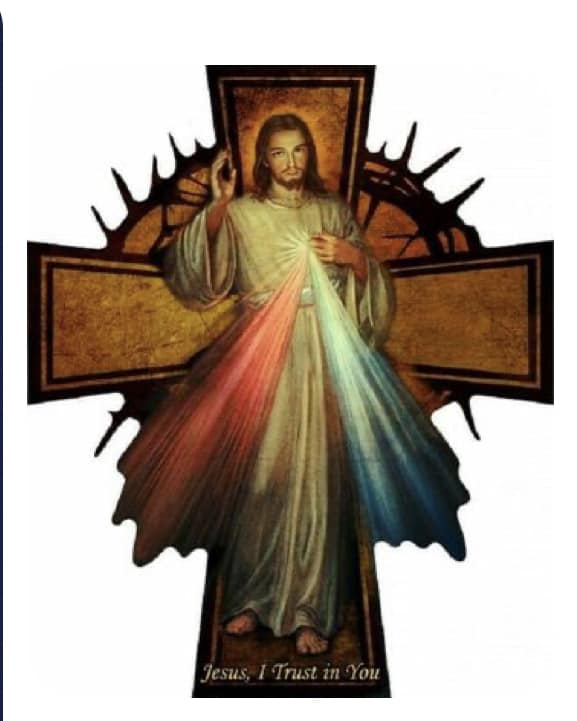
Since the year 2000, the Second Sunday of Easter is celebrated as the Feast of Divine Mercy. It was established by John Paul II on the occasion of the canonization of St. Faustina Kowlaska, (April 30), the Polish nun who experienced the divine mercy revelations.
Connecting today’s gospel (John 20:19-31) to the mercy of God, the greetings of Peace of the Risen Jesus (vv19,21,22,26) flow from that event called the paschal mystery of the Lord that was just celebrated. For the peace referred to here is the fruit of ‘the redemptive-historical fulfillment of God’s plan of salvation- the restoration of harmony between God and creation and within the created order itself effected by the Spirit life of the resurrection’, (cf John 14:27; s1S#82 Peace, 4/24/22). And with the commissioning of the apostles and gifting them with the Spirit (vv21b-23), their mission of reconciliation/forgiveness is to perpetuate that peace. This consists The Divine Mercy, the complete and unmerited reconciliation mankind received (cf John 1:16-17; s1S#26 Mercy, 4/11/21). As shown by the risen Jesus, when he appeared, he could have remonstrated his disciples for being unfaithful, he could have chastised them for being cowards, and he could have scolded them for betraying him at the foot of the cross. Instead, he greeted them, “Peace be with you”. Mercy triumphs over judgment.
This Sunday we thank God for his mercy that “is so great that no mind, be it of man or of an angel, will be able to fathom it throughout eternity”, (Jesus’ words to Sr. Faustina Kowalska). And we renew our commitment to the mission of reconciliation entrusted to us by being channels of His mercy so that His peace may truly reign in the world today.
Jesus King of Mercy, I trust in you. Amen.
Mercy
In the OT the Hebrew word ‘chesed’ (חֶ֖סֶד ), occurring around 250 times, translated in LXX ‘eleos’
( ἐλεος ) and used also in NT, while ‘misericordia’ in Vg (Latin Vulgate), is generally rendered ‘mercy’ in English. But biblical scholars are one in saying that it is too narrow a rendition of a complex and multi-faceted biblical motif and there is no single English word that can comprehensively express its meaning. Thus other renderings such as kindness, steadfast love, loving-kindness, loyalty, fidelity, etc., are invariably used.
In the OT, the right understanding of the term ‘mercy’ is bound up with the divine covenant with Israel, (Ex 20:6, 34:6); thus it points to Yahweh’s loyalty and devotion to the covenant, expressed in his steadfast love, for example, to Abraham (Gen 24:27), to Joseph (Gen 39:21), to the people of Israel (Ex 15:13; Is 54:8, 63:7; Jer 31: 3; Hos 2:19), to David (2Sm 7:15; Ps 51:1). Another nuance worth noting is its association with the will of Yahweh to save and all about salvation, (Ps 13:6, 85:11) and peace it brings, (Jer 16:5). Thus the entire history of the dealing of Yahweh with Israel can be summed up as ‘chesed’ or ‘mercy’- the dominating motive which appears in his deeds and which gives unity and intelligibility to all his dealings with men (including anger, judgment and basis of righteousness).
In the NT, God’s merciful faithfulness is attributed to his sending of Jesus and saving his people, and the rest of the world (Lk 1:58; Eph 2:4; Rom 11:30-32, 15:9; cf. also the Benedictus and Magnificat in Lk 1). Thus it is much more easily understood as God’s saving will which is antecedent to any deed of man, thus unmerited, initiated, and consummated in Christ, and even perfected by him, (cf John 1:14d, 16-17, where two words were used to understand further this biblical ‘mercy’ motif, namely grace and truth). During his ministry, Jesus shows mercy to the needy, with accompanying senses of compassion and pity, (Lk 17:13, 18:38), those who are diseased or disabled like the blind, the lepers, the demoniac, and of course the sinners, (Mt 9:27; Lk 17: 13; Mk 5:19; Mt 18:33). In turn, Jesus asks each one the same expression of ‘mercy’ if one expects to receive it and to consider it as a primary duty to one another to enter the Kingdom of God (Mt 5:7, 9:13, 12:7; 18:33; Lk 10:37; Rom 12:8; Ja 2:13).
After a week-long celebration of Easter, where we experience anew the saving mysteries of God accomplished in Jesus out of his enduring ‘mercy’, may we continually be overwhelmed by his steadfast love and mercy, strengthening us to courageously face the seemingly endless and hopeless pandemic situation and at the same time become the living presence of his mercy to others especially to those who are in greater need of our care and attention.
Jesus, King of Mercy, I trust in you! Amen.
Peace
The first appearance of Jesus to his disciples in the gospel of John (20:19-31) happens on the evening of the resurrection. In contrast to Luke’s extended temporal sequence of post-Easter events: appearances, ascension, and Pentecost, for John, these are but different aspects of a single transcendent event, the resurrection-exaltation of Jesus: he has gone to be Father (20:17), in a glorified state as shown by his appearance behind locked doors (v19,26), and his conferral of the Holy Spirit and it’s accompanying peace (v19,21,22,26).
Peace is the translation of the famous Hebrew word Shālōm, (שָׁל֨וֹם) ordinarily used for greeting (Gen 43:23; Judg 6:23; Is 58:19), a blessing (Ex 4:18; Num 6:26), prosperity in a material sense (Ps 27:3, Is 54:13), and in the majority usage means tranquility or calm (Gen 26:29, 44:17; Lev 26:6; Ez 9:12; Ps 122:7; Mic 5:5).
While all these senses are kept in the term eirēnē, (εἰρήνη) in the NT, a significant difference is evident in the context of the redemptive-historical fulfillment of God’s plan of salvation. Thus the peace of the risen Christ in this eschatological moment is not an ordinary greeting or wish but a statement of fact, a declaration about the restoration of harmony between God and creation and within the created order itself effected by the Spirit life of the resurrection (cf Col 1:20). It is the fulfillment of Jesus’ promise at the supper (14:27). The act of breathing the Spirit evokes the image of God’s breathing the spirit of life into Adam (Gen 2:7). Here it is the new life from God that is bestowed. It finds its ultimate expression in the intimate relationship with God made possible by the saving work of God. The person of Christ is the embodiment of peace, bringing about permanent reconciliation between humankind and God.
On this Sunday of the Divine Mercy, let us humbly and intensely ask for the peace of the Risen Christ, peace in the world especially in Ukraine, in our country, especially during this election period, in every home, and in every heart. Jesus King of Mercy, I trust in you.