


13,945 total reads
16th Sunday A
Wis 12:13, 16-19
The book of Wisdom contrasts the justice of God with the injustice of the wicked, highlighting Yahweh’s authentic power used for right and moderation toward the weak (v16). Yahweh’s actions, exemplified in the exodus, demonstrate his justice and compassion, serving as a lesson for Israelites to administer justice with mercy and encourage repentance (v19).
Rom 8:26-27
According to St. Paul the Spirit aids Christians in prayer, overcoming human weakness (v26) and enabling them to address God intimately as “Abba,”(Gal 4:6) This Spirit-assisted prayer is effective because it aligns with the Father’s will (v27).
Mt 13:24-43
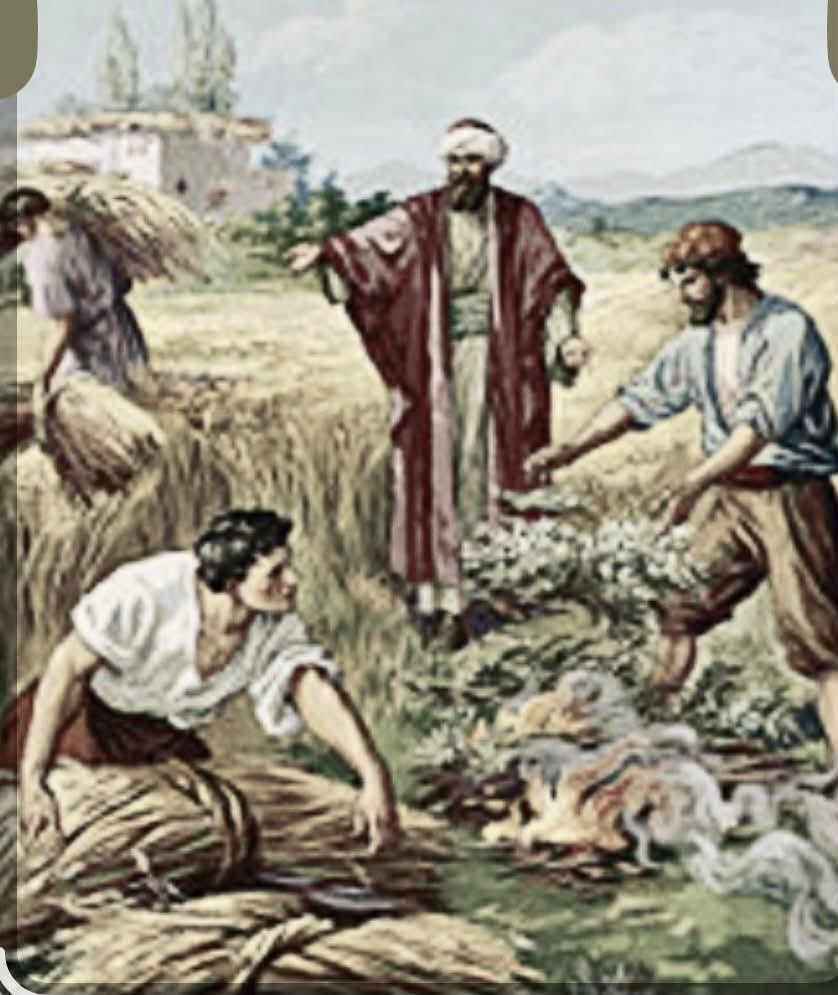
Three parables from the gospel illustrate the reign of God. The parable of the wheat acknowledges the coexistence of good and evil (v24ff), while the mustard seed and yeast (vv31, 33) highlight the remarkable growth of the believing community.
Focusing on the parable of the wheat (cf s1S#147, Gather <7/27/23), which is found only in Matthew (though it could be related to Mark’s parable of the seed growing secretly, 4:46-29), the allegorical interpretation (where every item in the story is given a reference, vv37f), though attributed to Jesus, reflects the conditions of the later Church. Thus, the slant of the parable is less on the aforementioned presence of good and evil as on the serious, frightening character of eventual retribution (vv40f). Employing the imagery of harvest for this final event, the verb “syllegō” (συλλέγω) is used among the many verbs that mean “to gather”, for it refers exclusively to gathering or picking fruit and plants, like grapes (Mt 7:26), figs (Lk 6:44), including weeds (Mt 13:28ff). Symbolically, therefore, the gathering points to the eschatological time of the final judgment when the righteous are gathered to receive their eternal blessing while the ungodly of their doom (cf Mt 13:30, 39; Mk 4:39; Rev 14:15).
Despite the terrifying scenario in the allegorization of the parable, God is shown to exhibit considerable patience and more than ample opportunity for conversion.
The first reading (Wis 12:13,16-19) speaks of a God whose might and power, though much in evidence, is tempered by his patience (cf 12:2). He judges justly and, if the scales are tipped in any direction, it is on the side of leniency (v 18).
The Church indeed is not yet the spotless bride of Christ. It is still beset by humanness, no less than its individual members. The good is there, and it is widespread. But there is no doubt that weeds are there also and give every indication of remaining until the harvest. But as long as evil is present there is a chance of conversion. May we continue to respond to that call of repentance and to become instruments of leading others to conversion as well. And let us always remember that God is good and merciful. Amen.