

780 total reads
The Bible rarely tells us conversations between women, except for the Book of Ruth which records to us the story of two women, Naomi and her daughter-in-law Ruth who became the grandmother of King David, and therefore, a kin of our Lord Jesus Christ.
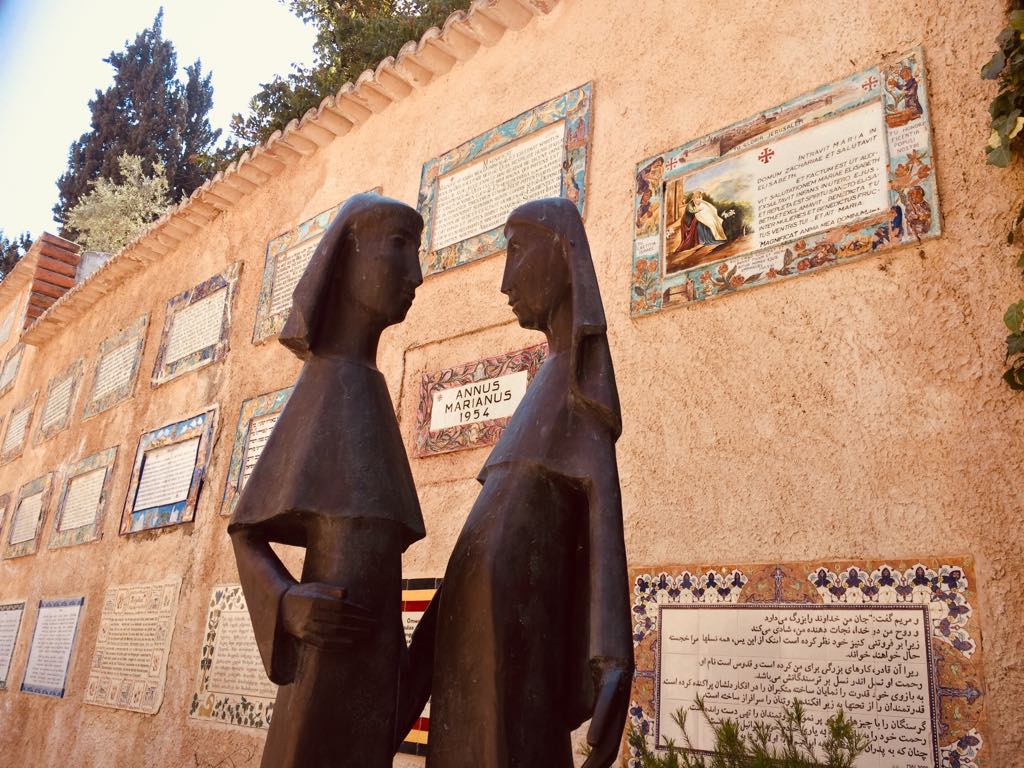
But more rare in the Bible are conversations between two pregnant women, mostly conversations even fights among pregnant mothers and their midwives or rival wives found in the Old Testament. It is therefore so unique is Luke’s account of the Visitation when Mary meets Elizabeth. There must be something so significant for Luke – and for us most especially – in this encounter and exchange.
Mary set out in those days and traveled to the hill country in haste to a town of Judah, where she entered the house of Zechariah and greeted Elizabeth. When Elizabeth heard Mary’s greeting, the infant leaped in her womb, and Elizabeth, filled with the Holy Spirit, cried out in a loud voice and said, “Most blessed are you among women, blessed is the fruit of your womb. And how does this happen to me, that the mother of my Lord should come to me? For at the moment the sound of your greeting reached my ears, the infant in my womb leaped for joy. Blessed are you who believed that what was spoken to you by the Lord would be fulfilled.”
Luke 1:39-45
Women as vessels of God’s blessings
Recall Matthew’s genealogy dominated by the male figures as it was the prevailing culture at that time when women were not really given much attention. But to show the immense power and freedom of God, Matthew mentioned five women who made the coming of Jesus Christ possible.
Most of the women were not really that good whom we would rather describe as a problematique: Tamar pretended to be a prostitute to entice her father-in-law Judah to get her pregnant while Rahab was a real prostitute (a mamasan in fact) at Jericho who helped the spies sent by Joshua before attacking that ancient city; Ruth was a foreigner, not purely Jewish while Bathsheba was the wife of Uriah whom David had killed after she got pregnant with Solomon. And Mary, the wife of Joseph, was found pregnant while still a virgin! (That is what I like most with God – he has a great sense of humor all the time!)
Very interesting with the gospel by Luke is that he got a lot of stories not found in the three other gospels but we find him unique in having a special place for women. He was one of the earliest champions of women in the Church by mentioning many females in his stories to show their important roles in God’s plan for mankind.

In this story of the Visitation, we find a totally different presentation of women even in today’s world. What do I mean? Recall how during the lockdown the memes of pictures of women meeting with a caption “mga nagbabagang balita” (today’s news headlines) portraying women as rumor mongers or chismosas. Later when classes resumed, another meme circulated of women gathered together exchanging class modules of their children as if to show they are stage mothers.
Luke always presented women so dignified in stature like in the Visitation, so blessed by God.
First thing we notice in the story is how Luke never mentioned Mary and Elizabeth were pregnant. He merely indicated their situation by saying “When Elizabeth heard Mary’s greeting, the infant leaped in her womb” at 1:41 while at the following verse 1:42, Elizabeth proclaims to Mary, “Most blessed are you among women, blessed is the fruit of your womb”. Biblical scholars say that perhaps, Luke wanted to assure his readers that God’s powerful blessings marked both women, over each of whom the Holy Spirit overshadowed them with a child: Elizabeth in her barrenness and old age, Mary in her being a virgin before living with her husband Joseph.
What a display of the power of God so simple, so unassuming!
But the most beautiful part in this conversations by these two great women is the meaning of being blessed. So often when we think of being blessed, especially us Filipinos, it is something more of being “lucky” or “swerte” that means having money to spend and buy things. Sometimes being blessed for us is having achieved something that makes us and our loved ones famous.
The Visitation story tells us something entirely different: to be blessed means to believe in God, that His words would be fulfilled in us like with Mary, “Blessed are you who believed that what was spoken to you by the Lord would be fulfilled” (Lk.1:45).
True blessings
Luke’s Gospel teems with so many occasions of blessings beginning in the infancy narratives up to the Presentation to the temple and then of Jesus pronouncing His blessings especially to those who listen and act on God’s words or those who accept Him as the Christ.
It is at the Visitation where Luke shows us the true meaning of blessedness through Mary because of her faith and trust in God’s word spoken to her by the angel at the annunciation of the birth of Jesus Christ. Her faith makes her a model disciple to be imitated by all followers and believers of her Son Jesus Christ.
And here we find again the artistry of Luke because it is not only Mary who is blessed in the Visitation, but also Elizabeth as another model disciple like the Blessed Mother. Elizabeth was the first to call and recognize Jesus Christ as Lord, “And how does this happen to me, that the mother of my Lord should come to me?” (Lk.1:43).
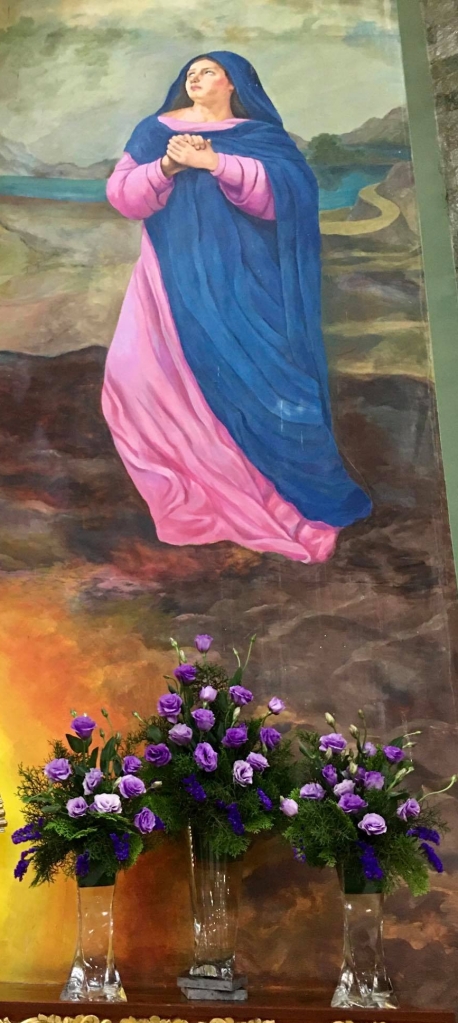
See that when Elizabeth heard the greeting by Mary, like when Mary heard the greeting by the angel at the annunciation, it signaled the coming of the messianic age. Pope emeritus Benedict XVI even claims the annunciation is the beginning of the New Testament.
Elizabeth is the first person as far as Luke is concerned to call Jesus “Lord” and the first to call Mary “blessed” whom she will confirm later in her Magnificat, “all generations will call me blessed” (Lk.1:48).
Two women so blessed by God because they both believed in His words, both believed in the Christ still in the womb. Mary and Elizabeth are in fact the first two Christian disciples who showed us the essential task of every disciple: after hearing the word of God and accepting it, we must share it with others not only by repeating it but interpreting it in our very lives that everyone would see it as the good news.
With barely a week left on this final week of Advent, let us ask ourselves how are we going to show to others what we believe happens in Christmas in this time of the pandemic, that true blessedness is not being rich with material wealth but being enriched by a deep and animated faith in Jesus Christ who is Christmas Himself.
A blessed Monday to everyone!