
3,575 total reads
Nanindigan ang Catholic Educational Association of the Philippines o CEAP at CBCP Episcopal Commission on Catholic Education (CBCP-ECCE) na mapanatili ang kasalukuyang General Education o GE curriculum na planong baguhin ng Commission on Higher Education o CHED.
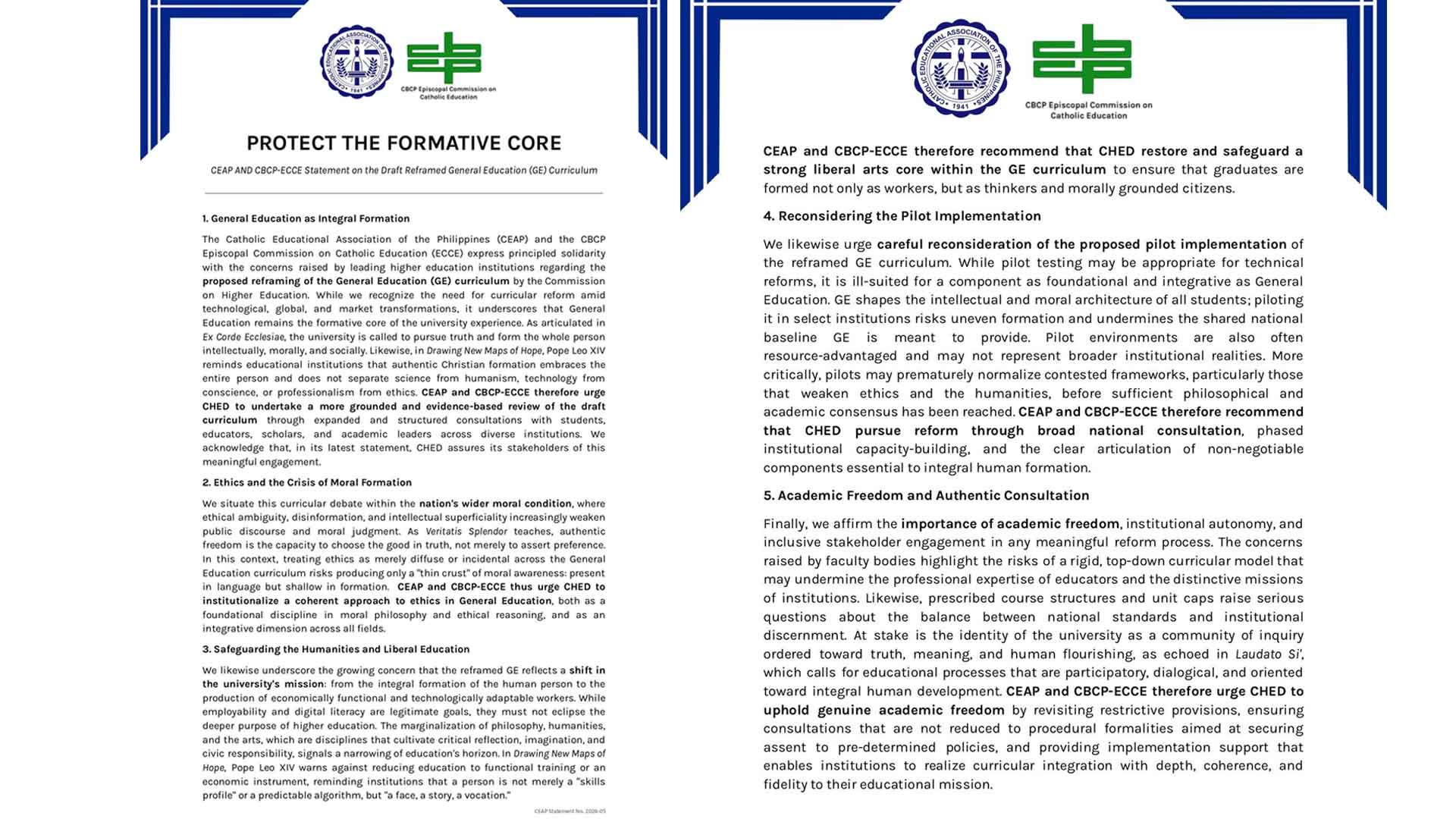
Sa inilabas na pahayag na “Protect the Formative Core,” iginiit ng CEAP at CBCP-ECCE na ang General Education ay hindi lamang paghahanda sa trabaho kundi mahalagang bahagi ng paghubog sa kabuuang pagkatao ng mga mag-aaral kabilang ang moralidad, kritikal na pag-iisip, makabuo ng pananagutan at maging handa sa kanilang trabaho sa hinaharap.
Binigyang-diin din ng mga CEAP ang pangamba sa posibleng paghina ng mga kabataan o mag-aaral sa mga paksang nakatuon sa pagtuturo ng humanities, philosophy, ethics, at liberal arts sa ilalim ng panukalang reframed GE curriculum ng CHED.
“The Catholic Educational Association of the Philippines (CEAP) and the CBCP Episcopal Commission on Catholic Education (ECCE) express principled solidarity with the concerns raised by leading higher education institutions regarding the proposed reframing of the General Education (GE) curriculum by the Commission on Higher Education. While we recognize the need for curricular reform amid technological, global, and market transformations, it underscores that General Education remains the formative core of the university experience” ayon sa mensahe ng CEAP at CBCP-ECCE .
Ayon sa CEAP at CBCP-ECCE, hindi dapat maging sentro lamang ng edukasyon ang pagiging abot-kaya o nakakatipid para sa mga estudyante kundi mas mahalaga ito upang linangin ang mga mag-aaral bilang makatao, mapanuri, at makabayang mamamayan.
Hinimok rin nila ang CHED na magsagawa ng mas malawak at makabuluhang dayalogo sa pagitan ng mga estudyante, guro, academic leaders kasama pa ang iba’t ibang institusyon bago ipatupad ang anumang pagbabago sa curriculum bilang bahagi ng paggalang sa academic freedom at institutional autonomy ng mga pamantasan.
“Finally, we affirm the importance of academic freedom, institutional autonomy, and inclusive stakeholder engagement in any meaningful reform process. The concerns raised by faculty bodies highlight the risks of a rigid, top-down curricular model that may undermine the professional expertise of educators and the distinctive missions of institutions. Likewise, prescribed course structures and unit caps raise serious questions about the balance between national standards and institutional discernment,” bahagi pa ng mensahe ng CEAP at CBCP-ECCE.
Ang mensahe ay matapos isulong nang CHED ang pababago sa General Education Curriculum na babawasan ng units na kinukuha ng mga nasa kolehiyo na ngayon ay hindi na sinasang-ayunan ng maraming educational groups.
Kaugnay nito, pinaalalahanan ng CEAP at CBCP-ECCE ang kahalagahan ng edukasyong nakaugat sa dignidad ng tao at katotohanan alinsunod sa mga panawagan nina Pope Leo XIV at ng Simbahang Katolika na isulong ang integral human formation at makataong paghubog sa kabataan.