

392 total reads
Sir 27:30-28:7
The reading reflects on retribution, a key Hebrew concept despite challenges like Job. Actions have consequences, with sin often rebounding, as seen in Cain’s blood, Dathan and Abiram’s destruction, and David’s sin with Bathsheba leading to death. Yahweh judges, but evil tends toward retribution, which is regulated—retaliation can’t exceed provocation, and God’s justice reflects misconduct. Sirach shows harboring revenge invites divine punishment, while forgiveness fosters God’s mercy. Death emphasizes living virtuously, as neither life nor decay offers hope, and virtue brings peace guided by God’s law. These themes subtly continue in the New Testament.
Rom 14:7-9
Paul stresses that Christians live solely for God, with a transformation through baptism that brings freedom from sin, law, and death. His sovereignty extends to both living and deceased Christians, who belong to Christ just as the living do. They will rise again by Jesus’ power, since he experienced both life and death.
Mt 18:21-35
Continuing last week’s lesson from the Gospel regarding the relationship of the members of the Christian community where the paramount goal is to bring back to full communion a member who sins, today’s gospel focuses on an interpersonal offense and the need for forgiveness.
Jesus’s response to Peter’s question how often one should forgive, (he probably imagined that he was already being very generous in his willingness to forgive, for in the Babylonian Talmud, for example, three times was an acceptable maximum), was “hebdomēkontakis hepta”, (ἑβδομηκοντάκις ἑπτά), meaning seventy-seven times and can be translated also as seventy times seven times (vv21-22). The number seven and its multiples are symbolic of fullness. But be it 77 or 490 times, the point is that there can be no limits to the willingness to forgive. Forgiveness cannot be limited to a certain number of times. It is incalculable.
The parable, comparing the amount of two debts owed, further illustrates the point of Jesus. The “huge amount” (v24) refers to ten thousand talents: a talent (talanton,ταλάντον) was equivalent to 6,000 denarii, so a total of 60 million denarii; a denarius was approximately one day’s wage; this would require more than 164,000 years of work, seven days a week. The “smaller amount” (v28) is literally a hundred (100) denarii only, needing a hundred days only to pay it. The difference between these two debts is so enormous that it brings out the absurdity of the conduct of the unforgiving servant.
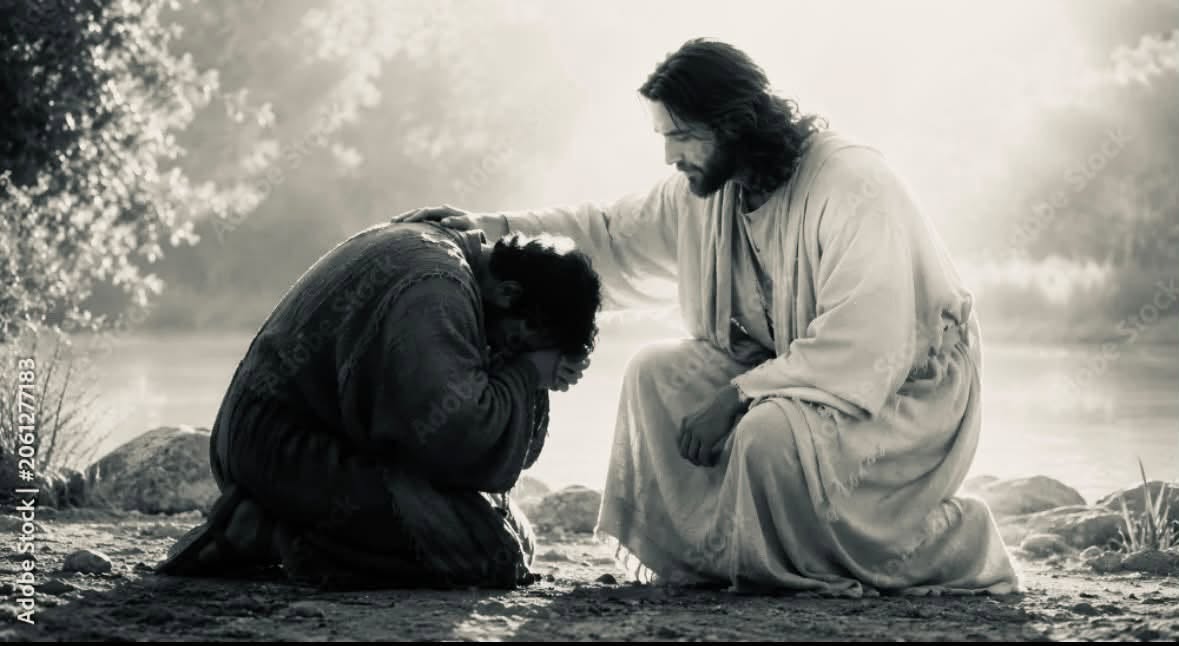
Jesus, therefore, teaches not the quantity of forgiveness (how often?), but the quality, by giving the reason for “no limits”: if God places no limits, humans cannot place a limit.The gospel highlights Jesus’ teaching on unlimited forgiveness, illustrated by the parable of the unforgiving servant. Jesus responds to Peter that forgiveness should be without limit, referencing the number seventy times seven, symbolizing inexhaustible mercy. The parable emphasizes that just as the king forgives a large debt, believers, receiving God’s forgiveness, should similarly show mercy. The story underscores that God’s justice punishes unforgiveness, as mercy invites mercy, contrasting with the destructive cycle of vengeance.
The Word of God today presents Christian forgiveness as the human counterpart of God’s forgiveness. Sirach speaks of Yahweh’s dealing with his creatures as being a reflection of the ways in which they treat one another, (cf Sir 27:30-28:7), while the parable in the Gospel is a clear self-explanatory presentation of the Christian teaching on forgiveness. Beginning with God’s treatment of us, Jesus appeals for a similar spirit of mercy among his followers. Do we sincerely mean whenever we pray “as we forgive those who trespass against us? Otherwise we cannot appeal to the Lord to “forgive us our trespasses”. Amen.