
11,524 total reads
Body and Blood
Deut 8:2-3, 14-16
The reading reflects on the lessons from the exodus. The forty-year journey tested the people’s commitment to Yahweh, revealing their resolve (v2). Sometimes they failed to trust Yahweh, testing Him (6:16f). They experienced hunger and saw God’s care through manna (Ex 16; Num 11:16-23), showing that true life depends on aligning with Yahweh’s will, not just satisfying material needs (v3). Jesus used this to reject Satan’s temptation to turn stones into bread (Mt 4:4). The major desert events—deliverance from bondage, poison, hunger, and thirst—were instructive. When prosperity arrives, the temptation to forget God increases, so they must remember (vv14f).
1 Cor 10:16-17
Paul warns against idolatry through examples of Christian, Jewish, and pagan sacrifices, all of which promote union with the deity. Christians must avoid inappropriate bonds from other sacrifices and focus on the preeminent Christian offering, which includes the cup (blood) and the loaf (body). Participating in both creates unity with Christ and the community of believers, symbolized by sharing a single loaf. This act fosters the unity of believers as one body in Christ, strengthened through the Holy Spirit and the symbolism of the loaf.
John 6:51-58
The passage highlights Jesus’ eucharistic discourse, transitioning from His divine self-revelation as the bread of life to portraying Himself as the Eucharistic bread, sharing His flesh for the world’s life. The passage emphasizes that ‘eating’ and ‘drinking’—through the transformed bread and wine—are sacramental acts offering true life and eternal communion with Jesus, rooted in faith and mutual indwelling. This teaching underscores the importance of Eucharistic reception as a source of spiritual life, unity, and continuity with Jesus’ earlier teachings, fostering Christian fellowship and eternal life.
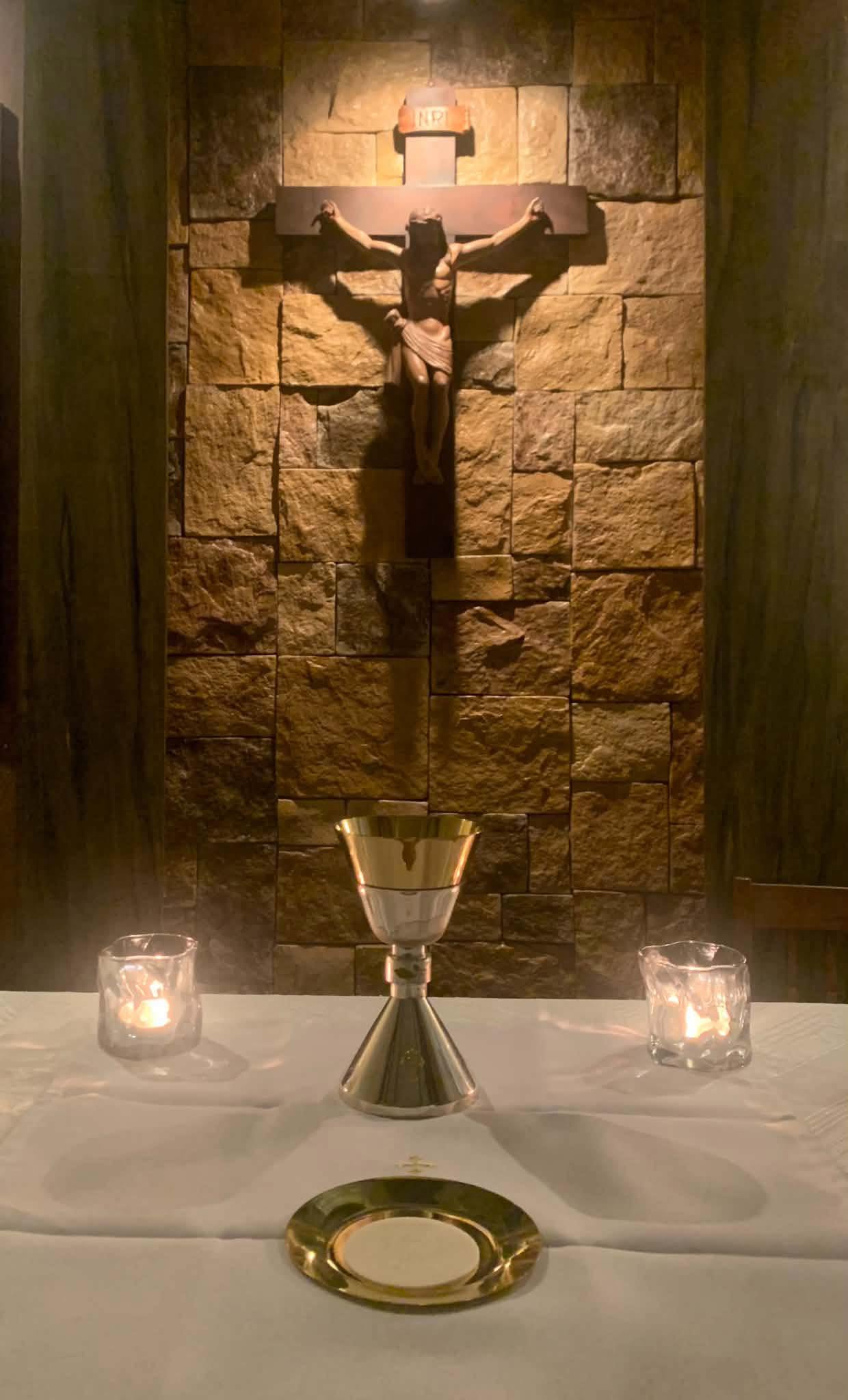
As we celebrate the Body and Blood of Christ, the wonderful sacrament he left us as a memorial of his passion, let us continue to receive him worthily that we may experience the fruits of his redemption and be nourished by the bread that gives eternal life. And may we become ‘blessed fragments (of bread)’ to others as we offer our selves to them in service and in love. Amen.
The Eucharistic tradition in the church is one of the oldest and most well documented beliefs. By the year 50 AD it was fixed in the life of the church and the death of Jesus was being memorialized. Thus 1 Cor 11:23-25 is considered the earliest version of the Eucharistic formula in the New Testament, (cf Mt 26: 26-29; Mk 14: 22-25; Lk 22:17-20). Multiple NT witnesses, as diverse they may be, all coverage around this central belief.
The word ‘ artos ‘ ( ἄρτος ) in NT shares the different levels of meaning as in the OT. Besides the literal references to bread as food, it took a profound theological significance when Jesus claims to be the ‘bread of life’, (cf John 6:31f), as God’s provision from heaven to meet humankind’s deepest spiritual need for reconciliation with God and intimate fellowship with him and his further claim that he fulfills the spiritual significance of the manna given by his Father to the Israelites (vv48-51). And in the breaking of the bread of the Passover meal with his disciples, it prefigures his broken body that hung on the cross, signifying his agony and suffering that brought life and salvation to mankind and partaking of it symbolizes the unity of Christians in one bread and one body, (cf 1 Cor 10:16ff, 11:23ff).
In the Lucan narrative of the multiplication of the loaves (9:11-17), the Eucharistic motif is strongly imprinted. Although there is mention of both loaves and fish, it is the bread that is, predominant even to the collection of the “fragments”, klasmata, (κλασμάτα) v17. This term became the technical expression for the Eucharistic bread. Thus the “breaking of the bread” is used before it is referred to as the Eucharist, (cf Acts 2:46). The action of Jesus in ‘taking, blessing, breaking, and giving’ (v16), reproduces the almost exactly the last supper formula (22:19), and the Emmaus meal (24:230). In the church Jesus continues to feed and nourish his followers through the ministry of the apostles (it was the apostles who distributed them, v16), and eventually their successors in the sacramental celebration of his saving death.
(from: s1S#90 Fragments, 19/06/22) See less