


15,632 total reads
20th Sunday A
Is 56:1.6-7
Third Isaiah (c. 55-66) concludes the prophetic book, set after 515 B.C. in Palestine with the temple rebuilt. The exile’s hardships have eased, shifting focus to ritual laws, Sabbath, and fasting. Compared to Second Isaiah’s broad vision, this view narrows but emphasizes universalism, aligning with figures like Jonah and Ruth. The passage highlights Israel’s expanding inclusiveness, stressing God’s intervention and calling for covenant fidelity, reflecting the bilateral nature of the covenant. Historically, foreigners in Israel had limited rights, but over time, especially after the exile, acceptance increased, as seen in this oracle. Converts to Judaism, including foreigners accepting Yahweh, will enjoy full ritual rights, with Sabbath observance and sacrifices valued equally for all nations. The temple, traditionally exclusive, will be open to all, with no active proselytizing suggested; Israel’s universalism is a fact, not an action plan.
Rom 11:13-15, 29-32.
Paul, speaking to Gentile Christians, calls himself their apostle (v13; Gal 2:7f) and hopes his mission will make Jews jealous, leading some to convert (v14). ‘My race’ (v14) shows Paul’s identification with Jews. Their rejection (v15) refers to Jews’ rejection of the Christian message. The apostle suggests that if Jews’ failure to respond led to the spread of the Gospel among Gentiles, their eventual acceptance will bring spiritual revival (v15; 6:4). Christ’s redemptive work encompasses the universe (Col 1:20; Eph 1:9t). The ultimate Jewish conversion is sure because God’s call is irrevocable (v29). As with Paul’s pattern of negative leading to positive (5:12-20), the Gentiles were saved from disobedience (1:18-32) through Jewish rejection. Now, God’s forgiveness also offers Jews salvation (vv30f). Paul sees this widespread sin being overcome by God’s greater mercy (v32; 5:20).
Mt 15:21-28
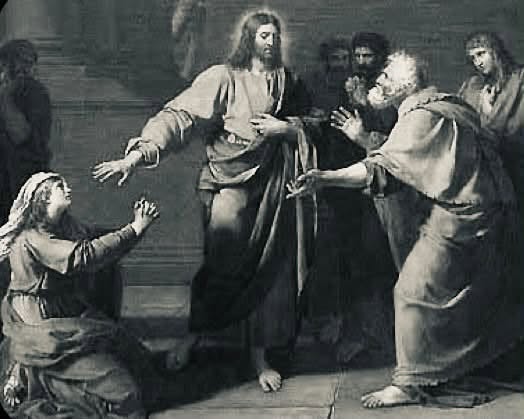
Matthew’s narrative is more didactic and not simply a miracle story, showing the tension between exclusivist Jewish identity and openness to Gentiles. Jesus, near Phoenicia in northern Galilee, encounters a Gentile woman who addresses Him as “Kyrios” ( κύριος ), meaning “Lord”. The term in the NT usually refers to Jesus Christ as God incarnate and when applied to the Messiah, signifies his divine nature. The equivalent of the Hebrew term YHWH transfers to the person of Christ all those characteristics that the Hebrew title attributes to the person of God.
Jesus initially responds reservedly, referencing Gentiles as dogs to emphasize his Jewish mission, but the woman persists, earning his praise for her “great faith.” The story highlights her courage and faith, with the healing becoming secondary to her act of faith.
The Canaanite woman is a compelling figure. She is a woman in a male-dominated society. She is a foreigner who ventures alone into a Jewish setting. When she encounters a seemingly detached and distant Jesus, she refuses to give up. She displays boldness and a sense of humor. Ultimately, she becomes one of the most respected figures in the gospels. Today, our actions often contradict our beliefs, even though we understand the message. Negative stereotypes still exist, but the core of our faith is universal love, which is constantly tested. It’s not just a concept but a reality that each of us must live out. May we be welcoming to all and imitate the persistent faith of the woman, which would push us beyond all limits in following the Lord. Amen.