173 total reads
21 September 2026 — 54th Anniversary of Martial Law
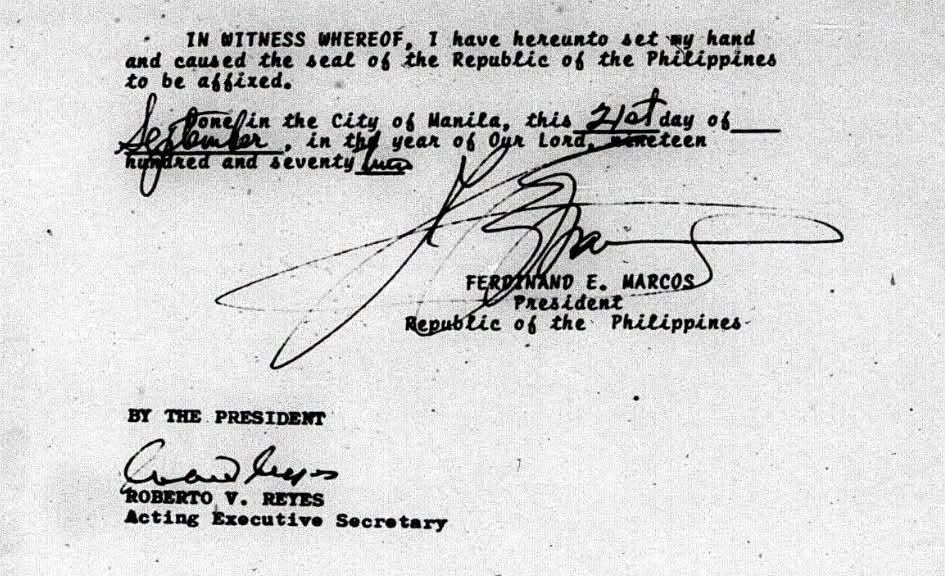
I was thirteen years old, a second-year high school student, when Ferdinand Marcos declared martial law in September 1972. I was too young then to understand fully what was happening to our country. All I knew was that, almost overnight, the Philippines had changed. Newspapers stopped coming out. Television and radio stations went off the air. Soldiers appeared in the streets. Political leaders were being arrested. People began to speak in whispers, afraid that someone might be listening.
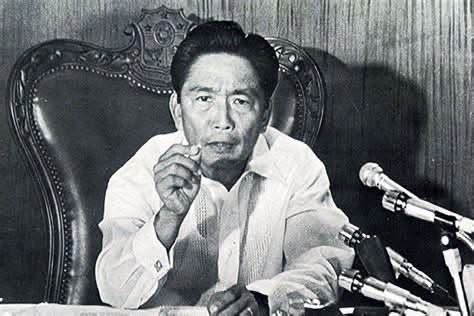
I would spend practically all my adolescence, my seminary years, and the first years of my priesthood under the shadow of a dictatorship. By the time it finally ended in February 1986, I was already twenty-six years old.
Marcos justified martial law by invoking the communist insurgency and the threat of rebellion. There were indeed serious problems of political instability and armed conflict in the country. But instead of addressing them within the framework of democratic institutions, he concentrated the powers of government in his own hands. Congress was shut down. Prominent opposition figures, including Senators Benigno Aquino Jr., Jose W. Diokno, and Ramon Mitra Jr., were arrested. Freedom of speech, freedom of assembly, and freedom of the press were severely restricted. Independent newspapers, including the Manila Times, the Manila Chronicle, and the Philippines Free Press, were closed. ABS-CBN and other broadcasting networks were shut down, and their facilities were seized or placed under government control.
Eventually, newspapers and broadcasting stations were allowed to operate again, but largely under the control of businessmen associated with the regime. Roberto Benedicto, a close Marcos associate, acquired extensive interests in broadcasting and the print media. There was no social media then. When the government controlled the newspapers, radio, and television, it could largely determine what the public was allowed to know. The country could be portrayed as peaceful and prosperous, while reports of abuses, corruption, and growing public discontent were suppressed.
I remember the atmosphere of fear. People were careful about what they said, especially in public places. Political conversations were conducted in whispers. One never knew who might be listening or reporting to military intelligence.
In many parts of the countryside, the military presence became even more pronounced. Farmers, workers, students, community organizers, and even church workers could be suspected of subversion because of their involvement in social movements. People were arrested and detained without due process. Some were tortured. Others were abducted and killed. We had a disturbing word for these killings: salvaging. It was the term commonly used then for what we now call extrajudicial killings. Others simply disappeared. We called them the desaparecidos. Their families did not know whether they were still alive, where they were being held, or whether they would ever return.
What was happening in the Philippines was not an isolated phenomenon. We were living in the Cold War, when the world was divided between the United States and its allies on one side, and the Soviet Union and its allies on the other. In the name of containing communism, the United States maintained close relations with several authoritarian governments. Indonesia was under Suharto, South Korea under Park Chung-hee, and Chile under Augusto Pinochet. Brazil had been under military rule since 1964, and Argentina would come under military dictatorship in 1976.
Marcos presented himself as a dependable American ally. The United States maintained important military installations at Clark and Subic, and successive American administrations continued to regard the Philippines as strategically important despite growing documentation of human rights abuses. It was a troubling contradiction for those of us who were growing up during those years. Countries that professed to defend freedom and democracy could nevertheless support authoritarian governments when their economic and geopolitical interests were served.
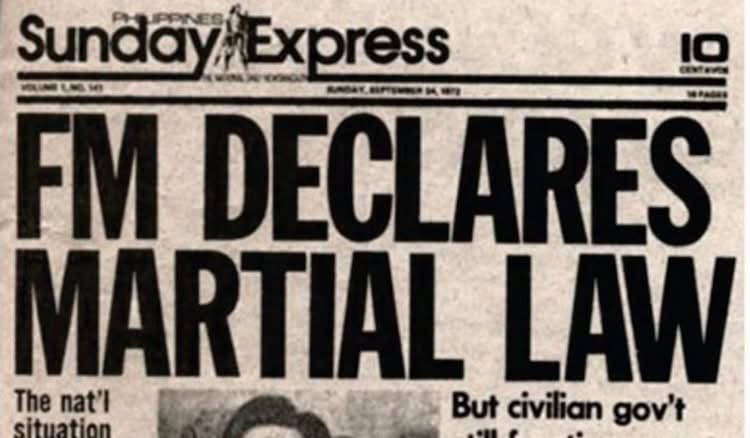
Marcos did not govern through military force alone. He also sought to give his continued rule a constitutional and legal framework. Under the 1935 Constitution, he was supposed to step down at the end of his second presidential term in 1973. Instead, martial law allowed him to remain in power, and a new Constitution was introduced in 1973. It provided for a modified parliamentary system, but transitional provisions allowed Marcos to exercise both presidential and prime-ministerial powers. The 1976 constitutional amendments expressly made him both president and prime minister. When the Interim Batasang Pambansa was established in 1978, government departments were converted into ministries, and department secretaries became ministers. Marcos continued to rule extensively through presidential decrees, which carried the force of law. He called this system constitutional authoritarianism. Even after martial law was formally lifted in January 1981, the authoritarian political structure remained substantially intact.
During the early years of martial law, the government projected an image of economic progress. There were ambitious infrastructure projects, new highways, government buildings, cultural centers, and large industrial ventures. Many of these were financed through foreign borrowing. But behind this image of modernization, another economic system was taking shape. We came to know it as crony capitalism.
This was an arrangement in which access to economic opportunities depended increasingly on one’s political connections with the ruling family. Favored businessmen were given monopolies, government contracts, loans, regulatory privileges, and control over important industries. Among them were Roberto Benedicto, who exercised extensive influence over the sugar industry and broadcasting, and Eduardo “Danding” Cojuangco Jr., who became a major figure in the coconut industry and banking.
The coconut levy was especially controversial. Funds collected from coconut farmers were used to finance acquisitions and investments associated with powerful political and business interests, while many of the farmers themselves continued to struggle for a decent livelihood.
Meanwhile, the government was accumulating enormous foreign debts. By the early 1980s, the economy was in serious difficulty. The debt crisis, declining investor confidence, economic mismanagement, and political instability eventually produced one of the most severe economic downturns in our postwar history. Businesses closed. Workers lost their jobs. Prices rose, and ordinary families found it increasingly difficult to make ends meet. The economy contracted sharply in both 1984 and 1985. The promised prosperity of the New Society had not materialized for the majority of Filipinos.
Another development during the Marcos years would have lasting consequences for our country: the institutionalization of overseas employment. In 1974, the government promulgated the Labor Code, which established a formal framework for the recruitment and deployment of Filipino workers abroad. Overseas employment was initially presented as a temporary response to domestic unemployment and the growing demand for foreign workers, particularly in the Middle East. But what began as a temporary measure gradually became a permanent feature of Philippine economic life.
As employment opportunities at home remained inadequate, more and more Filipinos sought work abroad. Their remittances helped sustain their families and provided much-needed foreign exchange for the country. Yet the social consequences were profound. Parents had to leave their children behind. Husbands and wives endured years of separation. Children grew up with one or both parents working in distant countries. I have always admired the sacrifices of our overseas Filipino workers. But I have also often wondered what it says about our economic system when millions of our people must leave their own country in order to provide their families with a decent livelihood.
I had already been a priest for a few months when, on August 21, 1983, the news broke that former Senator Benigno “Ninoy” Aquino Jr. had been assassinated at the Manila International Airport. He had just returned from three years of exile in the United States. He was under military escort when he was shot dead on the airport tarmac.
His assassination sent shock waves throughout the country. The fear that had kept so many Filipinos silent for years began to give way to indignation. When his funeral procession took place on August 31, an immense multitude filled the streets of Metro Manila. What began as a funeral became a massive public demonstration against the dictatorship. Protest rallies multiplied. Opposition groups, students, workers, professionals, religious communities, and ordinary citizens began to find common cause in their demand for political change. Ninoy’s widow, Corazon Aquino, gradually emerged as a unifying figure of the opposition.
In November 1985, Marcos announced that he would call a snap presidential election. Corazon Aquino agreed to run against him, with Salvador Laurel as her running mate. The election was held on February 7, 1986, amid widespread reports of intimidation, violence, and electoral fraud. The Batasang Pambansa proclaimed Marcos the winner, but Corazon Aquino rejected the result and called for a campaign of nonviolent civil disobedience.
Then came February 22. Defense Minister Juan Ponce Enrile and Armed Forces Vice Chief of Staff Fidel V. Ramos broke away from Marcos and took refuge in the military camps along EDSA. Cardinal Jaime Sin appealed over Radio Veritas for the people to come to their aid and prevent a military confrontation. What followed was extraordinary. Hundreds of thousands of Filipinos converged on EDSA. Priests, religious sisters, seminarians, students, workers, professionals, and families stood together before soldiers and tanks. People prayed the rosary, sang, offered food to the soldiers, and appealed to them not to fire upon their fellow Filipinos.
On February 25, 1986, Corazon Aquino took her oath as President of the Philippines. That evening, Ferdinand Marcos and his family left Malacañang and departed for exile in Hawaii. The dictatorship had finally ended.
Looking back, I realize that the People Power Revolution did not begin on February 22, 1986. It had been prepared by years of suffering, resistance, organizing, and the gradual awakening of the Filipino people. It was prepared by political prisoners who refused to surrender their convictions, by journalists who continued to seek the truth despite censorship, by lawyers who defended the rights of detainees, and by families who searched tirelessly for their disappeared loved ones. It was prepared by farmers and workers who organized for their rights, by students who challenged the culture of fear, and by priests, religious, and laypeople who accompanied communities subjected to violence and repression.
When millions of Filipinos finally gathered along EDSA in February 1986, they were not merely responding to a disputed election or a military rebellion. They were reclaiming freedoms that had been taken away from them fourteen years earlier.
And now, fast forward to 2026. Forty years after the People Power Revolution, the Philippines is once again governed by a Marcos. Ferdinand “Bongbong” Marcos Jr., the son and namesake of the president whose dictatorship ended in February 1986, was elected president in 2022.
For someone like me, who spent practically all his adolescence and early adulthood under the dictatorship of his father, this is an extraordinary turn in our country’s history. I am reminded of the biblical teaching that children should not be made to bear the guilt of their fathers. Every person must be judged according to his or her own actions. But neither should the return of a Marcos to Malacañang become a reason for us to forget the history of martial law or dismiss the suffering of those who lived through it.
In fact, it brings me back to one of the most important lessons we learned from that painful period of our history: the danger of allowing political power to become concentrated in the hands of one person, one family, or a small circle of privileged families.
When democracy was restored in 1986, the framers of the 1987 Constitution sought to establish safeguards against the recurrence of authoritarian rule. Among these was the provision in Article II, Section 26, which requires the State to guarantee equal access to opportunities for public service and prohibit political dynasties, as may be defined by law.
Yet, for almost four decades, Congress failed to enact the law that would give effect to this constitutional mandate. Political power continued to be concentrated in many of the same families, with public offices sometimes passing from parents to children, from spouses to spouses, or among siblings and other relatives. In some places, elective positions have come to resemble family inheritances rather than opportunities for public service open to all qualified citizens.
This is why the recent decision of the Supreme Court is historically significant. On September 16, the Court declared that Congress’s failure to enact an anti-political dynasty law for 39 years constituted grave abuse of discretion and a continuing violation of its constitutional duty. It directed Congress to enact the appropriate law at the earliest opportunity.
The Supreme Court has left it to Congress to define political dynasties and determine the scope of the prohibition. The challenge now is to give meaningful effect to the constitutional mandate while ensuring that the resulting legislation is clear, fair, and capable of addressing the concentration of political power within families.
It is worth remembering that the 1987 Constitution was born out of our experience of dictatorship. Its safeguards were intended not merely to prevent another declaration of martial law, but also to protect democratic institutions against the excessive concentration and perpetuation of political power.
For my generation, democracy was never simply an abstract political concept. We experienced what it meant to lose it. We saw how easily fear could silence a people, how institutions could be manipulated to perpetuate power, how economic privilege could be concentrated in the hands of a few, and how the language of national security could be used to justify violations of human rights.
We also witnessed how ordinary people, when they overcame their fear and acted together, could recover the freedom that had been taken from them.
The restoration of democracy in 1986 did not solve all our country’s problems. Poverty, corruption, political dynasties, inequality, and abuses of power did not disappear with the departure of Marcos. The work of building democratic institutions and a just society remained unfinished.
As we commemorate the 54th anniversary of the declaration of martial law, I hope we can continue to remember those years with historical honesty, respect for the victims, and a commitment to learning from our past.
Remembering history is not about making children answer for the sins of their parents. It is about ensuring that the suffering of previous generations is not rendered meaningless by forgetfulness.
For those of us who grew up under martial law, the freedom to speak without fear, to question those in power, to demand accountability, and to participate in shaping our country’s future is something we learned never to take for granted.
And perhaps one of the most meaningful ways of honoring the memory of those who struggled to restore our democracy is to ensure that the constitutional safeguards born out of that struggle are finally given their full effect.
After all, the democracy we recovered in 1986 was never intended to become the exclusive inheritance of a few privileged families. It was meant to belong to the Filipino people.