


1,921 total reads
28th Sunday A
Readings
Is 25:6-10
This passage from Isaiah (chapters 24-27), often called the little apocalypse, likely originates from a later period than the eighth-century prophet. It vividly depicts eschatology, showing Yahweh establishing kingship on Mount Zion after defeating cosmic evil and death. The imagery shifts from devastation affecting even the sun and moon (24:1-4, 23) to joyful celebration on Zion, symbolizing divine favor and universal salvation. The destruction of death is represented by symbols like the veil and web, signifying mortal shrouds and entrapment, emphasizing death as the result of sin and alienation from God. Yahweh’s triumph over death means liberation from grief and suffering, culminating in a joyful chorus praising His fidelity, with Zion as God’s dwelling (vv9f).
Phil 4:12-14,19-20
The Philippians sent a gift to Paul in prison, which he values more for their intent than the gift itself. He recognizes his ability to face abundance or scarcity with Christ’s presence (vv12f), considering all else as nothing compared to knowing Christ Jesus (3:8). Christ’s presence in believers gives strength to overcome obstacles (v13; Col 1:29). Their generosity will be rewarded by God’s goodness (v19). The riches in Christ come through the Spirit, which builds believers and glorifies God (v20). As believers contemplate God’s glory in Christ, they are transformed into greater glory, praising and worshiping God.
Mt 22:1-14
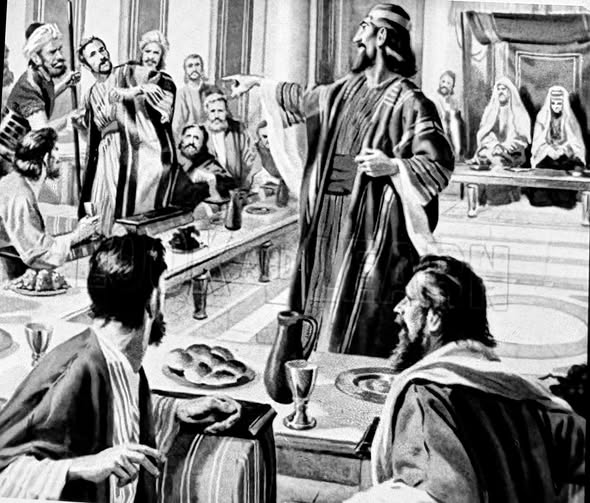
Matthew’s parable of the banquet, from the source, is shared with Luke but with different nuances. It allegorizes many features, possibly justifying Jesus among sinners and outcasts. The banquet is a frequent end-times image, notably in Isaiah, blending themes of a wedding banquet and eschatological nuptials between God and Israel. The twofold sending of servants (vv3f) highlights responses: refusal (v3) and indifference or maltreatment (vv5f), symbolizing Christian missionaries’ responses to Jews. The story’s allegory, abrupt and unrealistic, describes the king’s destruction of Jerusalem in 70 A.D., punishment for harsh treatment of early Christians. The Gentile mission is justified with the third wave of emissaries. The crowds from the “main roads” (v9) are outcasts-turned-Gentiles. Both “the bad and the good” (v10) enter the banquet, crucial for the story’s outcome. The parable reflects a current and future eschatology: the king’s entry signifies final judgment (v11), and the wedding garment symbolizes active faith. Belonging to the church isn’t enough; one’s life must reflect faith (7:21f). Both good and bad will be present in the church; salvation depends on Christ’s return. Those unfit (not properly dressed) are cast out (v13). The final line (v14) shows many called but few chosen, with salvation uncertain even among the elect.
We are all invited to the banquet. Let us be grateful then to ‘the Lord of hosts…who provide for all peoples a feast of rich food and choice wines’, (cf Is 25:6-10). But as the parable in the gospel ends (vv11-14) it provides a warning that mere admission is not enough; an appropriate response is needed. Those invited to the celebration must give evidence of their commitment- we should go there appropriately dressed, clothed with good deeds and a life of righteousness. Amen.